How to Become a Carnie: Essential Guide
Becoming a carnie involves embracing a unique lifestyle of travel, hard work, and entertainment. It requires adaptability, a strong work ethic, and a passion for bringing joy to others through amusement rides, games, and shows.
Dreaming of a life under the big top or behind the cheerful chaos of a carnival? The idea of being a “carny” – a term often used for carnival and amusement park workers – sparks imagination. It’s a world far removed from the typical 9-to-5, filled with exciting sights, sounds, and a constant sense of adventure. If you’re an adventurous spirit looking for a career that’s anything but ordinary, this guide is for you. We’ll break down exactly what it takes to join this vibrant community, from common job roles to the essential skills you’ll need. Get ready to explore how you can become part of the magic that makes carnivals so special!
What is a Carnie? Understanding the Role
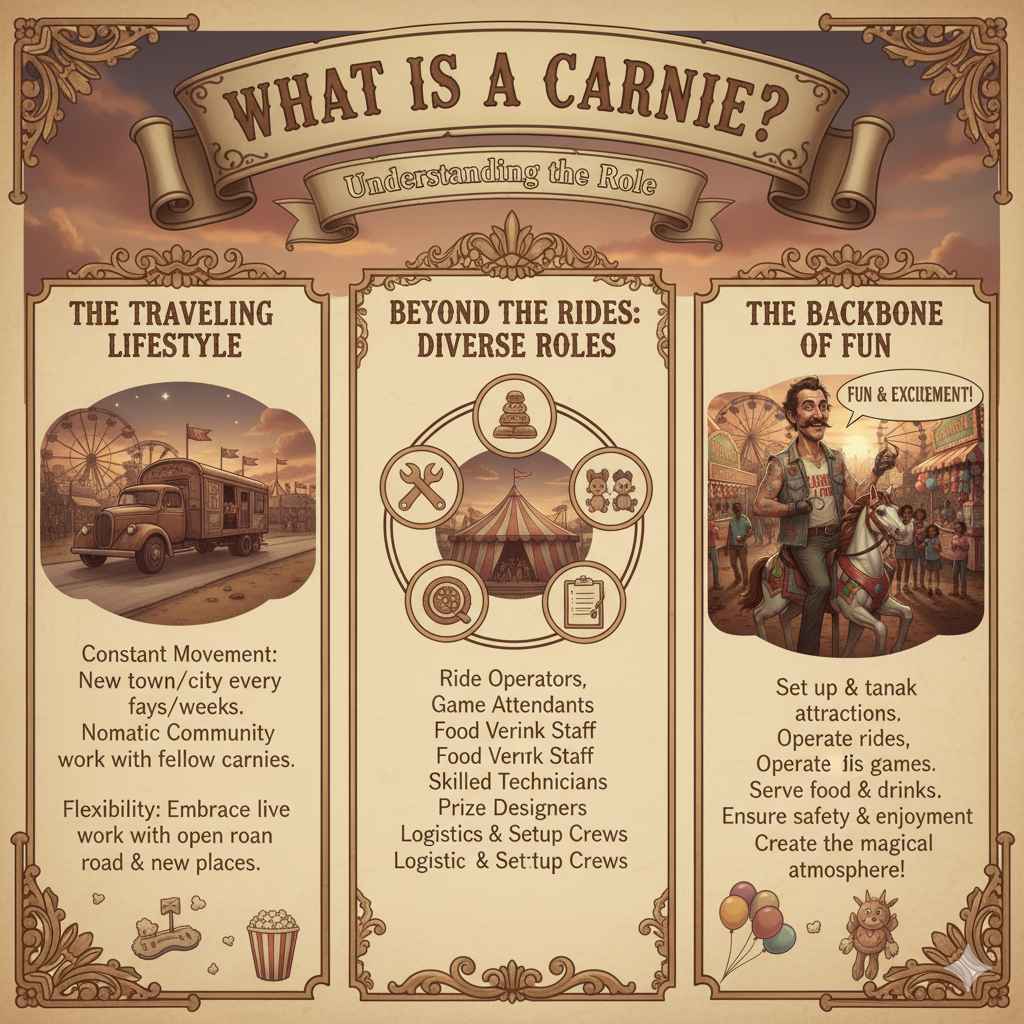
Before diving into how to become one, it’s good to understand what a carnie is. The term “carny” historically refers to employees of a traveling carnival, circus, or amusement park. These individuals are the backbone of these operations, responsible for setting up, running, and taking down attractions, games, and food stands. They are the people who operate the Ferris wheel, manage the ring toss, serve up delicious popcorn, and ensure everyone has a safe and fun experience. It’s a lifestyle that involves a lot of moving, a lot of interacting with the public, and a shared sense of purpose among the crew. They create the atmosphere of fun and excitement that draws crowds, season after season.
The Traveling Lifestyle
One of the most defining aspects of being a carnie, especially in the traditional sense of a traveling carnival, is the constant movement. Carnivals set up in different towns and cities, often moving every few days or weeks. This means you’ll be packing up your life, traveling to a new location, and setting up everything all over again. While this travel is exciting for many, it’s essential to be prepared for it. It’s a nomadic lifestyle that requires flexibility and a willingness to embrace the open road. You become part of a community that relies on each other, traveling from one gig to the next.
Beyond the Rides: Diverse Roles
While operating rides is a common image, the world of carnies is much broader. There are numerous roles within a carnival, offering opportunities for people with different skills and interests. From skilled technicians who keep the rides running smoothly to creative individuals who design game prizes, and those who manage the logistics of the entire operation, there’s a place for almost everyone. Understanding these various roles can help you identify where you might best fit in and what path you might want to pursue.
Essential Skills and Qualities for Aspiring Carnies
The carnival life isn’t for everyone, but for those it calls to, it’s incredibly rewarding. To thrive in this environment, certain skills and qualities are more important than others. Think of these as your essential toolkit for navigating the exciting, fast-paced world of carnivals:
- Adaptability: Conditions can change rapidly. Weather, mechanical issues, or schedule changes are part of the job. Being able to roll with the punches and adjust your plans is crucial.
- Strong Work Ethic: This job is physically demanding and often involves long hours. You’ll be setting up, operating, and tearing down, often in challenging weather. Dedication is key.
- Customer Service Skills: You’ll be interacting with the public constantly. A friendly demeanor, patience, and the ability to handle a wide variety of people are essential for creating a positive experience for guests.
- Teamwork: Carnivals are a collaborative effort. Everyone relies on each other to get the job done. Being a good team player, willing to help out wherever needed, is vital for the group’s success.
- Problem-Solving Abilities: Things don’t always go according to plan. Being able to think on your feet and find solutions to unexpected problems, whether mechanical or logistical, is a valuable skill.
- Physical Stamina: Much of the work involves manual labor, standing for long periods, and working in various weather conditions. Good physical health and stamina are a must.
- Reliability: Showing up on time, every time, is non-negotiable. Your absence can impact the entire operation.
Common Job Roles in the Carnival Industry
The carnival industry offers a surprising variety of jobs. Whether you’re mechanically inclined, good with people, or have a knack for organization, there’s likely a role for you. Here are some of the most common positions you’ll find:
Ride Operators
These are the folks you see at every ride. Their primary job is to ensure riders are safely loaded and unloaded, understand and enforce safety rules, and operate the machinery. It requires attention to detail and a commitment to safety above all else. You’ll be the friendly face that makes sure everyone enjoys the thrill safely.
Game Booth Operators
Love interacting with guests and handing out prizes? This is the role for you. Game booth operators manage the various games on the midway, explain the rules, encourage participation, and award prizes. They need to be engaging, friendly, and fair.
Concession Staff
Responsible for preparing and serving food and drinks. This involves everything from making popcorn and cotton candy to serving hot dogs and lemonade. Food safety, speed, and a cheerful attitude are key here.
Maintenance and Repair Technicians
These skilled individuals are the heroes who keep the rides and equipment in top working order. They perform regular inspections, troubleshoot mechanical issues, and make necessary repairs. A background in mechanics, electrical work, or engineering can be very valuable.
Show and Performance Staff
If your talents lie in performing, carnivals often have stages with musicians, dancers, clowns, or other entertainers. This could also include setting up staging, sound, and lighting.
Management and Supervisory Roles
As you gain experience, you might move into roles that involve overseeing a section of the carnival, managing staff, or handling logistics like scheduling and inventory.
Setup and Teardown Crew
This is the heavy-lifting crew that makes the magic happen. They are responsible for erecting and dismantling rides, booths, and other structures. This role is physically demanding and requires teamwork.
How to Get Started: A Step-by-Step Guide
Ready to take the leap and join the carnival world? Here’s a practical, step-by-step approach to help you land your first gig:
-
Research Carnival Companies:
Start by identifying major carnival operators. Companies like Strates Shows, Reithoffer Shows, or Fantasy Amusements are prominent names in the industry. Many smaller regional companies also exist. Look for their official websites, as they often have a “Careers” or “Join Our Team” section.
Tip: Search for terms like “traveling carnival jobs,” “amusement park hiring,” or “seasonal entertainment work.”
-
Check Job Listings:
Many carnival companies post their job openings on their websites, industry-specific job boards, or general employment sites. Pay attention to the hiring seasons, as most recruitment happens in late winter or early spring for the upcoming operating season.
-
Prepare Your Resume:
Even if you don’t have direct carnival experience, highlight transferable skills. Emphasize customer service, teamwork, any mechanical abilities, physical labor experience, and reliability. Keep it concise and easy to read.
-
Attend Job Fairs and Hiring Events:
Larger carnival companies often hold in-person job fairs or attend industry-specific hiring events. This is a fantastic opportunity to meet recruiters face-to-face, learn more about their operations, and make a personal connection.
-
Submit Applications:
Fill out applications thoroughly and honestly. Many companies prefer online applications, but some may accept them in person at their headquarters or during hiring events.
-
Prepare for an Interview:
Be ready to talk about why you want to work in the carnival industry, your willingness to travel, your ability to handle demanding work, and your customer service approach. Dress professionally, even if the job is labor-intensive. Your attitude and enthusiasm are key.
-
Understand the Commitment:
Be prepared for non-traditional hours, including nights, weekends, and holidays. Understand that you will be traveling extensively and living in close quarters with other crew members. Many positions are seasonal, so discuss the expected duration of employment.
Understanding the Upsides and Downsides
Like any career, working in the carnival industry comes with its own set of advantages and disadvantages. Weighing these carefully will help you decide if it’s the right fit for your lifestyle and aspirations.
The Perks of the Midway Life (Pros)
- Adventure and Travel: If you love seeing new places and dislike being tied to one location, this is a dream job. You’ll experience different cities and cultures throughout the year.
- Unique Community: You become part of a close-knit community of fellow workers who share a common passion and lifestyle. This camaraderie can be very strong.
- Dynamic Environment: Every day is different. You’re constantly interacting with new people and facing new challenges, which can be very stimulating.
- Skill Development: You’ll learn a wide range of practical skills, from operating machinery and basic repair to customer service and problem-solving.
- Sense of Accomplishment: There’s a deep satisfaction in being part of creating joy and excitement for thousands of people each season.
Challenges on the Road (Cons)
- Grueling Work: The work is physically demanding, with long hours and demanding tasks, often in unpleasant weather conditions.
- Instability: It’s a seasonal industry, and work can be seasonal. Weather can also cause cancellations, impacting pay and schedules.
- Limited Personal Time: When not working, you’re often traveling, setting up, or tearing down. True downtime can be scarce.
- Basic Living Conditions: Housing and amenities can be very basic, especially for lower-level positions.
- Constant Movement: While an upside for some, the constant travel and setting up can be tiring and can make maintaining relationships outside of work challenging.
Compensation and Benefits
Compensation in the carnival industry can vary significantly depending on the role, experience, and the specific company. Generally, entry-level positions tend to offer hourly wages, while more specialized roles or supervisory positions might come with a salary or a higher hourly rate. It’s important to understand what is included in your compensation package.
| Job Role | Typical Compensation Structure | Notes |
|---|---|---|
| Ride Operator | Hourly Wage | Often starts at minimum wage and increases with experience. |
| Game Booth Operator | Hourly Wage / Commission | Some may offer a base wage plus a small commission on game sales. |
| Concession Staff | Hourly Wage | May involve tips in some instances, but usually a set hourly rate. |
| Maintenance Technician | Hourly Wage / Salary | Higher skill requirements often mean higher pay. |
| Manager/Supervisor | Salary / Higher Hourly Wage | Reflects greater responsibility and experience. |
Beyond wages, carnival companies often provide basic accommodation and sometimes meals, especially for traveling crews. These benefits are crucial for managing personal expenses while on the road. However, the quality and availability of these benefits can differ greatly between companies. Always inquire about housing, meal provisions, and how any potential overtime is compensated during the hiring process.
It’s also worth noting that many carnival jobs are considered temporary or seasonal. This can affect access to traditional employment benefits like health insurance or retirement plans, though some larger, well-established companies might offer limited benefits to long-term employees. Understanding the full package, not just the hourly rate, is essential for making an informed decision.
Safety First: Regulations and Best Practices
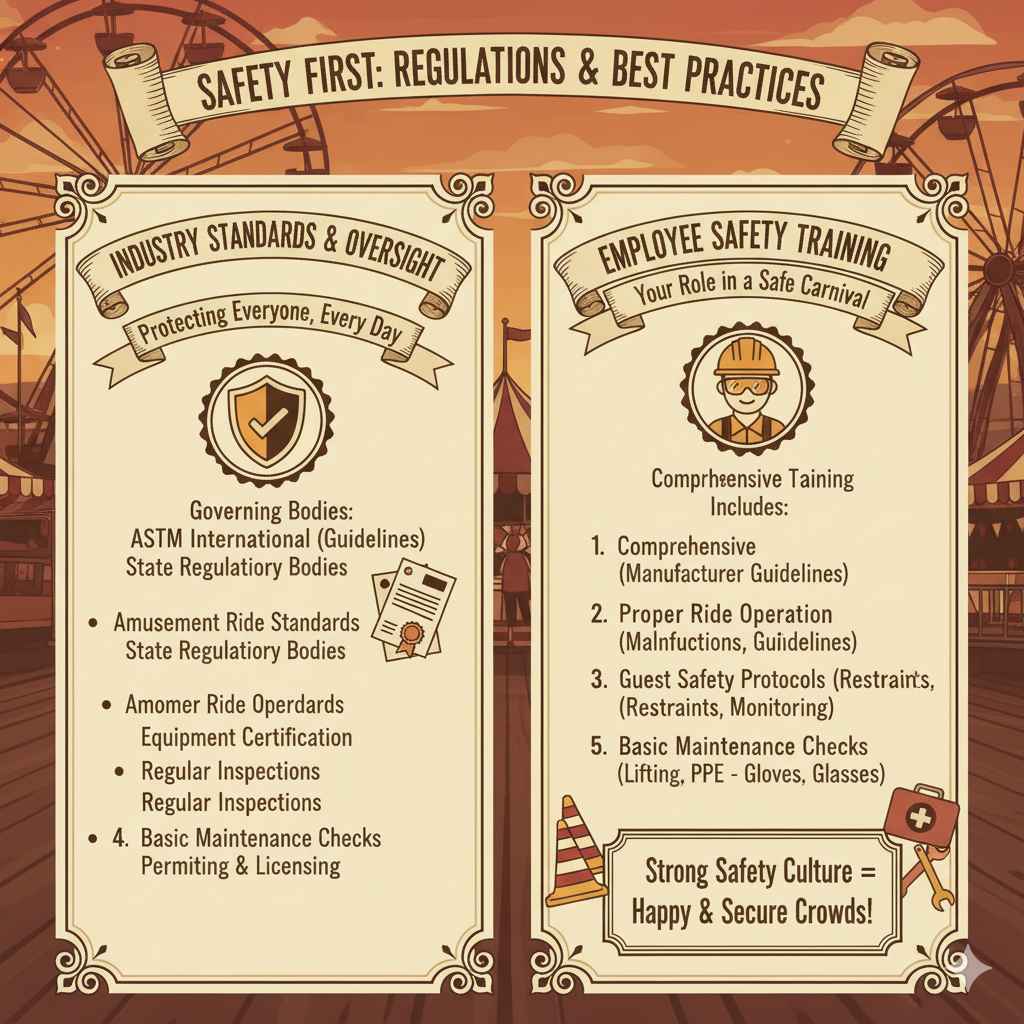
Safety is paramount in the carnival industry. The operation of amusement rides and attractions is subject to strict regulations to prevent accidents and ensure the well-being of both guests and employees. In the United States, organizations like the ASTM International (American Society for Testing and Materials) develop standards for amusement rides and devices, which are often adopted by state regulatory bodies. You can learn more about the general safety standards for amusement devices from sources like the ASTM International.
As an employee, you will receive comprehensive safety training for your specific role. This typically includes:
- Proper operation of rides and games according to manufacturer guidelines and company policy.
- Emergency procedures, including what to do in case of ride malfunctions, medical emergencies, or severe weather.
- Guest safety protocols, such as ensuring all restraints are secured, monitoring rider behavior, and clearing boarding/exiting areas.
- Basic maintenance checks and reporting procedures for any equipment issues.
- Personal safety, including proper lifting techniques, awareness of moving machinery, and wearing appropriate personal protective equipment (PPE) like gloves or safety glasses when needed.
Adhering to these safety practices is not just about following rules; it’s about protecting yourself, your colleagues, and the thousands of people who trust you with their enjoyment and safety each day. A strong safety culture is a hallmark of reputable carnival operators.
FAQ: Your Carnival Career Questions Answered
Q1: Do I need special permits or licenses to be a carnie?
Generally, for entry-level positions like ride operators or game attendants, specific licenses aren’t required. However, you will need a standard government-issued ID. For roles involving driving large vehicles or operating heavy machinery, appropriate driver’s licenses (like a CDL) or certifications might be necessary. Always check with the specific carnival company about their requirements.
Q2: What’s the average salary for a carnival worker?
Salaries vary widely. Entry-level positions might start around minimum wage ($10-$15/hour), while experienced technicians, supervisors, or specialized roles can earn significantly more. Some companies also offer per diems or meal allowances.
Q3: How much travel is involved?
For traveling carnivals, expect to move frequently, often every 1-4 weeks. Some positions might be based at a single amusement park, which requires less travel but a more stable, long-term commitment to that location.
Q4: What kind of housing is provided?
Housing arrangements differ. Some companies provide bunkhouses or shared trailers. Others may offer a per diem allowance for you to find your own accommodation. It’s typically very basic and functional, designed for multiple occupants.
Q5: Is the work year-round?
Many carnival jobs are seasonal, typically running from spring through fall. Some larger amusement parks operate year-round and may offer more stable employment. Off-season work often involves maintenance, storage, or preparation for the next season.
Q6: Can I bring my family on the road with me?
This depends entirely on the carnival company’s policies and available housing. Some larger operations might have limited facilities for families, but it’s not common, especially for entry-level staff. It’s best to ask directly during the application process.
Q7: What are the typical working hours?
Expect long hours, often 10-12 hours per day, including nights, weekends, and holidays. The work is intense and requires being present whenever the carnival is operating and during setup/teardown.
Conclusion
Embarking on a career as a carnie is more than just taking a job; it’s embracing a unique lifestyle characterized by adventure, hard work, and a sense of community. From the thrill of operating a towering Ferris wheel to the simple joy of seeing a child win a prize at a game booth, the carnival life offers unparalleled experiences. While it demands a strong work ethic, adaptability, and a willingness to travel, the rewards – the friendships forged, the skills gained, and the memories created – are profound.
If you’re drawn to the bright lights, the cheerful crowds, and the open road, this guide has laid out the essential steps. Research companies, highlight your transferable skills, and prepare for an interview with enthusiasm. Remember that safety is always the top priority, and by adhering to regulations and best practices, you contribute to the magic and security of the carnival experience. The carnival industry is always looking for dedicated individuals ready to bring smiles and excitement to people of all ages. Your journey to becoming a carnie starts with that first application and a spirit ready for adventure.