How To Carry A Car Seat Comfortably (Tips That Actually Help)
Car seats can feel heavy and clumsy. Learning to carry them better makes a big difference. This guide shows you easy ways to get a good grip, find balance, and use smart techniques so it feels lighter and less tiring.
You’ll feel more confident and comfortable when moving your baby.
Understanding the Challenge of Carrying Car Seats
Car seats are designed for safety. This means they have strong frames and lots of padding. They also have metal parts.
All this makes them heavier than they look. Many parents find them hard to carry for more than a few minutes. It’s common to feel a pinch in your back or a sore arm.
This is especially true when you are also juggling a baby. Or perhaps you have other bags to carry.
Think about it. You might be going from your car to a doctor’s office. Or maybe you’re heading into a store.
You need to get the baby out, then get the seat out too. Then you have to walk. It can be a real workout!
The awkward shape also makes it hard to hold onto. You might bang it into door frames or furniture. It feels like a wrestling match sometimes.
The weight distribution can be tricky. The baby’s weight might shift. This makes you lose your balance.
Your body tries to adjust. This can lead to strain. It’s not just about the weight.
It’s about how you hold it. And how you move with it. We all want to be super parents.
But sometimes, simple tasks feel like a huge effort. This is a very common feeling.
My Own Car Seat Carrying Saga
I remember the first few weeks with my daughter. She was tiny and perfect. But getting her anywhere felt like a major expedition.
The car seat was the biggest hurdle. I’d pull it out of the car, and immediately my shoulder would protest. It felt like I was lifting a sack of potatoes.
One day, I was trying to get her from the car to my parents’ house.
It was a warm afternoon. I had the baby strapped in. She was finally asleep.
The last thing I wanted was to wake her. I had a grocery bag in my other hand. I was trying to unlock the front door.
The car seat kept bumping against my leg. I lost my balance for a second. The bag tipped.
Milk spilled everywhere. The baby stirred. My shoulder screamed.
I just stood there, feeling defeated.
That moment stuck with me. I knew there had to be a better way. I felt so clumsy and overwhelmed.
Surely other parents felt this way too? I started watching how other people managed. I tried different grips.
I even asked a seasoned mom at the park for her secret. She just smiled and said, “It’s all in the hips, dear.” That was helpful, but not quite enough.
Common Car Seat Carrying Mistakes
Too Much Arm Strain: Relying only on your arms to bear the full weight.
Poor Grip: Not using the handle effectively or holding the seat body.
Bad Balance: Leaning too far back or forward, causing instability.
Jerky Movements: Rushing and not moving smoothly, which makes it feel heavier.
Ignoring the Baby’s Comfort: Bouncing or jostling the baby too much.
The Science of a Better Grip
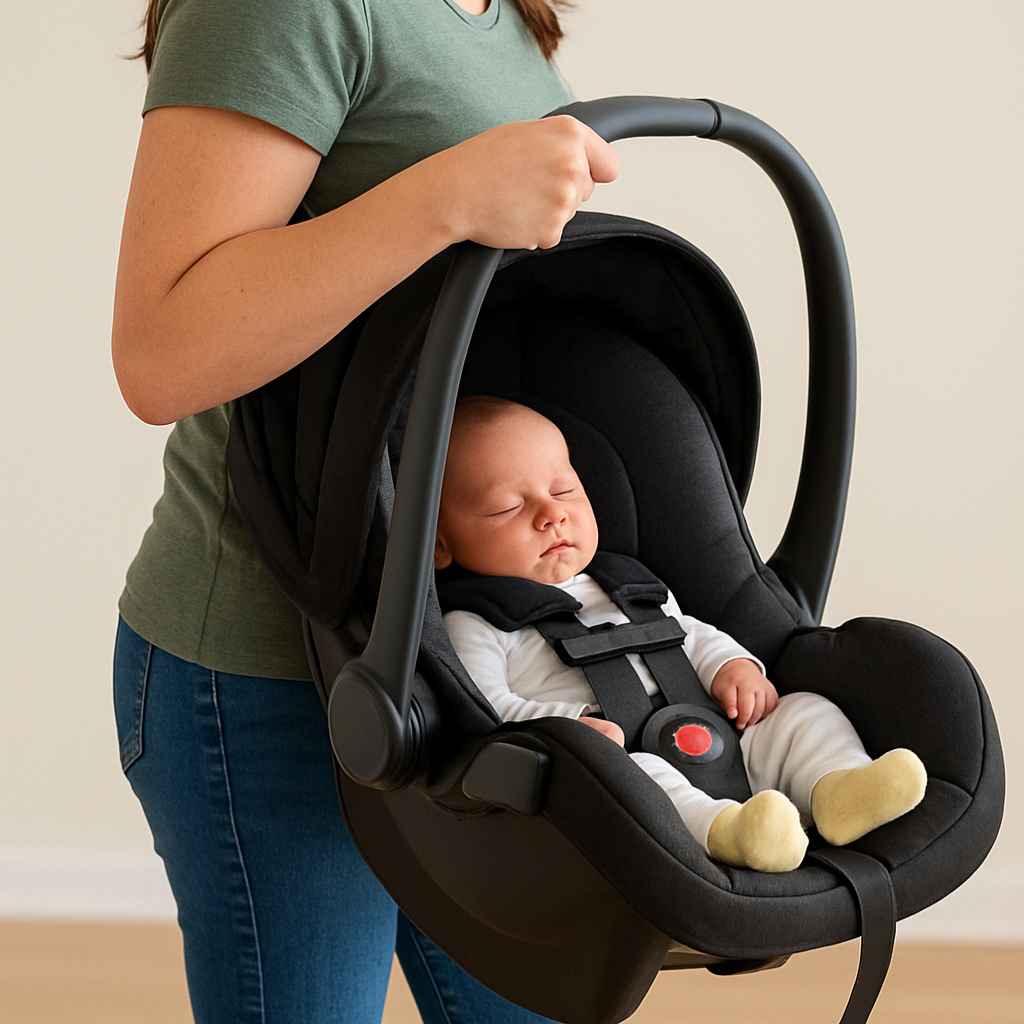
The handle on your car seat is there for a reason. It’s usually curved. It’s designed to fit your hand.
But how you use it matters a lot. Many people just grab it from the top. This puts all the force on your hand and arm muscles.
It’s like trying to carry a bucket with just your fingertips.
A better grip uses more of your hand. Try wrapping your fingers around the handle. Use your palm too.
This spreads the weight. It feels more secure. Some handles also have a textured grip.
This helps prevent slipping. If your handle feels too hard, consider a small pad. Some companies make these.
Or you could use a soft cloth.
The angle of the handle also plays a part. Most are designed to swing down. This is for when the seat is in the car.
When you carry it, you usually want the handle to swing up. This gives you a good pivot point. It keeps the seat more upright.
This helps keep the baby’s head from tilting too much. It also helps you find a natural carrying position.
Sometimes, the handle isn’t enough. Especially if the seat is very heavy. Or if you have to carry it a long way.
Look at the sides of the seat. Are there any other places to steady it? Some parents use their forearm.
They rest the side of the seat against their forearm. This takes some pressure off the hand. It feels more stable.
Finding Your Carrying Balance
Balance is key. When you hold something heavy, your body naturally shifts. To carry a car seat comfortably, you need to use your whole body.
Not just your arms. Think about how you carry a large box. You might bend your knees.
You might keep your back straight. You use your legs to support the weight.
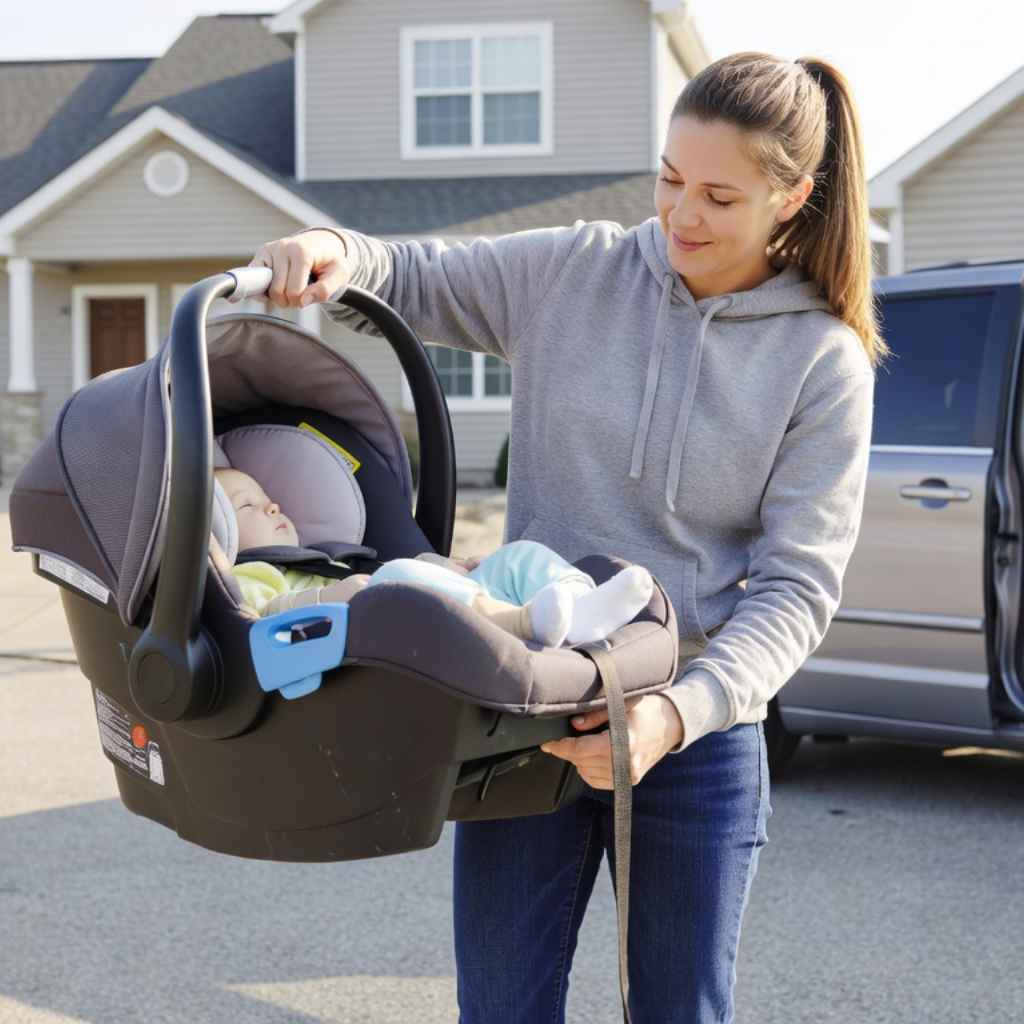
With a car seat, try to keep it close to your body. This is like holding a baby. When something is close, it’s easier to control.
It’s also more stable. Your body’s center of gravity is more balanced. If you hold the seat far away from you, you’ll lean back.
This puts a strain on your lower back.
Try to stand up straight. Let the seat hang naturally. Don’t crane your neck or hunch your shoulders.
Keep your shoulders relaxed. Your arms should hang loosely. The weight should feel centered.
If it feels heavy, try adjusting your stance. Maybe spread your feet a little wider. This gives you a firmer base.
What about turning? When you need to turn, don’t just twist your torso. Turn your feet.
Move your whole body. This is safer. It’s also easier on your back.
Think of it like dancing. You move as a whole unit. This makes the heavy item feel less cumbersome.
Balance Tips for Carrying
Stand Tall: Keep your back straight and shoulders relaxed.
Keep it Close: Hold the car seat near your body’s center.
Wide Stance: Spread your feet slightly for a stable base.
Move Your Feet: Turn your whole body, not just your waist.
Use Your Legs: Bend your knees to lower or raise the seat.
Leveraging Your Legs and Core
Your legs and core are your strongest muscles. They should do more of the work. When you lift the car seat, bend your knees.
Think of it like doing a squat. Keep your back straight. Lift with your legs.
This is much safer than lifting with your back. It also feels easier.
When you’re walking, try to engage your core muscles. This is your stomach and back. Gently pull your belly button towards your spine.
This supports your back. It makes you more stable. It helps you carry the weight more efficiently.
It feels less like your arms are doing all the work. Your core acts like a strong anchor.
If you have to go up or down stairs, this is where legs and core really shine. Take your time. Use the handrail if you can.
Keep the car seat in front of you. Don’t try to carry it on your side on stairs. This is very dangerous.
It’s easy to lose your footing. Always face the stairs. Move one step at a time.
If the seat feels too heavy, try carrying it for shorter distances. Or take breaks. It’s okay to set it down for a moment.
Rest your arms. Regain your balance. No one expects you to be a superhero.
Using your strongest muscles makes a huge difference in how tired you feel.
The Role of Baby Gear and Accessories
There are some clever accessories that can help. These are designed to make carrying easier. One popular item is a car seat caddy or carrier.
This is often a padded strap. It goes over your shoulder. The car seat then hangs from it.
It distributes the weight better. It frees up your hands too.
Some caddies have a padded shoulder rest. This makes it more comfortable. They can also help keep the seat more upright.
This is good for the baby. It’s important to choose one that fits your car seat. Not all carriers work with all seats.
Check the reviews and product descriptions.
Another option is a car seat stroller. This is a frame. The car seat clicks onto it.
You can then push it like a stroller. This is great for longer distances. Or if you have a lot of shopping to do.
It takes all the weight off your arms. It’s a game-changer for errands.
Consider the weight of the car seat itself. Some infant car seats are lighter than others. If you are buying a new seat, look at its weight.
This might seem minor. But when you carry it every day, even a pound or two makes a difference. Also, consider if you need a travel system.
This is a stroller and car seat that work together. It reduces the need to carry the seat often.
Helpful Car Seat Accessories
Car Seat Straps/Carriers: Distribute weight over the shoulder and back.
Car Seat Caddies: Similar to straps, often with added padding.
Travel Systems: Car seat clicks into a compatible stroller frame.
Car Seat Strollers: Lightweight frames designed just for carrying the seat.
Adjusting for Different Car Seat Types
Not all car seats are the same. Infant car seats are typically the ones parents carry the most. They are designed to be removed from the car.
They usually have a handle. These can still be heavy, especially with a baby inside.
Convertible car seats are a different story. These stay in the car. You usually don’t carry them.
They are installed and left there. Some parents might move them between cars. This is still a heavier lift.
You would use proper lifting techniques. Bend your knees and keep your back straight. It’s more like moving furniture.
Booster seats are generally lighter. They don’t have the same complex harnesses. Some are backless.
These are quite portable. You might carry them to and from school. Their shape is usually flatter.
This makes them easier to hold. But still, they can be awkward if you have to carry them far.
Always check the manufacturer’s instructions for your specific car seat. They might have unique tips for carrying or moving it. Knowing your seat’s design helps you find the best way to handle it.
Understanding the differences helps you avoid strain.
The “Baby-On-Board” Technique
This is a technique many parents develop. It’s about comfort for both you and the baby. The goal is to keep the baby calm and secure while you move.
It’s not just about carrying the seat; it’s about carrying the baby in the seat.
When you’re ready to move, secure your baby first. Make sure the harness is snug. They should be safe and comfortable.
Then, pick up the car seat. Use the handle. Bring it close to your body.
Try to keep the seat as level as possible. This is very important for newborns. Their neck and head are not stable yet.
Walk smoothly. Avoid sudden stops or starts. If the baby is awake, talk to them gently.
Sing a quiet song. This can help them feel secure. If they are asleep, try not to wake them.
Slow, steady movements are best. Your calm demeanor can transfer to your baby.
If you need to set the seat down, find a flat, stable surface. Don’t lean it against something wobbly. Make sure it won’t tip over.
This is for the baby’s safety. Many infant car seats have a base. You can leave the base in the car.
Then you just carry the seat itself. This is usually lighter.
Baby-On-Board Technique Steps
Secure Baby: Ensure harness is snug and baby is comfortable.
Grip Handle: Use the car seat handle for a firm hold.
Close to Body: Keep the seat near your center for balance.
Level Seat: Maintain a relatively flat position for baby’s comfort.
Smooth Movement: Walk steadily, avoiding jerky motions.
Calm Demeanor: Talk or sing gently to your baby.
Real-World Scenarios and Solutions
Let’s look at some common situations. You’re getting out of the car at the grocery store. The parking lot is busy.
You need to get the baby and seat. First, unbuckle the baby. Lift them out gently.
Place them in your carrier or let them sit on your hip. Then, release the car seat from the car.
If you have a stroller, now is the time to use it. Click the seat onto the stroller frame. Then you can push it.
This saves your arms and back. If you don’t have a stroller, use the carrying techniques we discussed. Keep it close.
Use your legs. Walk smoothly to the shopping cart.
Another scenario: You’re going to a friend’s house. You park. You need to carry the seat up a few steps.
Use your leg strength. Keep the seat in front of you. Take one step at a time.
Don’t rush. Your core will help you stay stable. If it feels too much, ask your partner or friend for help.
What about carrying it through crowded places? Like a mall or an airport. This can be tough.
Try to stay aware of your surroundings. Keep the seat close. If you have a stroller, use it.
It acts like a shield too. It helps you navigate through people. It prevents you from bumping into others.
In all these cases, the core ideas are the same. Balance. Grip.
Using your body efficiently. And using helpful gear when you can. It’s about making life a little bit easier.
Because parenting is hard enough already. Every little bit of comfort counts.
When It’s Normal vs. When to Worry
It’s normal to feel some fatigue after carrying a car seat. Especially if you do it often. Your arms might feel tired.
Your shoulders might ache a little. This is natural. Your body is working hard.
However, you should worry if you feel sharp pain. Or if the pain persists long after you’ve put the seat down. Pain in your back, neck, or shoulders that is severe is a sign to stop.
Also, if you feel numbness or tingling in your arms or hands. This could mean you’re pinching a nerve.
If you find yourself constantly struggling. Or if you dread carrying the seat. It might be time to look at solutions.
Are you using the best technique for your seat? Could an accessory help? Is the seat too heavy for you?
(This is less common, as seats are designed for parents.)
Pay attention to your body. If something feels wrong, it probably is. Don’t push through severe pain.
It’s better to rest and find a better way. Consult a doctor or physical therapist if pain continues. They can offer advice on strengthening or posture.
Warning Signs for Car Seat Carrying
Sharp or Intense Pain: Especially in the back, neck, or shoulders.
Persistent Aches: Pain that lingers for hours after carrying.
Numbness or Tingling: In your arms, hands, or fingers.
Loss of Balance: Frequent stumbling or feeling unsteady.
Difficulty Lifting: If it feels overwhelmingly heavy every time.
Simple Checks and Quick Tips
Here are some quick things you can do. Check the car seat handle. Is it locked in the carrying position?
If it’s loose, it will feel awkward. Make sure it clicks securely. Also, check the baby’s harness.
A loose harness makes the baby shift. This throws off your balance.
Try wearing comfortable shoes. This helps with balance and stability. If you have a very bulky coat, it can make it harder to get a good grip.
Try to adjust your clothing. Or carry the seat on the outside of your coat.
Practice makes perfect. The more you carry the seat, the more natural it becomes. You’ll learn what feels best for your body.
You’ll find your rhythm. Don’t be afraid to experiment. What works for one parent might not work for another.
If you are transferring the seat between cars often, consider two bases. One for each car. This means you only carry the seat itself.
You don’t have to unbuckle the base each time. This saves time and effort.
Frequently Asked Questions About Carrying Car Seats
Is it bad to carry a car seat for a long time?
Carrying a car seat for extended periods can be tiring. It can strain your arms and back. It’s best to limit the time you carry it.
Using accessories like a stroller or carrier can help. If you feel pain, take a break.
How do I stop the car seat from digging into my shoulder?
Try to distribute the weight better. Keep the seat closer to your body. Use your legs and core for support.
Some carriers have a padded shoulder rest that helps. Experiment with different grips. Avoid letting the seat hang too far away from you.
My baby seems uncomfortable when I carry the car seat. What can I do?
Try to keep the car seat as level as possible. Avoid jerky movements or bouncing. Talk to your baby gently.
Ensure the harness is snug but not too tight. If your baby is a newborn, their head and neck need support. Avoid tilting the seat excessively.
Are there special bags for carrying car seats?
Yes, there are car seat carriers and bags. Some are simple straps. Others are more like padded bags.
They help distribute the weight and protect the seat. Make sure any bag you choose is compatible with your specific car seat model.
Can I carry a convertible car seat without removing it from the car?
Convertible car seats are generally too heavy and bulky to be carried regularly. They are designed to stay installed in the vehicle. If you need to move it between cars, use proper lifting techniques.
Bend your knees, keep your back straight, and lift with your legs.
What is the best way to carry a car seat with a sleeping baby inside?
The goal is to keep the baby asleep and comfortable. Use the handle and keep the seat close to your body. Move smoothly and slowly.
Try to keep the seat level. Avoid any sudden movements that might wake them. Your calm and steady handling is key.
Final Thoughts on Comfortable Car Seat Carrying
Carrying a car seat doesn’t have to be a daily struggle. By understanding how to grip it better, find your balance, and use your body wisely, you can make a real difference. Remember to use your legs and core.
Explore helpful accessories if needed. And always listen to your body.
You’ve got this! Small changes can lead to big comfort. Enjoy those moments with your little one.
Make the journey easier for yourself.
Products related to this article
Sponsored / affiliate links. As an Amazon Associate I earn from qualifying purchases. I may earn additional commission from eligible campaigns.
 CAR-GRAND Piping Cloth Front Car Seat Covers, Breathable High Back Front Seat Covers, Airbag Compatible Seat Cover for Cars Trucks SUV Van Sedan (Black-Gray Strips)
 PartsTo Adjustable Kids Travel Car Seat Headrest Pillow with Lean Support Cushion Sleeping Travel Neck Safeguard Cushion Suitable for Kids Children Teenagers and Adults