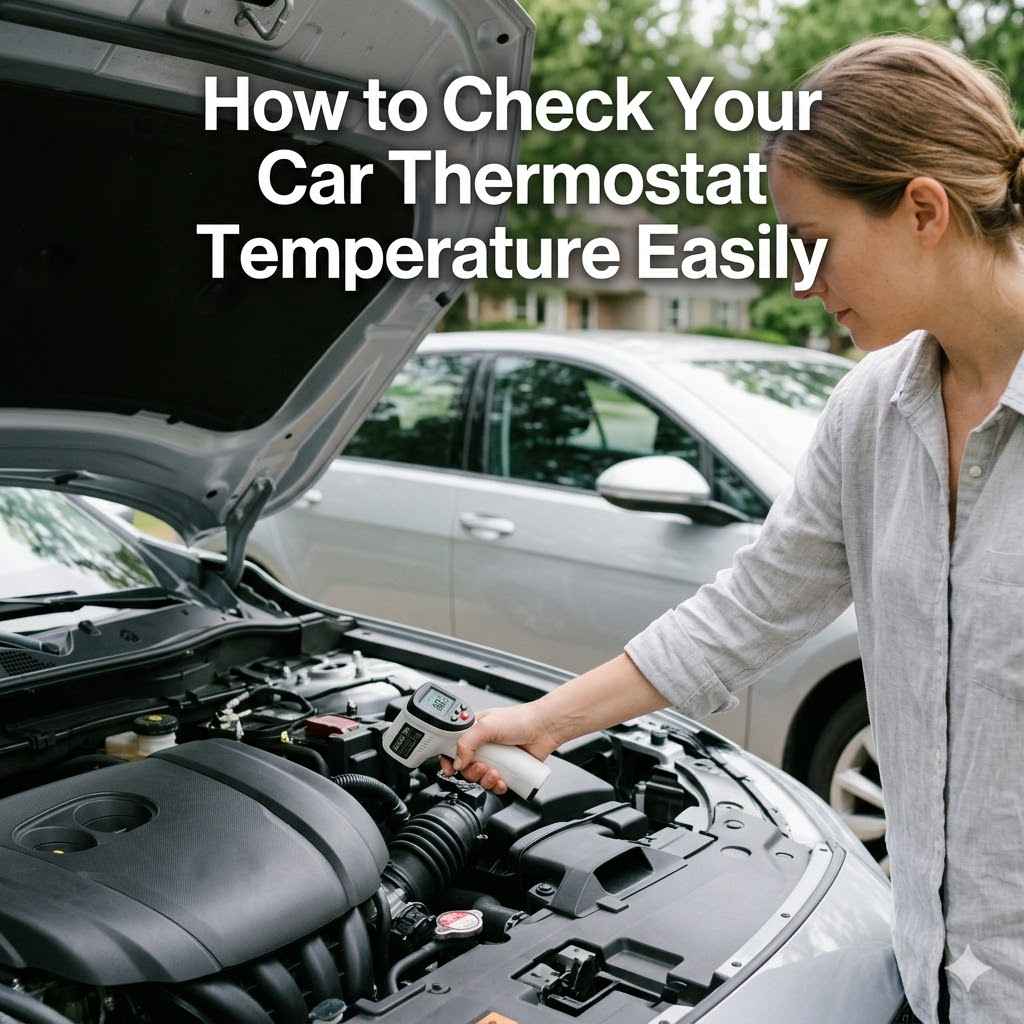
How to Check Your Car Thermostat Temperature Easily
Many car owners wonder if their car’s thermostat is working right. It can seem tricky to know if your engine is running too hot or too cold. This guide makes it simple. We will walk you through How to Check Your Car Thermostat Temperature Easily. You will learn easy steps to check your car’s temperature and keep it running smoothly.
Your car’s thermostat is a small but vital part of the cooling system. It controls the flow of coolant to the engine. When the engine gets hot, the thermostat opens to let coolant circulate and cool it down.
If it gets stuck closed, the engine can overheat very quickly. If it gets stuck open, the engine might take too long to warm up. This can affect performance and fuel efficiency.
Knowing how to check your car’s thermostat temperature helps you catch problems early.
Understanding Your Car’s Cooling System
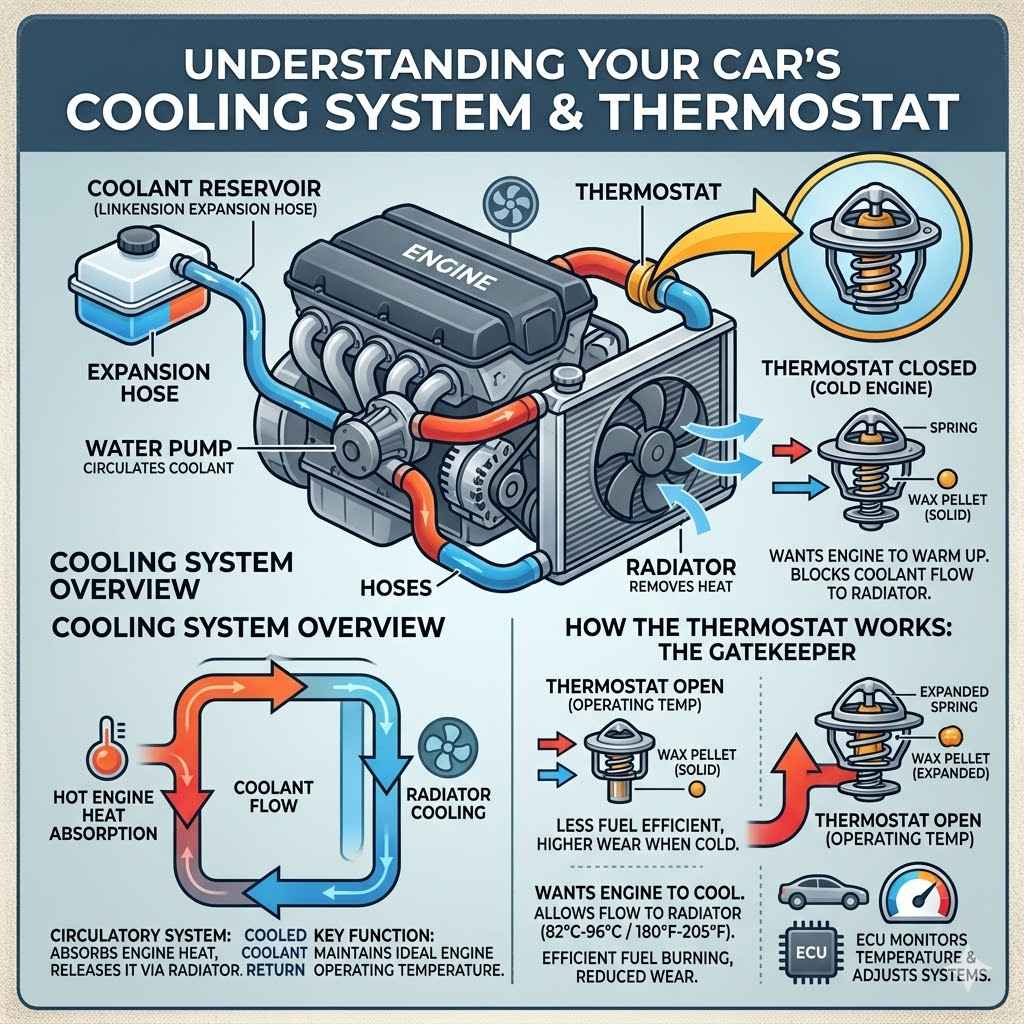
The cooling system in your car is like a circulatory system for your engine. It uses a special liquid called coolant, or antifreeze, to absorb heat from the engine. This heated coolant then flows through hoses to the radiator.
The radiator is a set of thin metal fins that allow heat to escape into the air. A fan often helps push air through the radiator. The thermostat acts as a gatekeeper for this whole process.
It decides when the coolant needs to flow to the radiator to be cooled. This keeps your engine at its ideal operating temperature.
The main parts of the cooling system include the coolant reservoir, the water pump, the thermostat, hoses, and the radiator. The water pump pushes the coolant around the system. The coolant reservoir holds extra coolant and allows for expansion as it heats up.
Hoses connect these parts, carrying the coolant where it needs to go. The thermostat, usually found where the upper radiator hose connects to the engine, is the key component we are focusing on.
How the Thermostat Works
A thermostat is a temperature-sensitive valve. Inside it is a wax pellet. When the coolant reaches a certain temperature, the wax melts and expands.
This expansion pushes a spring-loaded valve open. This allows the hot coolant to flow out of the engine and into the radiator. As the coolant cools down in the radiator, the wax pellet solidifies.
This causes the valve to close again, stopping the flow of coolant. The thermostat then waits for the engine temperature to rise again before opening.
The temperature at which the thermostat opens is called its “open temperature.” This is usually printed on the thermostat itself. Common open temperatures for cars are around 180 to 205 degrees Fahrenheit (82 to 96 degrees Celsius). The engine control unit, or ECU, monitors engine temperature and can adjust other systems based on this.
For instance, it might change the idle speed or fuel mixture. A faulty thermostat can prevent the engine from reaching its optimal temperature, leading to less efficient burning of fuel and increased wear over time.
Common Signs of a Failing Thermostat
When a car’s thermostat starts to fail, it often shows several symptoms. These signs can help you identify if there’s an issue before it becomes a major problem. Paying attention to these signals is key to maintaining your car’s health and preventing costly repairs.
It’s like your car is trying to tell you something is wrong.
Engine Overheating
One of the most common signs of a thermostat problem is the engine overheating. This happens if the thermostat gets stuck in the closed position. It cannot open to allow coolant to flow to the radiator.
The coolant will stay trapped in the engine block, getting hotter and hotter. The temperature gauge on your dashboard will rise into the red zone. This is a serious warning that you should stop driving as soon as it is safe.
A car can overheat very quickly when the thermostat is stuck closed. Driving with an overheating engine can cause severe damage, including warped cylinder heads or a blown head gasket. If you see your temperature gauge climb high, pull over immediately.
Turn off the engine and let it cool down completely before attempting any checks. Never open the radiator cap when the engine is hot, as the pressurized hot coolant can cause severe burns.
Engine Running Too Cold
Conversely, a thermostat can also get stuck in the open position. In this case, the coolant will constantly flow to the radiator, even when the engine is cold. This means the engine will never reach its proper operating temperature.
You might notice the temperature gauge staying very low. In very cold weather, the heater in your car might also blow cold air, even when the engine is running. This is because the coolant that heats the cabin is not getting hot enough.
An engine that runs too cold is not as immediately dangerous as an overheating engine, but it’s still not good. It can lead to poor fuel economy because the engine management system may not be able to optimize fuel delivery for a cold engine. It can also cause increased wear on engine components over time.
Some engines may even struggle to start properly if they are not reaching their operating temperature. This is because sensors tell the car’s computer the engine is still cold.
Temperature Gauge Fluctuations
Sometimes, a thermostat might not be completely stuck open or closed. It might be partially opening or closing, or it might be sticking intermittently. This can cause the temperature gauge to behave erratically.
It might fluctuate up and down without a clear pattern. One moment the engine could be running at a normal temperature, and the next it might start to climb. This instability is a strong indicator that the thermostat is not functioning correctly.
These rapid changes in temperature can be confusing, but they are a sign that the thermostat is not regulating the coolant flow smoothly. If you notice your temperature gauge jumping around, it’s wise to get it checked. This intermittent failure can be dangerous as it might lead to overheating when you least expect it.
It could also mean the engine is running inefficiently for periods without you realizing.
How to Check Your Car Thermostat Temperature Easily
Checking your car’s thermostat temperature doesn’t have to be complicated. There are a few ways to do it, ranging from simple visual checks to using a diagnostic tool. We will cover the easiest and most common methods you can try at home.
These steps are designed for average car owners with basic tools.
Using an Infrared Thermometer
An infrared thermometer, sometimes called a non-contact thermometer, is a very easy way to check surface temperatures. You can point it at the thermostat housing or the radiator hose to get a reading. This method is quick and doesn’t require you to take anything apart.
You will need to get the engine up to normal operating temperature for an accurate reading.
Step 1: Warm up the Engine
Start your car and let it run until the engine reaches its normal operating temperature. This usually means the temperature gauge is in the middle of the range. You can also drive the car for about 10-15 minutes.
This ensures the thermostat has had a chance to open and close as needed.
Step 2: Locate the Thermostat Housing
The thermostat housing is typically located where the upper radiator hose connects to the engine. It’s a metal or plastic part. It might be a round or oblong shape.
You might need to look under the hood and identify this connection point.
Step 3: Measure the Temperature
Carefully point the infrared thermometer at the thermostat housing. Hold it steady for a moment to get a reading. Do this a few times.
You can also point it at the upper and lower radiator hoses. The upper hose should be hot if the thermostat is open and coolant is circulating. The lower hose should be cooler.
Step 4: Compare Readings
Compare your readings to the thermostat’s rated opening temperature. If the housing is significantly cooler than the expected opening temperature when the engine is warm, the thermostat might be stuck open. If the upper radiator hose is cool but the engine is hot, it could be stuck closed.
Many online resources can tell you the typical thermostat opening temperature for your specific car model.
Checking Radiator Hoses
This method involves a bit more direct contact but is still straightforward. It helps you gauge if coolant is flowing properly. This is a good indicator of thermostat function.
Step 1: Start the Engine and Let it Warm Up
As before, start your car and let it run until the temperature gauge shows the engine is at its normal operating temperature. This is crucial because the thermostat only opens when it reaches a certain heat level.
Step 2: Carefully Feel the Radiator Hoses
Using gloves or a thick cloth for protection, carefully feel the upper and lower radiator hoses. The upper hose carries hot coolant from the engine to the radiator. The lower hose carries cooler coolant from the radiator back to the engine.
Be very cautious as engine parts can be hot.
Step 3: Assess the Temperature Difference
If the thermostat is working correctly, the upper radiator hose should feel hot. The lower radiator hose should feel noticeably cooler than the upper one. This temperature difference shows that coolant is circulating through the radiator and being cooled.
If both hoses feel the same temperature, or if the upper hose is cool while the engine is hot, there might be a thermostat issue.
Example Scenario
- Your car’s temperature gauge is climbing towards the red.
- You let the engine warm up.
- You carefully touch the upper radiator hose and it feels very hot.
- You touch the lower radiator hose and it feels only slightly warm.
- This suggests the thermostat is likely open, but something else is causing the overheating, perhaps a radiator fan issue or low coolant.
Another Example Scenario
- Your car’s temperature gauge stays very low, even after driving for a while.
- You let the engine warm up.
- You carefully touch the upper radiator hose and it feels cool, not hot.
- The lower radiator hose also feels cool.
- This strongly indicates the thermostat is stuck open and coolant is circulating without the engine getting warm enough.
Using a Scan Tool (OBD-II Reader)
Modern cars are equipped with onboard diagnostics (OBD-II) systems. A scan tool can read error codes and live data from your car’s computer. This is a more advanced method, but it provides very accurate information about engine temperature and thermostat operation.
Step 1: Connect the Scan Tool
Locate the OBD-II port, usually under the dashboard on the driver’s side. Plug in your scan tool. Turn on the ignition but do not start the engine.
Step 2: Access Live Data
Turn on the scan tool and navigate to the live data or data stream function. Look for engine coolant temperature (ECT) readings. Some tools might also show thermostat status or heater circuit readings.
Step 3: Monitor Temperature Changes
Start the engine and let it warm up. Observe the ECT reading on the scan tool. You should see the temperature steadily increase.
When it reaches the thermostat’s opening temperature, you should notice a slight dip or a leveling off of the temperature as coolant begins to circulate. If the temperature continues to climb rapidly without any change, or if it never reaches the normal operating range, it can indicate a thermostat problem.
Step 4: Check for Error Codes
While you’re using the scan tool, check for any stored trouble codes. A faulty thermostat often triggers specific OBD-II codes, such as P0128 (Coolant Thermostat Malfunction). This code provides a direct clue that there’s an issue with the thermostat.
hen to Replace Your Car Thermostat
Replacing a thermostat is often a good idea when you notice the signs of failure. It’s generally a cost-effective repair that can prevent more serious engine damage. Most automotive repair shops can replace a thermostat for you.
The Replacement Process
Replacing a thermostat involves draining some of the coolant, removing the old thermostat housing, swapping the thermostat, and then refilling and bleeding the cooling system. It’s important to use the correct type of coolant specified for your vehicle.
- Drain Coolant: Locate the drain plug on the radiator or the lowest point of the cooling system and drain the old coolant into a suitable container.
- Remove Thermostat Housing: Unbolt the thermostat housing. Be prepared for some coolant to spill out.
- Install New Thermostat: Clean the housing and install the new thermostat. Make sure it’s oriented correctly (often there’s an arrow or a jiggle pin to align).
- Refill and Bleed: Reassemble the housing and refill the cooling system with fresh coolant. It’s essential to bleed any air pockets out of the system. This is often done by running the engine with the radiator cap off (or a special bleeding tool) until the thermostat opens and air bubbles stop appearing.
Cost of Replacement
The cost to replace a thermostat can vary depending on the make and model of your car and your location. The thermostat itself is usually an inexpensive part, often costing between $15 and $50. The labor cost for replacement can range from $75 to $150, depending on how accessible the thermostat housing is.
Some vehicles have thermostats that are more difficult to access, increasing labor time.
A professional mechanic can perform this service efficiently. If you are comfortable with car maintenance and have the right tools, you can also consider doing it yourself to save on labor costs. Always consult your car’s repair manual for specific instructions and safety precautions.
Preventative Maintenance for Your Cooling System
Taking care of your car’s cooling system regularly can help prevent thermostat issues and other problems. Simple maintenance steps can go a long way in keeping your engine running cool and efficiently.
Regular Coolant Flushes
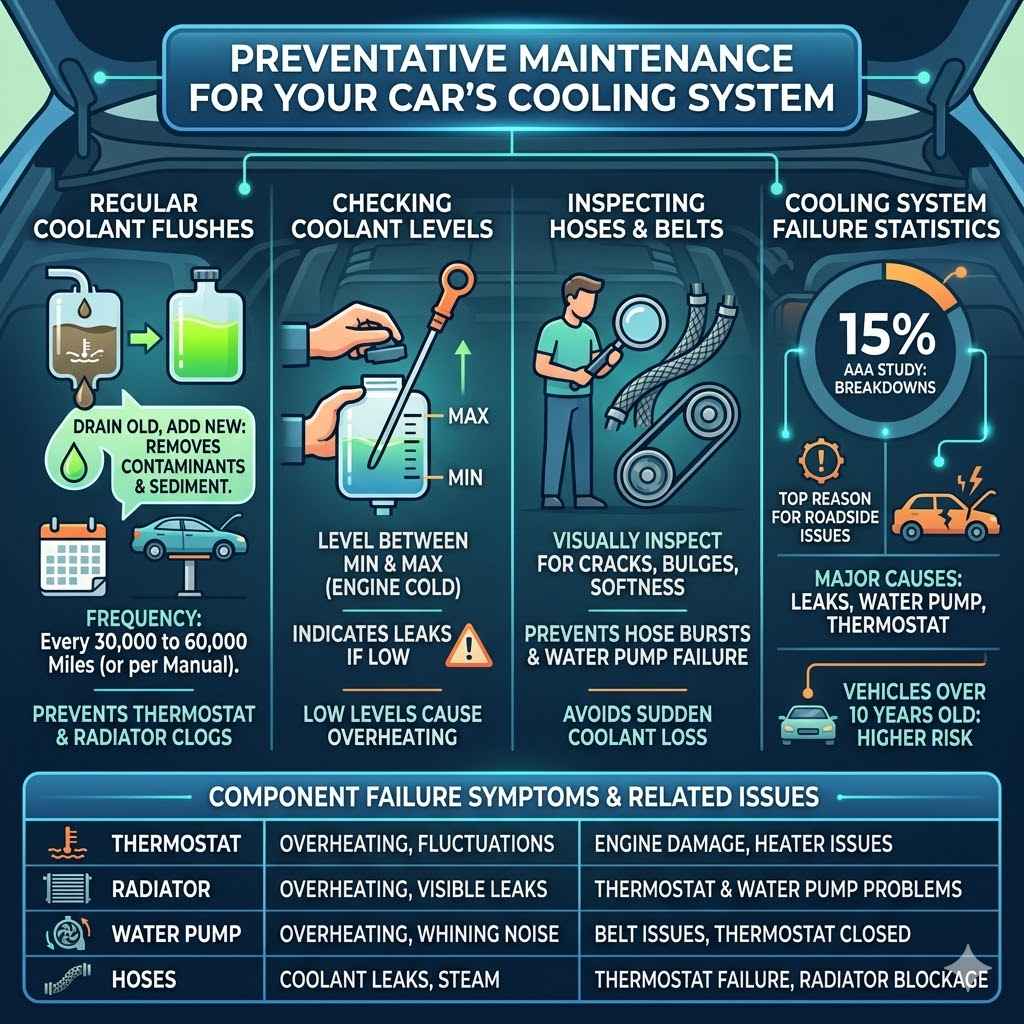
Coolant degrades over time. It loses its anti-corrosion properties and can become contaminated. A coolant flush involves draining the old coolant and replacing it with new coolant.
This is usually recommended every 30,000 to 60,000 miles, or as specified in your car’s owner’s manual. A flush also helps remove any sediment that might build up in the system and potentially clog the thermostat or radiator.
Checking Coolant Levels
Make sure to check your coolant level regularly. The coolant reservoir has “min” and “max” lines. The level should be between these lines when the engine is cold.
If it’s low, you may have a leak somewhere in the system. Low coolant levels can lead to overheating, even if the thermostat is working perfectly.
Inspecting Hoses and Belts
Visually inspect your radiator hoses for any signs of wear, such as cracks, bulges, or softness. Also, check the serpentine belt that drives the water pump. A worn hose can burst, causing a rapid coolant loss.
A damaged belt can stop the water pump from circulating coolant. Both issues can lead to engine overheating.
Statistics on Car Cooling System Failures
According to some automotive reports, cooling system issues are among the top reasons for roadside breakdowns. A significant percentage of these issues stem from coolant leaks, water pump failures, and thermostat malfunctions. For example, a study by AAA found that cooling system problems account for about 15% of all vehicle breakdowns.
Another analysis suggests that replacing a thermostat is a relatively common repair, often performed by mechanics several times a week. The average age of vehicles experiencing cooling system issues is often cited as being over 10 years old, indicating that preventative maintenance on younger vehicles can significantly reduce future repair needs.
| Cooling System Component | Typical Failure Symptoms | Related Issues |
|---|---|---|
| Thermostat | Overheating, engine runs too cold, temperature gauge fluctuations | Engine damage, poor fuel economy, heater not working |
| Radiator | Overheating, visible leaks, steam from engine | Thermostat issues, water pump problems, hose leaks |
| Water Pump | Overheating, whining noise, coolant leaks from pump | Belt issues, thermostat stuck closed, potential engine damage |
| Hoses | Coolant leaks, steam, engine overheating | Thermostat failure, radiator blockage, water pump failure |
Frequently Asked Questions
Question: How often should I check my car’s coolant level?
Answer: It’s a good idea to check your car’s coolant level at least once a month, and especially before any long road trips. You should also check it if you notice the temperature gauge rising or if you see any warning lights on your dashboard.
Question: Can I drive my car if the temperature gauge is in the red?
Answer: No, you should not drive your car if the temperature gauge is in the red zone. This indicates severe overheating, which can cause significant and expensive damage to your engine. Pull over safely and let the engine cool down.
Question: What type of coolant should I use?
Answer: Always use the type of coolant recommended in your car’s owner’s manual. Different vehicles require different types of coolant, and using the wrong one can cause damage to your cooling system.
Question: Is it dangerous to open the radiator cap when the engine is hot?
Answer: Yes, it is extremely dangerous. The cooling system is pressurized when hot, and opening the cap can cause scalding hot coolant to spray out, leading to severe burns. Always wait for the engine to cool down completely.
Question: How do I know if my thermostat is stuck open or closed?
Answer: If it’s stuck closed, your engine will likely overheat. If it’s stuck open, your engine will run too cold and may not reach operating temperature, leading to poor fuel economy and potential long-term wear.
Summary
Checking your car’s thermostat temperature is straightforward with a few easy steps. Whether using an infrared thermometer, feeling the radiator hoses, or using a scan tool, you can accurately assess its function. Addressing thermostat issues promptly prevents costly engine damage and keeps your car running smoothly and efficiently.