How to Donate a Car in California: The Essential Guide
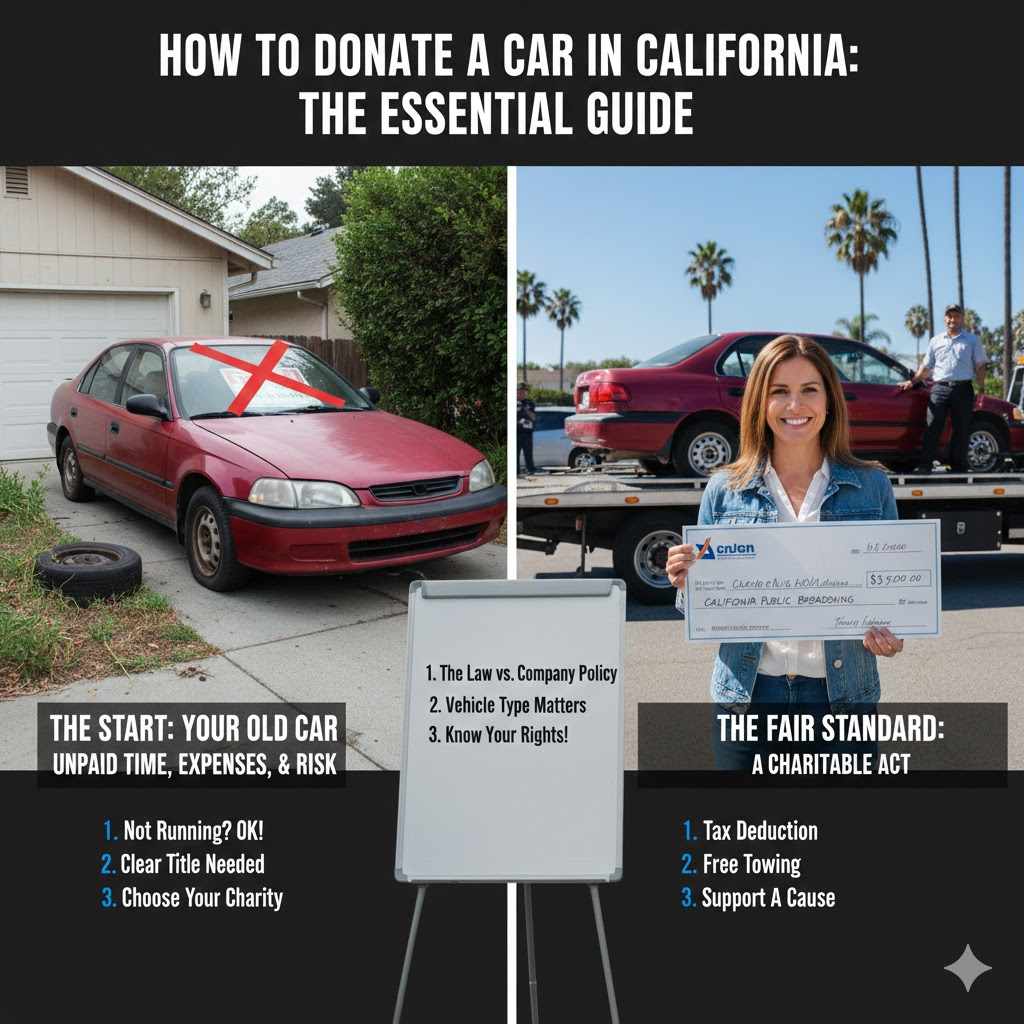
To donate a car in California, choose a legitimate 501(c)(3) charity, sign the Certificate of Title over to them, and let them handle the pickup. Most importantly, you must submit a Notice of Transfer and Release of Liability (NRL) to the California DMV within five days to end your responsibility for the vehicle.
Got an old car sitting in your driveway? Maybe it’s not worth the hassle to sell, or perhaps the repair bills are starting to add up. Whatever the reason, donating your car in California is a fantastic way to support a cause you care about, clear up space, and even get a nice tax deduction. But the process can seem confusing with all the talk about paperwork, charities, and the DMV. Don’t worry! I’m here to walk you through it, step by step. This guide will make donating your car simple, safe, and rewarding. Let’s get started.
Why Donate Your Car in California? More Than Just a Tax Break
You might be thinking that selling your car is the only way to get value out of it. But donating your vehicle offers a unique set of benefits that often outweigh the stress of private sales or lowball trade-in offers. It’s a choice that feels good and makes practical sense.
Here’s why so many Californians choose to donate:
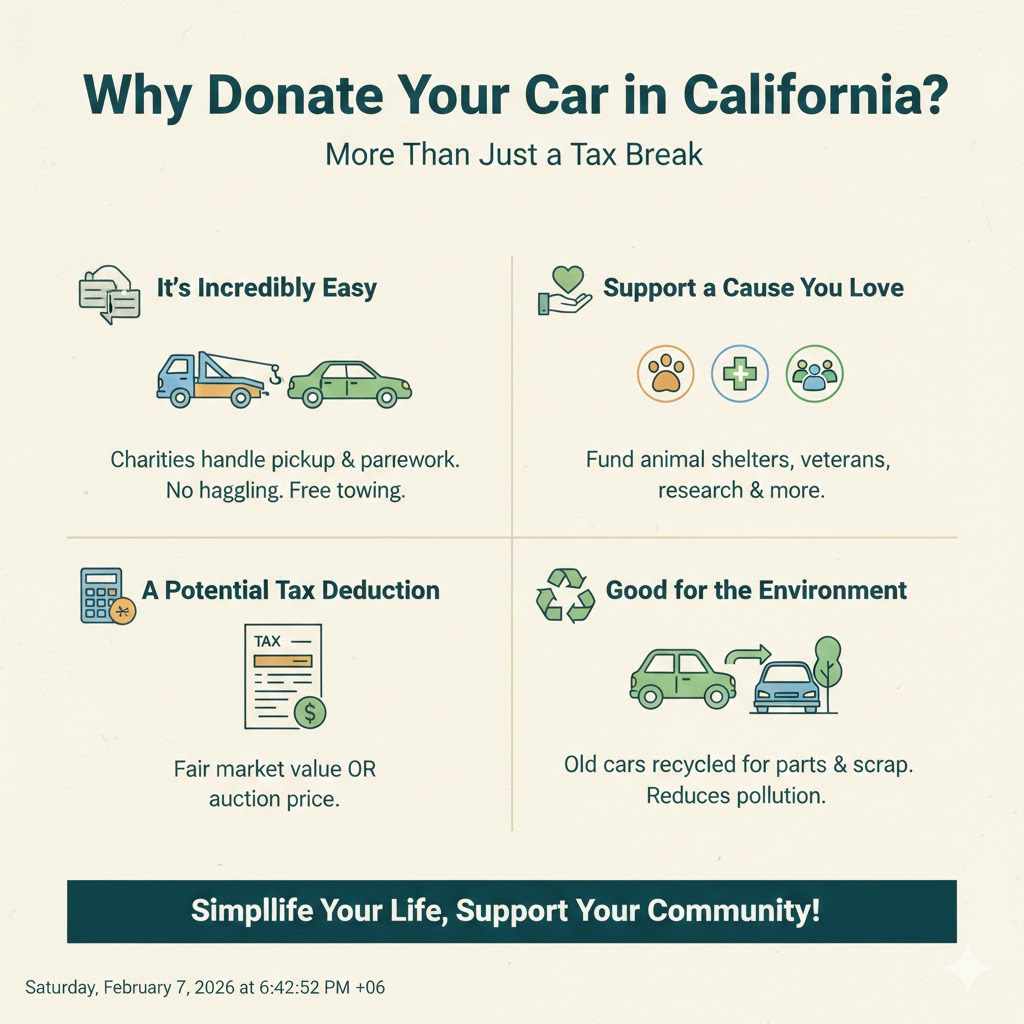
- It’s Incredibly Easy: Most charities make the process a breeze. They handle the pickup and most of the paperwork. You avoid creating online listings, meeting with strangers, and haggling over the price. Your car is simply towed away for free.
- You Support a Cause You Love: Your old car can turn into funding for animal shelters, veterans’ programs, medical research, or community services. It’s a powerful way to make a tangible difference.
- A Potential Tax Deduction: While it shouldn’t be the only reason, a tax deduction is a great perk. Depending on how the charity uses your car, you could deduct its fair market value or the amount it sells for at auction.
- Good for the Environment: If your car is old and not fuel-efficient, getting it off the road is a small win for the environment. Many older cars are recycled for parts and scrap metal, which is much better than letting them sit and leak fluids.
- Solves a Problem: Donating solves the problem of what to do with a car that doesn’t run, failed a smog test, or would cost too much to fix. Many charities will accept vehicles in almost any condition.
Before You Pick Up the Phone: Your Pre-Donation Checklist
A little preparation goes a long way. Getting your ducks in a row before you start the donation process will ensure everything goes smoothly and without any last-minute hiccups. Think of this as gathering your ingredients before you start cooking. It only takes a few minutes.
Here is what you should have ready:
- The Certificate of Title (Pink Slip): This is the most important document. It proves you own the car. Make sure you have it and that your name is listed as the owner. If you can’t find it, you’ll need to apply for a duplicate from the DMV.
- Lien Release (If Applicable): If you ever had a loan on the car, you need proof that it’s fully paid off. The bank or financial institution should have sent you a lien release document. The charity cannot accept a car that still has a loan on it.
- Your Vehicle’s Basic Information: Know the year, make, model, and vehicle identification number (VIN). You can find the VIN on your dashboard (driver’s side) or on your registration card.
- An Idea of Your Car’s Condition: Be honest with yourself and the charity. Does it run? Are there major mechanical issues? This information helps the charity determine the best way to use your donation.
How to Donate a Car in California: The 7-Step Guide
Ready to go? Follow these simple steps to donate your car successfully and securely. We’ll break down each part so you feel confident from start to finish.
Step 1: Choose a Legitimate Charity
This is the most critical decision. You want your donation to have the maximum impact. Research charities that align with your values. Make sure they are a registered 501(c)(3) nonprofit organization, as this is required to claim a tax deduction. We’ll cover how to vet charities in the next section.
Step 2: Contact the Charity and Arrange the Donation
Once you’ve picked a charity, you can usually start the process online or by phone. You’ll need to provide your vehicle’s information (year, make, model, VIN, condition). They will ask a few questions and then schedule a free pickup time that works for you.
Step 3: Prepare Your Car for Pickup
Before the tow truck arrives, clean out your car. Remove all personal belongings from the glove box, center console, trunk, and under the seats. Don’t forget to take off the license plates! In California, the plates stay with you, not the car.
Step 4: Handle the Title Transfer
When the tow truck driver arrives, you will sign the Certificate of Title over to the charity or their authorized agent. Be very careful here. Do not leave any sections blank. We’ll go over exactly how to fill this out in the DMV section below.
Step 5: Get a Receipt
The tow truck driver will give you an initial receipt when they pick up the car. This is your proof that the vehicle is no longer in your possession. Hold on to this! The charity will mail you a more formal tax receipt later on, after they have processed or sold the vehicle.
Step 6: Submit the Release of Liability to the DMV
This is a non-negotiable step in California. You must notify the DMV that you are no longer the owner. You have 5 days to submit the Notice of Transfer and Release of Liability (NRL). You can do this easily online at the DMV website. This protects you from any future tickets, fees, or civil liability associated with the car.
Step 7: File Your Taxes
When tax season rolls around, you can claim your deduction. You will use the official tax receipt the charity sent you. If your car was worth more than $500, you will need to fill out IRS Form 8283 and attach it to your tax return.
Choosing the Right Charity: Where Will Your Car Do the Most Good?
With so many organizations asking for car donations, it can be hard to know who to trust. Taking a few extra minutes to research your choice ensures your generosity isn’t wasted on administrative fees or for-profit middlemen.
Not All Charities Are Created Equal
Some charities use donated cars directly in their programs, such as delivering meals or transporting clients. Others work with third-party auction houses that sell the car and give a portion of the proceeds to the charity. While both are valid, the percentage that actually reaches the cause can vary wildly. A good charity is transparent about this process.
Use these trusted, independent resources to check a charity’s legitimacy and financial health:
- Charity Navigator: An excellent tool for rating charities on their financial efficiency and transparency.
- GuideStar: Provides in-depth information on the mission and finances of nonprofit organizations.
- BBB Wise Giving Alliance: Evaluates charities against 20 standards of accountability.
Questions to Ask a Potential Charity
Before you commit, call the organization and ask these questions:
- Are you a 501(c)(3) organization?
- What percentage of the car’s sale proceeds will your charity receive? (Aim for charities that receive at least 70-80%.)
- Do you handle the pickup yourselves or use a third-party service?
- Can you explain your process for selling or using the donated vehicles?
- When and how will I receive my official tax receipt?
| Donation Model | How It Works | Pros | Cons |
|---|---|---|---|
| Direct Use by Charity | The charity uses the car for its operations (e.g., Meals on Wheels). | Potentially higher tax deduction (fair market value). Your car directly serves the mission. | Fewer charities have the capacity for this. They may only accept cars in good running condition. |
| Sold at Auction | The charity hires a company to auction the car and takes a percentage of the sale price. | Most common model. Accepts cars in almost any condition. Very simple process for the donor. | Your tax deduction is limited to the gross sale price. A significant cut may go to the auction company. |
The Most Important Step: California DMV Paperwork Explained
This is where people get nervous, but it’s actually very straightforward. In California, you have two key pieces of paperwork to handle: the title and the release of liability. Getting this right is crucial for a clean break from the vehicle.
1. The California Certificate of Title (The “Pink Slip”)
Your title is the legal document that proves ownership. You must sign it over to the charity.
- Seller/Donor Section: On the front of the title, you will find a section for the seller to sign. Print your name exactly as it appears on the title, and then sign it.
- Buyer/Recipient Section: Leave this section blank! The charity will fill this in. Do not try to write the charity’s name here yourself. They have a specific way of processing titles, often through an authorized agent.
- Odometer Reading: Accurately write down the vehicle’s mileage in the space provided. Do not include tenths of a mile.
If there are two owners listed on the title joined by “and,” both people must sign. If it says “or,” only one signature is needed.
2. The Notice of Transfer and Release of Liability (NRL)
This is your golden ticket to freedom from the car. The NRL (form REG 138) tells the DMV that you are no longer responsible for the vehicle. This protects you if the car is later ticketed, towed, or involved in an accident. You MUST complete this within 5 calendar days of the car being picked up.
The easiest way to do this is online at the official California DMV website. You’ll need the new owner’s name and address (the charity will provide this), the odometer reading, and the sale/transfer date.
Keep a copy of your completed NRL or the confirmation page from the online submission for your records.
| Form / Document | Purpose | Your Action | Deadline |
|---|---|---|---|
| Certificate of Title (“Pink Slip”) | Transfers legal ownership of the vehicle. | Sign and print your name in the seller’s section. Provide odometer reading. Hand it to the tow driver. | At the time of pickup. |
| Notice of Transfer and Release of Liability (NRL) | Ends your legal responsibility for the vehicle. | Submit online or by mail to the DMV. You will need the charity’s name and address. | Within 5 days of pickup. |
Understanding Your Car Donation Tax Deduction
The tax deduction is a nice reward for your generosity, but the rules can be a bit tricky. The amount you can deduct depends entirely on what the charity does with your car.
The $500 Rule: How Your Deduction is Calculated
The value of your deduction generally falls into one of three categories:
- If the car is sold for less than $500: You can claim the fair market value of your car up to $500. You don’t have to know the exact sale price. For example, if the car’s fair market value is $800 but it sells for $350, you can still deduct $500.
- If the car is sold for more than $500: Your deduction is limited to the exact amount the car sold for. If your car sells for $1,200 at auction, you can deduct $1,200. The charity will report this amount to you on your tax receipt (Form 1098-C).
- If the charity uses the car (or sells it to a needy person at a discount): In some rare cases, if the charity uses your car for its own operations or gives it to someone in need, you may be able to claim the vehicle’s full fair market value. The charity must provide you with a written certification of this.
To determine your car’s fair market value, you can use online pricing guides like Kelley Blue Book (KBB), but be sure to use the “private party sale” value and be honest about the car’s condition.
Required IRS Paperwork
For any deduction over $500, you must get a written acknowledgment (Form 1098-C or a similar statement) from the charity and attach IRS Form 8283, “Noncash Charitable Contributions,” to your tax return. For a detailed breakdown, you can review the IRS Publication 526, Charitable Contributions.
Common Mistakes to Avoid When Donating a Car in California
Donating a car is simple, but a few common slip-ups can cause headaches. Be sure to avoid these:
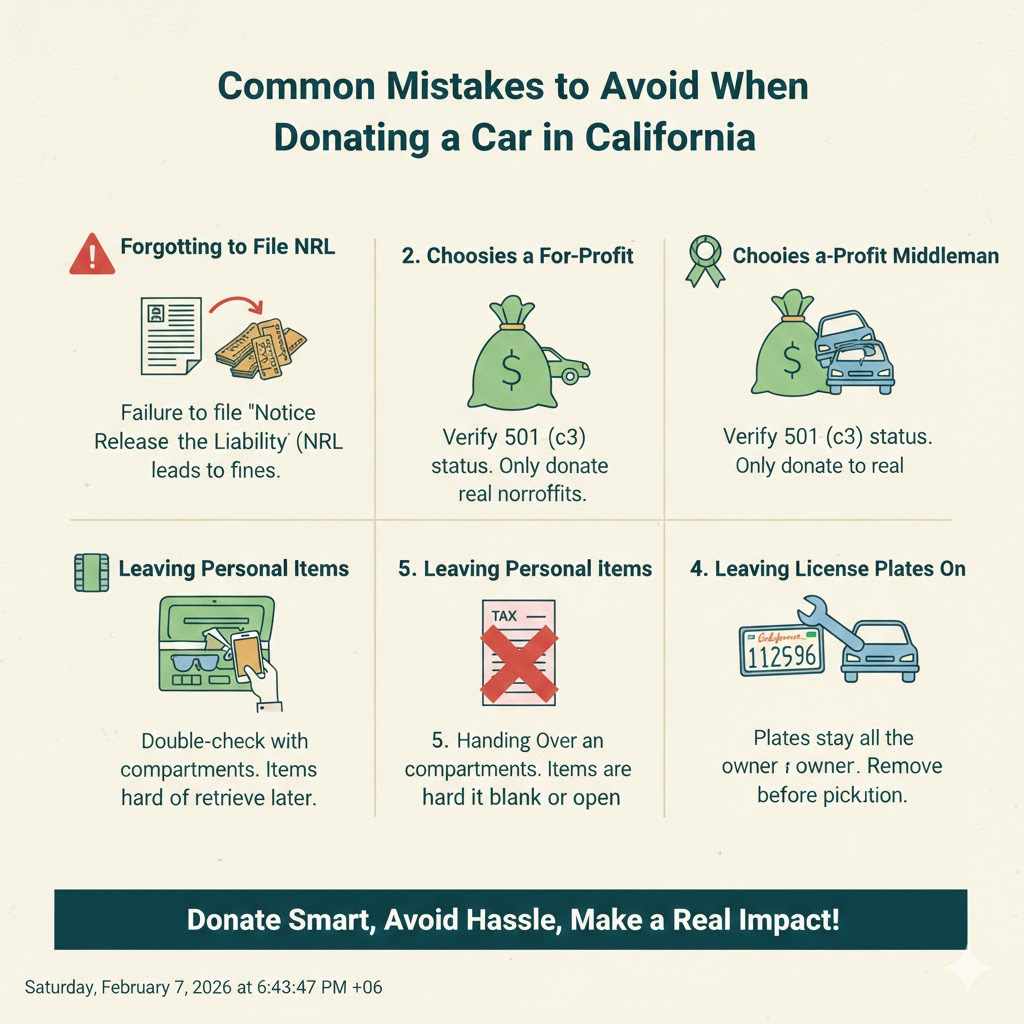
- Forgetting to file the NRL: This is the biggest mistake. If you don’t file the Notice of Transfer and Release of Liability, you could be held responsible for parking tickets or fines incurred by the new owner.
- Choosing a for-profit middleman: Some organizations sound like charities but are actually for-profit companies that give only a tiny fraction of the proceeds to a nonprofit. Always check for 501(c)(3) status.
- Leaving personal items in the car: Double-check every compartment. Once the car is gone, it’s very difficult to retrieve forgotten items.
- Leaving the license plates on: In California, plates stay with the owner. Remove them before the car is towed away to prevent misuse.
- Handing over an empty or improperly signed title: Never hand over a title that isn’t properly signed. An open title can lead to legal trouble.
Frequently Asked Questions (FAQ)
Can I donate a car in California if it doesn’t run?
Yes, absolutely! Most car donation charities accept vehicles whether they run or not. Cars that don’t run are typically sold for parts or scrap metal, and the proceeds still benefit the charity. Just be honest about the car’s condition when you arrange the pickup.
Do I need to get a smog check before donating my car?
No, you do not need a smog certificate to donate a car in California. The responsibility for smog certification falls on the person who buys the car from the charity. This is one of the great advantages of donating over selling.
What if I lost my car title? Can I still donate?
It’s more difficult, but possible. You will need to apply for a duplicate title from the California DMV before you can donate. You can find the Application for Duplicate or Paperless Title (REG 227) on the DMV website. Some charities may be able to help you with this process, so it’s worth asking.
Who is responsible for towing the car?
The charity is. Reputable car donation programs offer free towing. They will schedule a time to pick up the vehicle from your home, work, or even a repair shop at no cost to you.
Do I need to cancel my car insurance right away?
You should wait until the car has been physically picked up and you have submitted the Notice of Transfer and Release of Liability (NRL) to the DMV. Once the car is no longer in your possession and the DMV is notified, you can safely cancel your insurance policy.
How long does the whole process take?
The process is surprisingly fast. From your initial call or online form submission, the car is often picked up within 24 to 72 hours. Filing the NRL online takes only a few minutes. The final tax receipt from the charity may take a few weeks to arrive in the mail, especially if they need to sell the car first.
Ready to Make a Difference?
Donating a car in California is a fantastic way to clear out your garage, support a cause close to your heart, and simplify your life. By choosing a reputable charity, handling the DMV paperwork correctly, and understanding the tax benefits, you can ensure your donation is a smooth, rewarding, and impactful experience.
That old car has served you well, and now it can go on to do one last good deed. You’re not just getting rid of a vehicle; you’re providing a resource that can change lives. Take that first step today—you’ll be glad you did.