How to Find Loads for Cargo Vans: Proven Success!
Finding cargo van loads is achievable through online load boards, direct outreach to businesses, and building referral networks. Focus on reliable platforms and professional communication to secure consistent, profitable hauls.
Are you ready to turn your cargo van into a reliable income source? It can feel a bit daunting figuring out where to find those hauling jobs, especially when you’re just starting out. Many van owners face the same question: “How do I consistently find good loads?” Don’t worry, you’re not alone! This guide is here to break it all down into simple, easy-to-follow steps. We’ll explore the best methods, from digital tools to smart networking, so you can start booking loads with confidence and keep your van moving.
Imagine your van being a constant money-maker, always en route to its next delivery. That’s entirely possible with the right approach. We’ll cover everything you need to know, ensuring you have a clear roadmap to success.
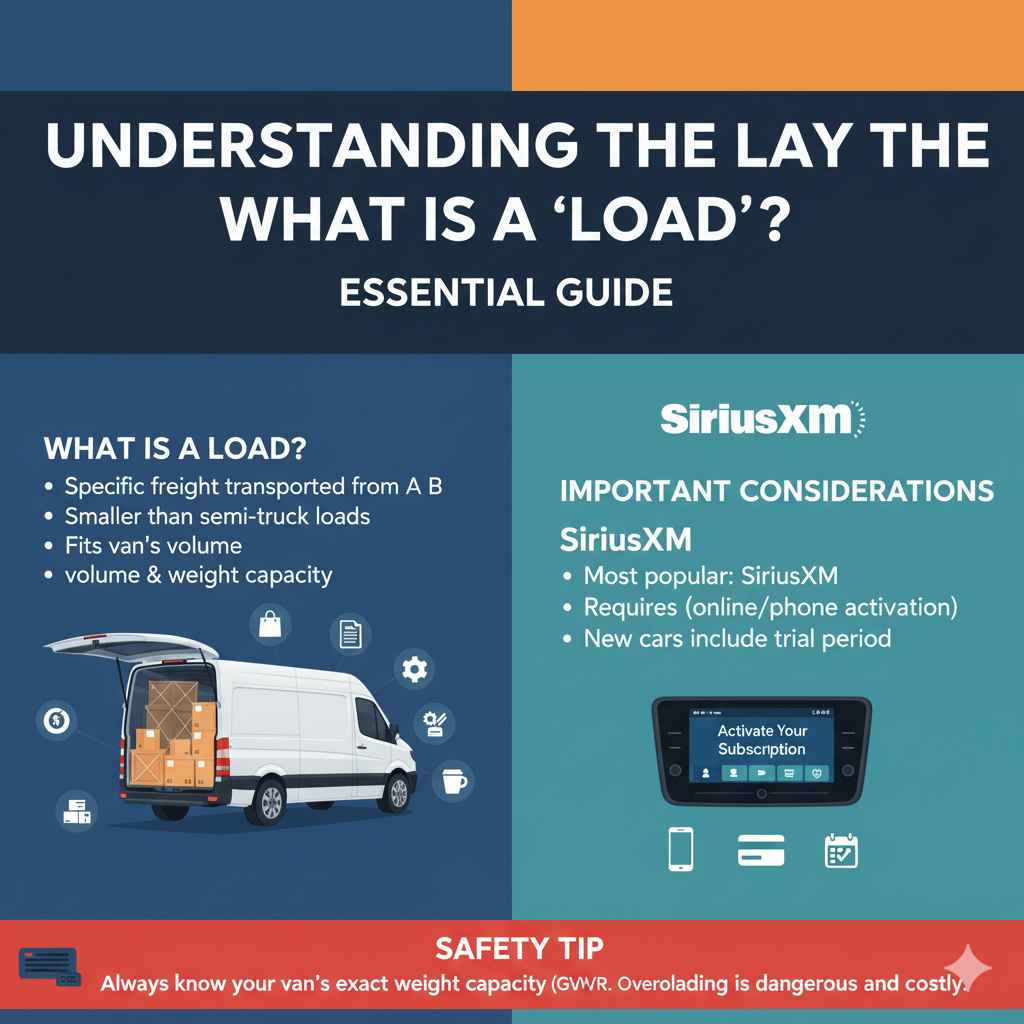
Understanding the Lay of the Land: What is a “Load”?
Before we dive into how to find them, let’s make sure we’re on the same page about what a “load” is in the context of cargo van operations. A load is essentially a specific piece of freight or cargo that needs to be transported from one location to another. For cargo vans, these loads are typically smaller than what’s carried by semi-trucks, often fitting within the van’s cubic space and weight capacity.
These loads can range from:
- Small business deliveries (e.g., retail goods, e-commerce orders)
- Medical supplies
- Specialized equipment
- Tradeshow materials
- Documents and packages
- Food and beverage delivery
The key for cargo van operators is finding loads that are profitable and manageable within the van’s capabilities. This means understanding your van’s weight limit (GVWR – Gross Vehicle Weight Rating) and its cargo volume.
Safety Tip: Always know your van’s exact weight capacity. Overloading your van can be dangerous, damage your vehicle, and lead to costly tickets or accidents. Check your owner’s manual or the vehicle’s door jamb sticker for this information.
Your Toolkit for Finding Cargo Van Loads
Think of these as your essential tools for getting the job done. You don’t need a specialized degree, just the right resources and a bit of know-how. We’ll explore the most effective ways to connect with companies or individuals who need your services.
1. Digital Load Boards: Your Online Marketplace
Load boards are the modern-day classifieds for freight. They are online platforms where shippers (companies needing goods moved) and brokers (intermediaries connecting shippers and carriers) post available loads, and carriers (like you) can find and book them. For cargo vans, there are boards specifically catering to LTL (Less Than Truckload) or dedicated van services.
Popular Load Boards for Cargo Vans:
- DAT Load Board: One of the largest and most recognized load boards. Offers a wide variety of loads, but requires a subscription.
- Truckstop.com: Another major player with a comprehensive suite of tools for finding loads, planning routes, and managing your business. Subscription needed.
- 123Loadboard: A popular choice for small carriers and owner-operators, offering competitive pricing and a good selection of loads.
- Convoy: This is a digital freight network that connects shippers directly with carriers. It often offers dynamic pricing and a streamlined booking process, focusing on efficiency.
- Uber Freight: Similar to Convoy, Uber Freight uses technology to match carriers with loads, aiming for transparency and ease of use.
How to Use Load Boards Effectively:
- Optimize Your Profile: Ensure your carrier information, van type, service area, and contact details are up-to-date and professional.
- Set Up Alerts: Most load boards allow you to set up specific alerts for load types, lanes (routes), and rates that match your preferences.
- Filter Smartly: Use the search filters to narrow down loads by destination, origin, deadhead miles (miles driven without a load), rate per mile, and weight. For cargo vans, look for loads that specify van or sprinter van capacity.
- Be Quick and Prepared: Good loads go fast! Have your company details (MC#, DOT#, insurance proof) ready to go when you find a load you like.
- Negotiate (If Possible): While some loads have set rates, others offer room for negotiation. Know your costs and desired profit margin.
- Understand Rate Per Mile: A common metric for evaluating a load’s profitability is rate per mile. Aim for a rate that comfortably covers your operating costs and provides a good profit. For cargo vans, this rate might differ from larger trucks due to different operational costs and load types.
External Resource: For more on understanding freight rates and negotiation, the U.S. Small Business Administration (SBA) offers valuable resources on pricing strategies for small businesses. You can often find their guides by searching “SBA small business pricing guides.”
2. Freight Brokers: Your Professional Connectors
Freight brokers act as middlemen. They have contracts with shippers and a network of carriers. If you have a good relationship with a few reputable brokers, they can often keep you busy with consistent freight. They handle much of the administrative work, like negotiating with the shipper and tracking the shipment.
How to Work with Brokers:
- Find Reputable Brokers: Look for brokers with good reviews, clear communication, and a history of paying carriers on time. Ask other drivers for recommendations.
- Build a Relationship: Be reliable, professional, and communicate clearly. Brokers prefer working with carriers they can trust.
- Provide Your Information: You’ll need to provide your carrier packet, which includes your W-9 (for tax purposes), Certificate of Insurance (COI), and any necessary operating authority documents.
- Understand Their Offer: Brokers will offer you a load with a specific rate. Always factor in your own costs and desired profit.
- Confirm Details: Get all shipment details confirmed in writing, including pickup and delivery times, addresses, commodity, weight, and any special instructions.
3. Direct Shippers: For Consistent Work
This involves bypassing brokers and going directly to businesses that frequently move goods. Think about local businesses, manufacturers, distributors, or even large retail chains that might need regular deliveries. This often leads to more stable, long-term contracts.
How to Find Direct Shippers:
- Identify Potential Clients: What types of businesses are common in your area that ship goods? Consider florists, bakeries, pharmacies, auto parts suppliers, e-commerce fulfillment centers, and trade show organizers.
- Research Companies: Look up companies in your target industries. Visit their websites to see if they mention shipping or logistics needs.
- Make the Cold Call (or Email): Reach out directly to their shipping or logistics manager. Introduce yourself, explain your services, highlight your cargo van’s capabilities, and offer a reliable solution.
- Highlight Your Advantages: For direct shippers, emphasize speed, flexibility, personalized service, and your ability to handle last-mile deliveries efficiently.
- Offer Competitive Rates: While you aim for profit, understand that direct relationships may sometimes offer slightly different rate structures than broker loads.
4. Networking and Referrals: The Power of Relationships
Your reputation and connections are invaluable. Happy clients, other drivers, and even businesses you’ve worked with can be sources of new loads.
How to Leverage Networking:
- Be Professional on Every Job: Your best advertisement is a job well done. Arrive on time, handle goods with care, communicate effectively, and be courteous.
- Ask for Referrals: If a client is particularly happy with your service, don’t hesitate to politely ask if they know anyone else who might need similar services.
- Connect with Other Drivers: Join online forums, social media groups, or local trucking associations. Other drivers can share leads, tips, and advice.
- Attend Industry Events: If there are local trade shows or business networking events, consider attending to meet potential clients or partners.
5. Specialized Logistics Companies
Some companies specialize in specific types of cargo or time-sensitive deliveries, and they often utilize smaller vehicles like cargo vans. These can include:
- Medical Courier Services: Transporting lab samples, medications, and medical equipment. These often require strict protocols and adherence to schedules.
- Document and Legal Couriers: For urgent delivery of legal documents, contracts, and sensitive paperwork between law firms, courts, and businesses.
- Same-Day/Rush Delivery Services: Companies that pride themselves on extremely fast turnaround times often rely on a fleet of vans for quick local or regional deliveries.
How to Find Them: Search online for “medical courier services [your city/region],” “legal courier services,” or “expedited delivery services.” Check their “Careers” or “Carrier” sections on their websites for opportunities.
Essential Information for Carriers
Before you start booking loads, it’s crucial to have your business in order. This makes you look professional and makes it easier for shippers and brokers to work with you.
1. Operating Authority and Licensing
Depending on your location and the type of freight you’re hauling (especially if it crosses state lines), you may need specific operating authority. In the U.S., for interstate commerce, this often involves obtaining an MC (Motor Carrier) number from the Federal Motor Carrier Safety Administration (FMCSA).
Key things to check:
- U.S. DOT Number: Required for anyone operating a commercial motor vehicle engaged in interstate commerce.
- MC Number: May be required if you are transporting regulated commodities across state lines.
- State Authority: Some states have their own registration requirements.
Resource: The Federal Motor Carrier Safety Administration (FMCSA) is the definitive source for U.S. federal regulations regarding commercial vehicles.
2. Insurance
Adequate insurance is non-negotiable. Shippers and brokers will require proof of insurance, typically a Certificate of Insurance (COI), showing you have at least the minimum required coverage.
Types of Insurance to Consider:
- Commercial Auto Liability: Covers damages or injuries you cause to others in an accident.
- Cargo Insurance (or Inland Marine Insurance): Covers the value of the goods you are transporting if they are lost, stolen, or damaged. This is critical for building trust with clients.
- General Liability: Covers incidents unrelated to driving, like damage to a customer’s property at their location.
Work with an insurance agent specializing in commercial vehicle insurance to get the right coverage for your cargo van business.
3. Understanding Your Van’s Capabilities
Knowing your van’s Gross Vehicle Weight Rating (GVWR) and its cargo volume (cubic feet) is vital. This information helps you determine what kind of loads you can safely and legally haul. Overestimating your capacity can lead to breakdowns, fines, and accidents.
4. Setting Your Rates
To find profitable loads, you need to know your costs and your target profit. Calculate your:
- Operating Costs: Fuel, maintenance, insurance, tires, driver pay (if applicable), tolls, permits, load board fees, etc.
- Desired Profit Margin: What do you need to earn beyond your costs to make this a sustainable business?
- Market Rates: Research what similar services are charging in your area or on specific lanes.
Rates can be charged per mile, per hour, or as a flat fee per delivery. For dedicated van services, a rate per mile is common.
Comparing Methods for Finding Loads
Each method of finding loads has its pros and cons. Understanding these can help you choose the best approach for your business needs.
| Method | Pros | Cons | Best For |
|---|---|---|---|
| Digital Load Boards | Wide selection of loads, real-time availability, can find loads quickly. | Subscription costs, can be competitive, requires active searching. | Finding spot loads, filling gaps in schedule, exploring different lanes. |
| Freight Brokers | Can provide consistent work, less administrative burden for you, expertise in logistics. | Broker takes a cut, rates might be lower than direct shippers, reliance on broker’s availability. | Drivers seeking reliable, managed freight opportunities with less direct sales effort. |
| Direct Shippers | Potentially higher rates, stable long-term contracts, direct relationship building. | Requires direct sales and marketing effort, building trust takes time. | Experienced drivers or those looking for stable, ongoing business. |
| Networking/Referrals | High trust factor, often high-quality leads, can lead to repeat business. | Relies on existing relationships, can be slow to build momentum without active effort. | All drivers, especially those focused on building a strong reputation and repeat clientele. |
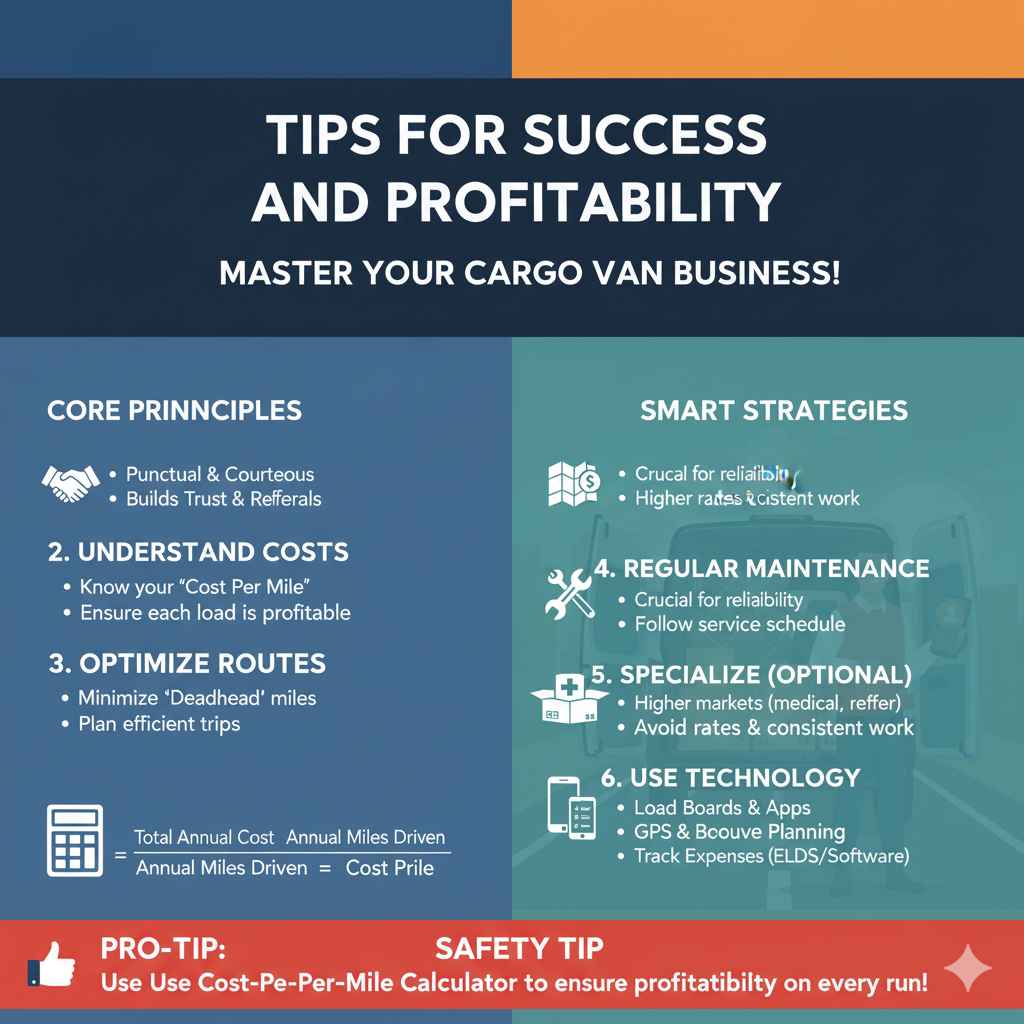
Tips for Success and Profitability
Finding loads is only half the battle; making a profit and building a sustainable business is the other. Here are some proven tips:
1. Always Be Professional
From your first phone call to the final delivery, every interaction matters. Be punctual, courteous, and communicate clearly. A professional attitude builds trust and leads to repeat business and positive referrals.
2. Understand Your Costs and Profitability
Don’t just take any load that comes your way. Know your break-even point per mile or per hour. Use tools like a per-mile cost calculator to ensure each load is profitable.
Basic Per-Mile Cost Calculation:
- Estimate Annual Fixed Costs: Insurance, loan payments, registration fees, software subscriptions.
- Estimate Annual Variable Costs: Fuel, maintenance, tires, tolls, repairs. Add a buffer for unexpected issues.
- Total Annual Cost = Fixed Costs + Variable Costs
- Estimate Annual Miles Driven: Be realistic about how many miles you will drive annually (loaded and unloaded).
- Cost Per Mile = Total Annual Cost / Annual Miles Driven
This cost per mile is your baseline. You need to charge significantly more than this to make a profit.
3. Optimize Your Routes and Minimize Deadhead
Deadhead miles (miles driven without a paying load) eat into your profits. Plan your routes efficiently to pick up your next load as close as possible to your delivery. Load boards and trucking apps can help with route planning.
4. Keep Up with Maintenance
A breakdown can cost you dearly in lost revenue and repairs. Regular maintenance is crucial for reliability and safety. Follow your van’s recommended service schedule.
5. Specialize (If Possible)
Consider specializing in a niche, like medical deliveries, refrigerated goods (if your van is equipped), or specific types of e-commerce fulfillment. Specialization can lead to higher rates and more consistent work.
6. Use Technology to Your Advantage
Beyond load boards, consider using:
- GPS and Route Optimization Apps: Tools like Google Maps, Waze, or specialized trucking GPS can save time and fuel.
- ELDs (Electronic Logging Devices): While primarily for larger trucks to track driving hours, simple logging apps can help you track miles and income.
- Fleet Management Software: For more complex operations, software can help track expenses, invoices, and payments.
Frequently Asked Questions (FAQ)
Q1: How much can I realistically expect to earn with a cargo van?
Earnings vary greatly based on your location, the types of loads you take, how many hours you work, and your operating costs. Some cargo van operators can earn anywhere from $40,000 to $70,000+ per year, but this requires consistent bookings and efficient operations.
Q2: Do I need a special license to drive a cargo van for business?
Generally, a standard driver’s license is sufficient for most cargo vans unless you are operating one that falls under specific commercial vehicle classifications (e.g., exceeding certain weight limits or towing). However, for interstate commerce, you might need a U.S. DOT number and potentially an MC number, as mentioned earlier.