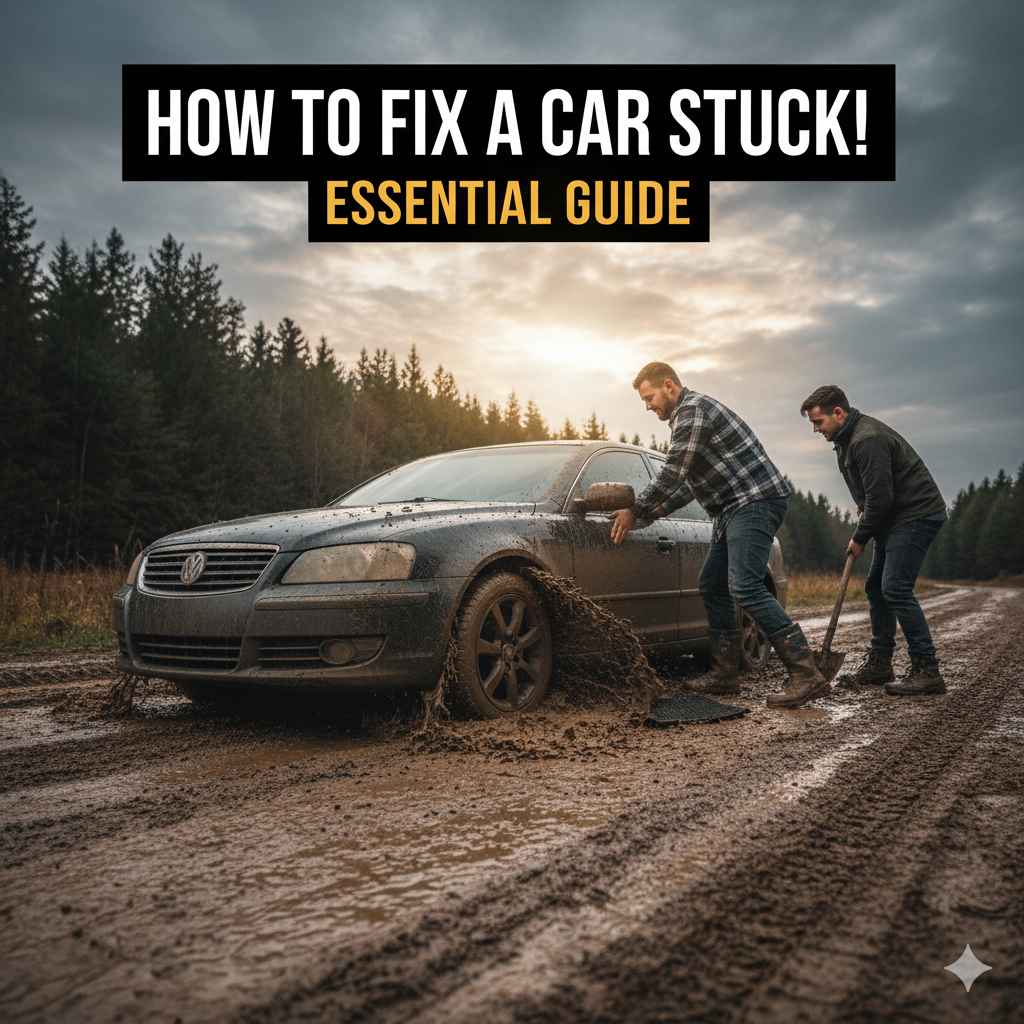
How to Fix a Car Stuck! Essential Guide
Stuck car? Don’t panic! This guide shows you how to safely get your car unstuck from mud, snow, or sand. We cover simple steps, common causes, and essential tools to help you get back on the road with confidence and avoid costly towing.
Has your car ever decided to take an unplanned vacation in mud, snow, or sand? It happens to the best of us! Feeling that sinking sensation as your wheels spin uselessly is frustrating, and it can feel like a big, expensive problem. But before you call for a tow truck, know that often, with a little know-how and some simple steps, you can free your car yourself. I’m Md Meraj, and I’m here to guide you through common scenarios and show you exactly what to do. We’ll break down how to safely get your car unstuck, explain why it happens, and equip you with the confidence to handle it.
Why Does a Car Get Stuck?
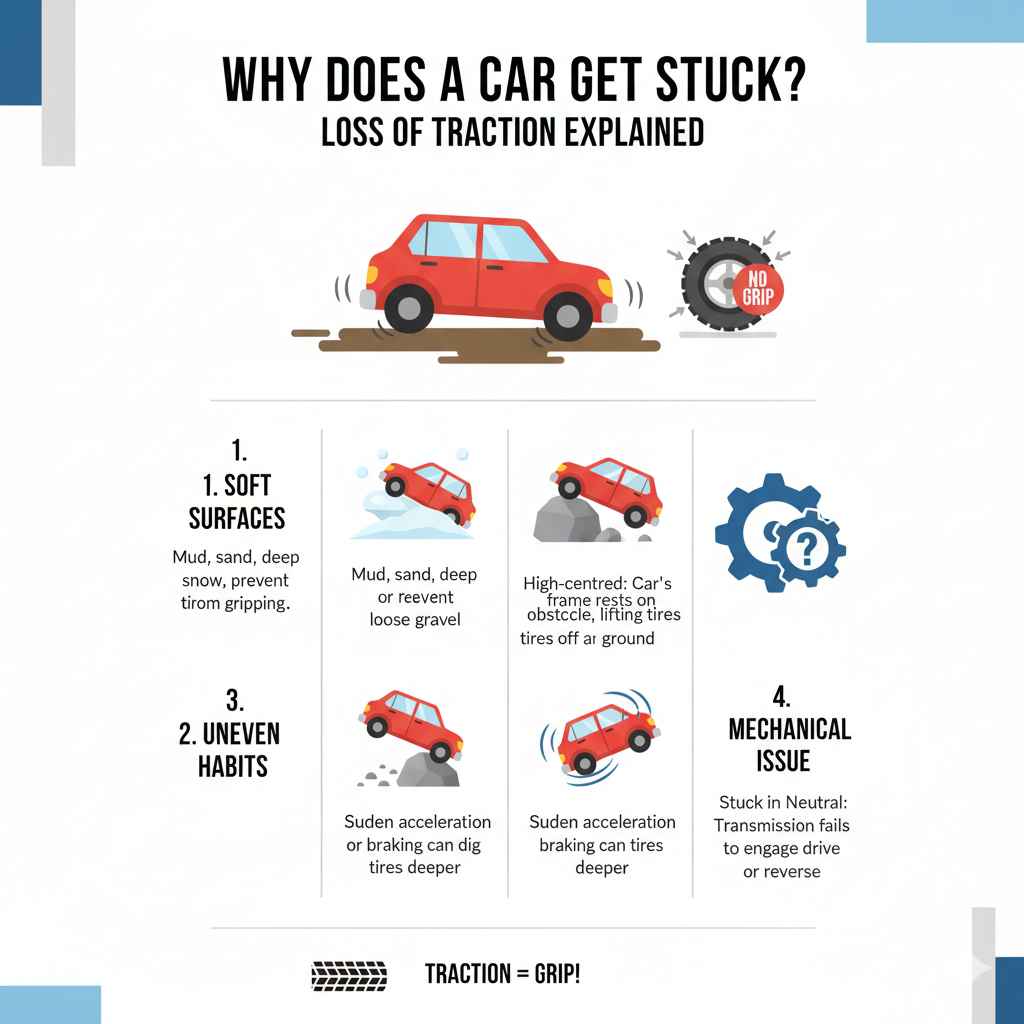
Cars get stuck when their tires lose traction. Traction is the grip between your tires and the road or ground. When this grip is gone, the engine’s power can’t move the car forward. Several things can cause this:
- Soft Surfaces: Like mud, sand, gravel, or even deep snow. These surfaces can’t provide enough resistance for the tires to grip.
- Uneven Surfaces: Getting high-centered, where the car’s frame rests on an obstacle, also traps it.
- Driving Habits: Sometimes, sudden acceleration or braking on slippery surfaces can cause a tire to dig itself in deeper.
- Stuck in Neutral: A very specific problem where the car’s transmission is stuck in neutral, preventing it from engaging drive or reverse. This is less about traction and more about a mechanical issue.
Getting Your Car Unstuck: A Step-by-Step Approach
The best way to fix a stuck car depends on what it’s stuck in. Here are solutions for common situations. Remember to always prioritize safety!
Scenario 1: Stuck in Mud or Snow
This is perhaps the most common “stuck” situation. The key here is to regain traction.
Preparing to Free Your Vehicle
Before you even start, take a moment to assess the situation. Is it safe to get out of the car? Is there heavy traffic nearby? If it’s safe, here’s what you’ll need:
- Shovel: Even a small camping shovel can make a big difference.
- Traction Mats or Boards: Special mats designed to give tires grip. If you don’t have these, thick cardboard, floor mats, or even branches can work in a pinch.
- Sand or Kitty Litter: These materials can add grip to slippery surfaces.
- Tow Strap or Rope: Only use if you have another vehicle to help pull you out. Never use a chain, as they can snap dangerously.
- Gloves: To keep your hands clean and protected.
- Friend or Helper: An extra pair of hands is always useful.
Step-by-Step Unsticking Process:
- Assess the Situation: Look at how deeply your tires are stuck and the type of surface.
- Clear the Path: Use your shovel to dig away any mud, snow, or debris from around the tires and the front/back of the car. You want to create as much clearance as possible.
- Straighten the Wheels: Ensure your front wheels are pointed straight ahead. This reduces resistance.
- Gentle Acceleration: Get back in the car. Put it in the lowest gear (usually ‘1’ for manual, ‘Drive’ for automatic) or ‘Reverse’. Gently press the gas pedal. Avoid spinning your tires wildly, as this will only dig you in deeper.
- Use Traction Aids: If gentle acceleration isn’t working, place your traction mats, boards, cardboard, or sand/kitty litter in front of the tires that are supposed to drive the car (front wheels for front-wheel drive, rear for rear-wheel drive, or all four for all-wheel drive/four-wheel drive).
- Try Again: Slowly and gently accelerate onto the traction aids. Have your helper steer slightly if needed to help the car find purchase.
- Rocking the Car (Manual Transmission Recommended): If available, a friend can help by gently pushing the car while you try to accelerate forward or backward. For manual transmissions, you can try to “rock” the car. Gently accelerate forward a little, then immediately shift to reverse and gently accelerate back. Repeat this motion slowly. This can sometimes build momentum to get you out. Be very careful not to over-rev the engine or burn your clutch.
- Use a Tow Strap (If Necessary): If you have another vehicle and a proper tow strap, you can have the other vehicle carefully pull your car out. The stuck car should be in neutral with its engine off. The pulling vehicle should move slowly and steadily. Always use tow straps, never chains. See resources from the National Highway Traffic Safety Administration (NHTSA) for safe towing practices.
Scenario 2: Stuck in Sand (Beach or Desert)
Sand is a tricky surface because it can shift easily. The goal is to give your tires something solid to grip.
Preparing for Sand Rescue
The tools are similar to mud or snow, with an emphasis on creating a firmer path:
- Shovel
- Traction mats, plywood, or even sturdy branches
- Sand or gravel (if available to add more grip)
- Floor mats (your own can be sacrificed if desperate)
- Water (to potentially firm up sand, but use sparingly and strategically)
Step-by-Step Unsticking Process:
- Deflate Tires Slightly (Optional, Use Caution): For sand, slightly deflating your tires can increase their surface area, providing more floatation and grip. Lowering tire pressure to around 15-20 PSI can help. Make sure to reinflate them to the correct pressure as soon as you get back on a firm surface. Check your owner’s manual for recommended tire pressures.
- Clear Around Tires: Dig out sand from in front of and behind all four tires, creating a smooth pathway.
- Straighten Wheels.
- Add Traction Aids: Place traction mats, boards, or even your car’s floor mats under the drive wheels. If you have sand or gravel nearby, spread it in front of the tires.
- Gentle Acceleration: Slowly and smoothly accelerate. Avoid sudden bursts of power that will just spin the tires and dig you deeper.
- Wiggle the steering wheel: As you accelerate, gently wiggle your steering wheel from side to side. This can help the tires find grip.
- Rocking Method: Similar to mud, try the forward-reverse rocking motion if your car allows.
- If You Have a Tow Strap: Again, a helper in another vehicle can pull you out gently.
Scenario 3: High-Centered (Frame on Obstacle)
This happens when the bottom of your car gets stuck on an object, like a rock, curb, or even a mound of dirt, preventing the wheels from touching the ground properly.
Preparing for High-Centered Rescue
This situation requires careful maneuvering and sometimes a bit of lifting.
- Shovel or sturdy object to dig
- Jack and jack stands (use with extreme caution and on a stable surface)
- Wooden planks or sturdy boards
Step-by-Step Unsticking Process:
- Assess Clearance: See exactly what your car is resting on and how much clearance you have.
- Dig and Lower: Use your shovel to dig away the obstacle or the ground around it, trying to lower the car. This is often the simplest and safest solution.
-
Use a Jack (with extreme caution): If digging isn’t enough, you might need to use a jack.
- Find a Solid Jack Point: Consult your car’s owner’s manual to find a safe and strong point on the frame or suspension to place the jack. Do NOT place the jack on the oil pan or body panels.
- Place a Sturdy Base: Place a flat, sturdy piece of wood or thick board under the jack to prevent it from sinking into softer ground.
- Lift Gently: Slowly and carefully lift the car just enough to relieve pressure on the obstacle.
- Create Clearance: Once lifted, try to dig away more of the obstacle or push the car slightly off it. You may need to place boards or rocks under the tires to create a ramp.
- Lower Safely: Slowly lower the jack and remove it.
Working under a jacked-up vehicle is extremely dangerous. Never place any part of your body under a car supported only by a jack. Use jack stands if you need to work under the vehicle for an extended period, but for simply freeing a stuck car, careful jacking and lowering should suffice. For detailed guidance on safe jacking procedures, refer to resources like those from Insurance Information Institute (III).
- Rocking or Towing: Once some clearance is achieved, try gentle acceleration or rocking the car. A tow strap might also help if the tires can gain some purchase.
Scenario 4: Car Stuck in Neutral (Mechanical Issue)
This is different from being stuck in mud. If your car won’t shift into Drive or Reverse and feels stuck in neutral, it’s a mechanical problem. This guide focuses on traction, but here are brief points for this specific issue.
A car stuck in neutral, meaning it won’t engage a gear (“Park” or “Drive”), usually points to a problem with the transmission or its control system. It’s not a situation for DIY fixes for most beginners.
When to Call for Professional Help:
- Your car’s gear shifter is loose or stuck.
- Your car rolls freely even when in “Park.”
- Your car won’t go into any gear (Drive, Reverse, Park) and the engine is running.
- There are strange noises coming from the transmission area.
In such cases, the safest and most effective solution is to call for roadside assistance or a tow truck to take your vehicle to a trusted mechanic. Attempting to force the shifter can cause further damage.
What NOT to Do When Your Car is Stuck
While eager to get moving, some actions can make things worse.
- Don’t Floor the Accelerator: Excessive spinning will only dig your tires deeper and can damage your transmission or drivetrain.
- Don’t Use a Chain to Tow: Chains can snap under tension, causing serious injury or damage. Always use a rated tow strap or rope.
- Don’t Get Under the Car if it’s Only Supported by a Jack: This is incredibly dangerous.
- Don’t Keep Trying if Nothing is Working: Sometimes, you need to accept that professional help is the best option to avoid causing more damage.
Essential Tools for Your Car’s Emergency Kit
Having a few key items in your car can turn a stressful stuck situation into a manageable one.
| Tool/Item | Purpose | Why it’s Essential |
|---|---|---|
| Traction Mats/Boards | Provide grip under tires | Essential for mud, snow, and sand. |
| Folding Shovel | Dig out snow, mud, or sand | Clears paths and creates space. |
| Tow Strap | For pulling by another vehicle | A safer alternative to chains for recovery. |
| Gloves | Protect hands | Keeps you clean and prevents injuries. |
| Flashlight | Visibility at night or in bad weather | Safety and seeing what you’re doing. |
| Jumper Cables | For dead batteries (can sometimes indirectly help by allowing restarts) | While not for getting unstuck, a dead battery can compound problems. |
| First-Aid Kit | For any minor injuries | Safety first, always. |
Preventing Your Car from Getting Stuck
The best way to “fix” a stuck car is to not get stuck in the first place!
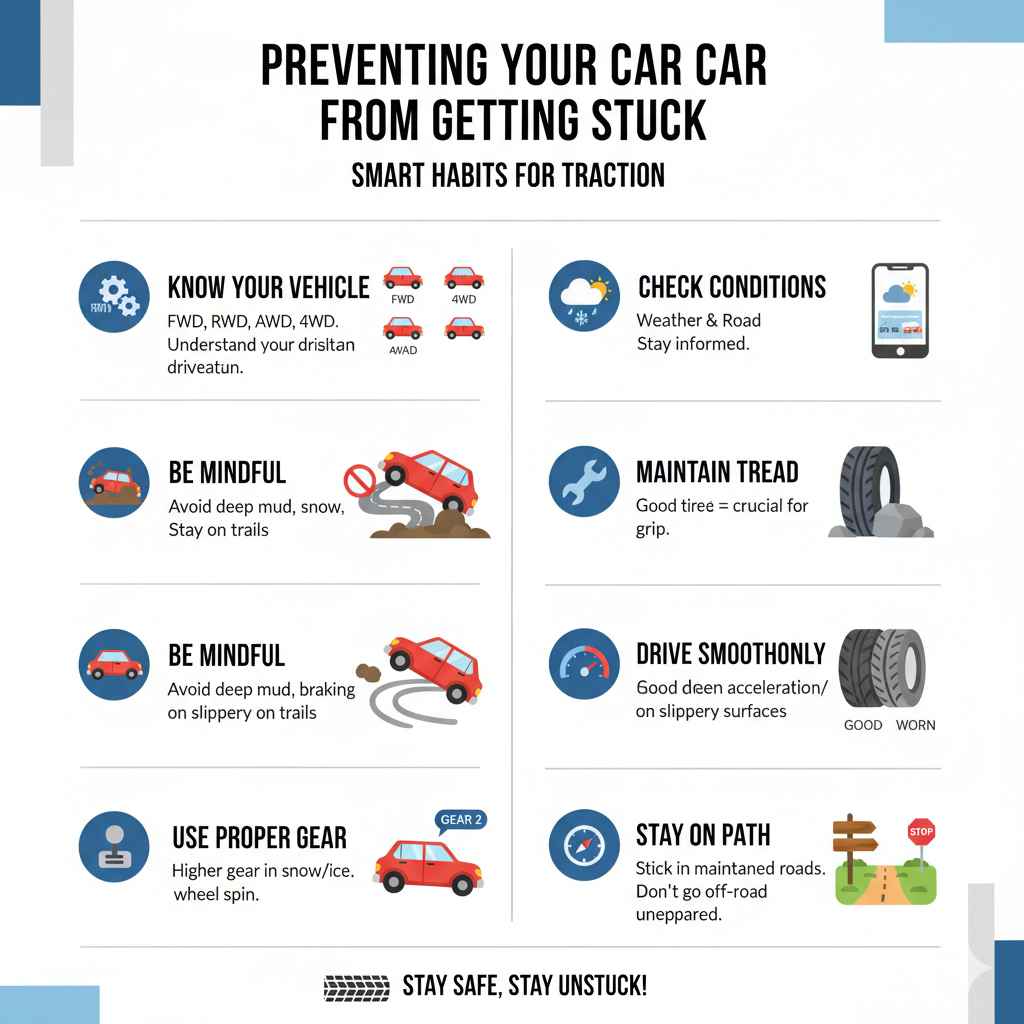
- Know Your Vehicle: Understand if your car is front-wheel drive (FWD), rear-wheel drive (RWD), all-wheel drive (AWD), or four-wheel drive (4WD). AWD and 4WD systems offer the best traction in challenging conditions.
- Check the Weather and Road Conditions: Before heading out, especially in winter or to off-road areas, check forecasts and local advisories.
- Be Mindful of Surfaces: Avoid driving through deep mud, sand, or snow unless you’re experienced and equipped.
- Maintain Tire Tread: Good tire tread is crucial for traction. Worn tires are more likely to slip.
- Drive Smoothly: Avoid sudden acceleration or braking, especially on slippery surfaces.
- Use Proper Gear: In snow or ice, using a higher gear (like ‘2’ on a manual) rather than ‘1’ can sometimes prevent wheels from spinning too fast.
- Don’t Drive into Uncharted Territory: Stick to maintained roads and trails unless you’re confident in your vehicle and your ability.
Frequently Asked Questions (FAQ)
Q1: What’s the first thing I should do if my car gets stuck?
A1: Stay calm! Assess your surroundings for safety. Then, check how your tires are stuck and the type of surface. Gentle, controlled attempts to get free usually come next.
Q2: Will letting air out of my tires help me get unstuck?
A2: Yes, slightly deflating tires can increase their contact patch, providing more floatation and grip, especially in sand or snow. However, only do this if you plan to reinflate them soon after regaining traction, as driving on very low-pressure tires can damage them and is unsafe.
Q3: Can I use my car’s floor mats for traction?
A3: Absolutely! Your car’s floor mats, especially rubber ones, can be surprisingly effective when placed under the drive wheels to give them something to grip onto. Just be prepared that they might get damaged or lost.
Q4: How do I know if I need to call for help?
A4: If you’ve tried basic methods and your car is still stuck, if you’re in a dangerous location (like near a busy road or in rising water), if you don’t have the right tools, or if the issue seems mechanical (like being stuck in neutral), it’s time to call for professional roadside assistance.
Q5: My car is stuck in snow. Should I rock it back and forth?
A5: Yes, the “rocking” method can be effective. Gently accelerate forward a little, then shift to reverse and gently accelerate back. Repeating this can build momentum. Be very careful not to over-rev your engine or burn your transmission/clutch.
Q6: Is it safe to be pulled out by another car?
A6: It can be, but safety is paramount. You must use a proper tow strap (never a chain), and both drivers need to communicate. The stuck car should be in neutral with its engine off. The pulling vehicle should move slowly and steadily.
Conclusion
Getting your car stuck can be a moment of panic, but it doesn’t have to be a disaster. By understanding why cars get stuck and knowing these practical, step-by-step solutions for mud, snow, and sand, you’re now much better equipped to handle the situation. Remember to always prioritize safety, use the right tools when you can, and don’t hesitate to call for professional help if you’re in doubt or if the problem is beyond basic traction issues. With a little preparation and this guide in your back pocket, you can confidently navigate most stuck-car scenarios and get back on your way. Safe driving!