Best Leather Brushes for Car Interiors (2026): we compared
The best leather brush for car interiors is a soft, flagged nylon or horsehair brush for clean, delicate leather, a medium-firm brush for grained or soiled seats, and a narrow-detail brush for seams and bolsters. Pick the wrong stiffness, and you can scuff the coating, push dirt into stitching, or leave grime in wear creases. This guide shows how to match bristle softness, brush length, and handle grip to leather condition and seat shape.
Top pick: a long-bristle horsehair brush, because it covers the widest range of sealed-leather maintenance without being harsh on stitching or grain.
Quick comparison
| Product | Badge | Best for | Price | ||
|---|---|---|---|---|---|
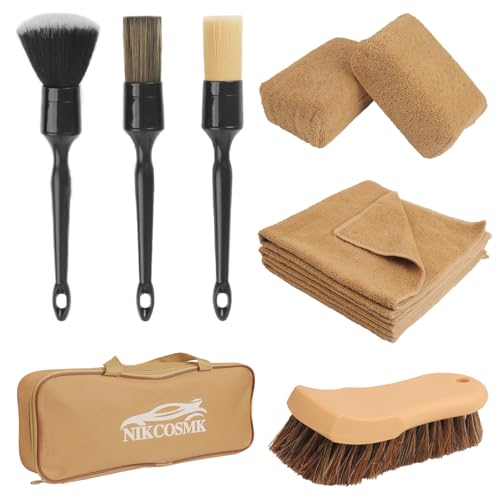 |
10PCS Car Cleaning Kit, Car Detailing Kit Interior Cleaner,NIKCOSMK | Our pick | 10-piece kit · Horse hair · Microfiber cloth included | $17.99
Price as of 3 Oct 2026
|
View |
 |
Maxshine Universal Ergonomic Interior Detailing Brush |Maxshine | Budget pick | 4.8-inch compact · Dual-bristle · Wooden handle | $9.99
Price as of 3 Oct 2026
|
View |
 |
Chemical Guys, Long Bristle Horsehair Leather CleaningChemical Guys | Also great | Long horsehair bristles · Safe for all leather types | $17.99
Price as of 3 Oct 2026
|
View |
Use the table to match the brush to the job first, then check the surface type. A brush that suits new leather can be a poor fit for a dirty bolster or a deep seam.
According to autofinesse.com — Auto Finesse sells an Upholstery Brush for £14.95.
How we chose
I started with bristle softness versus cleaning power. Then I weighed reach in seams, bolsters, and textured grain, plus how the handle feels after a long session in one cabin.
Fit mattered too. A brush should work with leather cleaner or conditioner without leaving scratches, finish marring, or dye transfer. For mixed interiors, the brush also had to make sense beyond one narrow use case.
Which brush type fits your leather condition?
The right brush depends more on leather condition than on brand. New sealed leather usually takes a soft horsehair brush well, while older dry surfaces, cracked areas, and neglected seams need less pressure, more control, and a gentler touch.
New or well-kept sealed leather
For sealed leather in good condition, a soft horsehair brush is the safest default. It pulls dust from the grain and stitching without digging into the coating, and it is usually enough for routine maintenance after a cleaner or foam has loosened surface grime.
Delicate, cracked, or dry leather
Delicate or cracked leather needs the least aggressive option that still moves dirt. A soft horsehair brush with short, controlled strokes is the better choice, and the cleaner should do most of the work. If the finish is already flaking, any brush can make matters worse if pressure is heavy.
Heavily soiled seats and neglected seams
When seats are heavily soiled, the goal is controlled agitation, not hard scrubbing. A slightly firmer synthetic brush can help on grime in seams, textured graining, and tight corners, but it should stay off fragile spots and dried, chalky surfaces where it can mark the finish.
Horsehair brush: best for daily wipe-downs and delicate leather
Horsehair is the best default for most car leather because it is soft enough for routine cleaning while still reaching into stitching and light grain. It is common in automotive leather brushes, often paired with wooden handles, and it does a solid job on maintenance-level dirt.
Where horsehair works best
Use it on seat bolsters, stitched panels, and light dust in creases. It also suits cleaner application before conditioning, because it moves residue without being aggressive. The softer feel matters when the leather is finished but still showing wear at high-contact points.
Where horsehair falls short
Horsehair can struggle with oily grime, old conditioner buildup, and packed dirt in deep texture. If the brush flexes too much, dirt may stay trapped in the seam instead of lifting out. On neglected interiors, a medium-firm option is often faster.
Synthetic-bristle brush: best for deeper cleaning prep
Synthetic bristles are the better choice when the seat needs more bite. They are durable, can be slightly stiffer, and are used in some leather and upholstery brushes for tougher grime. That extra firmness helps before conditioner, as long as the leather can take it.
Where synthetic bristles help
They work well on textured graining, seat seams, and tight corners where dirt sits below the surface. On sealed leather with visible buildup, a synthetic brush can shorten the cleaning step because it agitates residue more quickly than very soft horsehair.
Where synthetic bristles can fail
On softer, aged, or cracked leather, a stiffer synthetic brush can leave marks or create shiny scuffs in the finish. It also raises the risk of pushing dye or grime across the panel if too much pressure is used. That matters most on dyed surfaces with visible wear.
How do brush size and handle shape affect results?
Brush size changes how much control you have in the seat area you are cleaning. Long bristles reach seams and creases better, while shorter bristles give more control on flat panels. Handle shape matters too, especially when you are working around bolsters or cleaning several seats in one session.
Long versus short bristles
Long bristles are the better choice for stitching, deep seams, and panel edges because they bend into the gap instead of skating over it. Shorter bristles are better when you want precision on flat leather or when the seat shape leaves little room for overshoot.
Dense versus open bristle packs
Dense bristles can pull out dirt more effectively, but too much stiffness can mark sealed leather. An open pack feels lighter and safer on delicate finishes, while a denser head is better when grime sits in texture and the cleaner has already loosened the soil.
Wood, plastic, and rubber-lined handles
An ergonomic handle reduces hand fatigue during longer detailing sessions. Wood handles feel solid and natural, durable plastic handles often tolerate wet use better, and rubber-lined or non-slip grips are helpful when the brush is paired with cleaner or conditioner and your hands become slick.
Decision table: match the brush to the seat area
The easiest way to choose is to match leather condition with seat geometry. A daily wipe-down does not need the same brush as deep-clean prep on a textured seat with stitched bolsters.
| Leather condition and seat area | Bristle material | Bristle length | Handle style | Best-use scenario |
|---|---|---|---|---|
| New or well-kept sealed leather, flat seat panels | Horsehair | Short to medium | Wood or rubber-lined ergonomic | Daily wipe-down |
| Sealed leather with stitched bolsters and light dust in seams | Horsehair | Long | Non-slip ergonomic handle | Seam cleaning |
| Leather before conditioning, with light residue on grain | Soft horsehair or flagged nylon | Medium | Wood or durable plastic | Conditioner application |
| Textured or heavily soiled leather, deep corners, packed stitching | Synthetic | Long | Ergonomic, non-slip grip | Deep-clean prep |
10PCS Car Cleaning Kit, Car Detailing Kit Interior Cleaner, Long Bristle Horse Hair Leather Cleaning Brush, Car Detailing Brushes, Microfiber Cloth & Applicator, Car Cleaning Supplies for Interior: best for budget buyers
This NIKCOSMK kit fits buyers who want a simple starter set with multiple tools in one box. The long horse hair brush is the main draw for leather, while the bundled microfiber cloth and applicator pad make it easier to clean and then follow up with conditioner.
From the spec sheet and owner feedback, the appeal is range rather than specialization. The included two brush sizes can help with large areas and tight spaces, and the horse hair bristles sit in the right softness tier for general leather work.
The drawback is focus. A multi-piece kit can be handy, but it is not as purpose-built as a dedicated leather brush, and the extra items may be more useful to new detailers than to someone who already owns separate tools.
Maxshine Universal Ergonomic Interior Detailing Brush: best for tight interior spaces
This Maxshine brush suits owners who need one compact tool for leather seats, dashboards, and fabric surfaces. The 4.8-inch size helps in cramped areas, and the dual-bristle blend gives a bit more bite than pure horsehair without jumping straight to a harsh scrub brush.
What stands out is control. The wooden handle and anti-slip shape make it easier to keep pressure even when cleaning seams, stitching, and narrow seat edges. From the spec sheet and reviews, it is a practical choice for cars with busy seat contours.
The drawback is that the dual-bristle setup may be more aggressive than some delicate leather wants. On very soft or aged finishes, that extra firmness should be used sparingly and with cleaner doing most of the work.
Chemical Guys, Long Bristle Horsehair Leather Cleaning Brush for Interiors: best for seams and creases
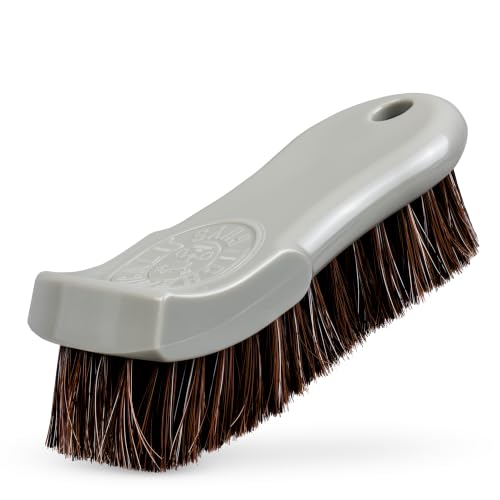
This Chemical Guys brush is the strongest fit for buyers who care most about reach. The long bristles are meant for creases, and the brand describes it as safe for natural, synthetic, faux, and pleather materials, which makes it a versatile interior tool.
From the spec sheet and owner feedback, it is the clearest answer for seam work, stitched bolsters, and regular leather maintenance. The ergonomic handle also gives more secure control when the brush is moving through narrow gaps and textured areas.
The drawback is the same feature that makes it useful: long bristles are not as precise on very small flat panels, so the brush can feel a little floppy if you want tight control on broad seat faces.
Which one should you buy?
Choose by the job, not by the logo. If the seats are new or only lightly dusty, the Chemical Guys brush is the best all-round pick for seam reach and regular leather care. If you want a lower-cost compact brush for mixed interiors, Maxshine is the tighter tool. If you want a multi-item starter kit, the NIKCOSMK bundle is the most flexible purchase.
For budget buyers, the Maxshine brush is the cleanest single-tool buy. For new-car maintenance, the Chemical Guys brush gives the best balance of softness and reach. For older or heavily used interiors, add a slightly firmer synthetic option for prep work, because horsehair alone may not lift packed grime fast enough.
If the car also needs work on shoes, upholstery, or furniture, a brush with a moderate bristle pack and comfortable handle makes more sense than a delicate-only leather brush. SONAX makes a brush for textile, Alcantara, and leather surfaces, which is useful when the cabin has mixed materials. Auto Finesse also sells an Upholstery Brush for £14.95 and a Leather Cleaning Kit for £39.95, while its Hide Leather Cleanser is glycerine-based and Hide Leather Conditioner provides UV protection.
How do brush size and handle shape affect results?
The best brush size depends on the seat area, not the trim package. Narrow brushes reach seam lines and bolsters more easily, while wider brushes can cover flat sections faster. Handle shape matters because leather work often needs repeated light passes instead of one hard scrub.
What features should you look for in a leather brush handle and grip?
Look for a handle that keeps your wrist in a neutral position and does not slip when cleaner is on the surface. Rubber-lined and non-slip handles reduce fatigue, while wood and durable plastic both work if the profile feels secure in hand and the brush stays controlled at the tip.
Can one leather brush work on Alcantara, vinyl, and upholstery too?
One brush can work across multiple surfaces only if the bristles are soft enough for the most delicate material in the group. SONAX makes a brush for textile, Alcantara, and leather surfaces, which shows the idea can work, but vinyl, upholstery, and leather still respond better to different pressure levels.
What brush size is best for seams, creases, and tight seat bolsters?
A narrow brush with long bristles is best for seams, creases, and tight bolsters because it can drop into the gap and lift dirt out rather than flattening it back into the stitching. For broader seat panels, a medium brush gives more control and less chance of brushing onto adjacent trim.
Do I need a special brush before using leather conditioner?
A special brush is not required, but the brush should be clean, soft, and safe for the finish. Conditioner works best after dirt is lifted from seams and grain, because rubbing contaminants into the surface can leave streaking or dull spots when the product is worked in.
How do I clean delicate or cracked leather without making it worse?
Use the least aggressive brush that still moves residue, and let the cleaner soften the soil first. Light pressure, short strokes, and a soft horsehair head are the safest starting point. If the leather is cracked, flaking, or color-transferred, stop before the brush starts catching on the finish.
Can a leather brush also be used on shoes or furniture?
Yes, many leather brushes can move between car interiors, shoes, and furniture, but the surface condition still decides how aggressive the brush should be. A brush used on muddy shoes should not be taken straight to a delicate seat until it is cleaned, because grit can scratch the finish.
Frequently asked questions
What is the best brush for cleaning leather car seats without scratching them?
A soft horsehair brush is usually the safest place to start for clean or lightly soiled car leather. It lifts dust from stitching and grain without adding much abrasion, which makes it a strong choice for regular maintenance on sealed seats and trim.
Should I use horsehair or synthetic bristles on car leather?
Use horsehair for routine cleaning, delicate leather, and conditioner prep. Choose synthetic bristles only when the seat has heavier grime, textured grain, or stubborn buildup that needs more agitation. The more aged or fragile the leather is, the more horsehair makes sense.
Can one leather brush work on Alcantara, vinyl, and upholstery too?
One brush can do all three only if the bristles are soft enough for the most sensitive material and the pressure stays light. A brush marketed for Alcantara and textile use can be a good crossover choice, but a dedicated leather brush still suits finished seats better.
What brush size is best for seams, creases, and tight seat bolsters?
A narrow brush with longer bristles is best for seams, creases, and bolsters because it reaches into the gap without forcing the bristle tips sideways. Larger brushes are better for broad panels, where speed matters more than pinpoint access.
Do I need a special brush before using leather conditioner?
You do not need a special conditioner brush, but you do need a clean, soft one that will not mar the finish. The goal is to remove dust and residue first, especially from seams and grain, so the conditioner can contact the leather evenly.
How do I clean delicate or cracked leather without making it worse?
Start with minimal pressure and a soft brush, then let the cleaner do most of the work. Avoid scrubbing the cracked spots directly, because the bristles can catch the edge of worn coating and spread damage. If the finish is failing, stop at gentle surface cleaning.
Products related to this article
Sponsored / affiliate links. As an Amazon Associate I earn from qualifying purchases. I may earn additional commission from eligible campaigns.