How to Get Duct Tape Residue off a Car (Without Damaging Paint)
The fastest safe way to get duct tape residue off a car is to soften it first, then lift it – never scrape it dry. Warm the spot with a hair dryer for 20–30 seconds, work in an oil-based product like Goo Gone or a few drops of cooking oil with a microfiber cloth, then wash and wax the area.
Duct tape’s adhesive is rubber-based, which is why it turns gummy and spreads if you just yank the tape off or attack it with a fingernail or metal scraper. Clear coat on a modern car is only about 2 mils (0.05mm) thick, so an abrasive tool or the wrong solvent can dull or scratch it in seconds – and that damage costs far more to fix than the sticky spot ever would.
This guide covers the safe removal order (heat, then a solvent, then a plastic scraper only as a last resort), the household products that actually work, what to use differently on interior dashboard and trim plastic versus exterior paint, and how to finish the spot so it doesn’t look duller than the rest of the panel.
Prepping the Surface Before You Start
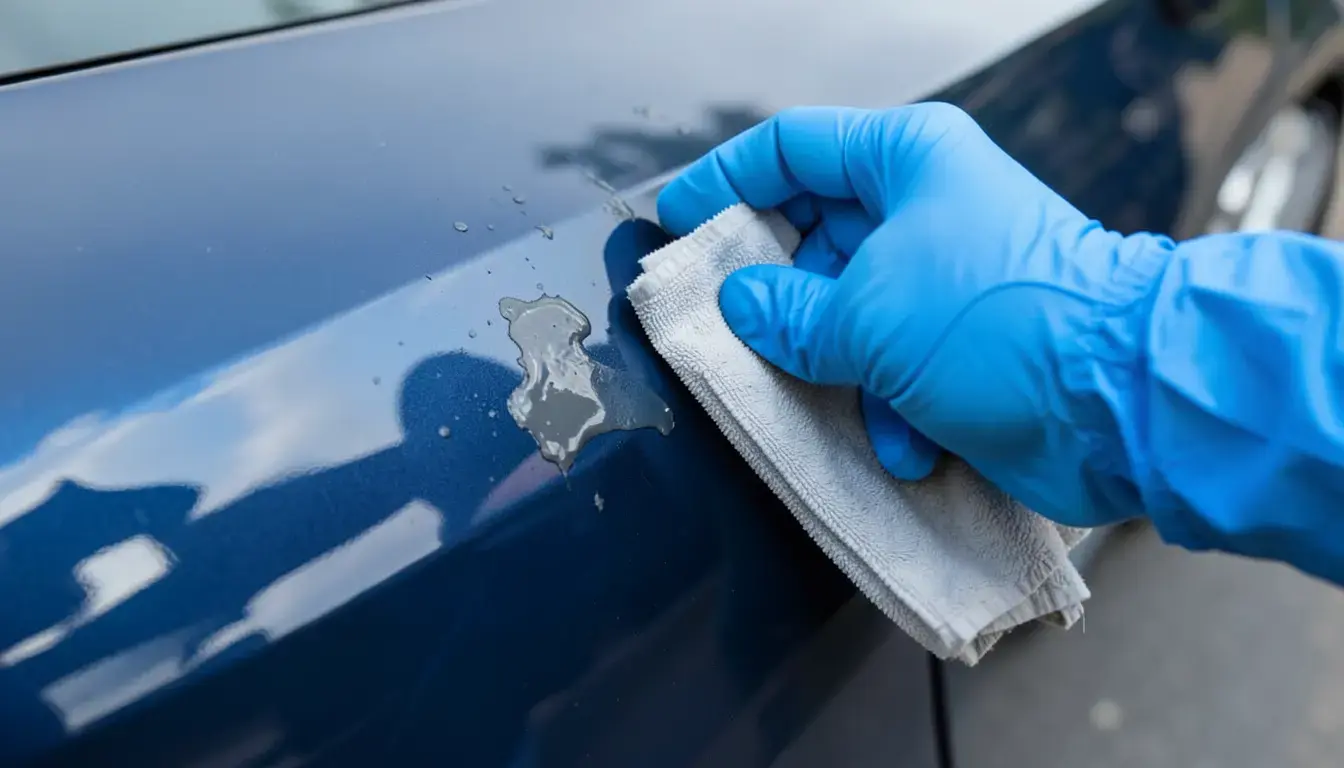
Wash the area with warm, soapy water and dry it before doing anything else. Dirt and grit trapped under a rag will act like sandpaper the moment you start rubbing, which is how a lot of people scratch paint while trying to remove something as harmless as tape glue.
What You’ll Need
- A microfiber cloth and a soft-bristle detail brush
- Warm, soapy water (dish soap works)
- A hair dryer or heat gun set to low
- An adhesive remover, isopropyl alcohol (under 70%), or a household oil
- A plastic (not metal) trim scraper, only for stubborn spots
- Car wax or spray sealant for after
TESTED FOR ADHESIVE RESIDUE
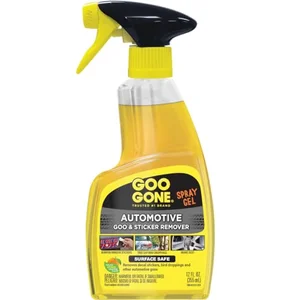 |
Goo Gone Automotive Adhesive Remover – $8.29 This is the product referenced throughout this guide – it’s formulated to be safe on clear coat and won’t strip wax the way a general-purpose solvent can.
|
Step 1: Soften the Residue With Heat
Heat is the single most effective — and safest — first move, because it works without any chemicals touching the paint at all. Set a hair dryer to its low or medium heat setting and hold it 4–6 inches from the residue, moving it in slow circles for 20–30 seconds at a time. The rubber adhesive softens and turns gummy rather than crumbly, which makes it lift away with a cloth instead of smearing.
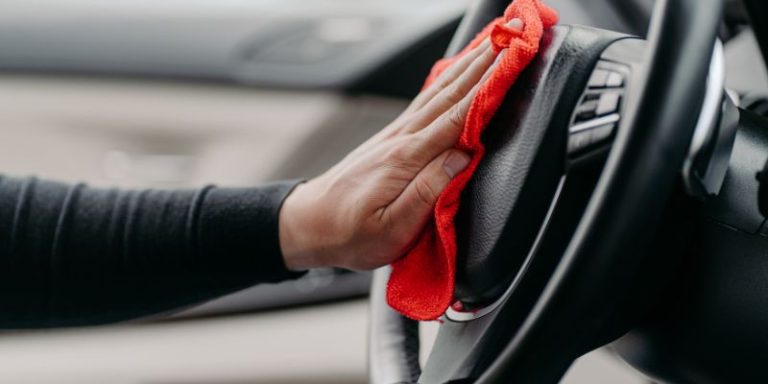
Check the spot with your fingertip between passes – once it feels tacky rather than hard, wipe it in one direction with a microfiber cloth. Don’t hold the dryer in one spot for more than a few seconds or use a heat gun on its high setting; on a hot day, paint that’s already warm from the sun can blister if you add too much direct heat on top of it.
Step 2: Use a Household Product or Adhesive Remover
If heat alone doesn’t fully clear it, an oil-based product breaks down what’s left. Any of the following work – pick based on what you have on hand, then move to the next one if the first doesn’t fully cut through the residue:
| Product | How to Use It | Best For |
|---|---|---|
| Cooking or baby oil | Apply to a cloth, rub in circles, let sit 2–3 minutes | Fresh residue, interior trim |
| Rubbing alcohol (under 70%) | Dab a cloth, don’t soak, wipe in one direction | Glass, chrome, most exterior paint |
| White vinegar | Soak a cloth, press on spot 1–2 minutes, then rub | Light residue, budget option |
| Baking soda paste | Mix with water, apply, let sit, wipe with a damp cloth | Mild, stubborn dried spots |
| Goo Gone or similar adhesive remover | Apply to cloth, let sit 3–5 minutes, wipe and rinse | Old, hardened, or large residue areas |
| WD-40 | Spray directly, wait 2–3 minutes, wipe clean | Exterior paint and metal trim only |
Always test any product on a small, hidden spot first – a door jamb or under the fuel door – and give it a minute to see how the paint reacts before using it on a visible panel. Avoid acetone-based nail polish remover; it can cut through wax and, on some plastics, cause hazing or cracking (“crazing”) that doesn’t buff out.
Step 3: Scrape Gently, Only if Needed
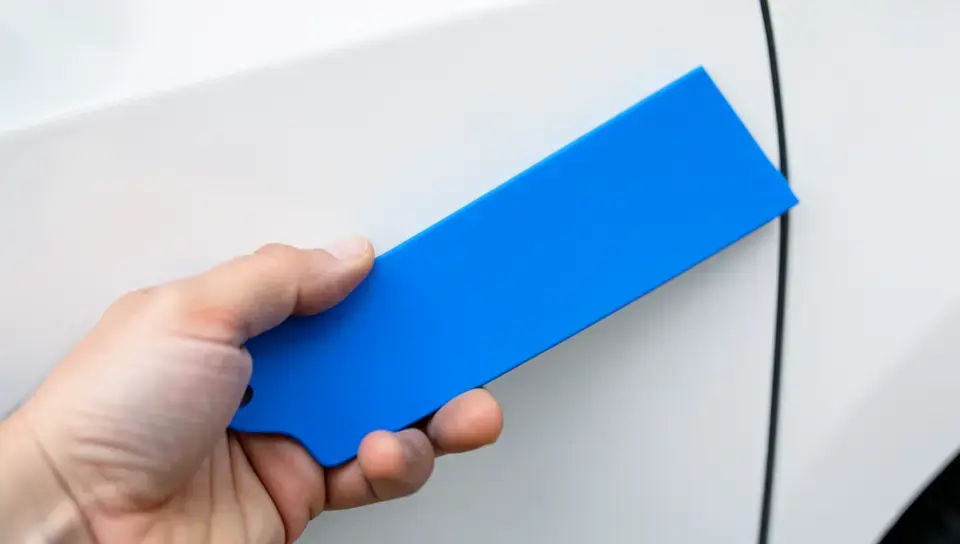
If a thick patch of residue is still stuck after heat and a solvent, a plastic trim scraper (not a razor blade or metal putty knife) can help finish it off. Hold the scraper nearly flat against the panel – close to a 15–20 degree angle – and push it under the edge of the softened glue rather than dragging it across dry.
- Never use a metal scraper, razor blade, or your fingernail directly on paint – even a light metal edge can cut through clear coat
- Keep the scraper flat, not angled up into the surface
- Wipe the residue off the scraper edge often so you’re not just spreading it around
- Stop and re-apply solvent if you feel any resistance or grinding
Removing Duct Tape Residue From the Dashboard or Interior Trim
Interior plastic and vinyl behave differently than exterior clear coat, which is a common search question and worth its own steps. Dashboard plastic is more heat-sensitive and can warp or develop a permanent shiny patch if a hair dryer is held too close for too long – keep it on low heat, at least 6 inches away, and never leave it pointed at one spot.
Skip WD-40 on interior trim; it’s designed for painted metal and can leave a greasy film on textured dash plastic that’s hard to fully wipe off and attracts dust afterward. Instead, use a small amount of rubbing alcohol on a cloth, or an interior-safe adhesive remover, and always test on a low-visibility spot (like inside the glovebox) first, since some interior plastics can be more prone to hazing than exterior paint.
Finishing Touches: Restore the Shine
Whatever product you used, wash the area with soap and water afterward to rinse away any leftover residue or oily film, then dry it fully. Exterior spots almost always look duller than the surrounding paint right after cleanup, even with zero damage – that’s the wax layer that got stripped along with the glue, not a sign the clear coat is harmed.
Apply a small amount of car wax or spray sealant to the spot with a microfiber applicator, working it in circular motions, then buff with a clean cloth. This blends the treated area back in with the rest of the panel and adds a protective layer that makes the next sticker, tape, or bumper decal easier to peel off cleanly.
Frequently Asked Questions
How Do You Remove Tape Residue From a Car Without Damaging the Paint?
Warm the spot with a hair dryer for 20–30 seconds to soften the adhesive, then work in an oil-based product like Goo Gone or a few drops of cooking oil with a microfiber cloth. Only use a plastic scraper – never metal – and always test any solvent on a hidden spot first. Finish with soap and water, then wax the area to restore the shine.
Is Goo Gone Safe on Car Paint?
Yes, Goo Gone Automotive is formulated specifically to be safe on clear coat, chrome, and glass. It’s a good default choice for tape or sticker residue, but it still strips wax, so plan to rewax the spot afterward, and always spot-test on flat or matte finishes before using it more broadly.
Can I Use WD-40 to Remove Duct Tape Residue From a Car?
Yes, on exterior paint and metal trim – spray it directly on the residue, wait 2–3 minutes, then wipe clean with a microfiber cloth. Avoid it on interior dashboard or door panel plastic, since it can leave a greasy film that’s hard to fully remove and tends to attract dust.
Will Rubbing Alcohol Damage Car Paint?
Isopropyl alcohol under 70% concentration is generally safe for a quick wipe if you don’t let it sit or soak into the paint, and it also works well on glass and chrome. Higher concentrations, or letting it dwell too long, can dull the clear coat’s finish over repeated use, so keep contact time short and rinse the spot afterward.
How Do You Get Sticky Residue Off a Car Dashboard?
Use low heat from at least 6 inches away rather than holding a hair dryer close, since dashboard plastic can warp under sustained direct heat. Then wipe with a cloth dampened in rubbing alcohol or an interior-safe adhesive remover – skip WD-40 on interior trim – and always test on a hidden spot like inside the glovebox first.
Why Does the Spot Look Dull After I Remove the Residue?
That dullness is almost always the wax layer that came off along with the glue, not damage to the clear coat underneath. Applying a small amount of car wax or spray sealant to the spot and buffing it in should restore the shine and blend it back in with the surrounding panel.
Conclusion
Duct tape residue is one of the easiest car messes to fix, as long as you soften it before you try to lift it. Heat first, follow with an oil-based product like Goo Gone if needed, save the plastic scraper for stubborn spots, and finish with a coat of wax so the panel matches the rest of the car. Skip the metal blades and acetone-based removers, and this is a five-minute job rather than a paint-correction problem.
Products related to this article
Sponsored / affiliate links. As an Amazon Associate I earn from qualifying purchases. I may earn additional commission from eligible campaigns.