How to Get Ink Out of a Leather Car Seat (By Ink and Leather Type)
Fresh ballpoint ink lifts off most leather car seats with a cotton swab and a little rubbing alcohol — but the safe method changes depending on your leather’s finish and the type of ink involved.
Not every leather seat reacts to cleaners the same way. A pigmented, factory-sealed leather seat (the kind in most mainstream cars) can usually handle a careful alcohol dab. An unsealed aniline, nubuck, or suede leather seat can stain permanently from the exact same product. Leather requires special care in general, and ink is one of the few stains where guessing wrong can make things worse.
This guide walks through how to tell which leather you have, which method matches your ink type, and exactly what to avoid so you don’t trade a small ink mark for a bigger discoloration problem.
Identify Your Leather Type First
Before you reach for any cleaner, figure out what kind of leather finish you’re working with. This single step matters more than the ink type, because it determines how aggressive a cleaner your seat can safely tolerate.
Most factory car seats use protected (pigmented) leather — it has a polyurethane topcoat that seals the surface and repels liquids. You can usually tell by pressing a finger into it: if the color doesn’t darken and a drop of water beads up instead of soaking in, it’s protected. Aniline, semi-aniline, nubuck, and suede leathers have little to no protective topcoat, so they absorb liquids (and stains) directly into the hide. These show up mostly in luxury trims and aftermarket upholstery.
| Leather Type | How to Tell | Ink Stain Risk |
|---|---|---|
| Protected / pigmented (most cars) | Water beads on the surface; color doesn’t darken when pressed | Lower — alcohol dabbing is generally safe when tested first |
| Semi-aniline | Slight color change when pressed; some water absorption | Moderate — test in a hidden spot before using any solvent |
| Aniline / nubuck / suede | Water soaks in immediately; surface feels soft, matte, or fuzzy | High — solvents can leave a permanent dark ring or lighten the dye |
AFTER-CLEANUP LEATHER CARE
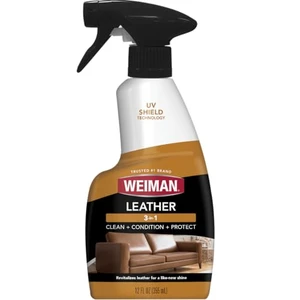 |
Weiman Leather Cleaner, Conditioner & Protector – $8.98 Once the ink is gone, alcohol and solvents leave leather thirsty — this conditions and re-seals the surface so the next spill beads up instead of soaking in.
|
Identify the Ink Type You Are Dealing With
Not all ink behaves the same way once it hits leather. Ballpoint ink is oil-based and sits mostly on the surface, which is why it’s the easiest to lift. Gel pen and felt-tip ink carry more pigment and dye, so they can bleed into the leather’s pores before you even notice the stain. Permanent marker ink is formulated to resist exactly the kind of light cleaning that removes ballpoint ink, which is why it needs a stronger — and more careful — approach.
| Ink Type | How It Behaves on Leather | Removal Difficulty |
|---|---|---|
| Ballpoint pen | Oily, mostly sits on the surface | Easiest — usually responds to rubbing alcohol alone |
| Gel pen / felt-tip | Water-based, more pigment, can migrate into pores | Moderate — may resist alcohol; test a stronger solvent on a hidden spot first |
| Permanent marker | Formulated to resist alcohol and water | Hardest — often needs a leather-safe solvent or a professional |
How to Remove Ink From Protected (Coated) Leather Car Seats
This is the method for the leather in most factory cars — the kind that beads water and doesn’t darken when you press it. Always test on a hidden spot (under the seat, or the back of a headrest) before treating the visible stain.
- Blot fresh ink immediately with a dry microfiber cloth. Don’t rub — rubbing pushes ink deeper into the grain and spreads it wider.
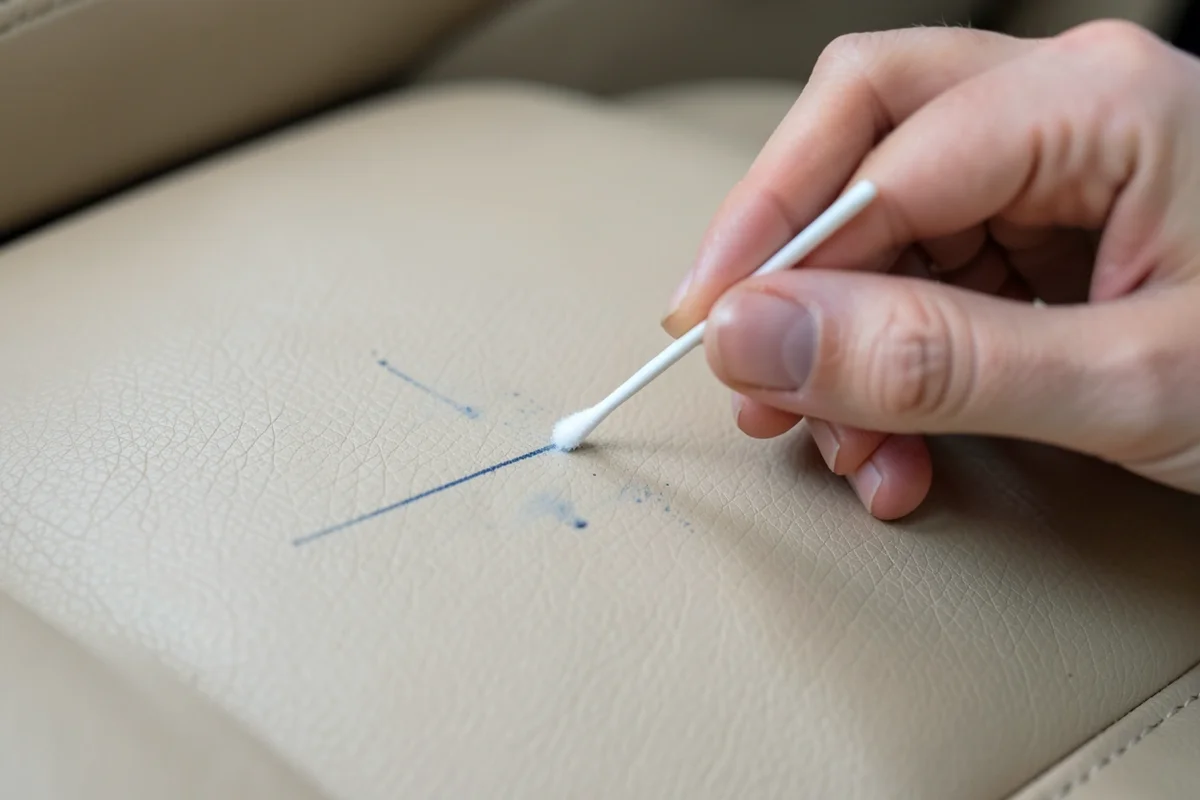
- Dampen a cotton swab or cotton ball with 70% isopropyl rubbing alcohol. It should be damp, not dripping.
- Test it on a hidden patch of the seat first. Wait a minute and check for any color change before moving to the visible stain.
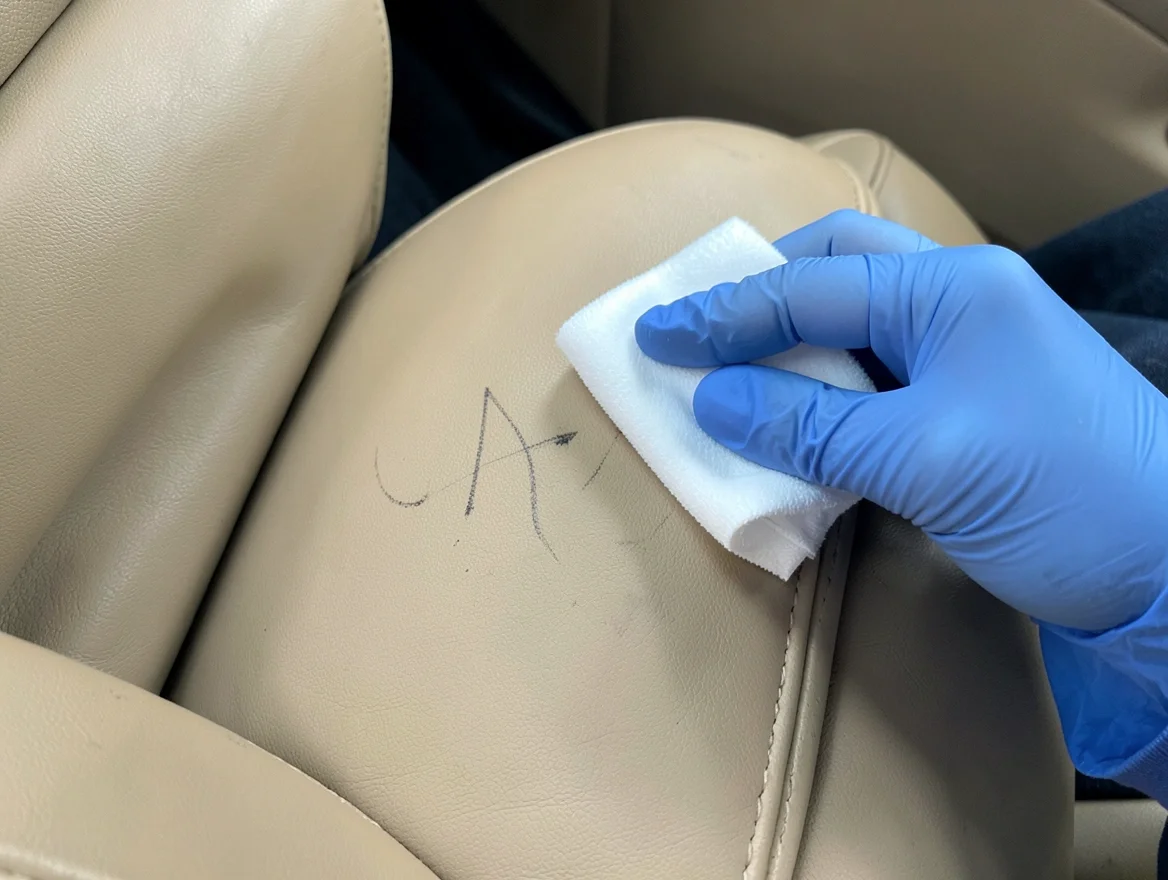
- Gently dab — never scrub — the stain, working from the outer edge toward the center so you don’t spread it.
- Switch to a clean section of swab as soon as it picks up ink, and immediately wipe the treated area with a barely damp cloth to remove leftover alcohol.
- Repeat in short sessions rather than one long scrub. Let the leather dry between attempts, and stop if the stain stops lifting — more alcohol won’t help once it plateaus.
- Condition the leather once the stain is gone (see the section below) — alcohol is dehydrating even when used correctly.
If alcohol alone doesn’t fully clear a gel-pen or marker stain, a leather-specific cleaner (like the one above) formulated to lift ink and grease without stripping the topcoat is the safer next step before reaching for a stronger solvent.
How to Remove Ink From Aniline, Nubuck, or Suede Leather
Unprotected leather has no topcoat standing between the ink and the dye underneath, so the same alcohol dab that works on a coated seat can pull color out along with the ink or leave a permanent dark ring. On these finishes:
- Blot fresh ink immediately — on unsealed leather, speed matters even more than on protected leather, since the ink starts absorbing right away.
- Skip alcohol and solvents as a first move. Start with a leather-safe cleaner made specifically for aniline, nubuck, or suede, and test it on a hidden spot first.
- If the stain doesn’t fully clear, stop before it’s worse. A faint shadow is a much easier fix for a professional than a solvent-damaged patch of dye.
- Never use a stiff brush or abrasive pad on suede or nubuck — it will crush the nap and leave a visible mark of its own.
Some dye bonds so tightly to aniline leather that a stain can only be lightened, not fully erased, without professional dye work. If your seat falls into this category and the mark is visible, it’s worth reading the section on professional help below before you experiment further.
What Not to Use on a Leather Ink Stain
A few common “fixes” for ink stains do more damage to leather than the ink itself:
- Magic erasers. They’re made of melamine foam, which is mildly abrasive — roughly equivalent to very fine sandpaper when wet. On leather, that abrasiveness can strip the thin protective topcoat, leaving a dull, faded patch even if the ink comes out.
- Acetone or nail polish remover. Acetone dissolves the finish on pigmented leather and can permanently damage aniline, nubuck, or suede on contact. If you use a non-acetone remover as a last resort on protected leather, test it on a hidden spot first and use it sparingly.
- Hot water. Heat can set an ink stain rather than lift it, and repeated hot-water contact dries out leather over time.
- Bleach or ammonia-based household cleaners. These strip color and dry out leather fast, and any residue left behind can cause damage that shows up weeks later.
- Hard scrubbing with any tool. Ink spreads and pushes deeper into the grain under pressure — blotting and dabbing are the only safe motions.
How to Protect Leather After Cleaning
Alcohol, solvents, and even leather cleaners pull natural oils out of leather along with the stain. Skipping this step is the most common reason a seat that looked fine right after cleaning ends up dry, stiff, or cracked a few months later.
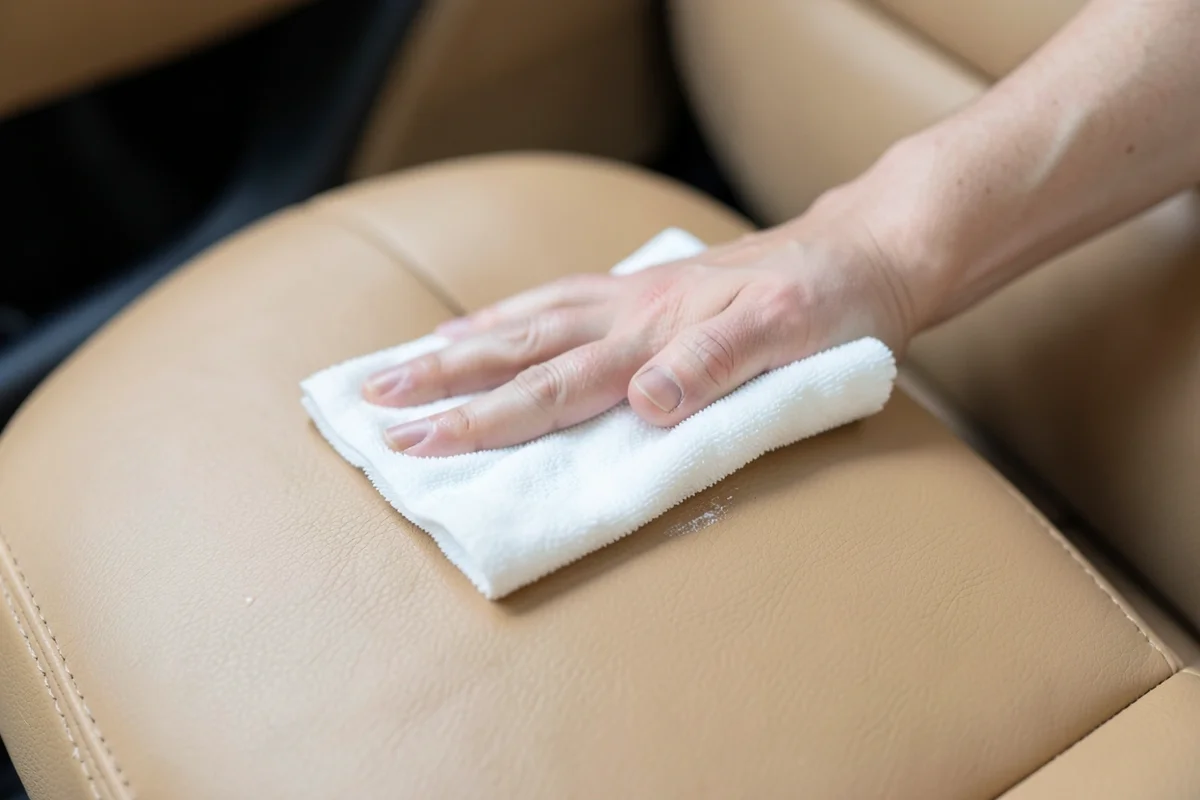
Apply a small amount of leather conditioner to a clean, soft cloth and work it in with light circular motions, then let it absorb for a few minutes before wiping off any excess. Going forward, a seat cover over frequently-used seats, and keeping pens capped and stored in a door pocket instead of loose on the seat, prevents most ink stains before they happen.
When to Call a Leather Repair Professional
Call in a leather specialist if the stain is old and set-in, if it’s on aniline, nubuck, or suede and hasn’t lightened after one careful attempt, or if a test spot already showed a color change. Professionals have access to leather-matched dye and can often fully restore a spot that DIY methods would only partially fix or make worse. Look for a shop with specific automotive leather experience — furniture upholstery techniques don’t always translate directly to car leather’s thinner, more heavily finished hide.
Frequently Asked Questions
How do you get pen ink off leather seats?
Dab a cotton swab lightly dampened with rubbing alcohol onto the stain, working from the outside edge in. Wipe with a clean, barely damp cloth, and repeat in short sessions rather than one long scrub. Always test on a hidden spot first, and condition the leather afterward.
Is ink permanent on leather?
Not usually on protected leather, where rubbing alcohol or a leather-safe cleaner typically lifts ballpoint and most gel-pen ink. On unsealed aniline, nubuck, or suede leather, dye can bond permanently with the ink, and the stain may only lighten rather than fully disappear without professional dye work.
Will a magic eraser remove ink from leather?
It can lift some ink, but it’s not recommended. Magic erasers are made of melamine foam, which is mildly abrasive when wet and can strip the thin protective topcoat on finished leather, leaving a dull or faded patch. A leather-specific cleaner or a careful alcohol dab is a safer first choice.
Does ink come out of car seats?
Yes, in most cases, especially if you act quickly. Blot the stain gently instead of rubbing, use rubbing alcohol or a leather-safe cleaner matched to your leather type, and always test on a hidden area first. Older or set-in stains, and stains on unsealed leather, are harder to fully remove and may need a professional.
Is rubbing alcohol safe on all leather car seats?
No. It’s generally safe in small, sparing amounts on protected (pigmented) leather when tested first, but it can dry out leather if overused and should be avoided on aniline, nubuck, or suede, where it can strip color or leave a ring. Always condition the leather after using it.
Conclusion
Removing ink stains from leather car seats comes down to matching the method to your leather type and ink type, not just reaching for the first cleaner you find. Identify your leather’s finish, blot before you dab, test every product on a hidden spot, and condition the leather once the stain is gone.
Regular conditioning and a bit of prevention — a seat cover, pens kept off the seat — go a lot further than any single cleaning trick. Handled carefully, most ink stains come out without leaving a trace.
Products related to this article
Sponsored / affiliate links. As an Amazon Associate I earn from qualifying purchases. I may earn additional commission from eligible campaigns.