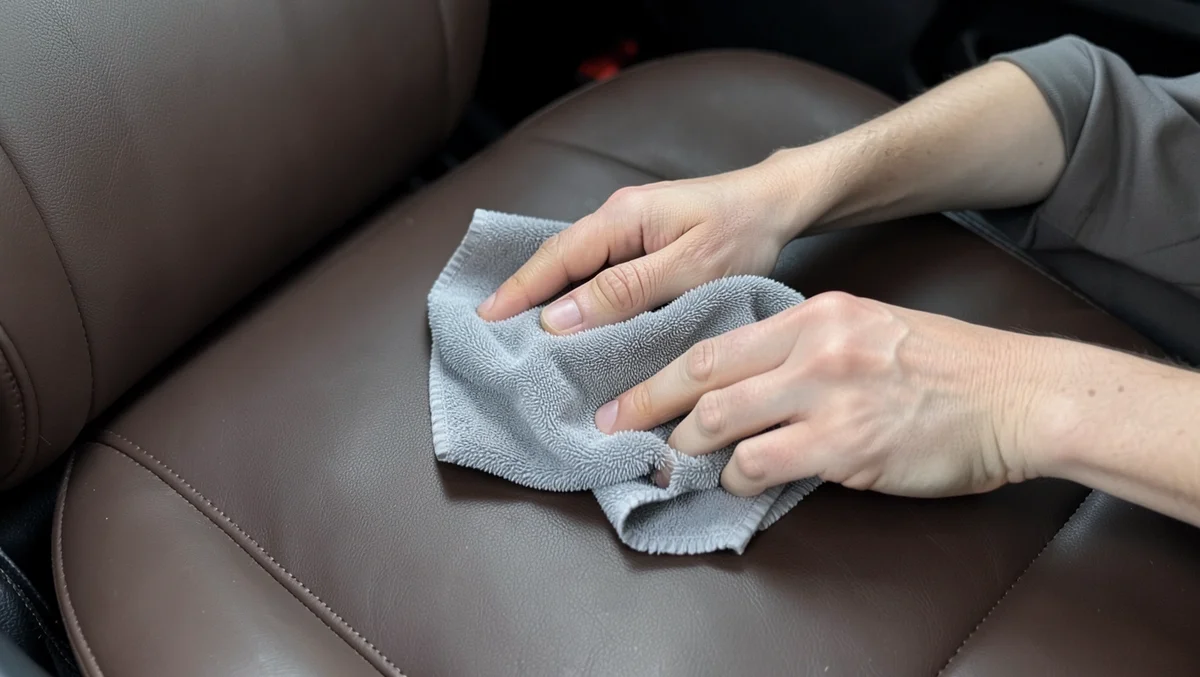
Stain Remover for Leather Car Seats: How to Choose and Use One
The right stain remover for leather car seats is a pH-neutral, water-based cleaner made specifically for leather — never dish soap, vinegar, or a general household spot cleaner, all of which strip the natural oils that keep leather from cracking.
Leather seats show every spill, and the wrong cleaner can do more damage than the stain itself. Ammonia-based glass cleaners, bleach, and straight alcohol can strip the dye and finish right along with the stain. This guide covers what actually works on leather specifically, how to treat the stains drivers deal with most (grease, ink, blood, mold), and the exact mistakes that turn a small stain into a permanent one.
What to Look For in a Leather Stain Remover
Not every “car interior cleaner” is safe on leather. Before you buy one, check for these four things:
- pH-neutral formula — leather’s natural pH is close to neutral; anything strongly acidic (vinegar) or alkaline (many degreasers) dries it out and speeds up cracking.
- No ammonia or bleach — both strip the dye and the protective topcoat finish, leaving discolored patches.
- Labeled safe for dyed or pigmented leather — some solvent-heavy cleaners are fine on unfinished leather but will lift color from the finished leather used in most cars.
- Works on more than one surface — a cleaner rated for leather, vinyl, and fabric gives you one bottle that’s safe for the rest of the interior too, so you’re not guessing.
BEST ALL-SURFACE STAIN REMOVER
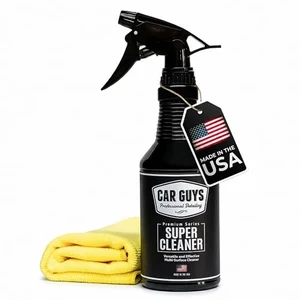 |
CarGuys Interior Car Cleaner for Tough Stains – $19.98 This water-based, pH-balanced formula is built to lift grease, ink, and food stains from leather, carpet, and fabric without stripping color or leaving a sticky residue.
|
How to Remove Common Stains from Leather Car Seats
Different stains respond to different treatments. Matching the method to the stain is the difference between lifting it cleanly and pushing it deeper into the leather.
Grease and Oil Stains
Blot the spot first with a microfiber cloth to soak up any excess oil — do not rub, or you’ll spread it. Sprinkle cornstarch or baking soda over the stain and leave it for a few hours (overnight for a stubborn spot); the powder pulls oil out of the leather’s pores. Brush the powder away with a soft brush, then go over the area with your leather cleaner in small circular motions and wipe dry.
Ink Stains
Dab (don’t rub) the mark with a cotton swab lightly dampened in rubbing alcohol. Gel-pen ink sometimes resists alcohol; acetone will pull it out, but test it on a hidden patch of seat first, since acetone can also strip the leather’s dye if the finish is thin. For the full method broken down by leather finish and ink type, see our complete ink-removal guide.
Blood Stains
Never use hot or warm water on blood — heat sets protein-based stains by cooking them into the fibers, making them permanent. Use cold water only, or make a thick paste from baking soda and a small amount of cold water, work it into the stain, let it dry, then brush and wipe it away.
Mold and Mildew
Dampen a cloth with hydrogen peroxide and wipe the affected area — it will foam slightly as it reacts with the mold, which helps lift it off the surface. A 1:1 mix of rubbing alcohol and water also works. Either way, dry the seat fully afterward and leave the doors open to air it out; leather that stays damp is exactly what let the mold grow in the first place.
How to Use a Leather Stain Remover the Right Way
- Test it first. Apply a small amount to a hidden spot — under the seat or on the side panel — and check back in a few minutes for any color change before treating the visible stain.
- Vacuum or brush off loose debris so you’re not grinding dirt into the leather while you work.
- Apply the cleaner to a cloth, not directly to the seat. Spraying straight onto leather can oversaturate the stitching and seams.
- Work in small, gentle circles and let the product sit for the time listed on the bottle before wiping.
- Wipe dry with a clean microfiber cloth and let the seat air-dry fully before use.
- Condition the leather afterward. Cleaning strips some of the natural oils along with the stain; a leather conditioner replaces them and helps prevent cracking.
What to Avoid on Leather Car Seats
- Vinegar and dish soap. Both are common fabric-seat remedies, but on leather they strip natural oils and dry out the hide over repeated use.
- Magic erasers. The melamine foam is a mild abrasive — fine on hard plastic trim, too rough for leather’s finish.
- Hot water. It sets protein stains (blood, dairy) permanently and can also soften and warp the leather’s finish.
- Soaking the leather. Leather absorbs moisture through the stitching; a heavily wet cloth left in place too long can cause water spots or mildew.
If the stains you’re dealing with span cloth and vinyl seats too, not just leather, our full guide on how to get stains out of car seats walks through the DIY methods for each material side by side.
Frequently Asked Questions
What is the best way to remove a stain from leather car seats?
Use a pH-neutral leather cleaner applied to a soft cloth, not sprayed directly on the seat. Work it into the stain in small circles, let it sit briefly, then wipe dry with a clean microfiber cloth.
Can vinegar be used on leather car seats?
It’s better avoided. Vinegar’s acidity strips the natural oils that keep leather flexible, and repeated use can dry and crack it. A pH-neutral leather cleaner treats stains without that risk.
Does baking soda remove stains from leather car seats?
Yes, for grease, oil, and blood stains specifically. Make a paste with a little water (or use it dry on oil stains), let it sit, then brush and wipe away. It’s not necessary for every stain type, like ink.
Will rubbing alcohol damage leather car seats?
Used sparingly on a damp cotton swab for ink stains, it’s generally safe. Used heavily or often, alcohol can dry out and dull the leather’s finish, so test it on a hidden spot first and use it only as needed.
How do you get grease or oil stains out of leather car seats?
Blot excess oil first, then cover the stain with cornstarch or baking soda for a few hours to absorb it. Brush the powder off and clean the area with a leather-safe cleaner.
How do you remove mold from leather car seats?
Wipe the area with hydrogen peroxide or a 1:1 mix of rubbing alcohol and water, then dry the seat completely and air out the car. Leaving leather damp is what lets mold return.
Leather seats hold up for years when they’re cleaned with the right product instead of whatever’s under the sink. Match the stain to the method above, test any new cleaner in a hidden spot first, and follow up with a conditioner so the leather stays as flexible as it looked the day it was new.
Products related to this article
Sponsored / affiliate links. As an Amazon Associate I earn from qualifying purchases. I may earn additional commission from eligible campaigns.