How to Lower a Car Jack Safely: Expert Tips
To lower a car jack, identify which type you have first. A hydraulic floor or bottle jack lowers by slowly opening a release valve (not by turning the main handle). A scissor jack lowers by turning its single handle counterclockwise, the same handle used to raise it.
Quick Answer
On a hydraulic floor or bottle jack, turn the release valve slowly counterclockwise until the car settles onto the ground – the pump handle itself does not lower it. On a scissor jack (the type stored with your spare tire), turn the same handle counterclockwise to wind it back down. Either way, remove jack stands first, go slowly, and keep your body clear of the vehicle’s path.
Lowering a car jack looks simple, but it is the step where most jack-related injuries actually happen – not the lifting. A jack that drops too fast, sits on uneven ground, or gets released before the jack stands are removed can crush a hand, damage a wheel, or let the car roll. Whether you just finished jacking up a car to change a tire or you are wrapping up work underneath the vehicle, the technique below works whether you are running a hydraulic jack or a scissor jack.
Know Your Jack Type – The Mechanism Is Different
Safer Than the Jack Alone
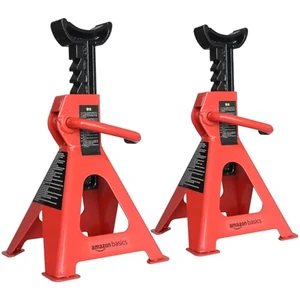 |
Amazon Basics 3-Ton Steel Jack Stands (Pair) – $37.78 A jack is only meant to lift and lower – never to hold a car up while you work under it. This pair of self-locking, ASME PASE-rated stands does that job safely.
|
Most of the confusion around “how do I lower this thing” comes from mixing up two completely different mechanisms. Check which one you have before you touch anything.
| Jack Type | How It Lowers | Common On |
|---|---|---|
| Hydraulic floor jack | Turn the release valve (a separate screw, often at the base or built into the handle knob) slowly counterclockwise | Home garages, shops |
| Hydraulic bottle jack | Same release-valve principle as a floor jack – the pump handle only raises it | Trucks, SUVs, trailers |
| Scissor jack | Turn the same handle you used to raise it, but counterclockwise | Factory spare-tire kits |
Trying to “turn the handle counterclockwise” on a hydraulic jack the way you would a scissor jack is a common mistake – the pump handle on a hydraulic jack does not rotate to lower the car, and forcing it can damage the mechanism. Always find the actual release valve first.
Before You Lower: Remove the Jack Stands and Clear the Area
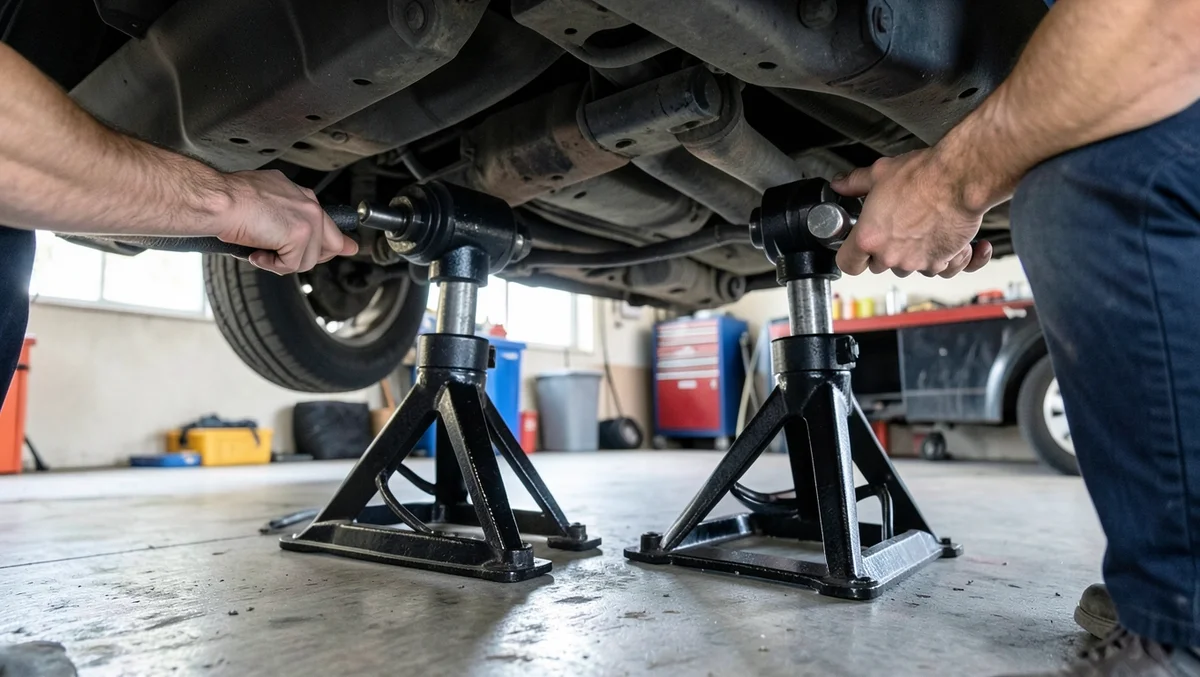
If you used jack stands while working under the car (you should have), remove them before you start lowering. Lowering a car onto stands that are still in place, or forgetting to pull them out, can tip the car or damage the stands. Walk through this order:
- Confirm all tools, rags, and parts are out from under the car.
- Remove the jack stands and set them aside.
- Recheck that the jack is still centered on the correct lift point.
- Make sure the ground under the jack is flat, hard, and dry.
- Warn anyone nearby that you are about to lower the vehicle.
How to Lower a Hydraulic Floor or Bottle Jack
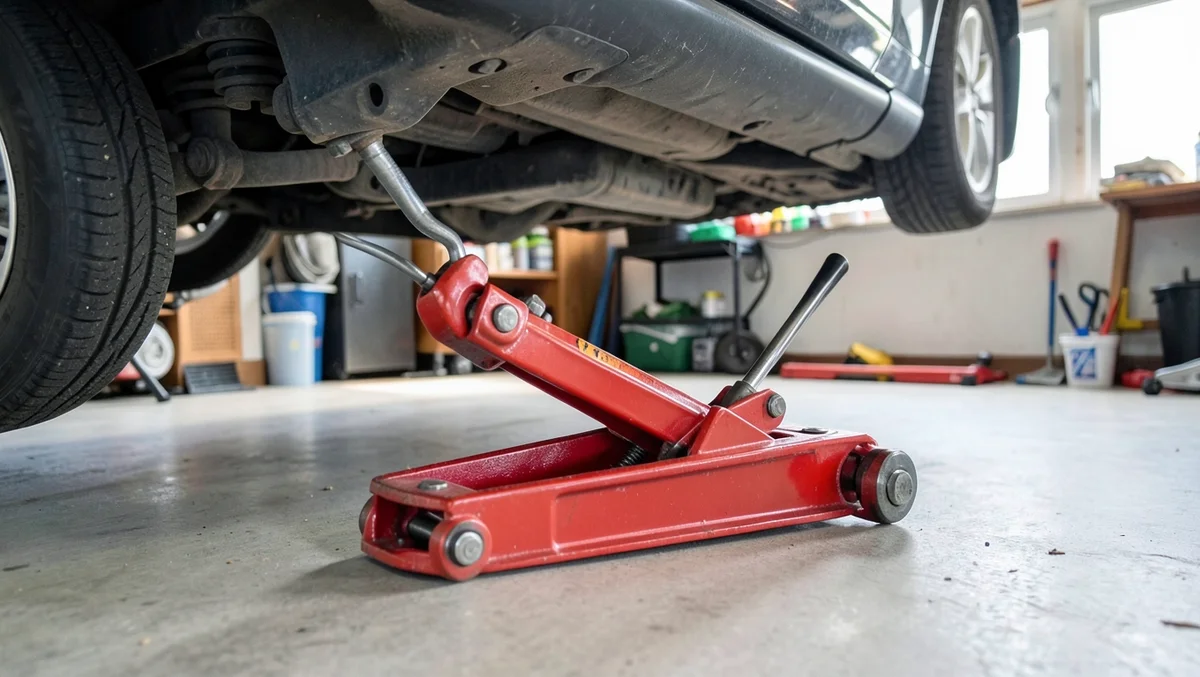
- Locate the release valve. On most floor jacks it is a small screw at the base of the handle assembly; on many bottle jacks it is built into the top of the handle itself.
- Insert the handle into the valve if your jack requires it, and turn it slowly counterclockwise – usually a quarter to a half turn is enough to start movement.
- Watch the car as it descends. If it drops faster than you want, turn the valve back clockwise slightly to slow it.
- Stop as soon as the tires are fully on the ground, then close the valve fully (clockwise) before storing the jack.
How to Lower a Scissor Jack
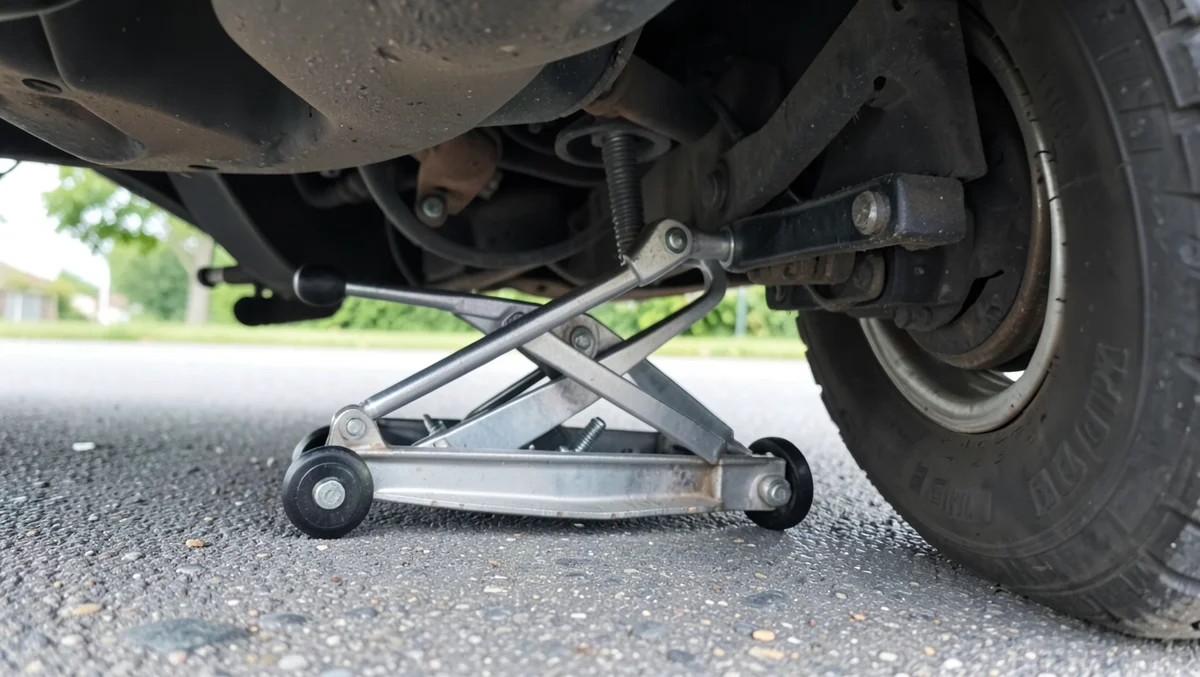
- Keep the crank handle attached – it is the same one you used to raise the car.
- Turn the handle counterclockwise at a slow, steady pace. There is no separate valve to worry about.
- Keep turning smoothly until the wheel touches the ground and the scissor mechanism is fully closed.
- Pull the jack out from under the car once the weight is fully back on the tires.
Common Mistakes When Lowering a Car Jack
Opening the valve too far, too fast. On a hydraulic jack this is the number-one cause of a sudden drop. Open it just enough to start a slow descent, and close it back down if the car falls faster than expected.
Forgetting the jack stands are still in place. Lowering onto stands that are positioned wrong, or leaving them under the car while you lower past them, is a common way to bend a rocker panel or tip the vehicle.
Lowering on uneven or soft ground. Gravel, grass, or a sloped driveway can let the jack’s base shift mid-descent. If the surface is not flat and firm, place a wide, solid board under the jack first.
A jack that will not lower at all. This is usually a stuck or gummed-up release valve, low hydraulic fluid, or a worn seal. Clean the valve threads, check the fluid level per the jack’s manual, and if it still will not release, stop using it – a jack that cannot release pressure in a controlled way is not safe to keep using.
Frequently Asked Questions
How Do You Lower a Car Jack?
It depends on the type. Turn a hydraulic jack’s release valve slowly counterclockwise to let the car descend, or turn a scissor jack’s handle counterclockwise. Confirm the vehicle is stable and the ground is level before you start either way.
How Do You Lower a Car Off Jack Stands?
Reposition the jack under the correct lift point, raise it just enough to take the weight off the stands, remove the stands, then lower the jack slowly (release valve on a hydraulic jack, or the handle on a scissor jack) until the tires are fully on the ground.
How Do You Lower a Scissor Jack?
Turn the same crank handle you used to raise it, but counterclockwise. There is no separate release valve on a scissor jack – keep turning smoothly until the wheel is fully on the ground.
Why Is My Jack Not Going Down?
On a hydraulic jack, this is usually a stuck or dirty release valve, low hydraulic fluid, or trapped air in the system. On a scissor jack, it is often rust or dried grease binding the threads. Clean and lubricate the mechanism, and stop using the jack if it still will not release in a controlled way.
Is It Safe to Lower a Jack Quickly?
No. Lowering quickly, especially on a hydraulic jack with the release valve opened too far, can drop the car suddenly, damage the suspension, or catch a hand or foot underneath. Always lower slowly and keep your body clear of the vehicle’s path.
Conclusion
Lowering a car jack safely comes down to knowing which mechanism you are working with, clearing jack stands and tools out first, and going slowly instead of cranking the valve or handle wide open. Get those three things right and the rest is routine.
Products related to this article
Sponsored / affiliate links. As an Amazon Associate I earn from qualifying purchases. I may earn additional commission from eligible campaigns.