Best LED Lights for Car Interiors: RGB Kits & Legal Colors
For most drivers, the best interior LED choice is a dimmable white or warm-white kit for footwells, map lights, and door pockets; use RGB only on static, low-output modes, and avoid blue, red, or flashing settings that can be illegal or distracting. Poorly set up interior lighting can bring citations, glare, battery drain, and weak night visibility. This guide compares legal-safe color choices, OEM-style utility upgrades, and RGB kits by use case and install risk.
Quick comparison
| Product | Badge | Best for | Price | ||
|---|---|---|---|---|---|
 |
Yourkar Car LED Strip Light, 24 LED Auto Interior UnderYourkar | Our pick | 24 LED · USB · White | $7.29
Price as of 30 Oct 2026
|
View |
 |
Interior Car LED Lights, 5 in 1 RGB Car Ambient LightingQVEVDACAR | Also great | 5 in 1 · RGB · 275in Fiber | $24.99
Price as of 30 Oct 2026
|
View |
 |
AUXITO 194 LED Bulb 6000K White 168 2825 W5W T10 WedgeAUXITO | Upgrade pick | 194 LED · 6000K · White | $11.99
Price as of 30 Oct 2026
|
View |
 |
Acrylic Interior Car LED Lights with Remote and WirelessTEKSHINNY | Also great | 6 in 1 · RGB · Acrylic | $29.99
Price as of 30 Oct 2026
|
View |
Use this comparison to sort by legality first, then by how much wiring you can tolerate. The right pick depends on whether you want factory-like utility, ambient color, or a setup you can remove fast.
How we chose
Top picks here come from manufacturer specs, listing details, and published buyer feedback, with fitment and legality checked against the way each product is meant to be used. We also weighed control method, socket compatibility, wiring visibility, and how easy each kit is to switch off or remove.
We did not look for one universal winner. The goal is the least annoying choice for your use case.
RGB interior LED strip kit: best for ambient color
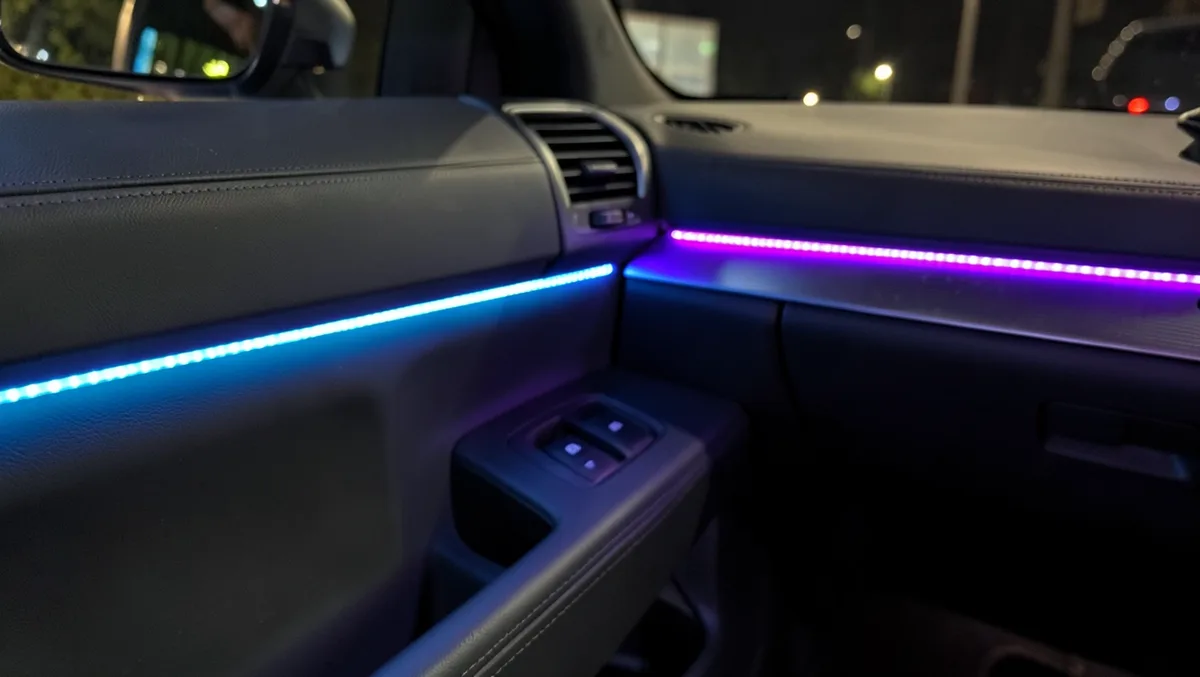
This type fits drivers who want cabin color control, app-based adjustment, and a more custom look than bulb swaps can provide. The featured kit lists 16 million colors, wireless app control for iOS and Android, music sync, and 29 preset modes, plus 12V compatibility.
It is the better pick when the goal is ambient lighting rather than bright task lighting. Based on the listing, it also adds DIY mode and sound-reactive effects, which makes it useful for show-car setups or road-trip mood lighting.
The drawback is the same one that makes RGB kits appealing: they can become distracting if you leave them bright, saturated, or flashing. Wiring also tends to be more visible than with a simple bulb swap, so route it cleanly and plan an easy switch-off method before you stick anything down.
Why it leads for ambient use
RGB strip kits are the easiest way to tune a cabin around a theme. They suit footwells, under-dash areas, and trim lines where soft color reads as accent instead of glare.
For a legal-safe setup, keep the output dim and stick to static colors while driving. White, warm white, and subdued amber are the safest starting points in many places, but local rules still control the final answer.
Install notes
Most 12V interior kits need a compatible vehicle power source, such as a car charger or adapter, plus a neat route that avoids pedals, seat tracks, steering components, and airbag zones. Check the manufacturer’s listing for your model before you buy, because trim layout and power access vary.
Included accessories often matter as much as the LEDs. This category commonly relies on a pry bar, double-sided tape, a remote controller, or magnetic mounting to keep the install neat and removable.
Where glare becomes a problem
Glare starts when the LEDs reflect in the windshield, mirror housings, or glossy trim. If you can see the source in the driver’s sightline at night, it is probably too bright or placed too high.
Suppose the kit looks clean in daylight but washes the lower windshield at dusk. Lower the brightness first, then move the strip farther from glass before you decide the kit is wrong for the car.
LED bulb kit: best for factory-style lighting
This is the right lane if you want brighter, more OEM-like cabin light without a colorful mood setup. The listed bulb kit is plug and play and supports common interior socket types for typical interior locations.
It is especially useful for dome lights, map lights, door courtesy lamps, trunk lamps, and some license-plate applications. The listing says it is a 6000K white replacement, which points toward clean utility light rather than decorative accent color.
The drawback is flexibility. Bulb kits are excellent for replacing a factory lamp, but they do not create the same ambient effect as strips or fiber optics, and they only work where the socket family matches.
Socket families and common cabin locations
T10 is a common wedge format for small interior lamps. DE3175 and 31mm/36mm/41mm-style festoon sizes are often used in dome, map, and courtesy lights, though exact fit still depends on the vehicle.
A bulb kit wins when the cabin already has a lamp housing you can replace. It is usually the cleaner choice for people who want better light output without visible strip runs.
When bulb swaps beat strip kits
Choose bulbs when you want easy reversibility, less visible wiring, and a stock-looking result. They are also easier to remove for lease returns or resale, because the light source stays inside the factory lens or housing.
A common first-timer mistake is buying a strip kit for a problem that a socket swap would solve more neatly. If the goal is brighter map lights or trunk light output, the bulb route is usually simpler and less fussy.
Fitment checks that matter
Do not buy by socket name alone. Check bulb length, polarity, lens depth, and whether the housing has room for the new LED’s shape.
Vehicles vary by trim and model year, so the right fit for one car can sit loose or throw uneven light in another. That is especially true in older dome lights and tight trunk housings.
Fiber optic interior lighting: best for a tidy install
This category suits drivers who want a cleaner, more premium look with less obvious wiring. The listed kit combines fiber optic strip lighting with wireless app control, 16 million colors, music and DIY functions, and a design that can be bent and cut.
Its main appeal is visual order. Fiber optic setups can hide the light path better than exposed strips, which makes them a strong match for cabins where you want the glow to read as built-in rather than added later.
The drawback is planning. If you skip path layout before sticking or routing anything, the finish can look uneven, and the fiber may telegraph bends or sloppy terminations more than a basic bulb kit would.
Reduced visible wiring
Fiber optic lighting can reduce the look of loose runs because the visible output is carried through a narrow light path. That makes it easier to keep the dash area and lower console area visually calm.
It still needs careful routing. The power feed, controller placement, and any hidden splice points should all be planned before installation starts.
Path planning before you stick anything down
- Map the cabin zones you want lit, then mark where the controller will sit.
- Check that the route avoids pedals, hinges, vents, seat tracks, and airbags.
- Dry-fit the light path first, especially around corners and trim gaps.
- Confirm you can reach the switch-off point without hunting for it at night.
- Only then fix the strips or fiber in place with tape or mounts.
If the car is leased or rented, this style still needs caution. The cleaner the finish, the more tempting it is to bury parts where removal later becomes annoying.
Interior LED decision matrix
| Use case | Legal-safe color choice | Install style and switch-off notes |
|---|---|---|
| Daily driver | White or warm white; subdued amber if your local rules allow it | Use bulb replacements or low-output strips with hidden wiring; keep glare low and make the off switch obvious |
| Show or ambient use | Static RGB in muted tones; avoid red, blue, and flashing while driving unless local law clearly allows it | Choose fiber or strip kits with app control, then set a default dim mode and a quick shutoff path for public roads |
| Temporary or rental use | White or warm white for the least attention; avoid highly saturated colors if removal matters | Use plug-and-play bulbs or taped strips with minimal adhesive, and keep every component reachable for fast removal |
This is the practical split most buyers miss: daily drivers need low-glare utility, show setups need controllable color, and temporary installs need the fastest exit path. If you want one rule that covers all three, choose the least visible wiring and the easiest shutoff.
Say your commute includes dark suburban roads and you want a cleaner cabin look. A dim white map light and footwell glow will usually be less distracting than a full RGB strip set, and it is easier to switch off when local rules or road conditions call for it.
Are RGB car interior lights legal?
Sometimes, but not everywhere and not in every mode. Interior lighting legality depends on region, where the lights are visible, and whether they distract the driver, reflect in the windshield, or resemble emergency lighting; red and blue deserve special caution because they can trigger enforcement or confusion.
What color interior LED lights are legal in a car?
White, warm white, and low-output amber are the safest choices for daily driving because they are less likely to draw attention or mimic emergency colors. Even then, local law controls the final answer, and a legal color can still be illegal if it is too bright, flashing, or aimed into the driver’s view.
Blue and red are the biggest caution zones. They can be seen as emergency-style colors in some regions, and in any cabin they are more likely to reflect off glass and become distracting at night.
Why placement matters as much as color
Lights hidden below the dash are usually less risky than lights mounted high on the dash or near the windshield. A bright strip that is legal in color can still create an issue if it spills onto the glass or blocks the driver’s view.
That is why the best legal setup is often dim, fixed, and pointed away from reflective surfaces. The result looks cleaner and gives you fewer problems during night driving.
Which one should you buy?
Choose the RGB strip kit if you want color control, app features, and the option to set a mood for parked or low-risk driving. Choose the bulb kit if you want brighter factory-style light and the easiest path to a stock-looking cabin. Choose the fiber optic kit if a tidy appearance matters more than simple installation.
Choose by budget
The white strip kit is the cheapest entry point here, but it is also the least flexible. The bulb kit sits in the middle for utility. The fiber optic RGB kit costs more because it bundles more control, more visual effect, and more install complexity.
Choose by install tolerance
If you want the least wiring exposure, go with the bulb kit. If you do not mind planning routes and hiding the controller, a strip or fiber optic kit gives you more room to shape the cabin.
Do not buy a kit only for the color count. A clean install with one legal shade will usually age better than a messy install with 16 million options.
Choose by how often you want to turn it off
If you expect to switch the lights off every time you hit public roads, choose a setup with an easy control method and a memorable off routine. App control helps with this because brightness and color can be adjusted quickly, and DIY mode or music mode can be left for parking or events.
Suppose you have a rental car and only need light for a weekend trip. A plug-and-play bulb kit or removable USB-powered strip is the safer choice because it is easier to uninstall without leaving a mess.
How to choose
Start with power, then fit, then legality. Most interior kits run on a 12V vehicle power system, but you still need to check the kit’s input, your car’s socket layout, and whether the route stays clear of controls and safety systems.
App control is the right call if you want wireless brightness and color adjustment, DIY mode, or music mode. If you only want brighter white light, a bulb replacement is simpler and less likely to annoy you later.
Music sync mode can be fun for parked events or road trips because the microphone reacts to beat and sound changes. It is a poor choice for driving if the lighting becomes too lively or starts pulling attention away from the road.
Look closely at accessories too. A pry bar, double-sided tape, magnetic mounting, and a remote controller can save time, but only if the kit still allows a clean shutoff and tidy removal.
One last filter matters most: if the light can be seen from the driver’s seat, assume it can become a problem. Dim it, move it, or choose another color before it becomes a glare issue.
Frequently asked questions
What are the best LED lights for car interiors?
The best choice depends on the job. Use white or warm-white bulb kits for factory-style lighting, RGB strip kits for ambient color, and fiber optic kits when you want a cleaner look with less visible wiring. The safest daily-driver setup is usually dim and non-flashing.
Do interior LED kits work in all vehicles?
No. Most are 12V, but socket families, trim shapes, and available space vary by vehicle. Check the manufacturer’s listing for your model, and confirm whether you need a car charger, adapter, or a specific bulb size such as T10, DE3175, or a festoon length.
Should I buy an app-controlled RGB kit or bulb replacement kit?
Buy the RGB kit if you want color control, mood settings, or music sync. Buy the bulb kit if you want brighter white light, easier installation, and less visible wiring. For many drivers, the bulb swap is the better fit for daily use.
How hard is it to install car interior LED lights?
It ranges from very easy to moderately involved. Plug-and-play bulb kits are usually the simplest, while strip and fiber optic kits need more planning for routing, mounting, and switch-off access. The safest install always follows the vehicle and product manuals.
Products related to this article
Sponsored / affiliate links. As an Amazon Associate I earn from qualifying purchases. I may earn additional commission from eligible campaigns.