How to Price Car Detailing: A Comprehensive Guide for Beginners and Pros
Hey there! If you’re reading this, you’re probably wondering how to price car detailing services, whether you’re starting a business or just curious about what goes into those costs. I’ve spent years diving into the world of car detailing—both as a hobbyist and someone who’s helped friends and family set up their own detailing gigs. It’s a fascinating industry, full of shiny cars and happy customers, but pricing can feel like navigating a maze. Don’t worry, though—I’m here to break it all down for you, step by step, like we’re chatting over coffee. By the end of this article, you’ll have a clear idea of how to set prices that are fair, competitive, and profitable, all while keeping your customers smiling. Let’s get started!
Understanding the Basics of Car Detailing
Car detailing is more than just a quick car wash. It’s about giving a vehicle a deep, thorough clean, inside and out, to make it look as close to brand-new as possible. Think of it as a spa day for your car—every nook and cranny gets attention. When I first started exploring detailing, I was amazed at how much work goes into it. From scrubbing upholstery to polishing paint, it’s a labor of love.
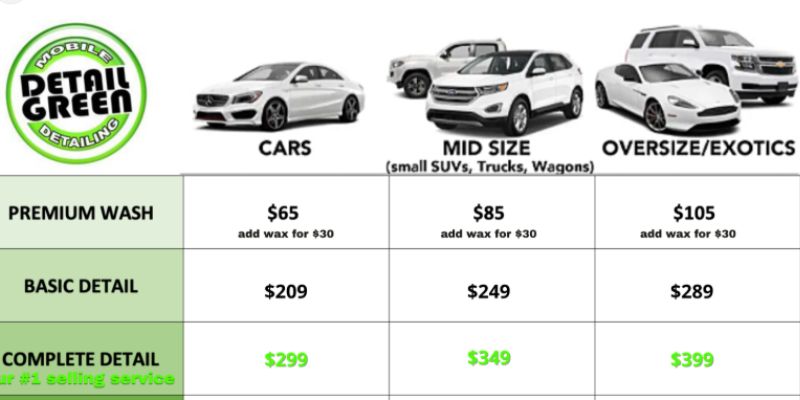
Pricing these services can be tricky because no two cars are the same. A dusty sedan needs less work than a muddy SUV that’s been off-roading. Plus, customers in different parts of the USA expect different price points. In my experience, understanding what detailing involves is the first step to setting prices that make sense. You’re not just cleaning—you’re adding value to a car, boosting its resale potential, and making it a joy to drive.
Factors That Influence Car Detailing Prices
When I started researching pricing, I quickly learned it’s not a one-size-fits-all deal. Several factors come into play, and knowing them helps you set prices that reflect your effort and keep customers coming back. Here’s what affects your costs:
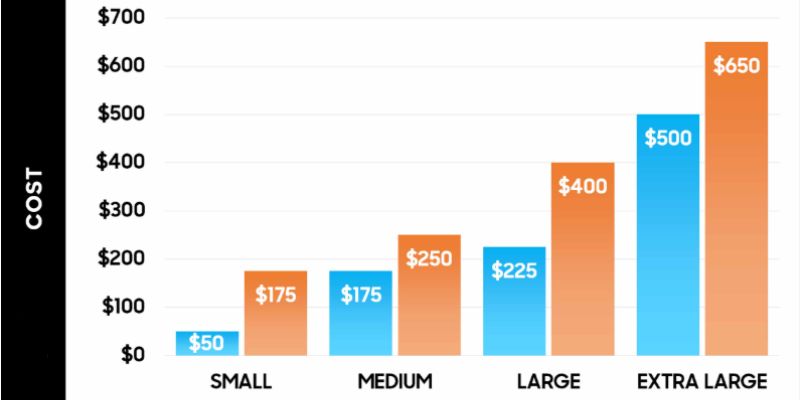
- Vehicle Size: Bigger vehicles like trucks or SUVs take more time and materials. I once detailed a compact car in three hours, but a minivan took me nearly five!
- Condition of the Car: A car that’s barely dirty is easier than one with pet hair or years of grime. I’ve seen cars that needed hours of scrubbing just for the seats.
- Type of Service: Basic washes are cheaper than full interior-exterior packages or specialty services like ceramic coating. Each service has its own time and supply demands.
- Location: Prices vary across the USA. In big cities like Los Angeles, detailing might cost more due to higher living costs. In smaller towns, you might charge less to stay competitive.
- Your Expertise: If you’ve got years of experience or certifications, you can charge more. Customers pay for quality, and I’ve learned they’ll happily pay extra for a detailer they trust.
- Mobile vs. Shop-Based: Mobile detailing, where you go to the customer, often costs more because of travel expenses like gas and vehicle maintenance.
These factors are like ingredients in a recipe—mix them together, and you get a price that works for your business and your clients.
Types of Car Detailing Services
Before setting prices, you need to know what services you’re offering. When I started, I offered a little bit of everything, but I quickly learned to focus on specific packages to streamline my work. Here’s a breakdown of common detailing services:
- Basic Detailing: This includes an exterior wash, wax, and interior vacuuming. It’s quick and budget-friendly, perfect for customers who want a simple refresh.
- Interior Detailing: This is all about the inside—vacuuming, shampooing carpets, cleaning upholstery, and wiping down surfaces. I once spent two hours just on a car’s interior because of stubborn stains!
- Exterior Detailing: This focuses on the outside—washing, clay bar treatment, polishing, and waxing. It’s great for making a car’s paint pop.
- Full Detailing: This combines interior and exterior services for a complete makeover. It’s time-intensive but gives amazing results.
- Specialty Services: These include extras like ceramic coating, paint correction, or headlight restoration. They’re pricier because they require special skills and products.
- Engine Bay Cleaning: This cleans under the hood, removing grease and dirt. It’s a niche service but can boost engine performance and appearance.
- Add-Ons: Things like odor removal, pet hair removal, or fabric protection can be offered separately to upsell customers.
Each service has its own time and material costs, so understanding what you’re offering helps you price accurately. I like to think of it as building a menu—give customers clear options, and they’ll pick what suits them.
How to Research Your Local Market
One of the biggest lessons I learned is that you can’t set prices in a vacuum. You need to know what other detailers in your area are charging. When I started, I called around to local shops and even got my own car detailed to see what they offered. Here’s how you can do it:
- Check Competitors: Look at websites, social media, or call detailing shops in your area. Note their prices for different services and packages.
- Understand Your Audience: Are your customers luxury car owners or families with minivans? In my town, families wanted affordable packages, while car enthusiasts were willing to pay more for premium services.
- Consider Location: Prices in urban areas are often higher than in rural ones. For example, a basic detail in New York City might cost $100, while in a small Midwest town, it could be $50.
- Look at Reviews: Customer reviews on platforms like Yelp can show what people value. If everyone raves about a shop’s attention to detail, you know quality matters more than low prices.
When I did my research, I found that offering slightly lower prices than the big shops but with better service helped me stand out. It’s all about finding that sweet spot where you’re competitive but not undercutting yourself.
Calculating Your Costs
Pricing isn’t just about what the market will bear—you need to cover your costs and make a profit. I learned this the hard way when I undercharged for a job and barely broke even. Here’s how to figure out your costs:
- Materials: Think about soaps, waxes, polishes, microfiber towels, and other supplies. For example, a good car wash soap might cost $10 per gallon, and you’ll use a few ounces per car.
- Equipment: Pressure washers, steam cleaners, and vacuums aren’t cheap. I invested in a good pressure washer for $300, and it’s paid for itself over time.
- Labor: Your time is valuable. If a detail takes six hours, decide how much you want to earn per hour. I aim for at least $30/hour, but you might want more.
- Overhead: This includes rent (if you have a shop), utilities, insurance, and marketing. For mobile detailers, factor in gas and vehicle maintenance.
- Profit Margin: Aim for a 15-35% profit margin. This means if a job costs you $100 in materials and labor, you might charge $130-$150 to ensure a profit.
Here’s a simple table I use to calculate costs for a basic detailing job:
| Expense | Cost |
|---|---|
| Materials (soap, wax, etc.) | $15 |
| Equipment (depreciation) | $10 |
| Labor (3 hours at $30/hour) | $90 |
| Overhead (gas, insurance) | $20 |
| Total Cost | $135 |
| Desired Profit (20%) | $27 |
| Price to Charge | $162 |
This table helped me see exactly what I needed to charge to stay profitable. Adjust the numbers based on your costs and desired profit.
Setting Your Pricing Strategy
Now that you know your costs and the market, it’s time to set your prices. I’ve tried a few strategies over the years, and here’s what works best:
- Flat Rates: Offer set prices for specific packages, like $75 for a basic detail or $200 for a full detail. This makes it easy for customers to understand.
- Tiered Pricing: Create different levels, like “Basic,” “Deluxe,” and “Premium.” I found that customers often pick the middle option, so make it attractive.
- Starting At Prices: Instead of fixed prices, list “starting at $100” for a service. This gives you flexibility if a car needs extra work.
- Hourly Rates: For specialty services like paint correction, charge by the hour. I charge $50/hour for detailed work like this.
- Package Deals: Bundle services for a discount. For example, I offer a $250 full detail package that includes interior, exterior, and waxing, which saves customers $50 compared to buying each service separately.
When I started, I used flat rates but added “starting at” to give myself wiggle room. It helped me avoid undercharging for messy cars while keeping prices clear for customers.
Pricing for Mobile vs. Shop-Based Detailing
One big decision you’ll face is whether to run a mobile detailing business or work from a fixed shop. I’ve done both, and they come with different pricing considerations.
- Mobile Detailing: You travel to the customer, which adds costs like gas, vehicle wear, and time. I charge 10-20% more for mobile services to cover these. For example, a $150 shop detail might be $180 for mobile.
- Shop-Based Detailing: You save on travel costs but might pay rent or utilities. I found shop-based pricing can be lower since you’re not driving around, but you need to factor in overhead.
Mobile detailing is super convenient for customers, so they’re often willing to pay extra. When I went mobile, I added a $20 travel fee for jobs outside a 10-mile radius, which covered my gas and time.
How to Communicate Prices to Customers
Pricing isn’t just about numbers—it’s about how you present them. I’ve had customers walk away because they didn’t understand the value of my services. Here’s how to communicate effectively:
- Be Transparent: List your services and starting prices on your website or flyers. I put together a simple menu with clear descriptions, like “Basic Detail: Starting at $75—includes exterior wash and interior vacuum.”
- Explain Value: Tell customers why your service is worth it. For example, I explain that my full detail includes a clay bar treatment to remove contaminants, which protects the paint.
- Offer Consultations: For big jobs, inspect the car first and give a custom quote. I once won a customer by walking them through what their $200 detail would include.
- Upsell Smartly: Suggest add-ons like waxing or odor removal without being pushy. I say something like, “For an extra $30, I can add a ceramic sealant that’ll keep your car shiny for months.”
When you show customers the value behind your prices, they’re more likely to trust you and book your services.
Adjusting Prices Over Time
Your prices aren’t set in stone. As your business grows, you’ll need to adjust them. I revisit my prices every six months to stay competitive and profitable. Here’s what to consider:
- Rising Costs: If supplies or gas prices go up, you may need to charge more. I raised my prices by 5% last year when my wax supplier increased costs.
- Experience: As you get better, you can charge more. After I got certified in ceramic coating, I upped my prices for that service by 20%.
- Demand: If you’re booked solid, it’s a sign you can raise prices. I started charging $10 more per package when I had a waiting list.
- Seasonal Changes: Spring and summer are busy for detailing, so you might offer discounts in winter to keep business steady.
Keep an eye on your competitors and customer feedback to know when it’s time to tweak your prices.
Marketing Your Pricing for Maximum Appeal
Once you’ve set your prices, you need to market them effectively. I learned that a good marketing strategy can make even higher prices seem like a great deal. Here’s how to do it:
- Showcase Before-and-After Photos: Post pictures of your work on social media or your website. I shared a photo of a muddy SUV I transformed, and it got me three new clients.
- Highlight Value: Emphasize what sets you apart, like eco-friendly products or same-day service. I advertise that I use high-end waxes for a longer-lasting shine.
- Offer Promotions: Run specials like “$20 off your first detail” to attract new customers. I did this when I started and got a loyal client base quickly.
- Use SEO: Make sure your website includes keywords like “car detailing prices near me” or “affordable car detailing in [your city].” This helped my site rank higher on Google.
- Leverage Reviews: Encourage happy customers to leave reviews on Google or Yelp. Positive feedback builds trust and justifies your prices.
Marketing is all about showing customers why your service is worth every penny. When I started focusing on SEO and social media, my bookings doubled within a month.
Common Mistakes to Avoid
I’ve made plenty of mistakes when pricing my services, and I want you to avoid them. Here are some pitfalls to watch out for:
- Undercharging: If you price too low, you’ll burn out and lose money. I once charged $50 for a detail that took five hours—never again!
- Overpromising: Don’t promise results you can’t deliver. I learned to be honest about what I could achieve with a basic package.
- Ignoring Costs: Always factor in materials, labor, and overhead. I forgot to include gas costs early on and barely broke even.
- Not Researching: If you don’t know what competitors charge, you might price yourself out of the market. Research saved me from setting prices too high.
- Sticking to Fixed Prices: Be flexible. A car in bad shape needs a higher quote than a clean one.
Learning from these mistakes helped me build a sustainable business that keeps both me and my customers happy.
Conclusion
Pricing car detailing services can feel overwhelming at first, but it’s all about understanding your costs, knowing your market, and communicating value to your customers. I’ve been through the ups and downs of figuring this out, and I can tell you it gets easier with practice. By researching your local competition, calculating your expenses, and offering clear, value-driven packages, you can set prices that are fair and profitable. Whether you’re running a mobile operation or a shop, the key is to balance what customers are willing to pay with what keeps your business thriving. So, grab a notebook, start crunching those numbers, and get ready to make cars shine while building a business you’re proud of. You’ve got this!
FAQs
How Much Should I Charge for a Basic Car Detail?
For a basic detail, which includes an exterior wash, wax, and interior vacuuming, I typically charge between $50 and $100, depending on the car’s size and my location. In smaller towns, you might start at $50, while in big cities, $75-$100 is more common. Always check what local competitors charge to stay competitive.
Should I Offer Discounts for First-Time Customers?
Yes, offering discounts for new customers is a great way to build your client base. I often give $20 off the first detail to get people in the door. Just make sure the discount doesn’t cut into your profits too much—cover your costs first.
How Do I Know If My Prices Are Too High or Too Low?
Compare your prices to local competitors and track your bookings. If you’re losing customers to cheaper detailers, your prices might be too high. If you’re booked solid but barely making a profit, you’re probably charging too little. I adjust my prices every six months based on demand and costs.
Is Mobile Detailing More Expensive to Price?
Mobile detailing usually costs more because of travel expenses like gas and time. I add a $15-$25 fee for mobile services, depending on distance. Customers love the convenience, so they’re often happy to pay extra.
How Can I Justify Higher Prices to Customers?
Show them the value! Explain what’s included, like premium products or extra steps like clay bar treatment. I share before-and-after photos and highlight my certifications to build trust. Happy customers are willing to pay for quality.