How To Remove Mold In A Car: The Genius, Safe Way
To safely remove mold in a car, first vacuum the area thoroughly with a HEPA filter vacuum. Then, scrub the spots with a solution of equal parts white vinegar and water. Use a soft brush for fabric and a cloth for hard surfaces. Finally, air out the car completely in direct sunlight to dry it and kill any remaining spores.
Finding that musty smell or seeing fuzzy spots in your car can be a real headache. It feels gross, and you might worry it’s a huge, expensive problem. But don’t stress! Mold in a car is a common issue, especially in damp weather or if a window was left cracked open. The good news is that you can absolutely handle this yourself.
You don’t need to be a professional detailer or use harsh, scary chemicals. In this guide, I’ll walk you through a simple, safe, and super-effective way to get rid of that mold for good. We’ll cover everything from what causes it to how to make sure it never comes back. Let’s get your car smelling fresh and looking clean again!
First, Why Is There Mold In Your Car?
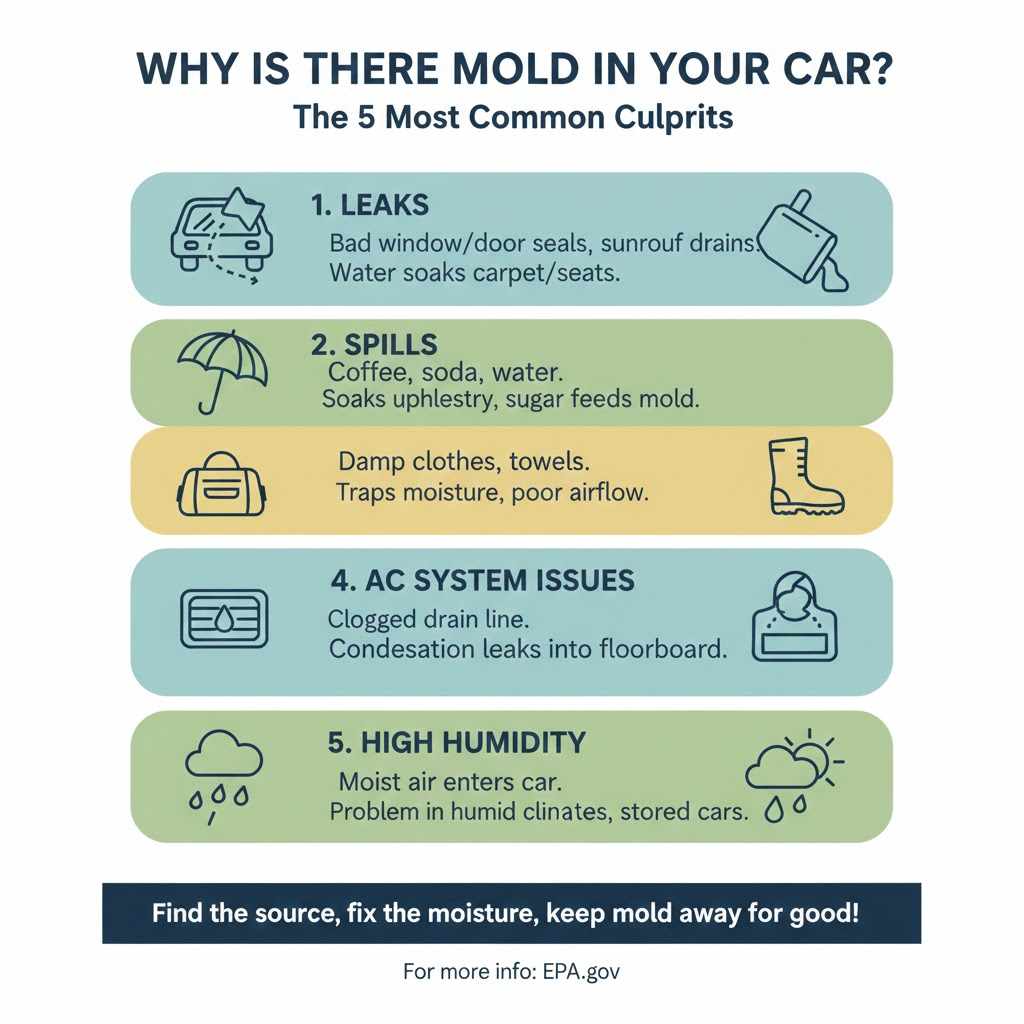
Before we jump into cleaning, it helps to know why mold showed up in the first place. Think of yourself as a detective. Mold needs three things to grow: moisture, warmth, and food (like dust, crumbs, or fabric fibers). Your car can easily become the perfect home for it. Understanding the cause is the key to preventing it from returning.
Here are the most common culprits:
- Leaks: A bad seal around a window, sunroof, or door is a classic entry point for water. Rain gets in, soaks into the carpet or seats, and creates a damp environment perfect for mold. Even a tiny leak can cause a big problem over time.
- Spills: That spilled coffee, soda, or water bottle that wasn’t cleaned up properly can soak into the upholstery. The sugar in drinks acts as extra food for mold, helping it grow even faster.
- Wet Items Left Inside: Leaving a damp gym bag, wet umbrella, or snowy boots in the car traps moisture. Without good airflow, that moisture has nowhere to go and settles into your car’s interior.
- AC System Issues: Your car’s air conditioning system can sometimes get a clog in its drain line. When this happens, condensation backs up and can leak into the passenger-side floorboard, creating a hidden swampy mess.
- High Humidity: If you live in a humid climate, simply opening and closing your doors can let enough moist air inside to cause problems, especially if the car sits for long periods without being aired out.
Finding the source of the moisture is just as important as cleaning the mold itself. Once you clean it up, you’ll want to fix the leak or change your habits to keep your car dry and mold-free for good.
Safety First! Gear Up Before You Clean
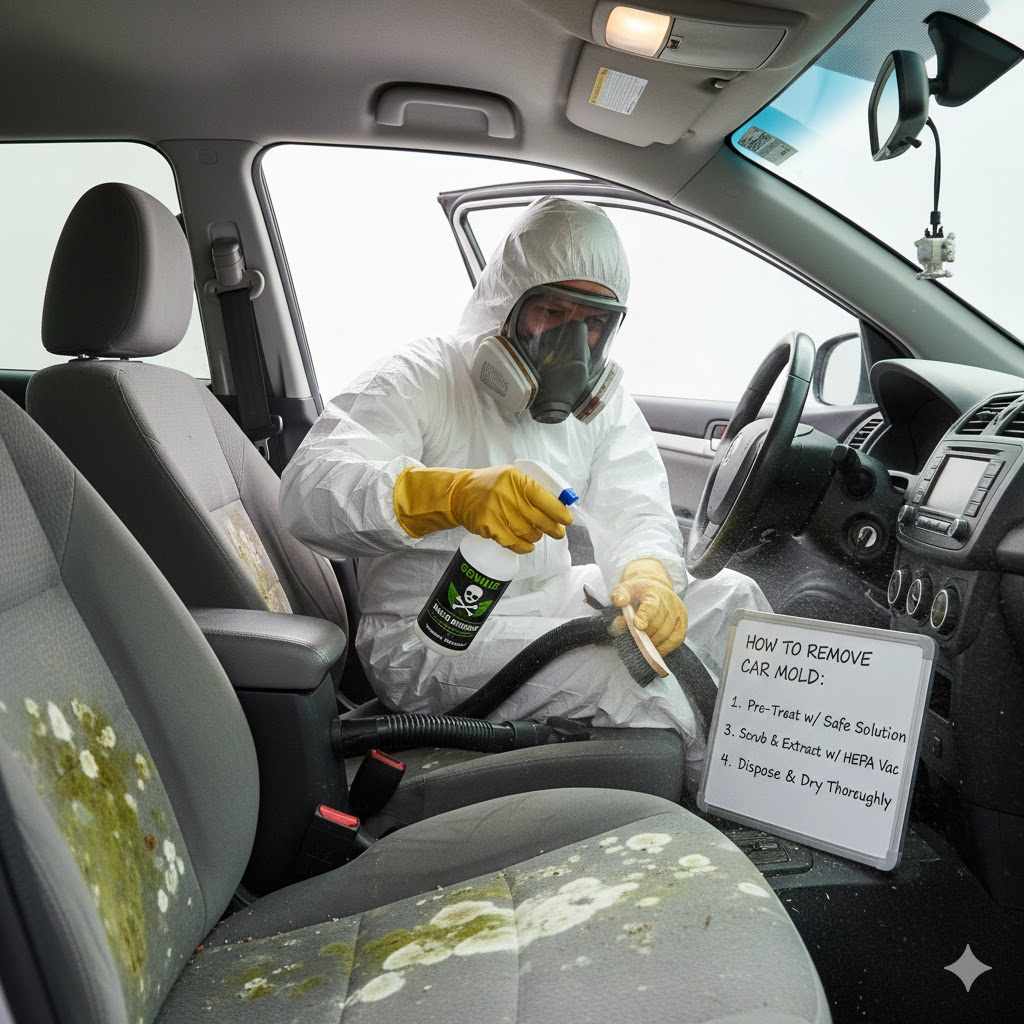
Okay, before you grab a sponge, let’s talk about safety. This is a non-negotiable step. Mold spores can be harmful if you breathe them in, especially for people with allergies or asthma. According to the U.S. Environmental Protection Agency (EPA), it’s important to protect yourself during cleanup. We want to get the mold out of your car, not into your lungs!
Here’s your simple safety checklist. Wearing this gear will keep you protected and comfortable while you work.
- N-95 Respirator Mask: This is your most important piece of gear. A simple dust mask isn’t enough. An N-95 mask will filter out tiny mold spores and prevent you from inhaling them.
- Safety Goggles: You don’t want spores or cleaning solutions splashing into your eyes. Goggles that seal around your eyes are best.
- Gloves: A pair of rubber or nitrile gloves will protect your hands from the mold and the cleaning solution.
- Long-Sleeved Clothing: Wear an old long-sleeved shirt and pants to keep mold spores off your skin. You can toss them in the wash right after you’re done.
Protecting yourself takes just a few minutes, but it makes the entire process safer and worry-free. Now that you’re geared up, let’s gather our cleaning supplies.
Your Mold-Busting Toolkit: What You’ll Need
You don’t need a bunch of expensive, specialized products to tackle car mold. In fact, some of the best solutions are probably already in your home. This approach saves you money and avoids filling your car with harsh chemical fumes.
Here’s a list of everything you’ll need for the job:
- Shop Vacuum or a Vacuum with a HEPA Filter: A High-Efficiency Particulate Air (HEPA) filter is great because it traps tiny mold spores instead of just blowing them back into the air. If you don’t have one, a regular vacuum will work, but be sure to empty it outside immediately after.
- Distilled White Vinegar: This is our secret weapon! It’s a natural, non-toxic acid that kills most species of mold. It’s safe for most car interiors and won’t leave behind harmful residues.
- Water: You’ll mix this with the vinegar to create your cleaning solution. Using distilled water can be even better as it contains no minerals.
- Spray Bottle: For applying your vinegar solution evenly.
- Scrub Brushes: You’ll want a few different sizes. A soft-bristled brush (like an upholstery brush) is perfect for seats and carpets. A small detail brush or an old toothbrush is great for getting into tight seams and crevices.
- Microfiber Towels: Have a stack of clean, dry microfiber towels ready. They are excellent for wiping away the cleaning solution and moisture without leaving lint behind.
- Optional – A Dehumidifier or Fan: This will be a huge help in the final drying stage to make sure all moisture is gone.
- Optional – Baking Soda or Activated Charcoal: These are great natural odor absorbers to help get rid of any lingering musty smells after cleaning.
With your safety gear on and your tools ready, you’re all set to begin the cleaning process. Let’s get to it!
The Step-by-Step Guide to a Mold-Free Car
Alright, it’s time for action. Follow these steps carefully, and you’ll have that mold gone in no time. Don’t rush the process—being thorough is the key to making sure it doesn’t come back.
Step 1: Find the Right Spot
Park your car outside in a well-ventilated, shady area. You want good airflow to carry away the mold spores as you clean. Avoid direct, hot sunlight while you’re working, as it can cause your cleaner to evaporate too quickly before it has a chance to work its magic. However, you’ll use the sun to your advantage later for drying!
Step 2: Suit Up for Safety
Put on your N-95 mask, goggles, gloves, and long-sleeved shirt. Make sure your mask has a snug fit around your nose and mouth. Open all the car doors and the trunk to get the air moving before you even start.
Step 3: The Initial Dry Vacuum
Before you introduce any moisture, you need to remove as many loose spores and debris as possible. Use your vacuum with a brush attachment and go over every surface: seats, carpets, floor mats, and the trunk. Pay extra attention to the areas where you see visible mold. This step prevents you from just spreading wet mold spores around later.
Step 4: Mix Your Genius Cleaning Solution
This is where the magic happens. Grab your spray bottle and create a simple but powerful cleaning solution.
The Recipe: Mix one part distilled white vinegar with one part water.
That’s it! Shake the bottle well. Vinegar’s natural acidity breaks down and kills mold effectively without damaging most car fabrics or plastics. It’s a much safer alternative to bleach, which can discolor and weaken your car’s interior.
Step 5: The All-Important Spot Test
Before you go spraying everywhere, find a small, hidden spot to test your solution. This could be under a seat or on a piece of carpet that’s usually covered by a floor mat. Spray a little bit, gently blot it with a towel, and let it dry. Check for any discoloration or damage. In 99% of cases, it will be perfectly fine, but this quick test gives you peace of mind.
Step 6: Gently Treat the Mold
Now, lightly spray your vinegar solution directly onto the moldy areas. Don’t soak the fabric; you just want to dampen it. Let the solution sit for about 5 to 10 minutes to allow the vinegar to penetrate and kill the mold.
Next, take your soft-bristled brush and gently scrub the area in a circular motion. You should see the mold lifting away. For stubborn spots, you can apply a bit more solution and scrub again. Use your smaller brush for seams, stitching, and hard-to-reach areas. After scrubbing, use a clean microfiber towel to blot the area and lift away the moisture and mold residue.
Step 7: Wipe Down All Hard Surfaces
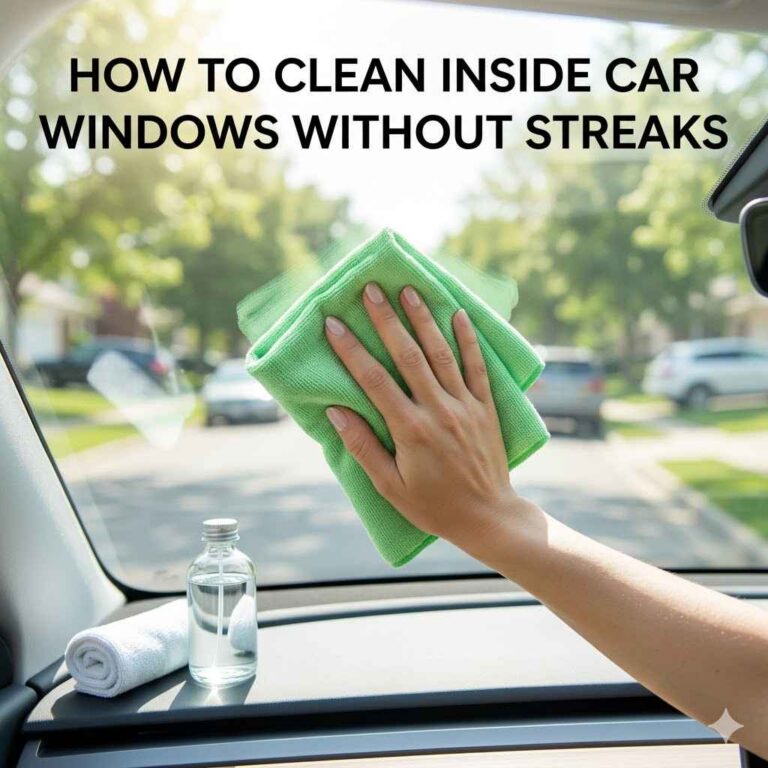
Mold spores can land anywhere, so don’t forget the hard surfaces. Lightly spray your vinegar solution onto a clean microfiber towel (not directly onto the surfaces) and wipe down the dashboard, steering wheel, door panels, center console, and any plastic or vinyl trim. This ensures you’ve neutralized any spores that may have settled there.
Step 8: Let It Breathe (The Most Important Step!)
Once you’ve cleaned all the affected areas, you need to dry your car out completely. This is the most critical step to prevent mold from growing back. If possible, park the car in direct sunlight with all the doors and windows open. The sun’s UV rays are a natural mold killer and will help speed up the drying process.
If it’s not sunny, you can place a fan or a small dehumidifier inside the car and let it run for several hours, or even overnight. You want the interior to be bone-dry. Feel the carpets and seats to make sure there’s no lingering dampness.
Step 9: Final Vacuum and Smell Test
After the car is completely dry, do one final, thorough vacuuming to suck up any dead mold spores that were loosened during cleaning. If you still notice a faint musty smell, sprinkle some baking soda on the carpets and seats. Let it sit for a few hours, then vacuum it up. Baking soda is amazing at absorbing stubborn odors.
What NOT to Do: Common Mold-Cleaning Mistakes
Knowing what to avoid is just as important as knowing what to do. Here are a few common mistakes that can make the problem worse or damage your car:
- Don’t Use Bleach: It might seem like a powerful cleaner, but bleach is a bad idea for your car. It can discolor and ruin fabric upholstery and carpets, and it can degrade the plastic on your dashboard. Plus, its fumes are harsh in an enclosed space.
- Don’t Saturate the Upholstery: Using too much water or cleaning solution will soak the foam padding underneath your seats and carpets. This deep-down moisture is very difficult to dry and can become a breeding ground for a new mold colony.
- Don’t Ignore the Source: If you just clean the mold without fixing the leak that caused it, the mold will be back in a few weeks. Do your detective work and fix that leaky window seal or clean up spills immediately.
- Don’t “Cover Up” the Smell: Using air fresheners to hide the musty smell is like putting a bandage on a broken arm. It doesn’t solve the underlying problem, and the mold will continue to grow and release spores.
Choosing Your Cleaner: Natural vs. Commercial
While our white vinegar solution is fantastic, you might wonder about other options. Here’s a quick comparison to help you decide what’s best for you and your car.
| Cleaner Type | Examples | Pros | Cons |
|---|---|---|---|
| Natural / DIY | White Vinegar & Water, Tea Tree Oil & Water, Clove Oil | Inexpensive, non-toxic, safe for most surfaces, readily available. | May require more scrubbing, vinegar has a strong (but temporary) smell. |
| Commercial Mold Removers | Products specifically labeled for automotive use or mold remediation. | Very effective, often designed to prevent regrowth (biocides). | Can be expensive, may contain harsh chemicals, requires good ventilation, must test for colorfastness. |
| Enzyme Cleaners | Cleaners that use natural enzymes to break down organic matter. | Excellent at removing stains and odors, generally safe for fabrics. | May not be as effective at killing all types of mold spores as vinegar or commercial products. |
For most beginner DIYers, the white vinegar solution is the perfect balance of safety, effectiveness, and cost. It gets the job done without the risks associated with harsh chemicals.
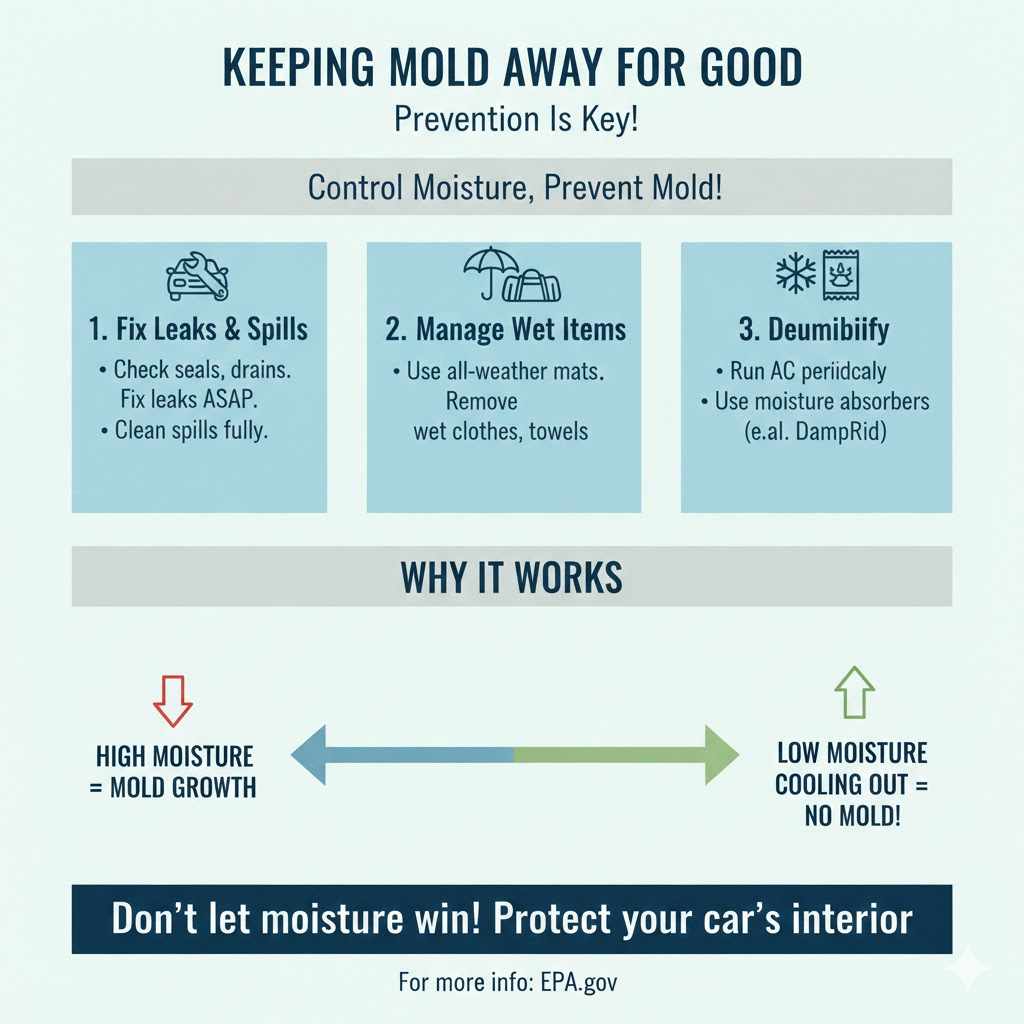
Keeping Mold Away for Good: Prevention Is Key
You’ve done the hard work of cleaning out the mold. Now let’s make sure you never have to do it again! Prevention is all about controlling moisture.
- Fix Leaks Immediately: Check window seals, door gaskets, and sunroof drains regularly. If you find a leak, get it fixed right away.
- Clean Spills Instantly: Don’t let spills sit. Use a towel to absorb as much as possible, then clean the spot and ensure it dries completely.
- Use All-Weather Floor Mats: Rubber mats trap water, mud, and snow, preventing moisture from soaking into your car’s carpeting. Just remember to empty them out regularly.
- Don’t Leave Wet Things in the Car: Make it a habit to take wet umbrellas, gym clothes, and towels out of your car as soon as you get home.
- Run the AC Periodically: Your car’s air conditioner acts as a dehumidifier. Running it for a few minutes, even in winter, can help pull moisture out of the air.
- Use a Moisture Absorber: For cars stored for long periods or in very humid climates, a product like DampRid or a reusable silica gel pack can work wonders. They passively absorb moisture from the air.
Frequently Asked Questions (FAQ)
Can mold in a car make you sick?
Yes, it can. For many people, mold exposure can cause allergy-like symptoms such as sneezing, a runny nose, red eyes, and skin rashes. For individuals with asthma or compromised immune systems, the effects can be more serious. That’s why cleaning it properly and wearing safety gear is so important.
How long does it take to remove mold from a car?
The cleaning process itself usually takes 1 to 3 hours, depending on how widespread the mold is. However, the most important part is the drying time, which can take several hours to a full day. Don’t rush the drying step!
Will the moldy smell go away?
Yes, once you have killed and removed the mold and completely dried the interior, the smell should disappear. The initial vinegar scent from the cleaner will fade within a day or so as it airs out. If a musty odor lingers, sprinkling baking soda on the carpets and vacuuming it up can absorb any remaining smells.
Can I just use bleach to kill mold in my car?
It’s highly recommended that you do not use bleach. Bleach is a harsh chemical that can permanently discolor or damage your car’s upholstery, carpet, and plastic surfaces. A simple white vinegar and water solution is much safer and just as effective for killing mold.
When should I call a professional?
If the mold covers a very large area (for example, more than half of the carpeting or seats), or if you suspect it has gotten deep into the seat cushions or ventilation system, it’s a good idea to call a professional auto detailer. They have specialized equipment like ozone generators and steam cleaners to handle severe infestations.
What’s the white stuff on my car seats? Is it mold?
It could be. Mold can appear in various colors, including white, green, or black. White, powdery mildew is a common type of mold found in cars. It could also potentially be salt stains from winter weather. If it has a musty smell and a slightly fuzzy texture, it’s likely mold.
Does sunlight kill car mold?
Sunlight is a fantastic natural helper. The UV rays in direct sunlight can kill mold spores, and the heat helps to dry out moisture, which mold needs to survive. After cleaning, parking your car in the sun with the doors open is one of the best things you can do to finish the job.
Your Fresh Start
There you have it! You’ve successfully learned how to tackle one of the most annoying car problems all by yourself. By following these steps, you not only removed the existing mold but also learned how to keep it from ever coming back. It’s a great feeling to open your car door to a clean, fresh-smelling interior, and even better knowing you did it the right way—safely and affordably.
Remember, car care isn’t about being a master mechanic; it’s about having the confidence to handle everyday issues. You just proved you have what it takes. So enjoy your clean ride, and be proud of the work you did to make it a healthier, more pleasant space for you and your passengers.