Why Does My Car AC Get Warm When I Stop or Idle?
Car AC that blows cold at speed but turns warm at a stoplight usually points to airflow over the condenser, which loses the air a moving car pushes through the grille and depends on the cooling fan instead. On a vehicle with engine stop/start, the warm air can also simply be the engine pausing at the light. This guide separates those cases, shows what Denso, Sanden, Toyota and GM publish about each, and marks the checks that stay with a certified technician.
Common Causes Of Warm Ac
Best Condenser Fin Straightener Pick
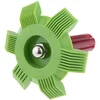 |
Plastic Fin Straightener for A/C Condenser and Radiator Fins
|
As an Amazon Associate we earn from qualifying purchases. Spec-based pick from the listing, not a hands-on test.
Denso describes the condenser as the part, at the front of the vehicle, that releases the refrigerant’s heat to the outside air so the gas can turn back into a liquid. Anything that reduces that air hurts cooling at a stop first. The table lists the usual causes of the warm-at-a-stop pattern and what the makers’ documents say.
| Cause | What the source says |
|---|---|
| Condenser fan not running, or too slow | Denso: cooling fans take heat away when a vehicle is stationary. A Toyota bulletin fixes idle A/C shutdown by adding a condenser fan and relay |
| Blocked or bent condenser fins | Sanden: restricted airflow over the condenser means not enough heat transfer and high discharge pressure |
| Too much refrigerant | Sanden: liquid backs up in the condenser, cutting the surface that cools the gas |
| Protection switch or cut-off | Sanden: pressure relief valves, thermal protection switches and pressure cut-offs make the system inoperable |
| Compressor clutch not engaging | Sanden: no coil voltage, a broken relay, a coil thermal fuse or a poor connection |
| Engine stop/start pause | GM: A/C settings can keep the engine running or restart it; eco A/C may leave the cabin warmer during auto stops |
For a different symptom, where the compressor keeps switching on and off, see AC compressor short cycling.
Impact Of Vehicle Speed
At road speed, air enters through the grille and passes the condenser without any help. At a stop that stream is gone and the system relies on the electric fan, which is why a weak fan or restricted condenser shows at the light and disappears once the car moves. Sanden’s compressor guide explains that restricted condenser airflow keeps the gas hotter and raises compressor discharge pressure.
Role Of The Cooling Fan
Denso’s cooling fan page says the fan keeps the engine within a safe temperature range when the vehicle is stationary or very hot, by forcing air through the radiator. Its fans can have solenoids and sensors so they run in low or high speed only when needed. The fan is controlled, not simply on, so it can start without warning, and no one should reach near it with the engine running.
Cooling Fan Malfunctions
A fan fault can take different forms, and a technician sorts out which one with the vehicle’s service data. Whatever the form, it takes airflow away from the condenser at a stop. A fan that behaves oddly in the other direction, such as running after shutdown, is a separate symptom covered in why car fans stay on.
Importance Of Fan Speed
Because Denso’s fans can run at low or high speed, the useful question is whether the fan reaches the speed the system calls for when the vents turn warm. Toyota’s repair for its added Tacoma fan ends with a dealer test: with the A/C on at the lowest settings, the technician blocks airflow between the condenser and radiator with cardboard and checks that the new fan turns on within 2 minutes. That is a dealer check for one repair, not a home test.
Why It’s Cold While Driving But Warm at Idle Specifically
The pattern matters more than any single symptom. Match what you notice to a row below.
| What you notice | Most consistent with |
|---|---|
| Cold at speed, warm at lights, cool again soon after moving | Airflow over the condenser: fan, fins or a protection cut-off |
| Warm only after long idling on very hot days | A design limit, as in the Toyota Tacoma bulletin below |
| Warm only while the engine is stopped at a light | Engine stop/start pause |
| Warm while moving too | Not an idle problem; see why a car AC stops working |
| Cold, warm, cold again in cycles | Compressor cycling, see short cycling |
In the classic idle pattern the condenser cannot shed heat, pressure climbs, and the cut-offs Sanden describes can stop the compressor, which the driver feels as warm vents. Moving restores airflow and cooling returns. A separate stalling problem with the A/C on is covered in why a car stalls when the AC is on.
Examining The Condenser
Denso advises a professional check whenever cooling changes, and a visual inspection of the condenser as part of regular maintenance. The one safe owner check is to look through the grille with the engine off for leaves, dirt or bent fins. Cleaning steps are in how to clean a car AC condenser.
Surface debris is only one problem. Sanden notes that current condensers use micro-channels that compressor metal particles can clog, so a condenser may need flushing or replacing after a compressor failure. It also describes brown, carbonized oil as a sign of overheating from condenser blockage or airflow restriction, among other causes; only a technician who opens the system can read it.
Electrical System Issues
Sanden lists why a clutch fails to engage: no voltage to the coil, a broken relay, an activated coil thermal fuse, a short circuit diode or a poor connection at the compressor terminal. Low voltage to the coil and a defective engine harness connection can make the clutch slip, which creates heat. On the fan side, Toyota’s idle repair adds a relay and new wiring.
Diagnosing Sensor Failures
Sanden says fail-safes such as pressure relief valves, thermal protection switches and pressure cut-offs reduce the chance of compressor damage by making the system inoperable in a severely abnormal condition. A warm-at-a-stop symptom can therefore be a protective shutdown, not a failed compressor. The same guide lists a defective pressure switch among causes of an overheated system. Telling a real high-pressure condition from a faulty switch takes measured pressures and your vehicle’s specifications.
DIY Troubleshooting Tips
The safe do-it-yourself work is observation. These notes shorten a shop visit:
- Time it. Write down how long the car sits before the air turns warm and how soon it cools after moving.
- Note the heat. Toyota’s bulletin says its Tacoma condition may not be possible to duplicate below 100°F ambient, so a test on a mild day can find nothing.
- Check the A/C mode. On stop/start cars, note max or eco; GM’s manual says eco leaves the interior warmer during auto stops.
- Look, engine off. Check the condenser through the grille for debris and keep hands out of the fan area.
- Do not add refrigerant to see if it helps. Sanden shows an overcharge raises pressure. EPA allows small cans of substitute refrigerant to be sold for do-it-yourself use, but this guide gives no charging steps, and Sanden notes it is illegal to knowingly vent refrigerants.
Professional Repair Solutions
EPA says technicians who repair or service motor vehicle air conditioners must be trained and certified under an EPA-approved Section 609 program; its EPA page on Section 608 and 609 also covers who may buy refrigerant. For this complaint a shop confirms the symptom, measures fan operation, checks condenser airflow and reads pressures, then fixes the specific cause.
Consulting With A Technician
- Describe the pattern, how long it takes and the outdoor heat.
- Say whether the vehicle has stop/start and which A/C mode you use.
- Ask for a fan and condenser airflow check at idle before major parts are replaced.
- Ask whether a manufacturer service bulletin applies to your year and model; NHTSA hosts many of them.
Cost Of Repairs
This guide gives no prices because the repair depends on the cause: a fan or relay is a smaller job than a condenser replaced after compressor damage, which Sanden says may also need flushing. Ask for an itemized estimate. Toyota’s bulletin repair was covered under its Basic Warranty of 36 months or 36,000 miles from the in-service date as of the 2019 revision.
Stop/Start Engines: When the Warm Air Is the Engine Pausing
GM’s support page says stop/start can turn the engine off at a complete stop, the tachometer then shows Auto Stop, and conditions such as A/C settings or battery charge can restart the engine before the brake is released. The 2018 Chevrolet Malibu owner’s manual spells out the A/C side for its 1.5 L stop/start engine:
| Setting or condition | What the manual says |
|---|---|
| Max A/C (amber) | Auto stops are less frequent, shorter, and do not occur in extremely warm weather |
| Eco A/C (green) | In warm weather auto stops may be more frequent and longer, and the interior may be warmer during them; higher humidity and window fogging are possible before restart |
| Auto stop limits | Deactivated outside the required temperature range, typically below 14°F or above 122°F, and when a stop lasts over two minutes |
If your car warms only while the engine is off and cools when it restarts, the cause is the setting, not a fault. Some GM vehicles have a button that turns stop/start off for one ignition cycle; other makes differ, so use your owner’s manual and see how auto start/stop works.
A Documented Case: Toyota Tacoma A/C Shutting Down at Idle
Some idle problems are design limits with a factory fix. Toyota bulletin T-SB-0063-18, revised in February 2019 and hosted by NHTSA, covers some 2016 to 2019 Tacoma trucks with the 2GR engine and 6-speed automatic. It says the A/C may shut down and stop blowing cool air during extended idle above 100°F ambient. The Toyota bulletin on NHTSA says the repair installs an additional condenser cooling fan, an engine room sub-wire harness, passenger compartment harnesses and an additional relay block, and that the parts are not sold as a kit.
If your vehicle goes warm at long idle in extreme heat, look up service bulletins for your exact year and model before assuming the compressor is failing. This bulletin applies only to the Tacomas it lists.
Frequently Asked Questions
Why Does The Air In My Car Get Hot When I Stop?
Usually airflow. A moving car pushes air across the A/C condenser, and a stopped car depends on its cooling fan. If the fan or condenser airflow is weak, the condenser sheds less heat and cooling drops at a stop. On a stop/start car, the engine itself may also be off.
Why Is My Car Ac Warm When Idling?
Idling removes road airflow, so weak condenser cooling shows first. Sanden’s guide says restricted condenser airflow raises discharge pressure and that pressure cut-offs can switch the system off. A technician measures fan operation and pressures to tell the causes apart.
Why Does My Ac Warm Up When I Stop?
The air stops flowing through the grille, and on some vehicles the engine pauses. If cooling returns within moments of moving, suspect airflow or a stop/start pause. If vents stay warm while moving too, it is a different problem for a shop.
Why Does My Car Ac Only Cool When Driving?
That pattern points to a condenser that depends on road speed: a fan not running, bent or blocked fins, or an overcharge, which Sanden says raises pressure as liquid backs up in the condenser. Charge and pressure checks need gauges and certification, so they belong with a technician.
Does Engine Stop/Start Make The AC Blow Warm?
It can, depending on the setting. GM’s manual for a stop/start Malibu says the interior may be warmer during auto stops in eco A/C mode, and that max A/C makes auto stops less frequent and shorter. Check your own owner’s manual.
Is It Safe To Keep Driving With AC That Goes Warm At Stops?
Warm vents alone are a comfort issue, but Denso says cooling fans keep the engine within a safe temperature range when stationary. If a temperature warning appears or the gauge climbs, stop in a safe place and get the vehicle checked.
Conclusion
Cold at speed and warm at a stop is usually about airflow: the condenser loses road air and relies on the fan, so a weak fan, blocked fins or an overcharge can trigger a protective shutdown. On a stop/start vehicle, the warm air may only be the engine pausing. Note when it happens, look at the condenser with the engine off, and leave charge, pressure and fan-circuit work to a certified technician.
This guide does not cover refrigerant charging steps, repair prices or vehicle-specific pressure values; ask a certified technician for those.
Products related to this article
Sponsored / affiliate links. As an Amazon Associate I earn from qualifying purchases. I may earn additional commission from eligible campaigns.