FWD Tire Rotation Pattern: How to Rotate Tires on a Front-Wheel Drive Car
Rotating the tires on a front-wheel drive (FWD) car means moving the front tires straight to the rear and crisscrossing the rear tires up to the front — because FWD front tires carry the engine weight and do the steering, they wear down much faster than the rears.
It’s a job you can handle yourself in about 30-45 minutes with a jack, jack stands, and a lug wrench — no shop visit required. Rotating every 5,000 to 7,500 miles keeps tread wear even, extends tire life by thousands of miles, and helps the car handle and brake the way it’s supposed to.
Below is the exact rotation pattern for FWD cars, the tools you need, and a step-by-step walkthrough — plus answers to the questions people ask most about FWD tire rotation.
Quick Answer
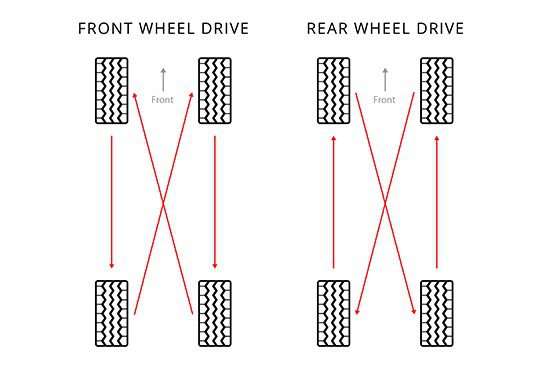
The correct tire rotation pattern for a FWD car is the rearward cross: move both front tires straight back to the rear, then move both rear tires forward but cross them side-to-side (left rear to right front, right rear to left front). Rotate every 5,000-7,500 miles, or at every other oil change.
Why FWD Tire Rotation Matters
On a front-wheel drive car, the front tires do double duty — they steer the car and put the engine’s power to the road. That combination wears them down noticeably faster than the rear tires, which mostly just roll along. Left alone, front tires can wear out 20-30% faster than the rears.
Regular rotation swaps the fast-wearing front tires to the rear and vice versa, spreading the wear evenly across all four. That means longer tire life, more predictable handling, shorter braking distances, and a smoother, quieter ride. Skipping rotations is one of the most common reasons FWD drivers end up replacing tires years earlier than they should.
Tools You’ll Need
- Floor jack or scissor jack — to lift the car
- Jack stands (2 minimum) — never work under a car supported only by a jack
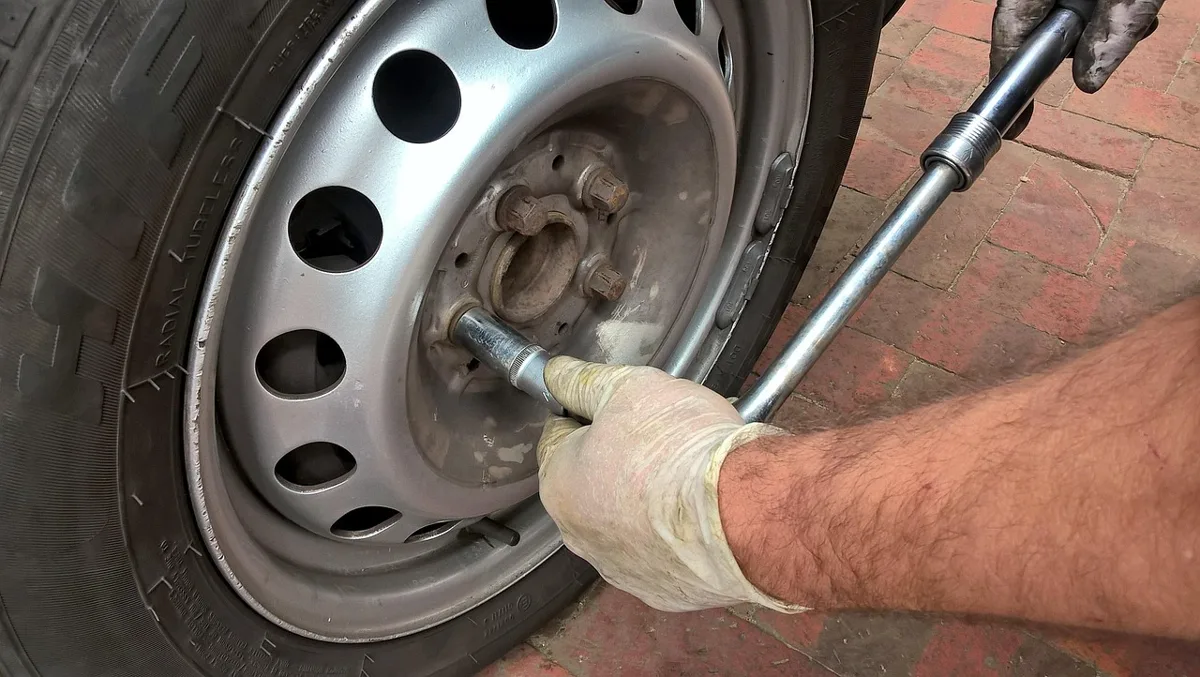
- Lug wrench or breaker bar — to loosen and tighten lug nuts
- Torque wrench — to tighten lug nuts to the manufacturer’s spec (usually 80-100 ft-lbs on most passenger cars — check your manual)
- Tire pressure gauge — to check and reset pressure after rotation
- Wheel chocks, gloves, and safety glasses — for a safer job
Best Tire Rotation Tool Pick
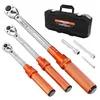
VEVOR 1/4 3/8 1/2 Inch Drive Torque Wrench, 3Pcs Click Torque Wrench Set 20-240I
Our top pick for tire rotation tools.
- Best for: torquing lug nuts to exact spec
- Why we picked it: click-style torque wrenches are the most reliable way to hit factory lug nut spec without over-tightening
- Main drawback: needs occasional calibration checks to stay accurate
Compare more tire rotation tools options
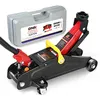 Option 1 DNA Motoring TOOLS-00234 Low Profile Hydraulic Trolley Service/Floor J
|
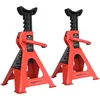 Option 2 Amazon Basics Steel Jack Auto Stands, 3 Ton (2.7 metric Ton) Capacity,
|
 Option 3 AstroAI Digital Tire Pressure Gauge 0-150PSI Calibrated to ANSI B40.7
|
As an Amazon Associate we earn from qualifying purchases.
FWD Tire Rotation Pattern (Rearward Cross)
Most tire manufacturers and manufacturers of FWD vehicles recommend the rearward cross pattern for non-directional tires (the most common type):
- Left front tire moves straight back to the left rear position.
- Right front tire moves straight back to the right rear position.
- Left rear tire moves diagonally forward to the right front position.
- Right rear tire moves diagonally forward to the left front position.
If your car has directional tires (tread designed to spin only one way, marked with a rotation arrow on the sidewall) or different-sized front and rear tires (staggered fitment), you can only rotate front-to-back on the same side — no crossing. Check your owner’s manual to confirm which pattern applies to your specific tires.
Step-by-Step: How to Rotate Tires on a FWD Car
- Park on level ground and set the parking brake. Loosen (but don’t remove) all lug nuts on all four wheels while the car is still on the ground — this is much easier with the tire’s weight holding it still.
- Lift the car with a jack at the manufacturer’s recommended jack points, then immediately set jack stands under the frame and lower the car onto them. Never work under a car resting only on a jack.
- Remove all four wheels by finishing unscrewing the lug nuts. Set each wheel aside and note which corner it came from.
- Move the tires into the rearward cross pattern described above — front tires go straight back, rear tires cross to the opposite front corner.
- Mount each wheel and hand-tighten the lug nuts in a star pattern (not circular) to seat them evenly.
- Lower the car off the jack stands, then torque each lug nut to spec in a star pattern using a torque wrench.
- Check and adjust tire pressure on all four tires to the PSI listed on the driver’s door jamb sticker.
How Often to Rotate Tires on a FWD Car
Rotate every 5,000 to 7,500 miles — most manufacturers time this to line up with every other oil change, which makes it easy to remember. If you notice uneven wear, pulling to one side, or vibration before that mileage, rotate sooner and have an alignment checked.
Post-Rotation Checks
After rotating, do a quick walk-around before driving off:
- Tread depth: use the penny test — insert a penny into the tread groove with Lincoln’s head down. If you can see the top of his head, the tire is due for replacement.
- Sidewall damage: look for cuts, bulges, or punctures on all four tires while they’re accessible.
- Lug nuts: confirm every lug nut is present and torqued — a missing or loose lug nut is a safety hazard.
- Tire pressure: re-check after the car has sat for a few hours, since pressure readings are most accurate when tires are cold.
Recommended Tools for the Job
Frequently Asked Questions
What Is the Correct Tire Rotation Pattern for FWD Cars?
The rearward cross pattern: move both front tires straight back, and move both rear tires forward but crossed to the opposite side (left rear to right front, right rear to left front). This is the pattern recommended by most tire manufacturers for non-directional tires on FWD vehicles.
How Often Should I Rotate Tires on a FWD Car?
Every 5,000 to 7,500 miles, or roughly every other oil change. Check your owner’s manual for the manufacturer’s specific recommendation, and rotate sooner if you notice uneven wear or vibration.
Can I Rotate Tires Myself on a FWD Car?
Yes. You’ll need a jack, jack stands, a lug wrench, and ideally a torque wrench. Follow the rearward cross pattern, torque the lug nuts to spec, and check tire pressure afterward. The job typically takes 30-45 minutes in a driveway or garage.
Why Is Tire Rotation Important for FWD Cars?
Because the front tires on a FWD car steer and drive the vehicle, they wear 20-30% faster than the rears if never rotated. Regular rotation evens out that wear, extends the life of the full tire set, and keeps handling and braking predictable.
Can I Use the Same Rotation Pattern on Directional or Staggered Tires?
No. Directional tires (marked with a rotation arrow on the sidewall) and staggered setups (different-sized front and rear tires) can only be rotated front-to-back on the same side — crossing them would put the tread facing the wrong direction or the wrong size tire on the wrong axle.
Conclusion
Rotating your FWD car’s tires every 5,000-7,500 miles using the rearward cross pattern is one of the cheapest ways to add thousands of miles to your tire life while keeping the car safer to drive. It’s a straightforward DIY job with basic tools, or a quick, inexpensive service if you’d rather leave it to a shop.
Products related to this article
Sponsored / affiliate links. As an Amazon Associate I earn from qualifying purchases. I may earn additional commission from eligible campaigns.