How To Start A Manual Car On A Hill: Proven Essential
Start a manual car on a hill with confidence by mastering clutch control and gentle throttle. This guide breaks down the process into simple steps, using the handbrake method for ultimate safety and control. You’ll be navigating inclines like a pro in no time!
Learning to drive a stick shift can feel a bit daunting, especially when that dreaded incline appears. That familiar worry of rolling backward, stalling, or causing traffic to pile up can make even experienced drivers break a sweat. But guess what? Starting a manual car on a hill isn’t some secret trick only for seasoned mechanics. It’s a skill you can absolutely master with a little practice and the right guidance. Think of it as unlocking a new level of driving confidence. This guide is designed to make that transition smooth and stress-free, transforming a potential panic-inducing situation into a simple, controlled maneuver. We’ll walk through it step-by-step, ensuring you understand every part of the process. Ready to conquer those hills?
Why Starting on a Hill Can Seem Tricky
Manual transmissions behave differently on inclines compared to flat ground. Gravity, your car’s rolling resistance, and the precise coordination required between the clutch, brake, and accelerator can seem like a complex dance at first. On a level surface, when you release the clutch, the engine’s torque can usually overcome the car’s inertia without much fuss. However, on a hill, gravity is constantly pulling your car backward. This means you need to engage the clutch and apply enough throttle to counteract both gravity and inertia before releasing the brake, all without stalling or rolling too far back.
The fear often stems from a few common issues:
- Stalling: Releasing the clutch too quickly or not giving enough gas can cause the engine to cut out. This is especially embarrassing and unnerving on a hill, as the car might roll backward.
- Rolling Backwards: Missing the ‘bite point’ of the clutch and not applying the brake firmly enough can lead to unintended backward movement, potentially startling other drivers or getting too close to the vehicle behind you.
- Jerking/Lurching: A sudden release of the clutch or an abrupt application of the accelerator can cause the car to lurch forward, which feels uncomfortable and can be jarring.
But don’t worry! These are all common learning experiences. With a clear understanding of the mechanics and a proven technique, you’ll soon feel comfortable and in control. We’re going to focus on the most reliable and beginner-friendly method: using the handbrake (or parking brake).
The Secret Weapon: The Handbrake Method
The handbrake method is universally recommended for beginners because it gives you ample time to find the clutch’s bite point and apply the accelerator without the immediate pressure of preventing rollback. It essentially acts as a temporary stationary device, just like the brake pedal, but it frees up your right foot to focus on the gas. Once you’re comfortable with this, you can explore other techniques, but this is where true hill-starting confidence is built.
Essential Tools and Controls
Before we dive into the steps, let’s identify the key players in your car you’ll be working with. Familiarity is key!
Your Car’s Controls for Hill Starts
- Clutch Pedal: The leftmost pedal in a manual. It completely disengages the engine from the transmission, allowing you to change gears or start the car without the transmission engaging.
- Brake Pedal: The middle pedal. Used to slow down or stop the car.
- Accelerator (Gas Pedal): The rightmost pedal. Used to control the engine speed and power.
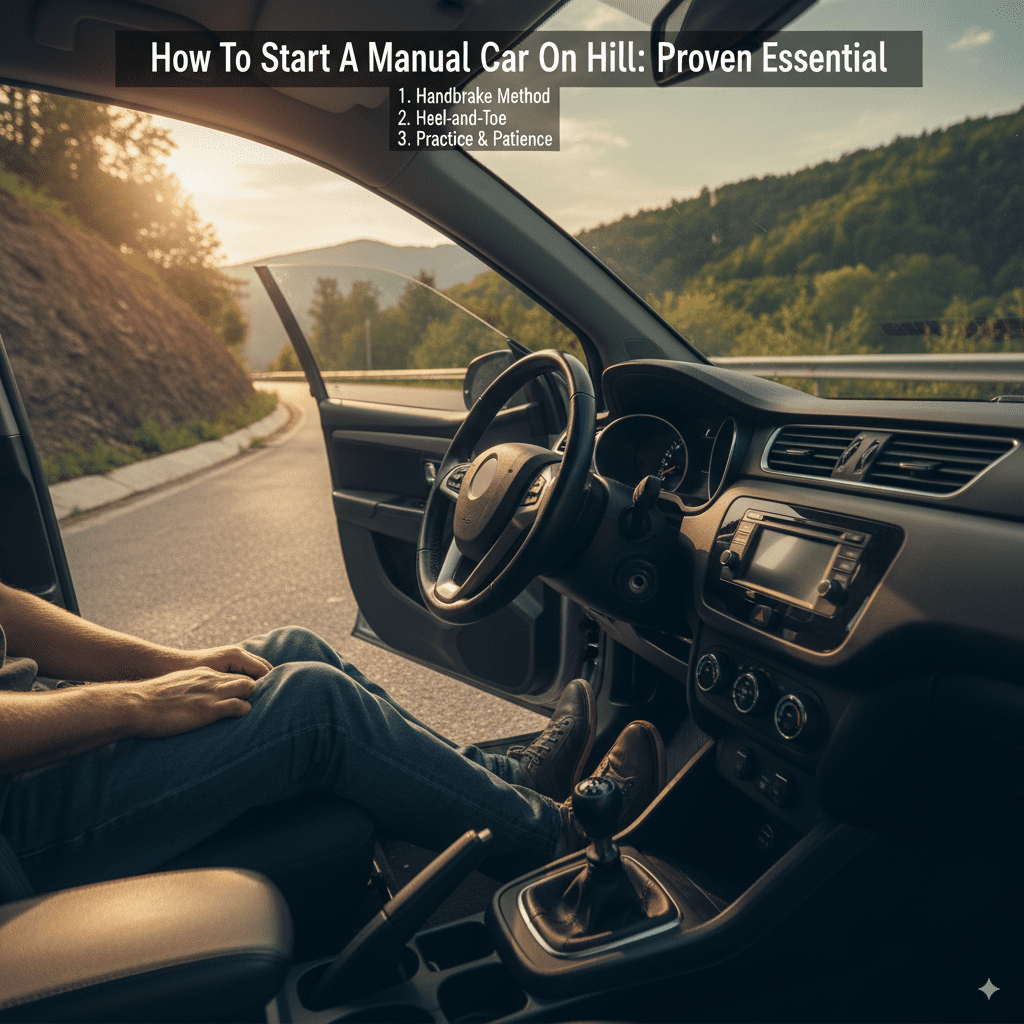
- Handbrake (Parking Brake/Emergency Brake): Usually a lever between the front seats, or a button/switch on the dashboard or center console. Its primary function is to hold the car in place when parked, but it’s invaluable for hill starts.
- Gearstick (Shifter): Selects the gear. For starting on a hill, you’ll typically use first gear.
- Tachometer (RPM Gauge): The gauge that shows your engine’s revolutions per minute (RPM). Watching this can help you gauge how much throttle your car needs.
Having a basic understanding of these controls will make following the steps much easier. If you’re unsure where any of these are located in your specific vehicle, consult your owner’s manual or take a moment to familiarize yourself in a safe, flat area.
Step-by-Step: Mastering the Handbrake Start
This is where the magic happens. We’ll break it down into manageable phases. Remember, patience and practice are your best friends here. Find a gentle slope to start with, perhaps an empty parking lot with a slight incline or a quiet residential street.
Phase 1: Getting Ready
Before you even think about moving, ensure everything is set up correctly. This phase is all about preparation and safety.
- Find a Suitable Location: Choose a gentle, quiet hill with minimal traffic. An empty parking lot with a slight incline is ideal for your first few attempts.
- Engage the Handbrake: Pull the handbrake up firmly. You want it to hold the car securely without any chance of rolling. If you’re unsure how much force to apply, make sure it clicks a few times and feels solid.
- Start the Engine: With the clutch pedal fully pressed down (all the way to the floor) and the gearstick in neutral, start the engine.
- Select First Gear: Once the engine is running smoothly, press the clutch pedal fully down again and move the gearstick into first gear. Ensure it’s firmly in place.
Phase 2: The Engagement Dance
This is the core of the technique. It involves carefully finding the clutch’s bite point while preparing to give the car gas. Take your time here; there’s no rush!
- Prepare Your Feet: Keep your left foot firmly on the clutch pedal (all the way down). Move your right foot from the brake pedal over to the accelerator pedal. Your right foot should now be positioned to apply gas.
- Find the Bite Point: Slowly, and I mean slowly, begin to lift your left foot off the clutch pedal. Pay close attention to the feel and sound of the engine. You’re looking for the “bite point” – the point where the engine starts to connect with the transmission, and you’ll feel a slight change in the engine’s note, or the car might feel like it wants to pull forward very gently. The tachometer needle might drop slightly.
- Apply a Little Gas: As soon as you feel that bite point, gently press the accelerator pedal with your right foot. You don’t need a lot of revs, just enough to prevent the engine from stalling when you release the clutch further. Aim for around 1,500 RPM on your tachometer as a starting point. You might hear the engine sound slightly louder and steadier.
Phase 3: Releasing the Handbrake and Moving Off
Now, it’s time to combine all the elements to get the car rolling smoothly up the hill.
- Coordinated Release: This is the critical moment: simultaneously and smoothly release the handbrake lever downwards (or disengage the button/switch) while continuing to GENTLY ease your left foot off the clutch pedal the rest of the way.
- Maintain Gas: As you release the handbrake and clutch, continue to apply or slightly increase the accelerator to keep the engine from stalling and to maintain forward momentum. The car should start to move forward up the hill.
- Smooth Transition: Once the car is smoothly moving forward, you can fully release the clutch pedal. You are now driving up the hill!
If the car doesn’t move, or feels like it might stall, quickly dip the clutch back in and/or apply a little more throttle. If you feel like you’re rolling back significantly, immediately press the clutch pedal back down fully and re-apply the handbrake. Don’t be afraid to make small corrections!
Common Scenarios and Troubleshooting
Even with careful instruction, things can go awry. Here’s how to handle common hiccups.
What If I Stall?
Stalling is perfectly normal when learning. If the engine cuts out:
- Immediately press the clutch pedal all the way down.
- Press the brake pedal to ensure you don’t roll back.
- Move the gearstick to neutral.
- Re-apply the handbrake if you feel any movement.
- Restart the engine (remembering the clutch pedal must be down).
- Then, repeat the hill-start steps from the beginning.
What If I Roll Back Too Much?
This usually means you didn’t engage the clutch enough or apply enough throttle before releasing the brake/handbrake.
- If you feel yourself rolling back significantly, quickly press the clutch pedal all the way down.
- Press the brake pedal firmly.
- You may need to re-apply the handbrake to secure the car, then start the process again from Phase 1. Don’t let the rollback worry you; just correct it and try again.
What If the Car Lurches Forward Violently?
This typically happens when you release the clutch too quickly or apply too much gas abruptly. You want a smooth, controlled engagement.
- Ease off the accelerator slightly.
- If it’s too jerky, press the clutch pedal partially back down to smooth out the engagement.
- Aim for a more gradual release of both the clutch and accelerator in your next attempt.
Understanding Your Car’s Hill-Hold Assist (If Equipped)
Many modern cars come equipped with a feature called Hill-Hold Assist, Hill Start Assist, or similar. This system can significantly ease the process of starting on a hill. If your car has it, the process is often much simpler.
How it works: When you stop on an incline and take your foot off the brake pedal, the system automatically holds the brakes for a few seconds. This gives you ample time to move your foot to the accelerator and engage the clutch without the car rolling back. You can then drive off as normal.
How to use it:
- Stop on the hill and take your foot off the brake. The car should remain stationary for a few seconds.
- Move your right foot to the accelerator and gently apply gas.
- As you move off, the brakes will automatically release.
Note: While Hill-Hold Assist is a fantastic aid, it’s still crucial to understand the manual control method described above. This knowledge is essential for driving cars without the feature, or in situations where the assist might not engage (e.g., very steep inclines, or if it’s deactivated).
For more technical details on how these systems function, you can refer to resources like NHTSA’s information on active safety control systems, which often include hill start assist as part of broader vehicle stability technologies.
Table: Handbrake Method vs. Foot Brake Method
To help you understand why the handbrake method is preferred for learning, let’s compare it to the alternative.
| Feature | Handbrake Method (Recommended for Beginners) | Foot Brake Method (More Advanced) |
|---|---|---|
| Primary Control for Holding Car | Handbrake (Parking Brake) | Foot Brake Pedal |
| Foot Coordination | Left foot: Clutch (slow release). Right foot: Accelerator (gentle application). No immediate need to switch feet. | Left foot: Clutch (slow release). Right foot: Must move quickly from brake to accelerator. |
| Time to Engage Clutch | Ample time to find bite point and apply gas before releasing brake. | Very limited time; requires quick feet and precise timing. |
| Risk of Rolling Back | Lower, as handbrake provides a strong, stable hold. | Higher if brake is released too soon or clutch/gas is not timed perfectly. |
| Stress Level for Beginners | Lower; more forgiving. | Higher; less room for error. |
| Typical Use Case | Ideal for learning, steep hills, stressful traffic. | Quicker starts on mild inclines for experienced drivers. |
As you can see, the handbrake method simplifies the footwork and reduces the pressure, making it the superior choice for building confidence and mastering the technique.
Practice Makes Perfect: Tips for Success
Getting this right consistently requires practice. Here are some tips to help you improve:
- Start Small: Begin with very gentle slopes. As you get more comfortable, gradually try steeper hills.
- Listen to Your Engine: Your engine will tell you what it needs. A labored sound means it’s about to stall; a steady, slightly revved sound means you have enough power.
- Smoothness is Key: Avoid sudden movements with the clutch or accelerator. Think of it as a gentle transition, not an on-off switch.
- Don’t Fear the Handbrake: It’s your best friend on a hill. Engage it firmly, use it to give yourself time, and release it smoothly when ready.
- Practice in Various Conditions: Once you’re comfortable, try in different situations – traffic, rain (though be extra cautious then), and steeper inclines.
- Seek Professional Guidance: If you’re still struggling, consider a few extra driving lessons specifically focused on manual transmission skills. A good instructor can provide real-time feedback.
- Visualize the Process: Mentally rehearse the steps before you even get in the car. This can build confidence and muscle memory.
Remember, every driver who can confidently drive a manual car learned this skill. You are absolutely capable!
FAQ: Your Hill Start Questions Answered
Q1: How do I know when I’ve reached the clutch’s bite point?
You’ll feel a slight change in the engine’s vibration, hear a subtle change in its sound (it might get a bit deeper or more strained), and sometimes the car will feel like it’s gently trying to creep forward. Your tachometer needle might also dip slightly.
Q2: What if my car has an automatic transmission? Do I need to worry about hills?
No! Automatic transmissions handle hills seamlessly. The torque converter and transmission software are designed to keep the car from rolling back when you stop on an incline. You simply stop using the brake and then accelerate away normally.
Q3: Is it okay to use the handbrake and the foot brake at the same time?
While you can technically rest your right foot on the brake pedal and then move it to the accelerator, the handbrake method is generally safer for beginners because it allows you to disengage the handbrake while your accelerator foot is already positioned and ready to apply gas. Trying to use both foot pedals simultaneously can get confusing and lead to jerky movements.
Q4: How steep of a hill can I realistically start on using the handbrake method?
With practice, you can start on quite steep hills. The handbrake provides a strong hold, and as long as you’re applying enough gas to match the incline once you feel the clutch bite, the car will move forward. Extremely steep hills might require a bit more throttle and quicker clutch work, but the handbrake method is the foundation.
Q5: Should I rev the engine high when starting on a hill?
No, you don’t need to rev it excessively high. Too much gas can cause the car to lurch forward suddenly or spin its wheels. Aim for a moderate, steady RPM, usually around 1,500 to 2,000, as you find the bite point and begin to release the clutch and handbrake. You’ll learn to feel the right amount of gas for your specific car through practice.
Q6: What’s the difference between the handbrake and the parking brake?
They are generally the same thing! “Handbrake” refers to its common location – a lever you operate by hand. “Parking brake” refers to its primary function – holding the car stationary when parked. Some cars have electronic parking brakes (EPBs) that are buttons or switches, but they serve the same purpose and often incorporate automatic hold functions.