How to Turn Off Manual Car: Essential Skill
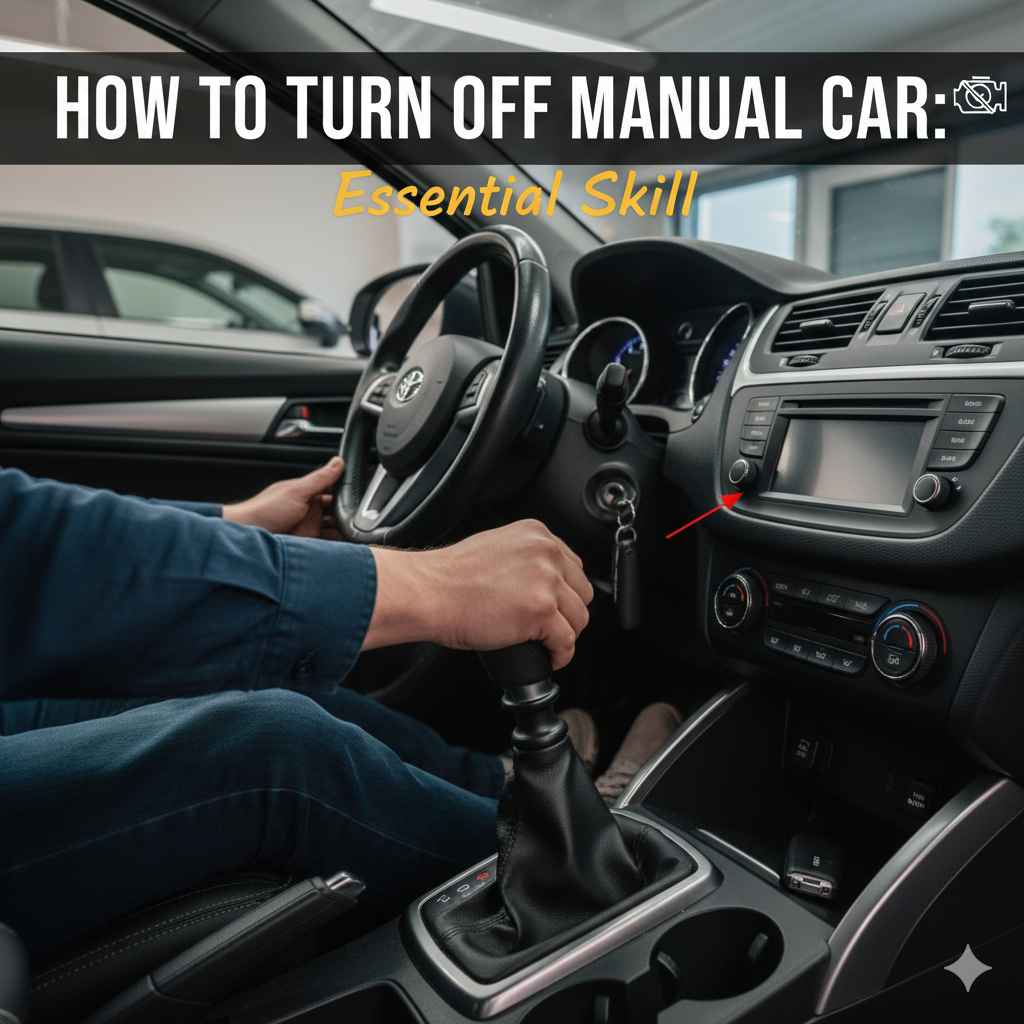
To turn off a manual car, simply press the clutch pedal all the way down, then turn the ignition key to the “Off” or “Lock” position. Ensure the parking brake is engaged and the gearstick is in neutral first for maximum safety. Following these simple steps will safely shut down your manual transmission vehicle.
Getting the hang of driving a manual car can feel like unlocking a secret superpower. But with that power comes responsibility, and one of the most fundamental skills, especially for beginners, is knowing how to safely turn off your manual car. It might seem straightforward, but a little know-how can prevent common newbie mistakes and keep your car (and your nerves) in good shape. Don’t worry if you’ve felt a bit unsure about this – you’re definitely not alone! We’ll break down the easy, step-by-step process so you can turn off your manual car with complete confidence every single time. Let’s get you road-ready!
Mastering the Art of Turning Off Your Manual Car: A Step-by-Step Guide
Driving a car with a manual transmission, often called a “stick shift,” offers a unique connection to the road. While learning to shift gears and coordinate the clutch can be a learning curve at first, mastering the basics, including how to properly turn off the engine, is crucial for any manual vehicle driver. This skill ensures your car stays safe and sound when parked and prevents potential damage or unexpected roll-aways. Think of it as the final, calm punctuation mark to your drive.
This guide is designed to make the process crystal clear, whether you’ve just gotten your license or are looking to brush up on your driving fundamentals. We’ll walk through each step with simple, easy-to-understand instructions.
Why Knowing How to Turn Off Your Manual Car is Important
Turning off your manual car isn’t just about stopping the engine; it’s about ensuring safety and prolonging the life of your vehicle. Here’s why it matters:
Safety First: Properly shutting down your car prevents it from accidentally rolling away, especially when parked on an incline. This is crucial for protecting yourself, your passengers, and other vehicles or property.
Preventing Engine Strain: Abruptly turning off the engine without following the correct procedure can sometimes put undue stress on certain engine components, though modern cars are quite robust. A proper shutdown is always best practice.
Avoiding “Stalling” When Restarting: While not directly related to turning off, a habit of proper shutdowns can lead to smoother restarts. You’ll get used to the feel of the car in neutral.
Building Driving Confidence: Mastering every aspect of driving a manual car, including the shutdown procedure, builds confidence. It makes you feel more in control and capable.
Let’s dive into the actual steps.
The Essential Steps: How to Turn Off a Manual Car
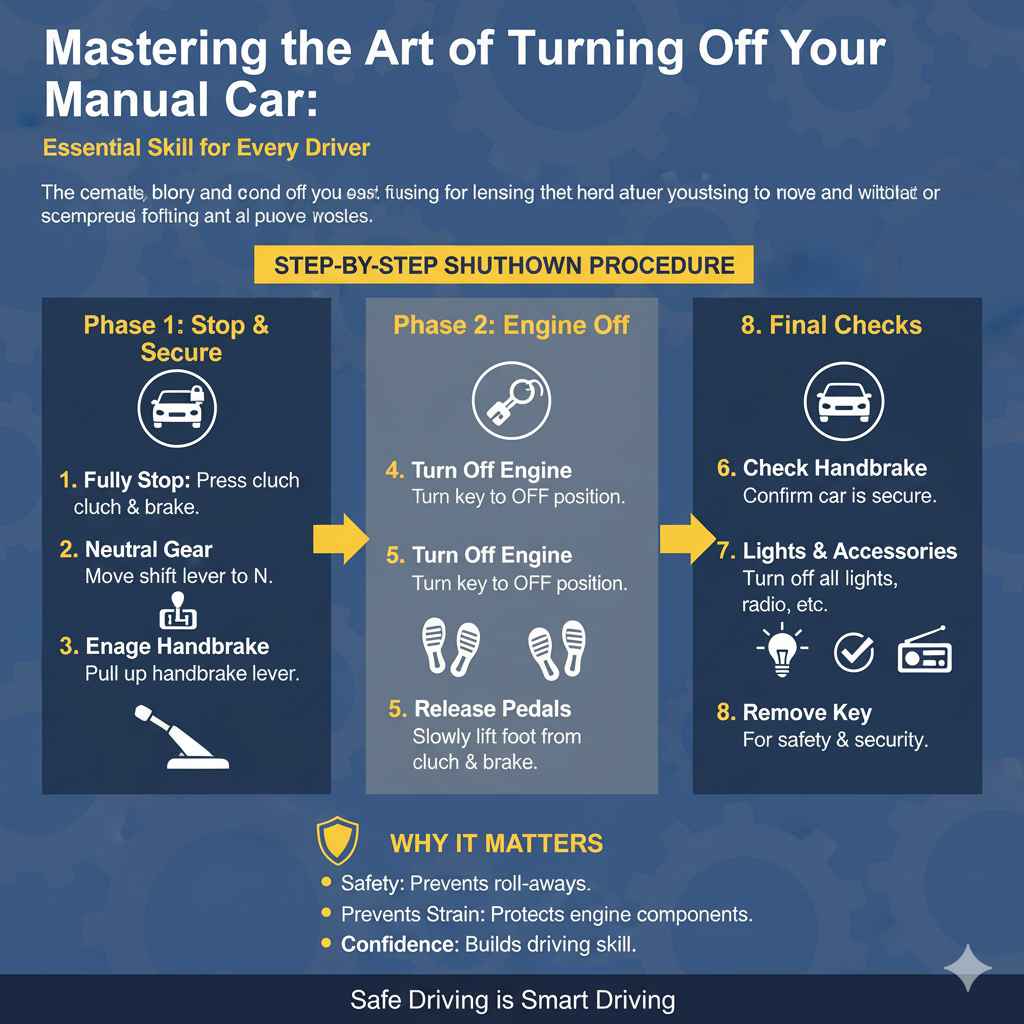
Turning off a manual transmission car safely involves a few key actions. It’s like a little routine that becomes second nature after a few tries. Follow these steps, and you’ll be turning off your car like a pro.
Step 1: Find a Safe and Level Spot
Before you even think about turning off the engine, pull over to a safe location. This means getting your car completely off the road, away from traffic, and on a relatively level surface if possible. If you absolutely must park on a hill, we’ll cover extra precautions a bit later.
Step 2: Engage the Parking Brake (Handbrake)
This is a critical step for safety, especially in manual cars. Pull the parking brake lever firmly upwards (for most handbrakes) or press the electronic parking brake button. This will physically lock your rear wheels, preventing your car from rolling even if it’s bumped or on a slight incline.
Location: The traditional handbrake is usually found between the driver and passenger seats. Electronic parking brakes might be a button on the dashboard or center console.
How to Engage: For a manual handbrake, you’ll feel resistance as you pull it up. For an electronic one, a simple press or pull usually activates it. You might see an indicator light on your dashboard.
Step 3: Disengage the Clutch Pedal
The clutch pedal is your key to managing the engine and transmission connection. To turn off the engine, you need to ensure the engine isn’t trying to engage with the transmission.
Action: Press the clutch pedal all the way down to the floor. You’ll feel it sink under your foot. Continue to hold it there.
Why: In a manual car, pressing the clutch pedal disconnects the engine from the gearbox. This ensures that if the car is accidentally left in gear, pressing the clutch prevents the engine from feeling the load, making it easier and safer to turn off.
Step 4: Shift the Gear Lever into Neutral
Neutral is the position where the engine is disconnected from all gears. This is a vital step for smooth operation and parking.
Action: With the clutch pedal fully depressed, move the gear lever freely from side to side. If it moves easily in all directions and feels loose, it’s likely in neutral.
Confirmation: If you’re unsure, try wiggling the gear lever slightly. If it has a lot of play and doesn’t resist going into a specific gear, it’s in neutral. You can also try gently releasing the clutch pedal a tiny bit while in neutral; the engine shouldn’t try to move the car.
Step 5: Turn Off the Ignition Key
Now that your car is safely parked, the parking brake is on, the clutch is pressed, and the gear is in neutral, you can turn off the engine.
Action: Turn the ignition key from the “On” (or “Accessory” or “Run”) position back to the “Off” or “Lock” position.
What Happens: You’ll hear the engine cut off. The dashboard lights will likely go out, except for any indicators related to the ignition being in the “Lock” position (like a steering wheel lock indicator).
Key Positions: Most ignition keys have positions like: LOCK/OFF, ACC (Accessory), ON/RUN, and START. You’re moving from ON/RUN back to LOCK/OFF.
Step 6: Remove the Key and Lock the Steering Wheel (If Applicable)
Once the engine is off, and you turn the key slightly further back (often to the “Lock” position), you’ll typically feel a click, and the steering wheel will lock. This deters theft.
Action: Gently turn the steering wheel back and forth until you feel it lock into place with a “clunk.”
Important Note: You can only lock the steering wheel when the engine is off and the key is in or turned to the “Lock” position. If you can turn the wheel freely after turning the car off, it might not be locking.
Step 7: Double-Check Everything
Before you walk away, take a moment to ensure everything is secure.
Are the lights off? (Unless you deliberately left parking lights on).
Is the parking brake fully engaged?
Is the gear in neutral?
Is the steering wheel locked?
This quick check seals the deal and gives you peace of mind.
Parking on an Incline: Extra Precautions for Manual Cars
Parking on a hill requires an extra layer of caution for any vehicle, but it’s particularly important for manual cars. The goal is to use the car’s weight and the slope to help prevent rolling.
Here’s how to park on a hill safely with your manual car:
Facing Uphill
1. Position: Stop parallel to the curb.
2. Clutch and Gear: Depress the clutch and put the car in first gear (1st Gear).
3. Release Brakes: Slowly release the parking brake and the clutch pedal, allowing the car to creep forward slightly until the front tires touch the curb.
4. Engage Parking Brake: Firmly engage the parking brake.
5. Turn Wheels: Turn the steering wheel away from the curb (to the left). This way, if the car were to roll back, the front tire would hit the curb and stop it.
6. Turn Off Engine: Follow the standard steps (clutch in, gear in neutral, turn off engine).
Facing Downhill
1. Position: Stop parallel to the curb.
2. Clutch and Gear: Depress the clutch and put the car in (Reverse Gear).
3. Release Brakes: Slowly release the parking brake and the clutch pedal, allowing the car to creep forward slightly until the front tires touch the curb.
4. Engage Parking Brake: Firmly engage the parking brake.
5. Turn Wheels: Turn the steering wheel towards the curb (to the right). This way, if the car tries to roll forward, the front tire will hit the curb and stop it.
6. Turn Off Engine: Follow the standard steps (clutch in, gear in neutral, turn off engine).
No Curb Available?
If there’s no curb, you still need to turn your wheels to direct the car away from the road if it were to roll.
Facing Uphill: Turn the wheels sharply to the right (away from the road).
Facing Downhill: Turn the wheels sharply to the left (towards the road, but angled away from the center if possible).
This strategy uses the tires to act as a secondary stopper. Always rely on the parking brake as your primary safety measure. For more information on safe parking practices, the U.S. Department of Transportation provides excellent resources: U.S. Department of Transportation.
Common Mistakes to Avoid When Turning Off a Manual Car
Even with clear steps, beginners can sometimes make a few common slips. Being aware of these can help you avoid them.
| Common Mistake | Why It’s a Problem | How to Fix/Avoid |
|---|---|---|
| Forgetting to engage the parking brake. | Increases the risk of the car rolling, especially on inclines. | Make it a non-negotiable part of your shutdown routine. Always engage it. |
| Not pressing the clutch pedal all the way down. | Can make it harder to turn off the engine, and if the car is slightly nudged, it might stall or lurch if still in gear. | Always press the clutch pedal firmly to the floor before turning the ignition. |
| Leaving the car in gear. | Can cause the car to lurch when you release the clutch, or if someone bumps it while parked, it could move unexpectedly. | Always shift into neutral before turning the ignition off. Wiggle the gear stick to confirm it’s loose. |
| Turning the engine off while the clutch is still engaged (and in gear). | This forcefully shuts down the engine against transmission load, which isn’t ideal for long-term wear. | Always press the clutch and shift to neutral before turning the ignition off. |
| Turning the steering wheel to lock before the engine is completely off. | Can sometimes make the ignition key hard to turn to the ‘Off’ position. | Turn the ignition to ‘Off’ first, then briefly turn the steering wheel to find the lock position. |
| Forgetting where you parked the keys. | Leads to frustration and delays. | Always put your keys in a designated spot immediately after removing them. |
Understanding these pitfalls helps reinforce the correct procedure and builds better driving habits.
What Does “Turning Off the Car” Really Mean?
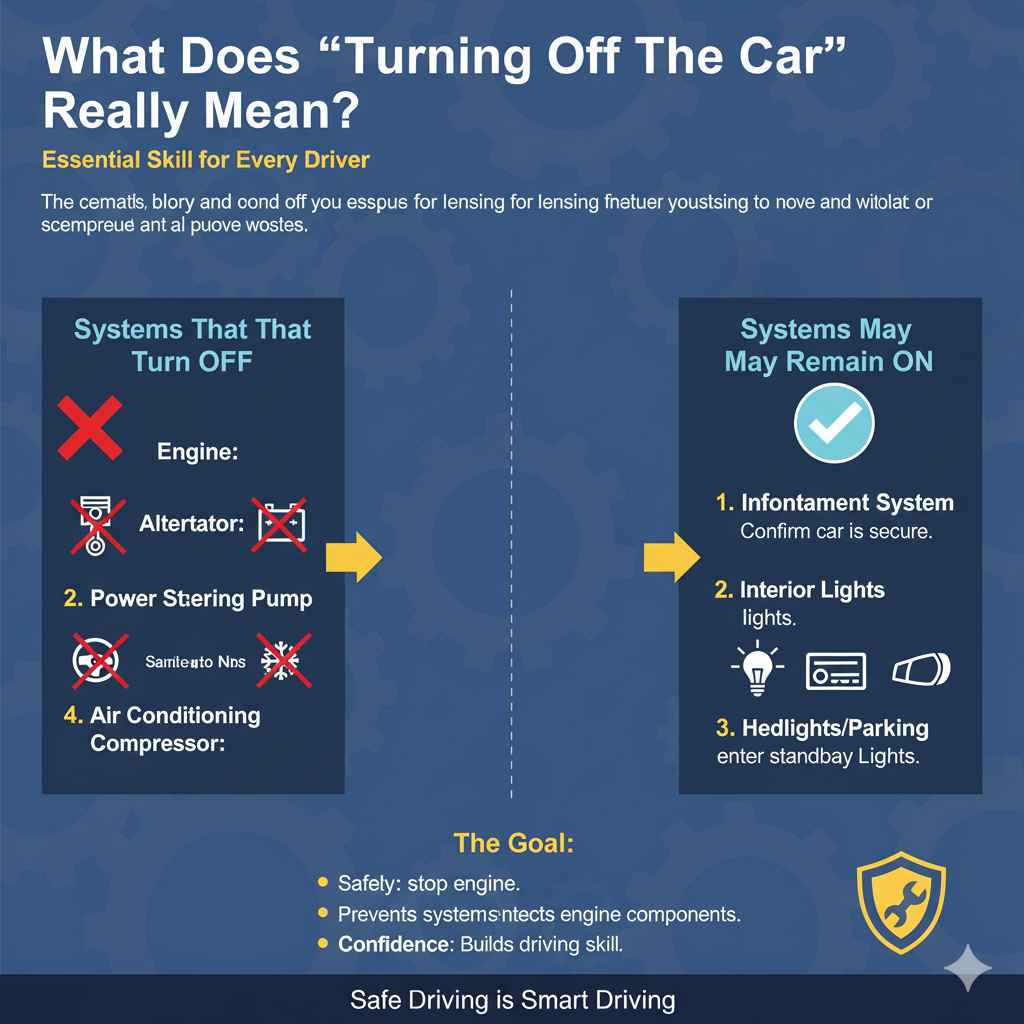
When we talk about “turning off the car,” we mean shutting down the engine and all its ancillary systems that run only when the engine is on. This includes:
Engine: The gasoline or diesel-powered heart of your vehicle stops combustion.
Alternator: This component charges your battery while the engine runs. Once off, it stops producing power.
Power Steering Pump: This hydraulic pump assist steering, powered by the engine. With the engine off, power steering becomes very heavy.
Air Conditioning Compressor: Often driven by the engine’s serpentine belt, its operation ceases.
Systems that may remain on briefly or until the car is locked include:
Infotainment System: The radio, screen, etc.
Interior Lights: If left switched on.
Headlights/Parking Lights: If left on.
The goal of turning off the car is to safely stop the engine and allow the vehicle’s electrical systems to enter a standby or off state, usually managed by the car’s battery.
Frequently Asked Questions (FAQ) about Turning Off Manual Cars
Here are some common questions beginner drivers have about turning off their manual transmission vehicles.
Q1: Do I need to press the clutch when turning off my manual car?
Yes, it’s highly recommended. While some modern cars might be forgiving if you turn them off in neutral without the clutch, pressing the clutch pedal all the way down before turning off the ignition ensures you disconnect the engine from the transmission. This makes the shutdown smoother and safer, especially if you accidentally left it in gear.
Q2: Can I just turn the key off without putting it in neutral?
Ideally, no. You should always shift into neutral with the clutch fully depressed and then turn off the engine. If the car is in gear and you turn off the engine without pressing the clutch, the engine will forcefully stop against the resistance of the gear. This isn’t great for the engine or transmission over time, and if the car is bumped, it could lurch forward or backward.
Q3: What’s the difference between turning the key to “Off” and “Lock”?
The “Off” position stops the engine. The “Lock” position typically cuts off all electrical power to accessories and engages the steering wheel lock to prevent theft. You usually turn the key back slightly from “Off” to reach the “Lock” position. Always ensure it’s in “Lock” when you leave the car.
Q4: My car stalled when I tried to turn it off. What did I do wrong?
This usually happens if you try to turn the engine off without the clutch fully pressed down and the car is still in gear. The engine fighting the transmission can cause it to stall. The correct process involves pressing the clutch, shifting to neutral, confirming neutral, and then turning the key to the off position.
Q5: Is it okay to leave the steering wheel unlocked after turning off the engine?
No, it’s best practice to always lock your steering wheel when parking. This is a security feature to prevent your car from being easily stolen. You’ll usually feel a click when the steering wheel lock engages as you turn the ignition key to the “Lock” position.
Q6: What if I forget to put on the parking brake?
This is a serious safety risk, especially on hills. Always make it a habit to engage the parking brake immediately after stopping. If you realize you forgot to engage it before you turned off the engine, you’ll need to restart the car, press the clutch, put it in neutral, apply the parking brake, and then turn the engine off again.
Q7: How do I know if my car is truly in neutral?
With the clutch pedal fully depressed, the gear stick should be loose and able to move freely from side to side. If you gently try to move it between first gear and second gear (or any adjacent gears), it should feel very loose. You can also gently release the clutch pedal a bit – if the car doesn’t try to move or the engine RPM doesn’t change, you are in neutral.
The Science Behind the Shutdown
Understanding a bit about how your car works can demystify certain actions. When you turn the ignition key to the “Off” or “Lock” position, you’re essentially disconnecting the electrical signal that tells the engine’s computer (ECU) and ignition system to keep running.
Ignition System: This is what sparks the fuel-air mixture in your cylinders. When you turn the key off, this spark stops.
Fuel System: The fuel pump, which supplies gasoline or diesel to the engine, also gets its signal to stop.
* ECU (Engine Control Unit): This is the car’s brain. It manages everything from fuel injection to spark timing. When the key is turned off, the ECU goes into a low-power mode or shuts down completely, ensuring it doesn’t drain your battery.
The clutch and neutral engagement are about ensuring a smooth transition for these systems. By pressing the clutch, you tell the engine it doesn’t need to power the wheels. By putting it in neutral, you confirm that it’s not linked to any gear rotation. This way, the engine can stop its internal combustion cycle cleanly without any external forces pulling it or fighting against it. A properly engaged parking brake then takes over the job of holding the car stationary.
Conclusion: Confidence in Every Turn of the Key
Turning off a manual car is more than just stopping the engine; it’s the final act of responsible driving for any journey. By following the simple steps—finding a safe spot, engaging the parking brake, pressing the clutch, shifting to neutral, turning the ignition, and performing a quick check—you ensure the safety of your vehicle and those around it.
Remember the extra precautions for parking on hills, and be mindful of those common beginner mistakes to build robust driving habits. This skill, like all aspects of manual driving, becomes second nature with practice. You’ve got this!