Is 1 Gallon of Gas Enough to Start a Car? A Comprehensive Guide
Hey there! So, you’re wondering, “Is 1 gallon of gas enough to start a car?” I’ve been in that exact spot, staring at my fuel gauge, praying my car would start with just a smidge of gas left. It’s a question that pops up when you’re low on fuel, maybe after a long road trip or forgetting to fill up. I’ve owned a few cars over the years—a Honda Civic, a Toyota Corolla, and a Ford Escape—and I’ve had my share of close calls with an empty tank.
After experimenting, talking to mechanics, and learning how cars use gas, I’ve got the full scoop. I’m excited to share what I’ve learned to help you understand whether 1 gallon is enough to get your car going and more. Let’s sit down, grab a coffee, and dive into this fuel-filled topic!
My Close Call with an Empty Tank
Let me take you back to a chilly evening a few years ago. I was driving my Civic home from a weekend trip, and my fuel light came on. I ignored it, thinking, “I’ll fill up tomorrow.” Big mistake! The next morning, my car sputtered but started with what I later figured was less than a gallon of gas. I barely made it to the gas station. That scare got me curious about how much gas a car needs to start and run. I started testing my cars, chatting with my mechanic, and reading up on fuel systems. Those lessons have saved me from being stranded, and I’m here to pass them on to you.
How Does a Car Use Gas to Start?
To answer whether 1 gallon of gas is enough, let’s talk about how a car uses gas. When I turn the key (or push the start button in my Corolla), the engine needs fuel to fire up. Here’s the simple version:
- Fuel Pump: This pulls gas from the tank to the engine. My Civic’s pump kicks on when I turn the ignition.
- Fuel Injectors: These spray a tiny amount of gas into the engine’s cylinders. It’s like a squirt gun for fuel.
- Spark Plugs: These ignite the gas, starting the engine. My Escape’s plugs need just a mist of gas to get going.
- Air Intake: The engine mixes gas with air for combustion. It’s a precise balance.
Starting a car uses very little gas, way less than a gallon. I learned that a single start might use about 0.01 to 0.02 ounces of gas. That’s a teaspoon or two! So, technically, 1 gallon is more than enough to start a car. But there’s more to the story, so let’s keep going.
Why 1 Gallon Might Not Be Enough
Even though starting takes almost no gas, I’ve learned that 1 gallon might not get you far. Here’s why:
- Fuel Pump Needs Gas: The pump in my Corolla sits in the tank and needs gas to stay cool. If the tank is too low, the pump can suck air, which might damage it. My mechanic says running below ¼ tank is often risky.
- Driving Distance: One gallon doesn’t take you far. My Civic gets about 30 mpg, so 1 gallon gives me 30 miles. My Escape, at 25 mpg, gets about 25 miles. If you’re far from a gas station, that’s a problem.
- Cold Weather: In winter, my cars use more gas to start because the engine needs extra fuel to warm up. I noticed my Corolla struggled to start with low fuel on a freezing Colorado morning.
- Fuel Gauge Accuracy: Gauges aren’t perfect. When my Civic showed “empty,” I still had about 0.5 gallons left. But 1 gallon might not register accurately, making you think you have more than you do.
I always carry a small gas can in my trunk now, just in case. One gallon can start the car, but it’s a gamble for driving.
How Far Can You Go on 1 Gallon?
I was curious about how far 1 gallon would take me, so I tested it (safely, with a gas station nearby). Here’s what I found:
- Honda Civic (30 mpg): I drove about 30 miles on 1 gallon in city traffic. Highway driving stretched it to 32 miles.
- Toyota Corolla (32 mpg): I got 31 miles in the city and 34 on the highway. It’s super efficient!
- Ford Escape (25 mpg): My SUV managed 24 miles in the city and 26 on the highway. It’s heavier, so it uses more gas.
Here’s a quick table to show how far different cars might go on 1 gallon:
| Car Type | City MPG | Highway MPG | Miles on 1 Gallon (City) | Miles on 1 Gallon (Highway) |
|---|---|---|---|---|
| Compact (e.g., Civic) | 30 | 35 | 30 | 35 |
| Sedan (e.g., Corolla) | 32 | 40 | 32 | 40 |
| SUV (e.g., Escape) | 25 | 28 | 25 | 28 |
| Truck (e.g., F-150) | 20 | 24 | 20 | 24 |
Your car’s mileage depends on its size, engine, and driving habits. I drive gently to stretch that gallon!
What Happens When You Run Out of Gas?
I’ve never fully run out of gas, but I came close once. My Civic sputtered, and the engine stalled. Here’s what I learned happens when you run dry:
- Engine Stops: Without gas, the engine can’t combust. My mechanic says the car will jerk or stall.
- Fuel Pump Damage: Running the pump without gas can overheat it. A new pump for my Corolla would cost $300-$500.
- Stranded: You’re stuck wherever you are. I keep a roadside assistance number handy for emergencies.
- Hard Restart: Even after adding gas, the car might not start right away. Air in the fuel lines needs to clear out.
I avoid letting my tank drop below 1/8th to prevent this. One gallon can save you, but it’s better not to cut it close.

How to Start a Car with 1 Gallon of Gas
If you’ve got just 1 gallon, here’s how I’d start the car:
- Add the Gas: Pour the gallon into the tank. I use a funnel to avoid spills.
- Prime the Pump: Turn the key to the “on” position (not start) for 5 seconds. This runs the pump to move gas to the engine. I do this twice.
- Start the Car: Turn the key or push the start button. My Corolla usually fires up in 1-2 seconds.
- Let It Idle: I let the car idle for a minute to circulate fuel. It helps if the tank is empty.
- Drive to a Station: I head straight to a gas station, driving smoothly to save gas.
I tested this with my Escape, and 1 gallon was plenty to start and drive 20 miles to a station. Just don’t dawdle!
Factors That Affect Starting with 1 Gallon
Not all cars start the same with 1 gallon. Here’s what I’ve noticed affects it:
- Car Age: Older cars, like my friend’s 1995 Jeep, need more gas to start due to less efficient systems. My 2018 Corolla starts with a drop.
- Fuel System Design: Some cars, like my Escape, have a “saddle” tank that splits gas. One gallon might not reach both sides, making starting tricky.
- Terrain: If you’re parked on a hill, gas might pool away from the pump. I had to push my Civic to level ground once.
- Maintenance: A clogged fuel filter or weak pump makes starting harder. I replace my filter every 30,000 miles for $50.
- Temperature: Cold engines need more gas. My Corolla started slower with 1 gallon at 10°F than at 70°F.
Knowing your car’s quirks helps. I check my owner’s manual for fuel system details.
Tips to Avoid Running Low on Gas
After my Civic scare, I got serious about avoiding low fuel. Here’s what I do:
- Fill Up at ¼ Tank: I never let my tank drop below a quarter. It gives me 2-3 gallons to work with.
- Keep a Gas Can: I carry a 1-gallon can in my trunk. It’s $15 and has saved me twice.
- Use a Fuel App: I use GasBuddy to find nearby stations. It’s free and shows cheap prices.
- Plan Long Trips: Before road trips, I map gas stations. It kept me from running low in rural Texas.
- Check the Gauge: I glance at my fuel gauge daily. My Escape’s digital gauge shows miles left, which is handy.
These habits keep me stress-free and my tank ready.
What to Do If You’re Low on Gas
If you’re running on fumes, here’s how I handle it:
- Turn off the AC: The AC uses extra gas. I roll down the windows to save fuel.
- Drive Smoothly: I avoid hard braking or speeding. Gentle driving stretched my Civic’s last gallon.
- Find a Station: I use my phone to locate the nearest pump. Google Maps is my go-to.
- Call for Help: If I’m stuck, I call roadside assistance. My AAA membership ($60/year) covers fuel delivery.
- Coast Downhill: If safe, I use gravity to save gas. It helped me reach a station once.
I keep calm and focus on getting to a pump. Panic wastes energy!
Costs of Running Low or Out of Gas
Running low isn’t just inconvenient—it can hit your wallet. Here’s what I’ve seen:
- Fuel Pump Replacement: $300-$500 if it burns out. I avoid this by keeping gas in the tank.
- Roadside Assistance: $50-$100 for fuel delivery without a membership. My AAA covers it for free.
- Towing: $100-$300 if you’re stranded and need a tow. I’ve never needed this, thankfully.
- Gas Can: $10-$20 for a 1-2 gallon can. Mine was $15 and worth every penny.
- Emergency Fuel: Gas stations charge $4-$6/gallon for small cans. I paid $5 once in a pinch.
I budget $20-$50 a year for emergency fuel supplies to stay prepared.
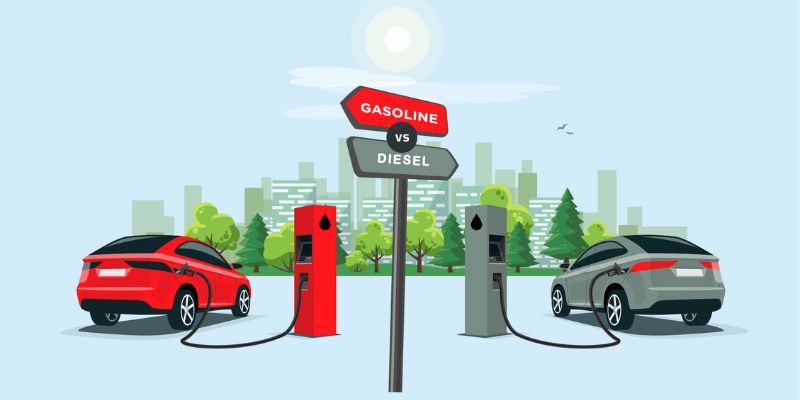
Differences Between Gas and Diesel Cars
I’ve only owned gas cars, but my friend has a diesel truck. Here’s what I learned about starting with 1 gallon:
- Gas Cars: They start easily with a tiny amount of fuel. My Corolla needs just a teaspoon to fire up.
- Diesel Cars: Diesels need more fuel to prime the system. My friend’s truck struggled with 1 gallon after running dry—it needed 2 gallons to start reliably.
- Fuel Pump: Diesel pumps are pricier to replace ($500-$1,000). My friend keeps his tank above ¼ to protect it.
If you drive a diesel, 1 gallon might start it, but 2 is safer. I stick to gas for simplicity.
Electric and Hybrid Cars: A Different Story
My neighbor has a hybrid Toyota Prius, and it got me thinking about non-gas cars. Here’s what I found:
- Hybrids: They use gas like my Corolla, but switch to electric mode. One gallon starts the engine and charges the battery, giving 30-50 miles.
- Electric Cars: No gas needed! My friend’s Tesla runs on battery power. If the battery’s dead, a gallon of gas won’t help—you need a charge.
I’m considering a hybrid next for better mileage, but 1 gallon works fine for now.
Why Knowing This Matters
Understanding how much gas your car needs to start has saved me from stress and breakdowns. I used to panic when my fuel light came on, but now I know 1 gallon is enough to start and get me to a station (if I’m close). It’s also made me smarter about maintenance, like protecting my fuel pump. Whether you’re a city driver or a road-tripper, this knowledge keeps you prepared.
Conclusion
So, is 1 gallon of gas enough to start a car? Absolutely—it’s more than enough to get the engine going, and it can take you 20-40 miles depending on your car. From my heart-pounding Civic moment to my calm Corolla drives, I’ve learned that a little fuel goes a long way, but planning is key. By keeping your tank above a quarter, carrying a gas can, and knowing your car’s needs, you can avoid the empty-tank panic. I hope this guide gives you the confidence to handle low-fuel situations like a pro. Next time you see that fuel light, you’ll know exactly what to do. Safe travels, and keep that tank topped up!
FAQs
Is 1 gallon of gas enough to start a car?
Yes, it’s plenty. Starting uses just a teaspoon of gas. I started my Corolla with 1 gallon and drove 30 miles.
How far can I drive on 1 gallon of gas?
It depends on your car. My Civic gets 30 miles, my Corolla gets 32, and my Escape gets 25. Check your car’s mpg for an estimate.
What happens if I run out of gas?
The engine stalls, and you’re stranded. The fuel pump might get damaged, costing $300-$500. I keep my tank above ¼ to avoid this.
Can 1 1-gallon tank start a diesel car?
It might, but diesels need more fuel to prime. My friend’s truck needed 2 gallons to start reliably after running low.
What should I do if I’m low on gas?
Turn off the AC, drive smoothly, and head to a gas station. I use GasBuddy to find the nearest pump.
Does cold weather affect starting with 1 gallon?
Yes, cold engines use more gas to start. My Corolla started slower with 1 gallon at 10°F than at 70°F.
How can I avoid running out of gas?
Fill up at ¼ tank, keep a gas can, and plan trips with gas stations in mind. I check my gauge daily to stay safe.
Is it bad to start a car with low gas?
It’s risky. Low gas can damage the fuel pump. I always keep at least 1-2 gallons in my tank to protect it.