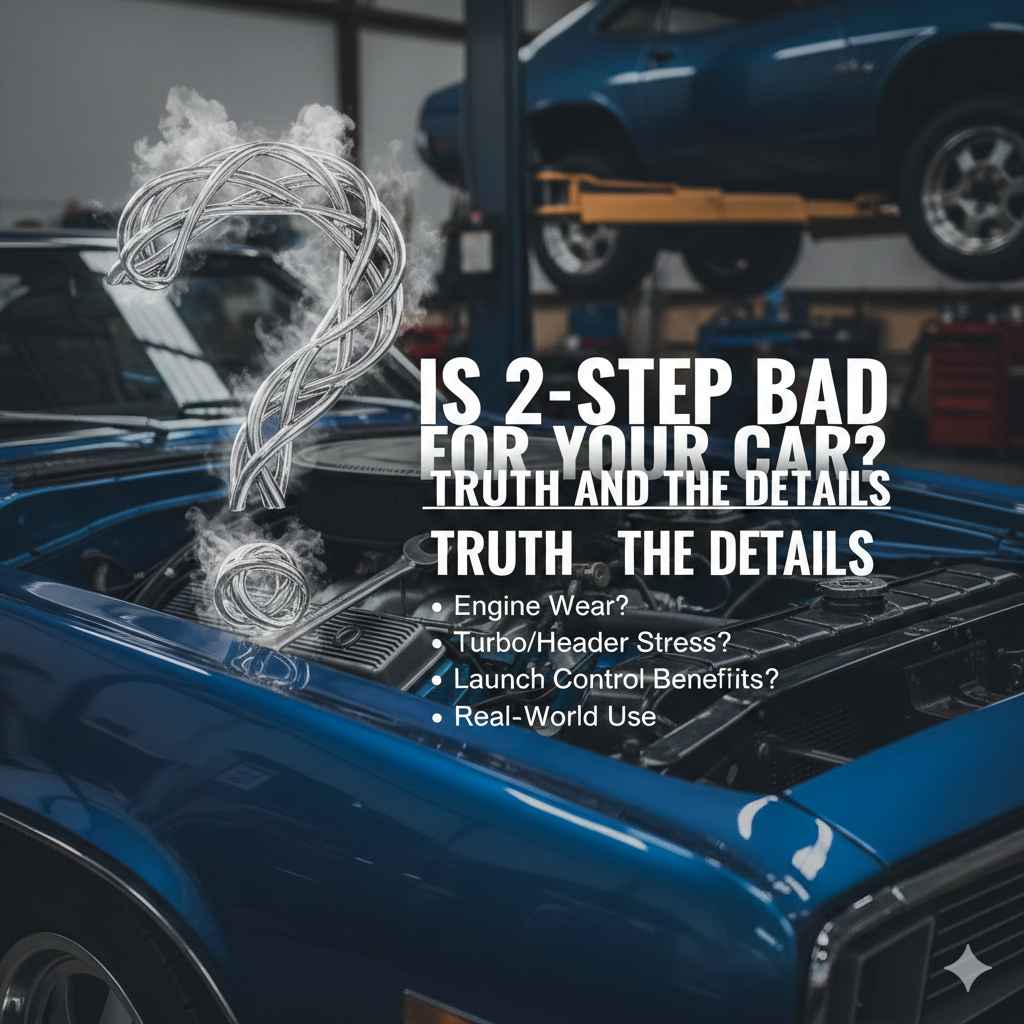
Is 2-Step Bad for Your Car? Truth and the Details
Figuring out if Is 2-Step Bad for Your Car? Truth Explained is tricky. Many car owners have heard stories, some good and some bad, about using this system. It can seem overwhelming when you’re just starting out. But don’t worry! This post will break down the topic in easy steps. We’ll explore exactly what 2-step is, how it works, and most importantly, whether it could damage your car. Let’s start by looking at the basics.
What Exactly Is 2-Step, and How Does It Work?
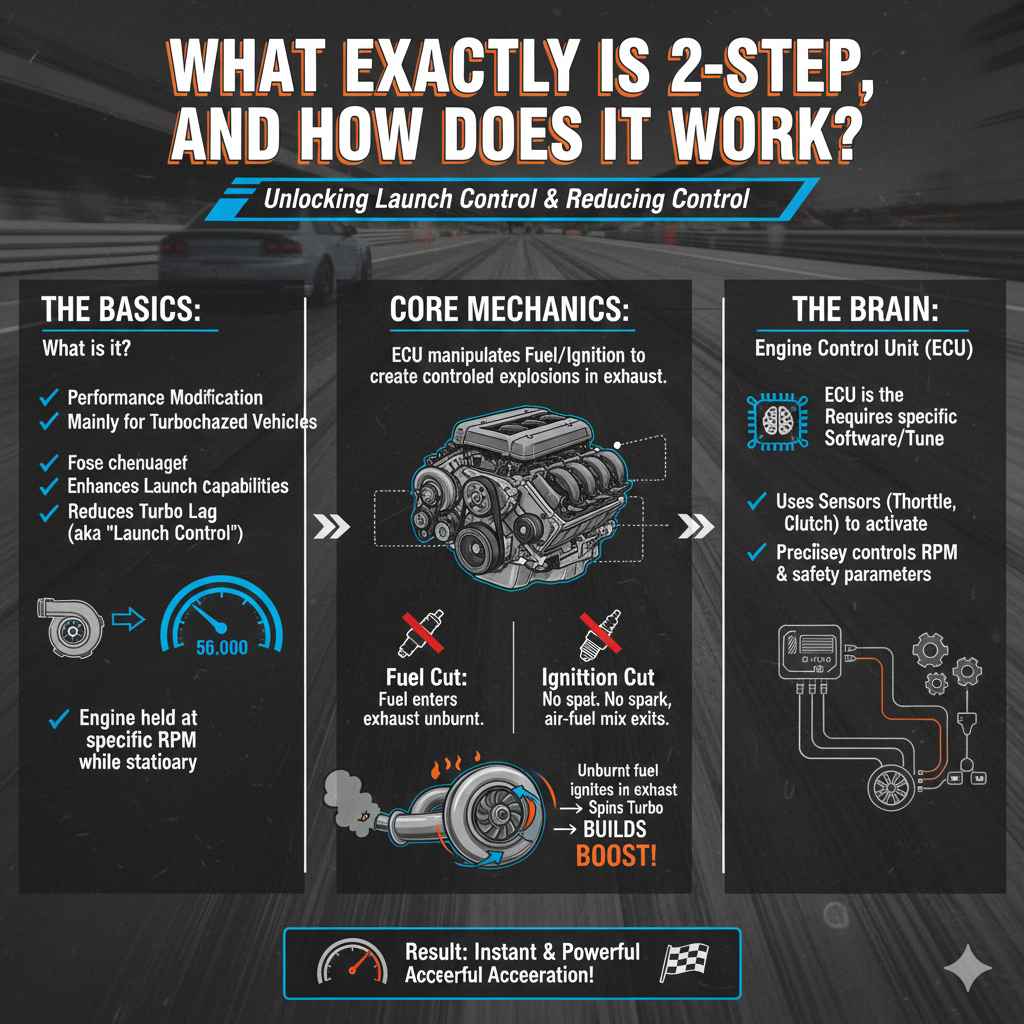
2-step is a performance modification, a method employed predominantly in turbocharged vehicles to enhance launch capabilities and reduce turbo lag. It’s also known as a “launch control” system. When activated, the engine’s ECU (Engine Control Unit) keeps the engine revving at a specific RPM (revolutions per minute) while the car is stationary.
This is achieved by cutting the ignition or fuel supply to the cylinders, causing combustion to occur within the exhaust manifold. The result? A build-up of boost pressure in the turbocharger, ready for an immediate and powerful acceleration when the vehicle launches.
This process might seem complex, but think of it as a way to “pre-spool” your turbo. This means getting the turbo spinning and building up pressure before you even start moving. When you release the clutch and hit the gas, all that stored-up power is unleashed instantly. This provides a significant advantage in drag races or when fast acceleration is necessary. The exact way this is implemented depends on the vehicle’s ECU. Some vehicles have a factory-installed 2-step system. Others need a custom tune or an aftermarket device.
The Core Mechanics Behind 2-Step
The core of a 2-step system lies in manipulating the engine’s normal operations to achieve a specific goal: generating boost while stationary. This involves a precise balance of fuel and ignition management. During a 2-step operation, the engine is deliberately kept at a high RPM. The ECU either cuts the fuel supply to some cylinders or disrupts the ignition process. This causes unburnt fuel to enter the exhaust system. The hot exhaust gases then ignite this fuel, creating a controlled explosion within the exhaust manifold. This controlled explosion spins the turbocharger’s turbine wheel, building boost pressure.
- Fuel Cut: Some systems cut the fuel supply to the cylinders. This means that the fuel does not ignite inside the engine. Instead, it moves through the exhaust.
- Ignition Cut: Other systems cut the spark. This prevents the air-fuel mixture from igniting in the cylinders.
- Exhaust Manifold Heat: The unburnt fuel in the exhaust manifold can ignite. This creates heat and pressure that helps spin the turbo.
The Role of the Engine Control Unit (ECU)
The ECU is the brain of the engine. It controls almost every function, from fuel injection to ignition timing. In a 2-step system, the ECU is reprogrammed to execute this special function. The ECU receives information from several sensors, including the throttle position sensor, engine speed sensor, and clutch position sensor. Based on this information, the ECU determines when to activate the 2-step and at what RPM to hold the engine.
The ECU’s ability to precisely control the engine is crucial for 2-step’s effectiveness and safety. It ensures the engine doesn’t over-rev and causes damage. The specific parameters of the 2-step system, such as the target RPM and the type of cut (fuel or ignition), are determined during the tuning process.
- Programming: The ECU needs specific software or a tune for 2-step to work. This can be done by a professional.
- Sensors: The ECU uses sensors to understand when you want to use 2-step.
- Control: The ECU controls when the engine revs and builds boost.
Does 2-Step Damage Your Engine? Potential Problems
The question “Is 2-Step Bad for Your Car? Truth Explained” often arises due to the intense nature of the process. While 2-step can be advantageous for performance, it potentially introduces stress on various engine components. The constant high RPMs and the explosions within the exhaust system can lead to problems if the system isn’t set up correctly or used too often. Over time, these conditions can lead to accelerated wear and tear on your car’s parts.
The potential damage from using 2-step comes from the heat, pressure, and stress it puts on the engine and exhaust system. The unburnt fuel ignited in the exhaust manifold creates a lot of heat. This can damage components like the exhaust manifold, turbocharger, and catalytic converter. The constant high RPMs also put stress on the engine’s internal parts, potentially leading to increased wear and tear. Therefore, it’s essential to understand these potential risks before installing or using a 2-step system.
Common Issues and Potential Wear
Regular use of a 2-step system can lead to various problems. The extreme heat generated during the process is a significant concern. It can cause components to degrade over time. The constant ignition and fuel cuts can also impact engine components. Moreover, the turbocharger itself experiences increased stress because it is constantly subjected to high temperatures and pressures. Over time, these conditions could lead to turbocharger failure.
Furthermore, the exhaust manifold is directly impacted by the explosions. It is critical to carefully consider these factors and adjust your use of the 2-step system accordingly to protect your engine.
- Exhaust Manifold: High heat can cause cracks and failures.
- Turbocharger: Accelerated wear and tear can reduce the turbo’s lifespan.
- Catalytic Converter: Unburnt fuel can damage the catalytic converter, reducing its effectiveness.
Factors Influencing Engine Wear
Several factors determine how much wear and tear a 2-step system causes. The quality of the components in your engine and exhaust system plays a role. Higher-quality parts will typically withstand the stress better than cheaper ones. The tuning of the 2-step system also matters. If the system is tuned poorly, it will generate more heat and stress.
Finally, how often you use the 2-step system impacts the engine. Frequent use will naturally cause more wear. Therefore, the setup, use, and the components themselves influence the overall longevity of the engine.
- Tuning: Poorly tuned systems can increase engine wear.
- Frequency: Using 2-step often will put more stress on the engine.
- Components: Higher-quality parts can handle the stress better.
Safe Use: Minimizing Risks with 2-Step
Can you use 2-step and not hurt your car? The answer is complex. You can reduce risks with proper setup and sensible operation. Careful planning and responsible use can minimize the chance of damage. Understanding how to use the system correctly is just as important as the system itself. This involves knowing its limitations and avoiding abuse. By taking these steps, you can still enjoy the performance benefits of a 2-step system while protecting your engine.
Safe use is about finding a balance between performance and engine health. This involves getting the system tuned properly. A well-tuned system will minimize the stress on your engine. It is essential to warm up your engine before using 2-step. This ensures that the engine components are at the correct operating temperature. Additionally, limit the use of the 2-step system. Frequent and extended use can accelerate wear and tear. Finally, it’s critical to regularly inspect your car and service it. This way, you can catch any potential issues before they become serious problems.
Proper Tuning and Setup
A well-tuned 2-step system is essential to minimize potential damage. A professional tuner should configure the system. The tuner will ensure the engine runs at optimal parameters. The tuning process involves adjusting the engine’s fuel delivery, ignition timing, and RPM limits. It ensures that the 2-step system generates the boost while minimizing the stress on the engine components. The tuner will also consider the specific engine modifications. They will tailor the tuning to work best with your car’s setup. A professional tune can also identify and correct any potential issues before they cause damage.
- Professional Tuning: Have a skilled tuner set up the system.
- RPM Limits: Set appropriate RPM limits to prevent over-revving.
- Fuel and Timing: Optimize fuel delivery and ignition timing.
Operating Guidelines for Optimal Use
Operating your 2-step system carefully is another step to protect your engine. Avoid using the system when the engine is cold. The components are less tolerant of stress when they haven’t reached their operating temperature. Limit your use of the 2-step system to occasions where you need maximum acceleration.
Avoid using it repeatedly, as this can increase wear and tear. Also, pay attention to the sound of your engine and any warning signs. Any unusual sounds or smells should be investigated immediately. Proper operation is not just about using the system correctly; it’s also about paying attention to your car’s overall health.
- Warm-up: Allow the engine to reach operating temperature.
- Limited Use: Use the system only when necessary.
- Listen for Issues: Be alert to any unusual engine sounds.
Examples and Case Studies
Let’s look at some real-world examples. These case studies can help illustrate the potential effects of 2-step and how people have managed them. These examples can provide valuable insights into both the benefits and the potential risks of the 2-step system. By examining these, we can better understand how to use the system safely and effectively. Remember that individual results may vary, and these cases represent only a portion of possible outcomes.
These examples offer a clearer view of what can happen when using the 2-step system, both positively and negatively. These studies highlight the importance of proper setup, tuning, and responsible operation. It is vital to note that each car and engine has specific characteristics that will affect the results.
-
Case Study 1: The Enthusiast’s ExperienceA car enthusiast with a turbocharged sports car decided to add a 2-step system. They researched the topic thoroughly and consulted with a professional tuner. The tuner carefully set up the system, making sure it was optimized for the car’s engine. The enthusiast used the system only occasionally, like at the drag strip and when showing off to friends.
The vehicle was regularly serviced and maintained. Over several years, the car maintained its performance, with no apparent damage from using the 2-step system. This demonstrates that careful planning and responsible use can minimize any risks associated with 2-step.
-
Case Study 2: The Lesson LearnedIn another case, a car owner with a turbo car installed a 2-step system without proper tuning. They used it frequently, revving the engine to high RPMs in short order. After several months, the exhaust manifold began to crack, and the turbocharger developed issues. The owner then had to spend a lot of money to repair the damage.
The case highlights that improper setup and excessive use can result in engine problems. It is a cautionary tale about the importance of professional tuning and using the system responsibly. The lesson learned was that rushing the installation and not taking care can cause expensive problems.
Comparison and Technical Specifications
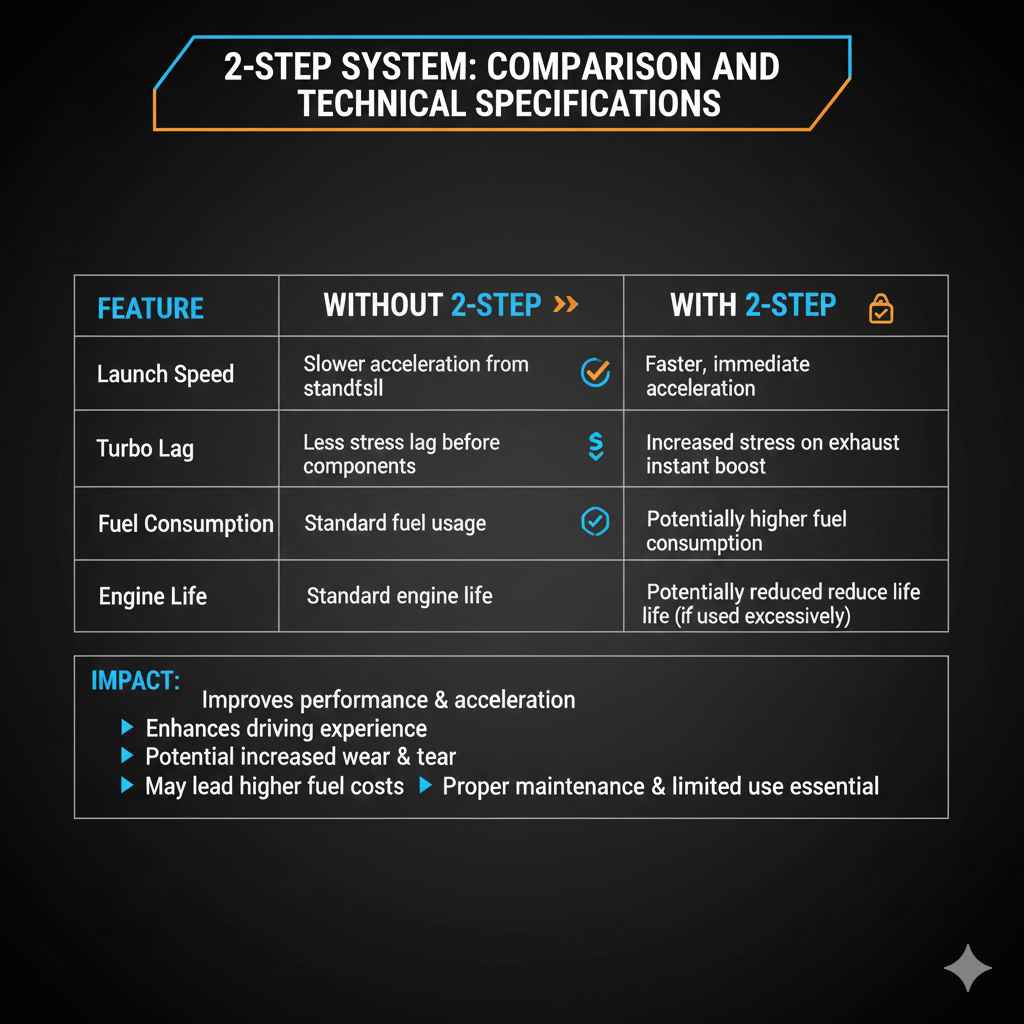
To better grasp the impact of the 2-step system, here’s a comparison table. It shows different factors, contrasting how the system affects various aspects of your car, from performance to potential wear and tear. This helps to show a clearer image of what to expect if you decide to install and use a 2-step system.
| Feature | Without 2-Step | With 2-Step | Impact |
|---|---|---|---|
| Launch Speed | Slower acceleration from a standstill | Faster, more immediate acceleration | Improves performance and acceleration |
| Turbo Lag | Noticeable lag before turbo spools up | Reduced turbo lag, instant boost | Enhances driving experience and performance |
| Engine Stress | Less stress on engine components | Increased stress on exhaust components and engine | Potential increased wear and tear if used too often |
| Fuel Consumption | Standard fuel usage | Potentially higher fuel consumption | May lead to higher fuel costs |
| Engine Life | Standard engine life | Potentially reduced engine life if used excessively | Proper maintenance and limited use are essential |
Frequently Asked Questions
Question: Is 2-step legal on public roads?
Answer: The legality of using 2-step on public roads varies by region. It’s often not allowed because it can be noisy and might violate noise regulations. Check your local laws.
Question: Can I install a 2-step system myself?
Answer: Technically, you could install a 2-step system yourself. However, it requires significant knowledge of engine tuning and electronics. A professional installation is highly recommended to avoid damaging your engine.
Question: What if my car doesn’t have a turbo?
Answer: 2-step systems are designed for turbocharged cars. They work by building boost while the car is stationary. Without a turbocharger, there’s no boost to build, so the system is ineffective and potentially harmful.
Question: How often can I safely use a 2-step system?
Answer: The frequency of 2-step use depends on the quality of your car’s components, the system’s tuning, and your driving style. Using it occasionally, like at the track or drag strip, is safer than using it often. Always monitor your engine and be mindful of any unusual sounds or smells.
Question: What other modifications are needed to use a 2-step system?
Answer: Besides the 2-step system, you may need other modifications. These can include a performance exhaust system, upgraded fuel injectors, and a robust ECU to handle the changes.
Final Thoughts
So, Is 2-Step Bad for Your Car? Truth Explained? It depends. 2-step can be a great way to boost performance and improve acceleration. But, it’s essential to understand its potential effects. It’s not inherently “bad,” but it does introduce extra stress on certain engine parts. The good news is, you can minimize these risks by getting your system properly tuned, using it carefully, and always keeping an eye on your engine. If you’re considering using a 2-step, do your homework, consult professionals, and make informed choices. If done correctly, it can be a great addition to your ride. Stay informed, drive safely, and enjoy the thrill!