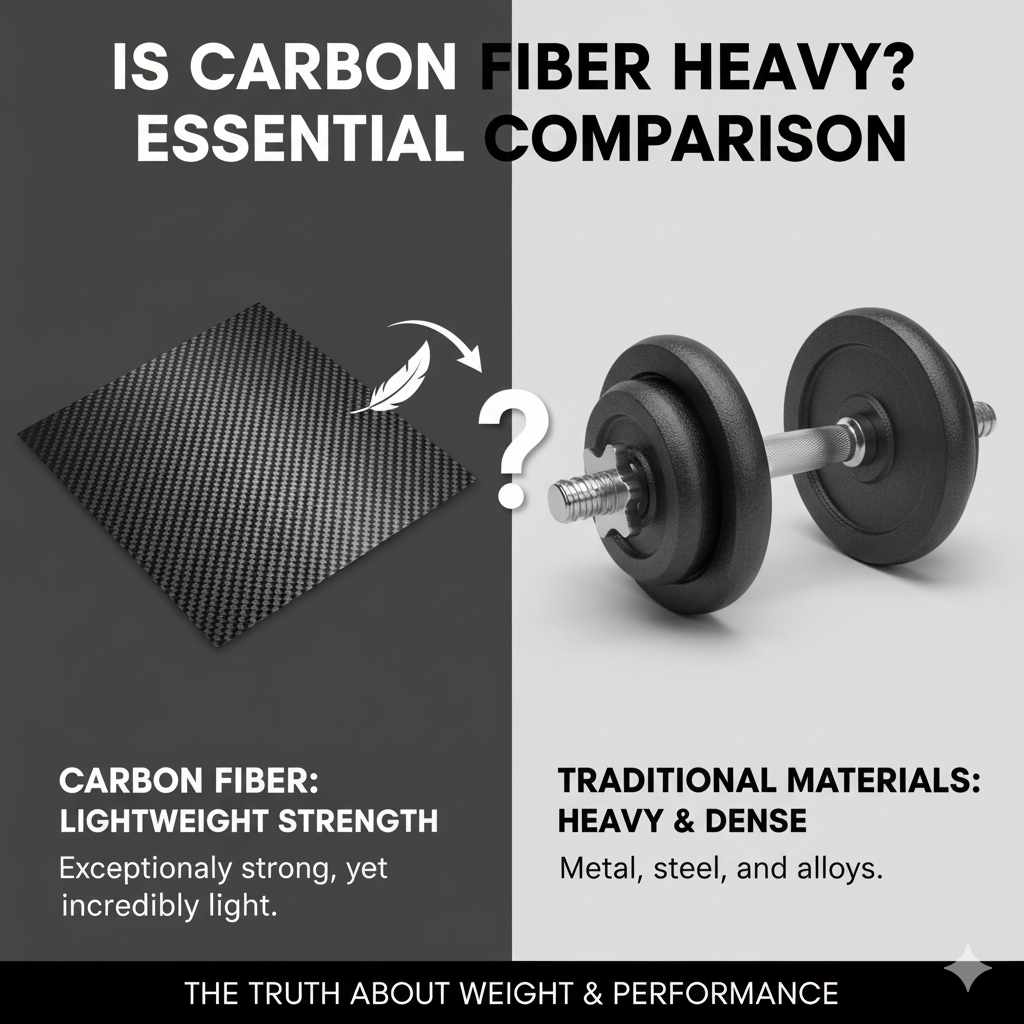
Is Carbon Fiber Heavy: Proven Weight Benefits
Is Carbon Fiber Heavy? Absolutely Not! Discover Its Proven Weight Benefits for Lighter, Faster Vehicles.
Ever wondered if carbon fiber is heavy? The short answer is a resounding no! In fact, one of its most impressive qualities is how incredibly light it is. This unique characteristic is a game-changer, especially in the automotive world. Many car owners and enthusiasts are curious about how this material can make vehicles perform better. It’s all about shedding pounds to gain speed and efficiency. Let’s dive into why carbon fiber isn’t heavy and explore the fantastic weight advantages it brings to your favorite rides.
Understanding Carbon Fiber: More Than Just Strong
Carbon fiber is a material that’s earned its reputation for being both incredibly strong and surprisingly light. It’s made by weaving super-thin threads of carbon atoms together. Think of it like a high-tech fabric, but instead of cotton or wool, it’s pure carbon. When these fibers are formed into a composite material, often by mixing them with a strong plastic resin, they create something truly remarkable.
The Science Behind Its Lightweight Nature
The secret to carbon fiber’s low weight lies in the atomic structure of carbon itself. Carbon atoms are very small and bond together in a way that creates a rigid, yet exceptionally light, molecular structure. When these are spun into fibers and then arranged in a strong matrix, the result is a material that packs a powerful punch in terms of strength-to-weight ratio, without the heft of traditional materials like steel or aluminum.
For anyone looking to understand automotive materials, knowing this difference is key. It helps explain why certain high-performance cars can achieve incredible speeds and handling capabilities. It’s not magic; it’s clever engineering and advanced materials science at work.
Carbon Fiber vs. Traditional Automotive Materials: A Weighty Comparison
To truly appreciate how light carbon fiber is, it’s helpful to compare it to the materials commonly used in car manufacturing. For decades, steel and aluminum have been the workhorses of the automotive industry. They offer good strength and are relatively affordable, but they come with a significant weight penalty.
Steel: The Heavy Standard
Steel is a very strong and durable metal, making it a popular choice for car frames and body panels. It provides crucial structural integrity and safety. However, steel is dense, meaning it has a lot of mass for its size. This added weight affects a car’s acceleration, braking, fuel efficiency, and handling.
Imagine building a car out of bricks. It would be incredibly strong, but also incredibly heavy and slow. Steel, while much lighter than bricks, occupies a similar role in terms of contributing significant weight to a vehicle.
Aluminum: Lighter, But Still Significant
Aluminum is about one-third the density of steel, making it a lighter alternative. Many manufacturers have turned to aluminum for parts like engine blocks, suspension components, and even entire body panels to reduce weight. While a step in the right direction, aluminum is still considerably heavier than carbon fiber. It also requires different manufacturing techniques and can be more expensive to produce in large quantities for certain applications.
Carbon Fiber: The Featherweight Champion
Carbon fiber composites can be made to be exceptionally light. For example, a carbon fiber hood can weigh less than half of a steel hood and significantly less than an aluminum one, while often being stronger. This dramatic reduction in weight is where the proven weight benefits truly shine. This difference isn’t just marginal; it can be substantial, impacting overall vehicle performance profoundly.
Let’s look at some typical weight comparisons to make this clearer:
| Material | Approximate Density (g/cm³) | Relative Weight (compared to Steel) |
|---|---|---|
| Steel | 7.85 | 1.0 |
| Aluminum | 2.70 | 0.35 |
| Carbon Fiber Composite (typical) | 1.5 – 1.8 | 0.19 – 0.23 |
As you can see from the table, typical carbon fiber composites are roughly 5 to 7 times lighter than steel per unit volume and about twice as light as aluminum. This is a massive difference when you start applying it to entire components or even the entire chassis of a vehicle.
Proven Weight Benefits of Carbon Fiber in Vehicles
The fact that carbon fiber is so much lighter than traditional materials translates directly into tangible benefits for vehicles. These aren’t just theoretical advantages; they are proven improvements that drivers can experience. For any car owner, understanding these benefits can help in appreciating why some vehicles are priced higher or how certain modifications can improve a car’s performance.
1. Enhanced Acceleration and Speed
One of the most direct impacts of reducing weight is improving acceleration. A lighter car requires less force to get moving from a standstill and to increase its speed. Think about pushing a shopping cart versus pushing a car. The lighter the object, the easier it is to make it move faster. With carbon fiber components, especially on performance vehicles, this means quicker 0-60 mph times and a more responsive feel when you press the gas pedal.
This principle is a fundamental part of physics, often described by Newton’s second law of motion: Force = Mass × Acceleration (F=ma). If you can reduce the mass (m) while applying the same force (F), the acceleration (a) will increase. Carbon fiber significantly reduces mass.
2. Improved Fuel Efficiency
Cars that weigh less need less energy to move. This directly translates to better fuel economy. When you’re driving, the engine has to work harder to overcome the inertia and resistance of a heavier vehicle. By using lighter materials like carbon fiber, the engine doesn’t have to strain as much, consuming less fuel. This is a huge win for everyday drivers and for the environment. Even small weight reductions across various parts can add up to noticeable improvements in miles per gallon (MPG).
For example, a study by the U.S. Department of Energy’s Office of Energy Efficiency & Renewable Energy (EERE) highlights that reducing vehicle weight is a key strategy for improving fuel economy. They state that a 10% reduction in vehicle weight can result in a 6-8% improvement in fuel economy.
3. Superior Handling and Agility
Weight distribution and overall vehicle mass play a critical role in how a car handles. A lighter car, especially with weight concentrated lower and more centrally, is more agile. It can change direction more quickly, feel more planted on the road during cornering, and provide a more connected driving experience. When you’re navigating curves or making sudden maneuvers, a lighter vehicle responds faster and more predictably.
This improved agility comes from reduced inertia. A heavier object takes more force to change its direction. By making the car lighter, it becomes easier to control its movements, making it feel more nimble and responsive to steering inputs.
4. Enhanced Braking Performance
Just as it takes more energy to get a heavy object moving, it also takes more energy to stop it. Lighter vehicles require less braking force to decelerate and come to a complete stop. This means shorter stopping distances, which is a significant safety advantage. Components like carbon ceramic brakes, often paired with lightweight chassis, further enhance this effect, adding another layer of safety and performance.
The kinetic energy of a moving object is calculated as ½ × mass × velocity². To stop the vehicle, the brakes must dissipate this energy. A lower mass means less kinetic energy to dissipate, leading to more effective and quicker braking.
5. Durability and Strength
While we’re focused on weight, it’s impossible to ignore carbon fiber’s incredible strength. It’s known to be stronger than steel on a pound-for-pound basis. This means that components made from carbon fiber can often be made thinner and lighter than their steel or aluminum counterparts while maintaining or even exceeding their structural integrity and resistance to deformation. This added durability means components can withstand significant stress before failing, contributing to the overall safety and longevity of the vehicle.
This strength-to-weight ratio is what makes carbon fiber a favorite in motorsports. It allows engineers to build incredibly strong yet exceptionally light structures that can endure the extreme forces experienced during racing.
Applications of Carbon Fiber in Modern Vehicles
Because of its impressive weight benefits, carbon fiber is increasingly being used in various parts of cars, from high-performance sports cars to more mainstream vehicles looking to improve their efficiency.
Common Carbon Fiber Components
Here are some of the most common parts of a vehicle where you’ll find carbon fiber:
- Body Panels: Hoods, roofs, fenders, trunk lids, and doors are frequently replaced with carbon fiber versions to shave significant weight off the car’s exterior.
- Chassis and Frame: In some high-end sports cars and race cars, the entire monocoque chassis or key structural elements are made from carbon fiber for maximum weight savings and rigidity.
- Interior Trim: Dashboard accents, center consoles, door inserts, and steering wheel components are often made from carbon fiber for a sportier, lighter feel.
- Aerodynamic Parts: Spoilers, diffusers, and splitters are common applications where both lightness and strength are crucial for performance.
- Drivetrain Components: Driveshafts and other rotating parts can benefit from being lighter, reducing rotational inertia and improving responsiveness.
Examples in the Automotive Industry
Many performance car manufacturers utilize carbon fiber extensively. Brands like Lamborghini, Ferrari, McLaren, and Porsche are well-known for incorporating carbon fiber into their flagship models. Beyond exotics, mainstream manufacturers are also using it more, such as in the roof panels of the BMW M3/M4 or the aluminum-intensive chassis of some Jaguar models which also utilize carbon fiber structural elements for certain applications.
The use of carbon fiber isn’t just limited to the most expensive cars. As the technology becomes more accessible, it’s gradually trickling down to more performance-oriented trims of common vehicle models or appearing in aftermarket upgrade parts.
Are There Any Downsides to Carbon Fiber?
While the weight benefits are outstanding, it’s important to acknowledge that carbon fiber isn’t a perfect solution for every automotive need. It has some drawbacks that potential users should be aware of:
- Cost: Carbon fiber production is complex and labor-intensive, making it significantly more expensive than steel or aluminum. This is why it’s often found on high-performance or luxury vehicles.
- Repair: Repairing damaged carbon fiber parts can be more challenging and costly than fixing metal components. It often requires specialized knowledge and equipment.
- Brittleness (in some applications): While incredibly strong under tension, some carbon fiber composites can be more brittle than metals and may fracture rather than deform under certain types of impact. This is highly dependent on the specific composite layup and resin used.
- UV Sensitivity: The resin matrix can degrade over time with prolonged exposure to UV radiation if not properly protected with coatings like clear coat.
Despite these challenges, the significant advantages in weight savings and performance continue to drive its adoption where those benefits are most critical.
Making Smart Decisions About Vehicle Components
For the average car owner, understanding the materials used in their vehicle can lead to smarter purchasing decisions and a better appreciation for their car’s engineering. When you see a car with a carbon fiber hood or spoiler, you now know it’s not just for looks; it’s a deliberate choice aimed at improving performance by reducing weight.
Whether you’re considering aftermarket upgrades or simply want to understand what makes a performance car perform, this knowledge is empowering. It helps you evaluate claims about vehicle enhancements and appreciate the engineering that goes into making cars lighter, faster, and more efficient.
Frequently Asked Questions About Carbon Fiber Weight
Here are some common questions answered in simple terms:
Is carbon fiber lighter than plastic?
Generally, yes. While there are many types of plastics, high-strength carbon fiber composites typically offer a much higher strength-to-weight ratio than most common plastics used in cars. For structural components where strength is key, carbon fiber is significantly lighter than making a plastic part strong enough to do the same job.
Can carbon fiber be as strong as steel?
Yes, in many ways, carbon fiber can be stronger than steel. When measured pound for pound, high-performance carbon fiber composites often surpass steel in tensile strength (resistance to being pulled apart). However, steel is generally more ductile (can deform without breaking), which can be an advantage in certain impact scenarios.
Is carbon fiber used in everyday cars?
Increasingly, yes. While more common in sports cars and performance models for things like roofs and hoods, manufacturers are finding ways to use carbon fiber in smaller components and structural elements in more common vehicles to help improve fuel efficiency and performance, especially as carbon fiber production becomes more efficient.
What makes carbon fiber so expensive?
The manufacturing process for carbon fiber is complex and energy-intensive. The raw materials (carbonized fibers) are expensive, and weaving them into pre-preg sheets or directly into molds often involves skilled labor and specialized equipment. It’s a high-tech material that requires a precise and often lengthy production cycle.
What are the main advantages of carbon fiber in a car?
The primary advantages are its exceptional strength-to-weight ratio, meaning it’s very strong but very light. This leads to better acceleration, improved fuel economy, enhanced handling, and quicker braking. Its stiffness also contributes positively to a vehicle’s structural integrity.
Is a carbon fiber car body safer than a steel one?
It depends on the design. Carbon fiber can be incredibly strong and rigid, offering excellent protection. However, its fracture behavior can differ from steel. Modern car safety systems are designed to absorb impact energy, and this can be achieved effectively with both steel and carbon fiber structures through careful engineering and design. Many carbon fiber structures are engineered to be as safe, or even safer, than traditional steel counterparts.
Conclusion: The Lightweight Advantage is Real
So, the answer to “is carbon fiber heavy?” is a definitive no. Its remarkable lightness, combined with incredible strength, makes it a revolutionary material in the automotive world. From boosting acceleration and improving handling to enhancing fuel efficiency and braking performance, the weight benefits of carbon fiber are undeniable and proven in countless applications.
While its cost and repair complexity mean it’s not yet in every vehicle on the road, its presence is growing. For car enthusiasts and everyday drivers alike, understanding the advantage carbon fiber brings helps us appreciate the engineering marvels that go into making our vehicles perform better. It’s a material that continuously pushes the boundaries of what’s possible in automotive design, proving that sometimes, less weight truly is more.