Is It Bad to Warm Up Modern Cars By Idling
Many people wonder, Is It Bad to Warm Up Modern Cars by Idling? It’s a question that pops up often, especially for those new to driving or who learned older car care habits. You might have heard different opinions, which can be confusing. Don’t worry, we’ll break it down simply and show you exactly what you need to know so you can take care of your car the right way.
Modern Car Idling Is It Bad The Truth
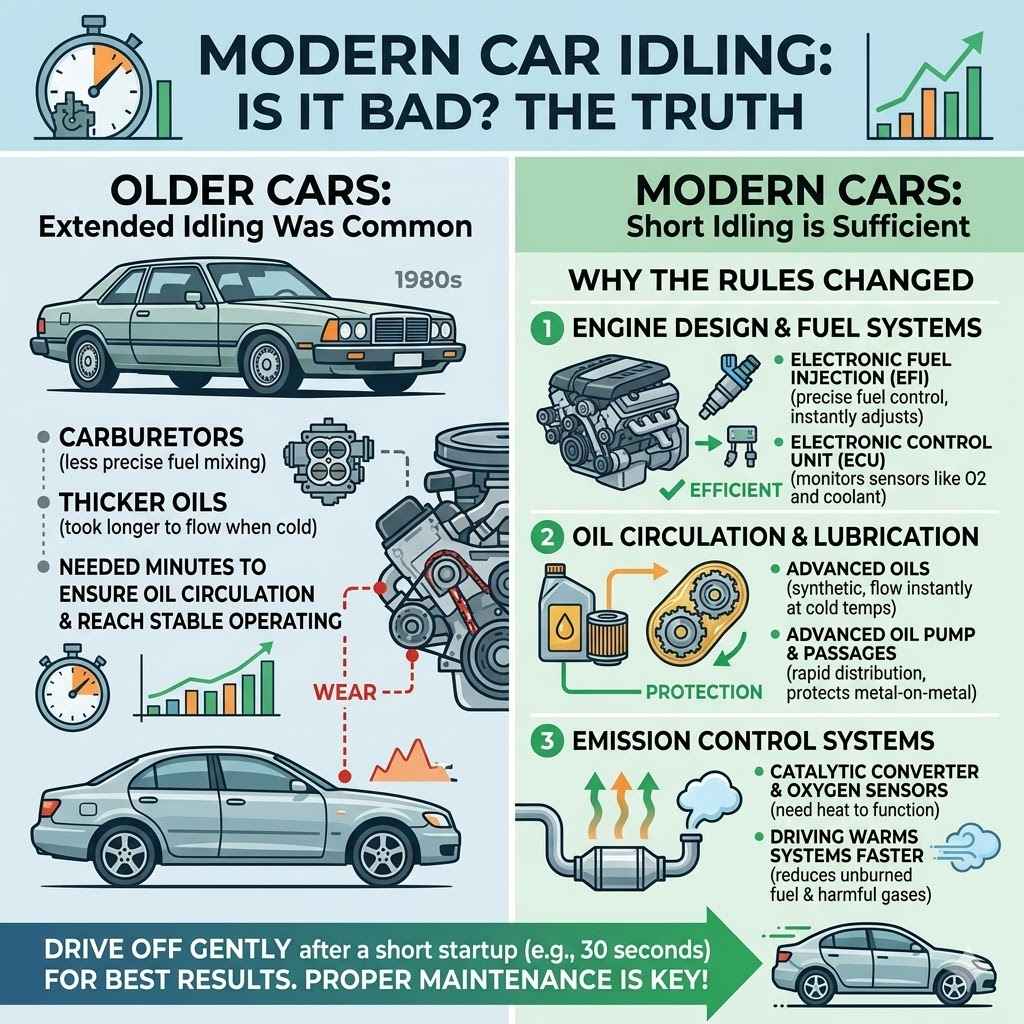
Many drivers have grown up with the idea that a car needs a good long idle to warm up before hitting the road. This belief often stems from older vehicle technology where engines were built differently. These older cars, especially those with carburetors, really did benefit from a few minutes of idling to ensure oil circulated properly and the engine reached a stable operating temperature.
However, modern vehicles are designed with advanced engineering and different fueling systems that change how they should be treated. Understanding these differences is key to proper car maintenance. This section will explore the evolution of engine technology and why the old idling rules no longer apply to new cars.
We will also look at the specific components that make modern cars so efficient and how they differ from their predecessors.
Engine Design and Fuel Systems
Modern cars use sophisticated electronic fuel injection (EFI) systems instead of carburetors. These EFI systems precisely control the air-fuel mixture entering the engine, allowing for much quicker and more efficient combustion even when the engine is cold. This means the engine doesn’t need a prolonged idle period to get the right mix.
The engine control unit (ECU) constantly monitors various sensors, like the oxygen sensor and coolant temperature sensor, to adjust the fuel delivery in real time. This constant adjustment ensures optimal performance and emissions control from the moment you start the engine. Furthermore, advancements in engine materials and lubrication technology mean that internal components are better protected and can handle immediate driving stress without damage.
Fuel Injection vs. Carburetors
Carburetors, common in cars before the 1990s, work by using the Venturi effect to mix air and fuel. As air rushes through the carburetor, it creates low pressure, drawing fuel from a reservoir. This process is less precise and can struggle to provide a consistent fuel-air ratio, especially when cold.
In contrast, Electronic Fuel Injection (EFI) uses sensors to measure airflow, engine temperature, and throttle position. An electronic control module then precisely meters fuel through injectors. This accuracy allows the engine to run smoothly and efficiently even at startup, eliminating the need for extensive warming periods.
The EFI system can instantly adapt to changing conditions, ensuring optimal combustion and reducing emissions.
One of the primary reasons why EFI is superior for cold starts is its ability to atomize fuel more effectively. Fuel injectors spray fuel in a fine mist, which mixes better with air than the liquid fuel that carburetors tend to deliver when cold. This finer mist ignites more readily and burns more completely, leading to smoother engine operation and fewer unburned hydrocarbons being expelled.
The precise control offered by EFI also means that the engine management system can intentionally run slightly richer (more fuel) for a short period after a cold start. This is to help the engine warm up faster and ensure stable running without the need for excessive idling. Once the engine reaches a certain temperature, the system automatically leans out the mixture for better fuel economy and lower emissions.
Oil Circulation and Lubrication
Older vehicles often had thicker oils that took longer to warm up and circulate properly. If you drove them hard immediately after starting, internal engine parts might not have received adequate lubrication, leading to increased wear. Modern engine oils are formulated with synthetic ingredients and advanced additives that allow them to flow much more easily at lower temperatures.
This means that as soon as you start your engine, the oil is ready to lubricate the critical components. The time it takes for oil to reach all parts of an engine has significantly decreased with advancements in oil technology and pump design.
The oil pump in modern cars is also designed to provide sufficient pressure from the moment the engine starts. This ensures that vital areas like the crankshaft, camshaft, and piston rings receive lubrication without delay. The sophisticated design of oil passages within the engine block and cylinder head also helps in faster distribution of oil, further reducing the risk of dry starts.
Even when the oil is cold, its viscosity is low enough to create a protective film between moving parts. This film prevents metal-on-metal contact, which is the primary cause of engine wear.
The oil filter also plays a role. Modern oil filters are designed to handle cold oil and can bypass the filter if the oil is too thick, ensuring the engine still receives oil, albeit unfiltered, to prevent immediate damage. However, this bypass function is typically only engaged for very short periods during extreme cold starts, and the primary oil circuit ensures lubrication.
The efficiency of the entire lubrication system in modern cars means that the engine is protected from the get-go.
Emission Control Systems
Modern cars are equipped with advanced emission control systems designed to minimize pollution. These systems, such as catalytic converters and oxygen sensors, often need to reach a specific operating temperature to function effectively. Idling for extended periods when the engine is cold can actually hinder these systems.
When the engine is running cold, it produces more unburned fuel and other pollutants. If the catalytic converter isn’t hot enough, it can’t convert these harmful gases into less harmful ones, leading to increased emissions. Driving the car allows the engine to reach its optimal operating temperature faster, enabling the emission control systems to work efficiently.
The oxygen sensor, also known as the lambda sensor, is crucial for monitoring the amount of oxygen in the exhaust gases. This data is used by the ECU to fine-tune the air-fuel mixture. When the engine is cold, the oxygen sensor may not provide accurate readings until it heats up.
Modern cars often use heated oxygen sensors (HO2S) that have a built-in heating element to bring them to operating temperature quickly. This allows the ECU to receive accurate feedback sooner, leading to better fuel control and reduced emissions from the start.
The catalytic converter itself is a marvel of engineering. It uses precious metals like platinum, palladium, and rhodium to facilitate chemical reactions that break down pollutants. For these reactions to occur, the converter needs to be hot, typically above 400 degrees Celsius (750 degrees Fahrenheit).
Driving the vehicle helps the exhaust gases flow through the converter at a higher rate, generating more heat than a long idle would. This faster heating process ensures that the car meets emission standards more effectively throughout its operation.
Why Idling Modern Cars Can Be Harmful
While the old advice was to let your car warm up, doing so with a modern vehicle can actually be detrimental. Prolonged idling wastes fuel, increases emissions, and can even lead to engine wear and damage over time. Instead of letting the car sit and idle, it’s generally better to drive gently for the first few minutes.
This allows the engine to warm up naturally while you’re on your way, rather than just sitting there burning fuel for no productive reason. This section will detail the negative impacts of excessive idling on your car and the environment.
Fuel Wastage and Economic Impact
Idling your car for an extended period consumes a significant amount of fuel without you going anywhere. Think about it: every minute your engine is running, you’re burning gasoline or diesel. For a typical car, idling can consume anywhere from a quarter of a gallon to a full gallon of fuel per hour, depending on the engine size and type.
This might not seem like much for a few minutes, but if you make it a habit, especially during cold weather when people tend to idle longer, the wasted fuel adds up quickly. Over a year, this can translate into hundreds of dollars spent on fuel that doesn’t get you anywhere. This is a direct economic loss for the car owner.
Furthermore, the economic impact extends beyond the individual car owner. On a larger scale, widespread unnecessary idling contributes to increased demand for fuel, potentially influencing fuel prices. It also places a greater burden on our energy resources.
Considering that millions of cars idle unnecessarily every day, the collective waste of fuel is enormous. This waste not only affects personal finances but also has broader implications for energy consumption and the economy. Many companies are now promoting anti-idling policies to reduce operational costs and their environmental footprint.
For businesses with fleets of vehicles, such as delivery services or taxi companies, fuel wastage due to idling can significantly impact profitability. Implementing anti-idling policies and educating drivers on the benefits of turning off the engine when stopped for more than a minute or two can lead to substantial savings. These savings can then be reinvested into the business or passed on to consumers through lower prices.
Increased Emissions and Environmental Concerns
When a car idles, especially when cold, it burns fuel inefficiently. This incomplete combustion releases more pollutants into the atmosphere. These pollutants include carbon monoxide (CO), nitrogen oxides (NOx), unburned hydrocarbons (HC), and particulate matter.
These substances contribute to air pollution, which can have serious health consequences, leading to respiratory problems, heart disease, and other ailments. Prolonged idling is particularly problematic in urban areas where traffic congestion means many cars are stationary for extended periods, exacerbating air quality issues.
The environmental impact of idling is substantial. Vehicles are a major source of greenhouse gas emissions, and idling contributes directly to climate change. By releasing more CO2 and other greenhouse gases, unnecessary idling hastens the rate at which our planet warms.
This leads to more extreme weather events, rising sea levels, and disruptions to ecosystems. Reducing idling is a simple yet effective way for individuals to contribute to cleaner air and a healthier planet. Many cities have implemented anti-idling ordinances with fines to discourage this practice, recognizing its detrimental effect on public health and the environment.
The technology in modern cars, with their advanced emission control systems, is designed to work best when the engine is operating within its normal temperature range. Idling for long periods can prevent these systems from functioning optimally, meaning more harmful pollutants are released. This is counterproductive to the efforts made by car manufacturers to produce cleaner vehicles.
Therefore, minimizing idling is crucial not just for fuel efficiency but also for the proper functioning of emission control equipment.
Potential Engine Wear and Internal Damage
While modern engines are more resilient, excessive idling can still contribute to engine wear. When an engine idles for a long time, especially at lower RPMs, oil may not circulate as effectively as it does when the engine is under load and revving higher. This can lead to insufficient lubrication of critical engine components, such as camshafts, pistons, and bearings, over prolonged periods.
Additionally, idling can lead to the formation of sludge and carbon deposits within the engine. This happens because the combustion process is less efficient at lower temperatures, leading to unburned fuel and oil byproducts accumulating.
These deposits can clog oil passages, restrict oil flow, and reduce the overall efficiency of the engine. Over time, this build-up can lead to increased friction between moving parts, premature wear, and potentially serious engine damage. While driving gently is recommended for warming up, extended idling essentially allows these harmful conditions to persist for longer durations.
The moisture that can accumulate in the exhaust system during extended idling can also lead to rust and corrosion over time, particularly in the muffler and exhaust pipes. This is because the exhaust gases are not hot enough to efficiently evaporate the condensation.
One aspect often overlooked is the effect of idling on the transmission. While less significant than engine wear, prolonged idling can cause transmission fluid to age prematurely, especially if the transmission is also operating at a lower temperature. This can lead to reduced efficiency and increased wear on transmission components.
Therefore, avoiding excessive idling is a multifaceted approach to engine longevity and overall vehicle health.
The Proper Way to Warm Up Modern Cars
The best approach for warming up a modern car is to drive it gently for the first few minutes after starting. This allows the engine to warm up naturally while you’re already on your way. Avoid rapid acceleration or high RPMs until the temperature gauge indicates the engine is at its normal operating temperature.
This simple habit is much more effective and beneficial for your car than letting it sit and idle. We will cover the specifics of driving gently and when it’s safe to push your car a bit harder.
Gentle Driving After Startup
When you first start your modern car, the engine is cold. The oil is thicker, and the engine components are not yet expanded to their normal operating sizes. The best practice is to start the engine and wait just 10-30 seconds for the initial oil pressure to build and circulate.
Then, begin driving. However, drive gently. This means avoiding hard acceleration, sudden stops, and high engine speeds (RPMs).
Focus on smooth acceleration and maintaining moderate speeds. The goal is to let the engine and drivetrain warm up gradually under a light load.
Think of it like stretching before exercising. You wouldn’t immediately sprint a mile without warming up your muscles, and your car’s engine is no different. By driving gently, you allow the engine oil to reach all the moving parts and lubricate them properly.
You also allow the transmission fluid to circulate and warm up, ensuring smooth gear changes. The engine’s computer will also adjust the fuel mixture as the engine temperature rises, optimizing performance and emissions. This gentle driving period typically lasts only for the first few minutes of your journey, or until the temperature gauge on your dashboard reaches its normal operating range.
It’s important to pay attention to your car’s temperature gauge. Most cars have a gauge that shows the engine coolant temperature. When this gauge is in the middle or on the “normal” mark, your engine has reached its operating temperature, and it is generally safe to drive more normally.
This includes moderate acceleration and higher speeds if needed. However, even after reaching normal operating temperature, it’s always a good idea to ease into full performance, especially if you’ve been driving in very cold conditions.
Monitoring Engine Temperature
Your car’s dashboard usually has a temperature gauge. This gauge is crucial for knowing when your engine has reached its optimal operating temperature. When you first start the car, the needle will typically be on the lower side.
As you drive gently, the needle will gradually move towards the middle of the gauge. This middle position indicates that the engine coolant has reached its normal operating temperature, and the engine components are properly expanded and lubricated.
For most modern vehicles, this usually takes about 5 to 10 minutes of gentle driving. However, this can vary significantly depending on the outside temperature. On a very cold day, it might take a bit longer.
On a warmer day, it might be quicker. It’s important not to push the engine hard, meaning no flooring the accelerator or high-revving, until the temperature gauge shows the engine is warm. Driving too hard when the engine is cold can put unnecessary stress on engine parts that are not yet at their optimal operating condition.
Some cars may have an engine temperature warning light instead of a gauge. If this light is on, it usually indicates that the engine is running too hot. However, for cold starts, you are looking for the absence of any temperature-related warnings and the presence of a stable reading on a temperature gauge.
If you don’t have a temperature gauge, listen to your engine; it will sound smoother and run more quietly once it’s warmed up.
When Is It Safe to Drive Normally?
Once your car’s temperature gauge has reached its normal operating range, typically indicated by the needle pointing to the middle of the gauge, your engine is considered warmed up. At this point, it is generally safe to drive your car normally. This includes accelerating more briskly when needed, driving at highway speeds, and engaging in activities that require more power from the engine.
The engine oil has circulated sufficiently, the engine components have expanded to their designed tolerances, and the emissions control systems are functioning optimally.
However, it’s still wise to be mindful of the conditions. If you have been driving in extremely cold weather, even after the gauge shows normal, the transmission fluid might still be a bit thicker than usual. For the first minute or two after reaching normal temperature, continuing with smooth, moderate acceleration is still a good practice.
Avoid sudden, aggressive maneuvers that could put excessive strain on cold drivetrain components. The key is a gradual transition from gentle driving to normal driving, rather than an abrupt shift.
For turbocharged vehicles, it’s especially important to ensure the engine oil is at operating temperature before putting the turbocharger under significant load. While modern turbos are more robust than older ones, prolonged high-speed driving or aggressive acceleration immediately after starting the engine can still lead to premature wear on the turbocharger’s bearings due to insufficient lubrication. Therefore, paying attention to the temperature gauge is the most reliable indicator for all types of modern vehicles.
Common Misconceptions About Idling
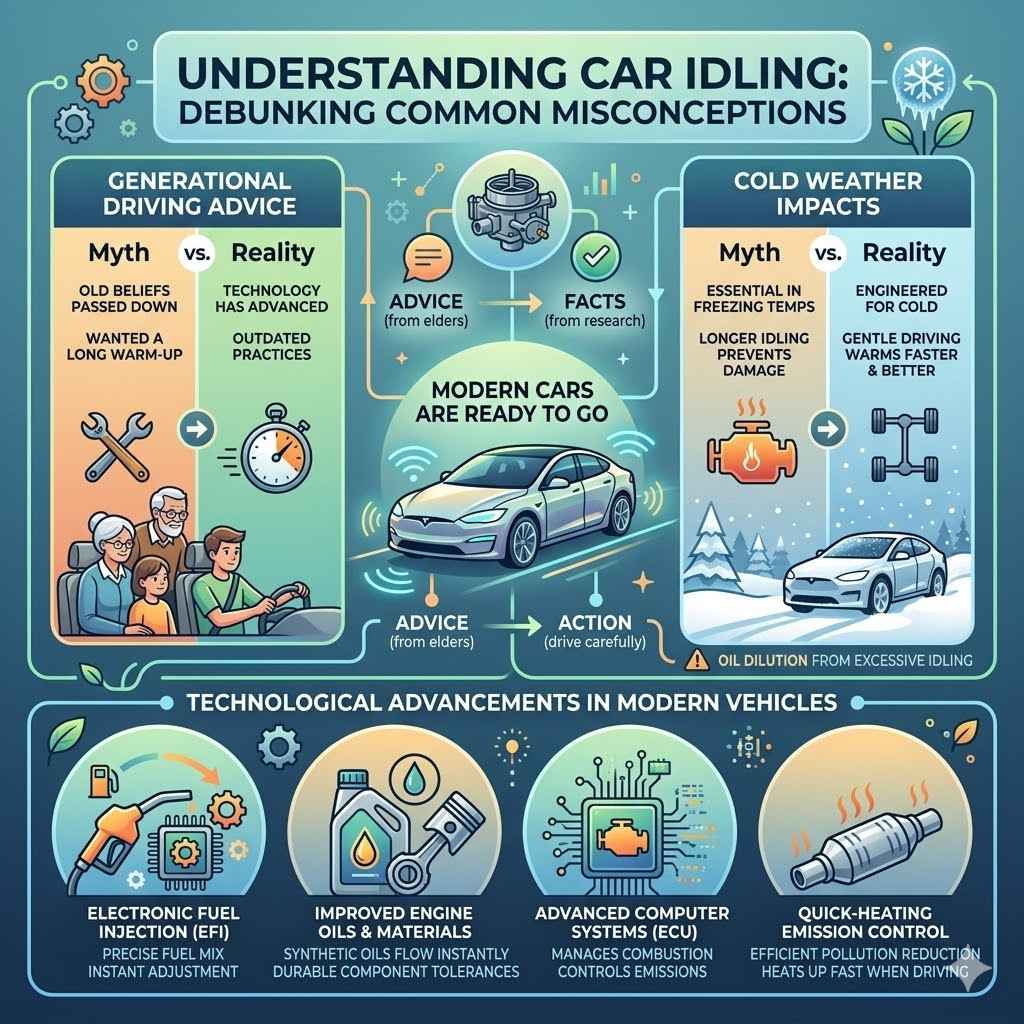
The idea of warming up a car by idling is deeply ingrained in many people’s driving habits. This is often due to advice passed down through generations or learned from older vehicles that genuinely required it. However, technology has advanced significantly, making these old practices obsolete and sometimes even harmful for modern cars.
Let’s clear up some of these common myths to ensure you’re caring for your car in the best possible way. We’ll address why these beliefs were formed and why they no longer hold true.
Generational Driving Advice
Many drivers learned to drive from parents or older relatives who followed traditional car maintenance advice. In the days of carbureted engines and less advanced lubricants, letting a car idle for several minutes was often necessary. This allowed the engine to warm up gradually, ensuring proper oil circulation and preventing premature wear.
This advice, though well-intentioned and once accurate, has been passed down through generations as a fundamental rule of car care. As a result, many people continue to practice it without realizing that modern vehicles operate very differently.
The advent of electronic fuel injection (EFI), improved engine materials, and superior synthetic oils has rendered much of this older advice outdated. Modern engines are designed for immediate use and can reach optimal operating temperatures much faster. The problem with generational advice is that it lacks context about technological advancements.
It’s like using a rotary phone in the age of smartphones; it might technically work, but it’s not the most efficient or effective solution anymore. We need to adapt our car care habits to match the technology in our vehicles.
This can be a challenging shift for some, as deeply ingrained habits are hard to break. The comfort of familiarity often outweighs the perceived benefits of change, especially if the change isn’t understood. However, by understanding the ‘why’ behind modern car design, we can confidently adopt new, more effective practices.
This knowledge empowers drivers to make informed decisions about their vehicle’s maintenance.
The Impact of Cold Weather on Old Beliefs
Cold weather often reinforces the old belief that idling is essential. In freezing temperatures, cars can feel sluggish, and starting them might seem more difficult. This leads drivers to believe that a longer warm-up period is needed to prevent damage.
While cold weather does affect engine performance, modern cars are engineered to handle it much better than their predecessors. The advanced fuel injection systems and specialized lubricants in today’s vehicles ensure proper function even in very low temperatures.
The issue with extended idling in cold weather is that it’s often counterproductive. While it might feel like you’re being cautious, you’re actually contributing to fuel wastage and increased emissions without significantly improving the engine’s readiness for hard driving. The engine may feel a bit smoother after idling, but this is often a superficial improvement.
Driving gently is a more effective way to warm up the entire drivetrain, including the transmission and differential, which are also affected by cold temperatures.
Moreover, in extremely cold conditions, idling for too long can actually lead to fuel dilution of the engine oil. This occurs when unburned fuel enters the crankcase, thinning the oil and reducing its lubricating properties. This is the opposite of what you want when trying to protect your engine from the cold.
Therefore, while it’s understandable why cold weather prompts these beliefs, modern automotive engineering has provided solutions that make extended idling unnecessary and even detrimental.
Technological Advancements in Modern Vehicles
The fundamental reason why idling for extended periods is no longer necessary or beneficial for modern cars lies in their technological advancements. Today’s engines are equipped with sophisticated computer systems that manage fuel delivery, ignition timing, and emissions control with incredible precision. Electronic fuel injection (EFI) systems, for example, can instantly adjust the air-fuel mixture to ensure optimal combustion, even when the engine is cold.
Modern engine oils are also formulated to be highly effective at a wide range of temperatures. Synthetic oils, in particular, maintain their viscosity better in cold weather, allowing for immediate lubrication of engine components from the moment the engine starts. This is a stark contrast to older oils that would thicken considerably in the cold, requiring extended idling for proper circulation.
Furthermore, advancements in metallurgy and manufacturing have led to tighter tolerances and more durable engine components, making them more resilient to the stresses of immediate use.
Finally, the emission control systems in modern vehicles, such as catalytic converters, are designed to heat up quickly. This ensures that they can effectively reduce harmful emissions from the outset of operation. Idling for a long time actually delays the point at which these systems become fully functional, leading to increased pollution during the warm-up phase.
In summary, the technological leaps in engine management, lubricants, and emissions control have completely changed the game for how cars should be started and warmed up.
Frequently Asked Questions
Question: Do I need to warm up my car at all before driving?
Answer: For modern cars, you only need to wait about 10-30 seconds after starting before gently driving. This allows oil to circulate. Avoid hard acceleration until the engine temperature gauge shows normal.
Question: Is it bad to drive a modern car hard right after starting it?
Answer: Yes, it is generally not recommended to drive a modern car hard immediately after starting. Wait until the engine reaches its normal operating temperature for optimal performance and to prevent undue wear.
Question: How long does it typically take for a modern car engine to warm up?
Answer: It typically takes about 5 to 10 minutes of gentle driving for a modern car engine to reach its normal operating temperature, depending on the outside weather conditions.
Question: Will warming up my car by idling damage it?
Answer: Prolonged idling can waste fuel, increase emissions, and potentially lead to engine wear and deposit buildup over time. Gentle driving is a much better alternative for modern cars.
Question: What should I do if my car is struggling to start in the cold?
Answer: If your car struggles to start in the cold, it might be a battery issue or require a tune-up. Consult your car’s manual or a mechanic, rather than relying on prolonged idling.
Summary
For modern cars, Is It Bad to Warm Up Modern Cars by Idling? The answer is yes, it is generally bad. Extended idling wastes fuel, pollutes more, and can cause engine wear. The best practice is to start your car, wait briefly, and then drive gently until the engine reaches its normal operating temperature.