Where Are Cars Made? Top Manufacturing Countries in 2026
Cars are made all over the world, but production is heavily concentrated in a handful of countries – China alone builds more vehicles than the next four largest producers combined. No single country makes a car from start to finish anymore, either: parts, engines, and raw materials typically cross several borders before final assembly. This guide breaks down where cars are actually manufactured today, by region and by country, plus how much of a “domestic” car is really built at home.
Where Most Cars Are Made Today
Global car production is dominated by a short list of countries:
| Country | Approx. Annual Vehicle Production |
|---|---|
| China | 31+ million |
| United States | ~10.5 million |
| Japan | ~7.1 million |
| Germany | ~4.1 million |
| India & South Korea | Rounding out the top 6 |
China’s scale is the real headline here – it produces more vehicles on its own than the US, Japan, Germany, and India combined, driven by both massive domestic demand and heavy government investment in manufacturing.
Where Modern Car Manufacturing Began
The modern automobile industry traces back to Germany, where Karl Benz built the first practical gasoline-powered car in 1885-1886. Early production then spread quickly to France, the United Kingdom, and the United States, where Ford’s moving assembly line (introduced in 1913) made mass production possible and turned cars from luxury items into everyday transportation.
North American Car Manufacturing
Detroit remains the historic center of the US auto industry, home to Ford, GM, and Stellantis (Chrysler’s parent company), but plenty of production now happens elsewhere – Toyota, for example, has a major plant in Georgetown, Kentucky, one of its largest outside Japan.
Canada’s auto industry is centered in Ontario, with Honda and Toyota among the major manufacturers running large plants there; Canadian-made vehicles are exported worldwide, and the industry is a significant part of the country’s economy.
Mexico has become a major manufacturing hub, with Nissan, Ford, Volkswagen, and others operating large modern plants. Most vehicles built in Mexico are exported, largely to the United States, under the USMCA trade agreement.
European Car Manufacturing
Germany remains Europe’s manufacturing powerhouse, home to BMW, Mercedes-Benz, and Audi. Its factories combine high-volume production with strong engineering reputations, and the country consistently ranks among the top 5 vehicle producers worldwide.
Italy is known for performance and luxury brands – Ferrari, Lamborghini, and Maserati are all built there, with production concentrated in specialized, lower-volume facilities rather than mass-market plants.
The United Kingdom builds everything from Jaguar and Land Rover to ultra-luxury brands like Rolls-Royce and Bentley, blending traditional craftsmanship with modern manufacturing for both everyday and high-end vehicles.
Asian Car Manufacturing
Asia is home to the largest concentration of global car production, led by three very different manufacturing cultures.
Japan
Toyota, Honda, and Nissan built Japan’s reputation for reliability and lean manufacturing, but none of them build exclusively at home – Toyota alone operates more than a dozen plants in North America. “Made by a Japanese brand” and “made in Japan” are increasingly two different things.
South Korea
Hyundai and Kia lead South Korea’s auto industry, known for combining competitive pricing with rapidly improving build quality and long warranties.
China
China is now the world’s largest car producer by a wide margin, driven both by international brands manufacturing locally and by fast-growing domestic brands like BYD and Geely, which have become major players in electric vehicles specifically.
Emerging Manufacturing Hubs
India has grown into a major manufacturing base, with both domestic brands like Tata and Mahindra and international automakers building smaller, affordable cars suited to the local market and export.
Brazil is a significant producer in South America, notable for its flex-fuel vehicles that run on ethanol made from sugarcane alongside traditional gasoline vehicles.
Thailand is often called the “Detroit of Asia” for pickup trucks specifically – several Japanese brands run major truck plants there, serving both the local market and export to other countries.
Is Any Car 100% Made in One Country?
No – not even the vehicles marketed as the “most American-made” car are fully domestic. Under the American Automotive Labeling Act, a vehicle only needs 75% US/Canadian content to be labeled domestic. The Chevrolet Corvette, often cited as one of the most American-built cars, has ranked as high as 84-86% domestic content in past years on the Kogod School of Business’s Made in America Auto Index – but even that fell to 12th place by 2024, showing how even a “home-grown” car’s supply chain keeps globalizing over time. Every modern car, regardless of brand or badge, relies on a genuinely international supply chain for at least some parts or raw materials.
How Global Supply Chains Shape Where Cars Are Made
A single car brings together raw materials and parts from dozens of countries before final assembly. Steel, aluminum, rare-earth minerals for electronics and batteries, and semiconductor chips each have their own separate supply chains, often concentrated in different parts of the world – which is exactly why a shortage in one country (like the 2021 global chip shortage) can shut down assembly lines on the other side of the planet.
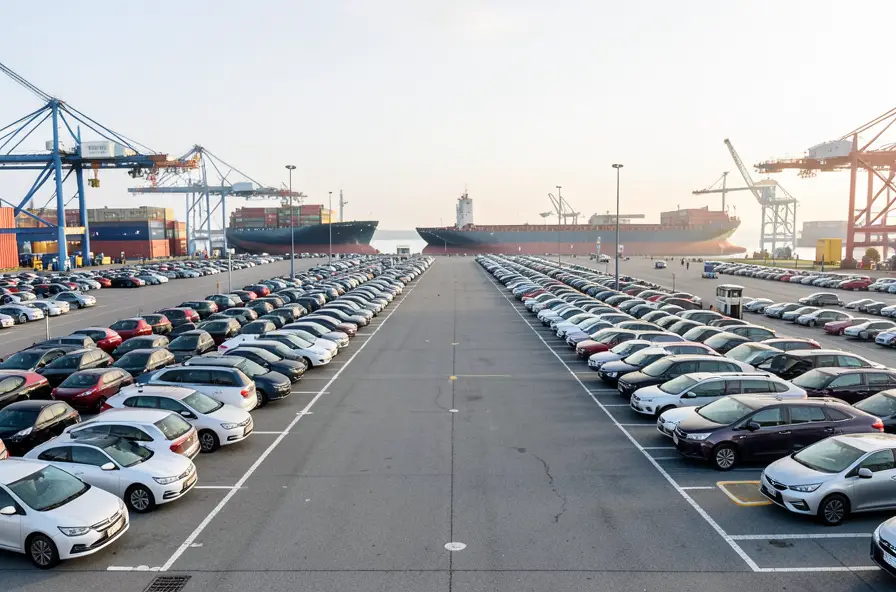
Getting all of those parts to the right factory at the right time is its own massive logistics operation involving ships, trains, and trucks – a delay anywhere in that chain can slow or halt production, which is why automakers increasingly build redundancy into their supplier networks.
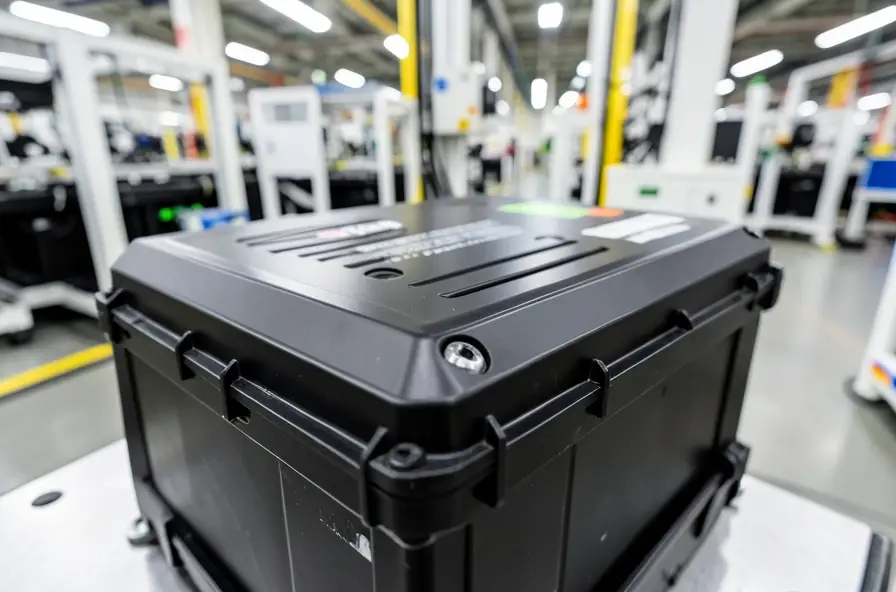
Where Electric Vehicles Are Being Built
EV manufacturing is reshaping the map. Tesla builds in the US (California, Texas) as well as Germany and China. Chinese brands like BYD and NIO have scaled up rapidly, with China now producing the largest share of EVs globally. Traditional automakers like Volkswagen and BMW are converting existing German plants and building new ones specifically for EV and battery production, since battery packs and traditional engines require very different manufacturing setups.
Frequently Asked Questions
Where Are Most Cars Made?
China produces more vehicles than any other country by a wide margin (31+ million annually), followed by the United States, Japan, and Germany.
Is Any Car 100% Made in the USA?
No. Even the Chevrolet Corvette, frequently cited as one of the most “American-made” cars, has never scored 100% domestic content – its best years hit roughly 84-86% US/Canadian parts, and that share has since declined. No modern car is built with a fully domestic supply chain.
What Cars Are Made in Which Country?
Brand headquarters and actual manufacturing location often differ. Toyota is Japanese but builds heavily in the US; Ford is American but manufactures worldwide, including Mexico and Europe; BMW is German with plants in the US and China; Fiat is Italian but part of the multinational Stellantis group.
Where Do Most Cars in the US Come From?
Most vehicles sold in the US are assembled domestically or in Canada and Mexico under North American trade agreements, alongside significant imports from Japan, South Korea, and Germany.
Conclusion
Car manufacturing is genuinely global – China leads by volume, the US, Japan, and Germany round out the top tier, and no single country (or even brand) builds a car entirely on its own anymore. The badge on the hood tells you where a company started, not necessarily where your specific car, or its parts, actually came from.
Products related to this article
Sponsored / affiliate links. As an Amazon Associate I earn from qualifying purchases. I may earn additional commission from eligible campaigns.