Is It Illegal to Leave a Dog in a Car? State Laws Explained
Yes, in most of the United States it is illegal to leave a dog alone in a parked car if the conditions put the animal at risk. As of 2026, 32 states and Washington, D.C. have laws that specifically address confining an animal in an unattended vehicle, according to the Animal Legal & Historical Center. There is no single federal law on this, so the exact rules, and the penalty if you break them, depend entirely on which state you are in.
This guide breaks down what actually counts as illegal, how the penalties differ from state to state, whether a stranger can legally break your window to get your dog out, and how quickly a parked car really heats up.
Is It Illegal to Leave a Dog Alone in a Parked Car?
CAR CABIN TEMPERATURE ALERT
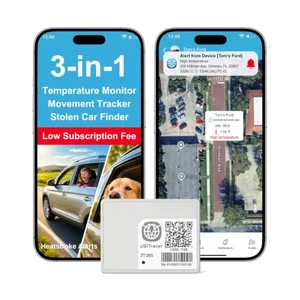 |
UBITracer Car Cabin Temperature Monitor – $29.99 A cellular sensor you leave in the car that texts your phone the instant cabin temperature crosses a threshold you set, even if the dog is only alone for a few minutes.
|
In the 32 states (plus D.C.) with a specific law on the books, leaving an animal unattended in a vehicle becomes illegal once conditions could reasonably cause it suffering, illness, or death, most commonly extreme heat or cold, or lack of ventilation, food, or water. Simply running into a store for a minute on a mild, shaded day is not automatically a crime in most of those states; the law is triggered by the actual risk to the animal, not by the act of leaving it alone.
In the roughly 18 states without a law written specifically for parked vehicles, leaving a dog to suffer in a hot or cold car can still be prosecuted under that state’s general animal cruelty statute. Texas is a good example: it has no vehicle-specific statute, but a dog left to suffer in a hot car there can still trigger charges under Texas Penal Code 42.092, the general animal cruelty law.
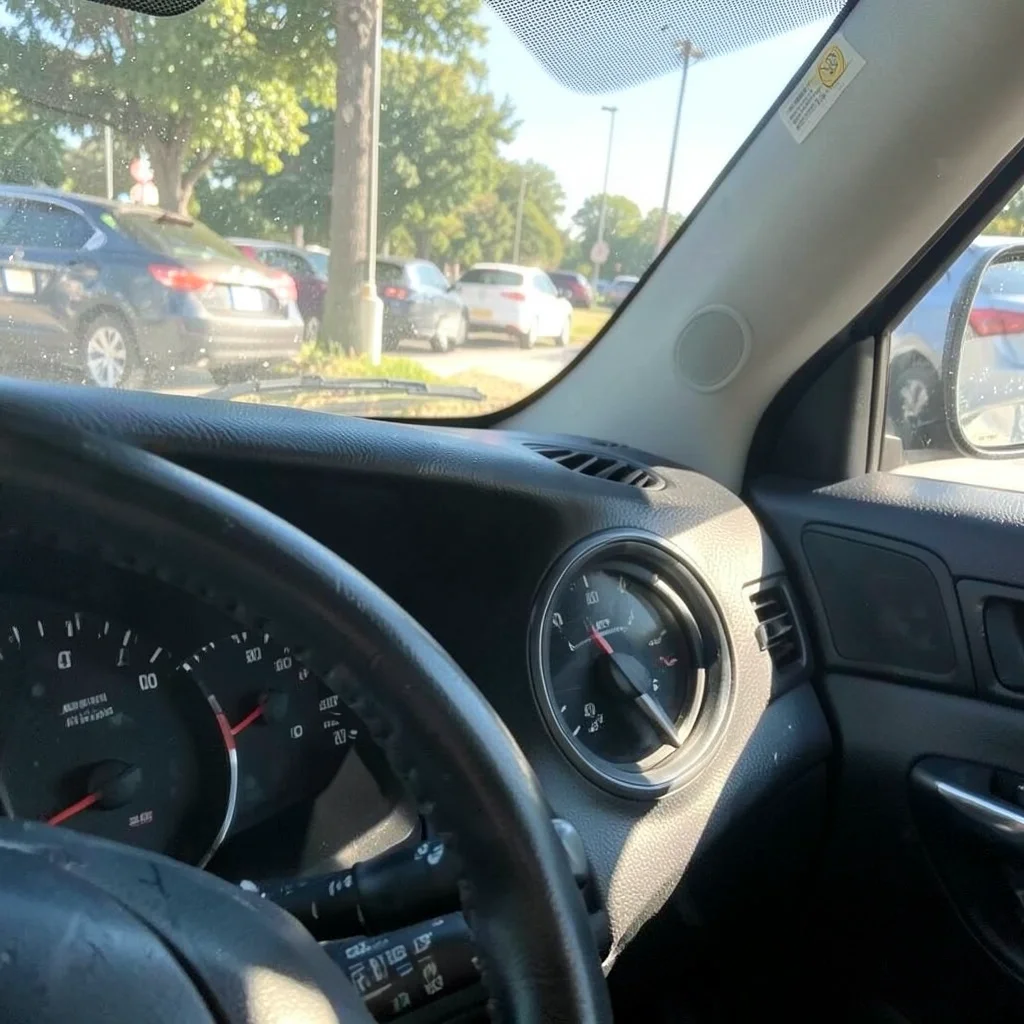
How Fast Does a Parked Car Actually Heat Up?
This is the part most people underestimate. On a 70°F day, the inside of a parked car can reach roughly 89°F after just 10 minutes and climb past 104°F within half an hour, even with the windows cracked. A Stanford University School of Medicine study found that a car’s interior temperature rises by an average of 40°F within the first hour, regardless of how mild the outside temperature is.
Cracking the windows a couple of inches barely slows this down. That is why brief errands are still risky, even on days that do not feel especially hot outside, and why several states word their laws around the actual physical risk to the animal rather than a specific outdoor temperature.
How Penalties Differ by State
There is no single nationwide fine or jail sentence, because each state writes its own law. Here is how three very different approaches actually look in practice:
| State | Legal Approach | Typical Penalty |
|---|---|---|
| California (Penal Code 597.7) | Specific vehicle law, tiered by harm | $100 fine (infraction) if no injury; up to $500 fine and 6 months in jail if the animal suffers great bodily injury, or on a repeat offense |
| Nevada (NRS 202.487, strengthened by 2025’s Reba’s Law) | Specific vehicle law, misdemeanor to felony | Up to $1,000 fine and 6 months in jail as a misdemeanor; can now be charged as a gross misdemeanor or felony, up to 1–6 years in prison, if the animal dies |
| Texas | No vehicle-specific law; falls under general animal cruelty law (Penal Code 42.092) | Varies by case; charged as animal cruelty rather than a dedicated “hot car” offense |
Because the range is this wide, the only reliable way to know your exact exposure is to check your own state’s statute, or a resource like the Animal Legal & Historical Center’s state-by-state table, rather than relying on a single number you saw online.
Can Someone Legally Break Your Car Window to Rescue Your Dog?
In some states, yes. Sixteen states currently have Good Samaritan laws that give a private citizen civil immunity, meaning you generally cannot be sued for property damage, for breaking a car window to rescue an animal they reasonably believe is in imminent danger: Arizona, California, Colorado, Connecticut, Delaware, Florida, Georgia, Indiana, Kansas, Louisiana, Massachusetts, Ohio, Oregon, Tennessee, Vermont, and Wisconsin.
These laws almost always come with conditions attached before someone is protected: they typically must first try to locate the owner or call 911 or animal control, use no more force than necessary, and stay at the scene until help arrives. In every other state, breaking a window to free an animal is still a legal gray area and can expose the rescuer to a property-damage claim, even if their intentions were good.

What to Do If You See a Dog Alone in a Hot Car
If you spot a dog showing signs of distress, heavy panting, drooling, lethargy, or collapse, in a parked car:
- Note the make, model, color, and license plate, then try to locate the owner (many stores will page a car description over the intercom).
- Call the non-emergency police line or animal control immediately and give them the exact location.
- Only break a window yourself as a last resort, and only if you are in one of the 16 Good Samaritan states listed above; aim for a corner of the window, use a spring-loaded center-punch tool rather than a blunt object, and stay with the dog until help arrives.
- Do not leave once the dog is freed. Stay to give a statement if police or animal control ask for one.
How to Avoid the Risk in the First Place
The only fully reliable option is simple: do not leave your dog in the car alone, even for what feels like a quick errand. If you are running multiple stops with your dog, plan a route where pet-friendly stores let the dog come inside, or leave them at home instead. Reflective windshield shades and cracked windows can shave a few degrees off the interior temperature, but neither one changes the underlying physics enough to make a parked car safe on a warm day.
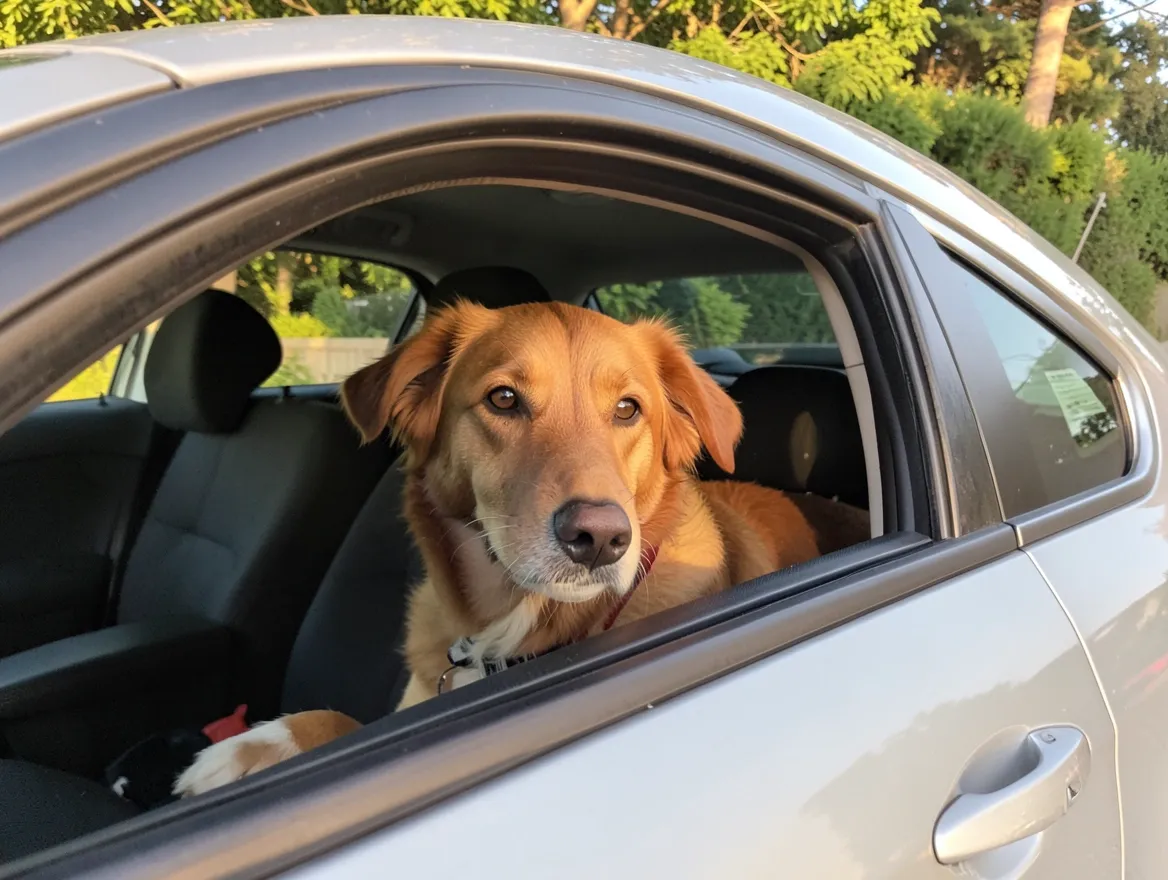
If you occasionally must leave a pet in the car for a short, unavoidable stop, a cabin temperature sensor like the one below can at least alert you the moment things start to turn dangerous, though it is a backup plan, not a substitute for not leaving the dog in the first place.
Frequently Asked Questions
Is it okay to leave a dog in the car on a cool day?
No. Even on a mild 70°F day, a parked car’s interior can reach roughly 89°F in 10 minutes and past 104°F within 30 minutes. Cool outdoor temperatures do not prevent the greenhouse effect that heats up a closed car.
How many states have laws against leaving a dog in a car?
As of 2026, 32 states plus Washington, D.C. have laws that specifically address leaving an animal unattended in a vehicle under dangerous conditions. States without a dedicated law can still prosecute under their general animal cruelty statute.
Can you leave your dog in the car with the windows cracked?
It is still dangerous. Cracking the windows a couple of inches does very little to slow the rise in interior temperature, so it does not make leaving a dog unattended safe, and it does not change whether the act is illegal in your state.
Can someone legally break my car window to save my dog?
In 16 states, a bystander who reasonably believes an animal is in imminent danger has civil immunity for breaking a window to rescue it, as long as they first try to contact the owner or authorities and use no more force than necessary. In the remaining states, doing so is a legal gray area.
Is leaving a dog in the car the same as not restraining it while driving?
No, these are two different legal issues. Leaving a dog alone in a parked car is covered by animal-endangerment laws in 32 states. Requiring a dog to be restrained while the car is moving is a separate rule that currently exists in only three states: Rhode Island, Hawaii, and New Jersey.
What is the penalty for leaving a dog in a hot car?
It depends entirely on the state. California treats a first offense with no injury as an infraction with up to a $100 fine, rising to a $500 fine and up to 6 months in jail if the animal is seriously harmed. Nevada allows penalties up to a $1,000 fine and 6 months in jail as a misdemeanor, and can now charge it as a felony carrying 1 to 6 years in prison if the animal dies. There is no single nationwide penalty.
The Bottom Line
In most states, leaving a dog alone in a parked car is illegal once conditions put the animal at real risk, and the penalties range from a small fine to felony charges depending on where you live and what happens to the animal. Windows cracked or not, a parked car heats up far faster than most people expect, so the safest rule is the simplest one: if you cannot bring your dog inside with you, leave them at home instead.
Products related to this article
Sponsored / affiliate links. As an Amazon Associate I earn from qualifying purchases. I may earn additional commission from eligible campaigns.