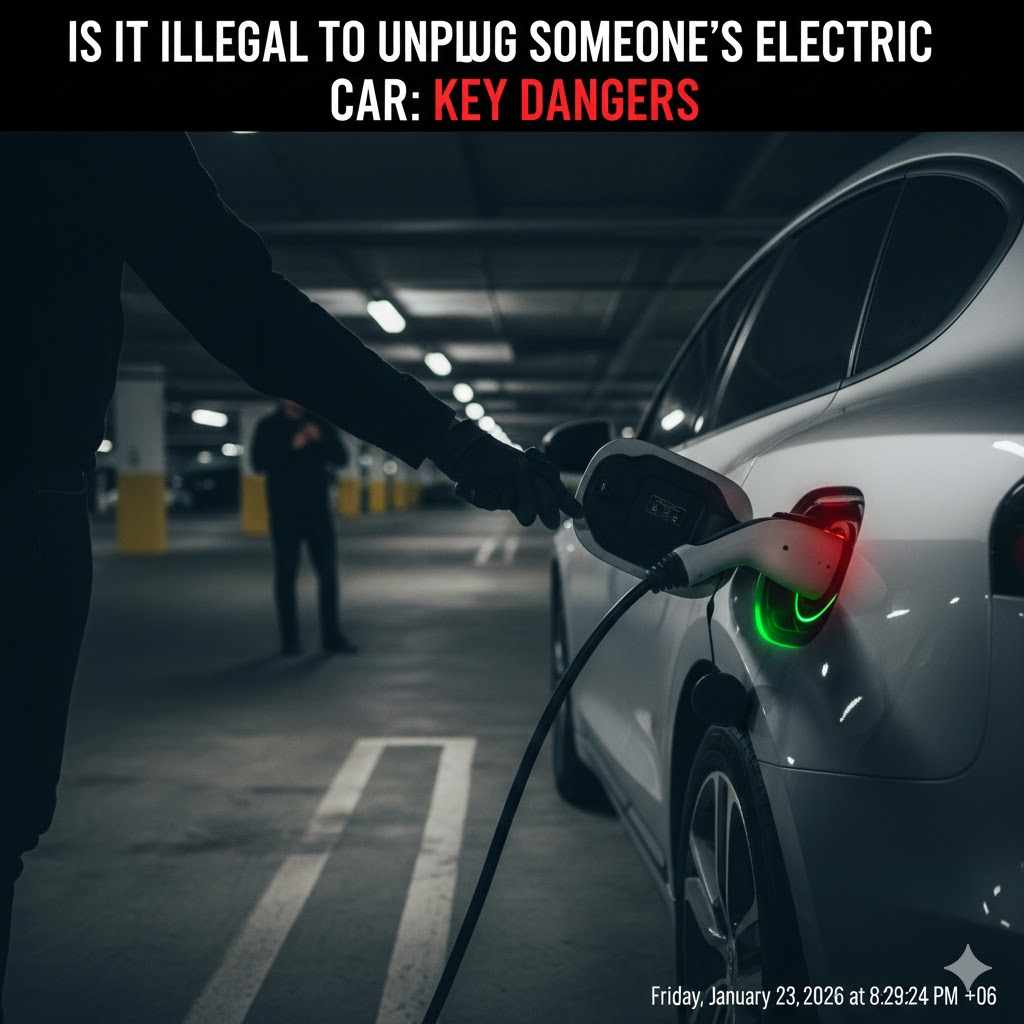
Is It Illegal to Unplug Someone’s Electric Car: Key Dangers
Yes, it can be illegal to unplug someone’s electric car without permission. This act can be considered theft of services, vandalism, or trespassing, depending on local laws. It also poses significant risks, including damage to the vehicle, the charging station, and potential electrical hazards. Always respect charging etiquette to avoid legal trouble and ensure safety.
Picture this: you pull into a public charging station, your battery is running low, and every single spot is taken. You notice one car is sitting there at a 100% charge, just taking up space. It can be so frustrating! You might think, “Can I just unplug them and plug my car in?” It seems like a simple solution, but it’s a bigger deal than you might realize.
As your friendly automotive guide, I’m here to help you understand the rules of the road—and the charging station. Unplugging someone’s car isn’t just about good manners; it can lead to legal problems and expensive damage. Don’t worry, I’ll break it all down for you in simple terms. We’ll look at the laws, the dangers, and the right way to handle these tricky situations, so you can charge up with confidence.
Is It Illegal to Unplug Someone’s Electric Car?
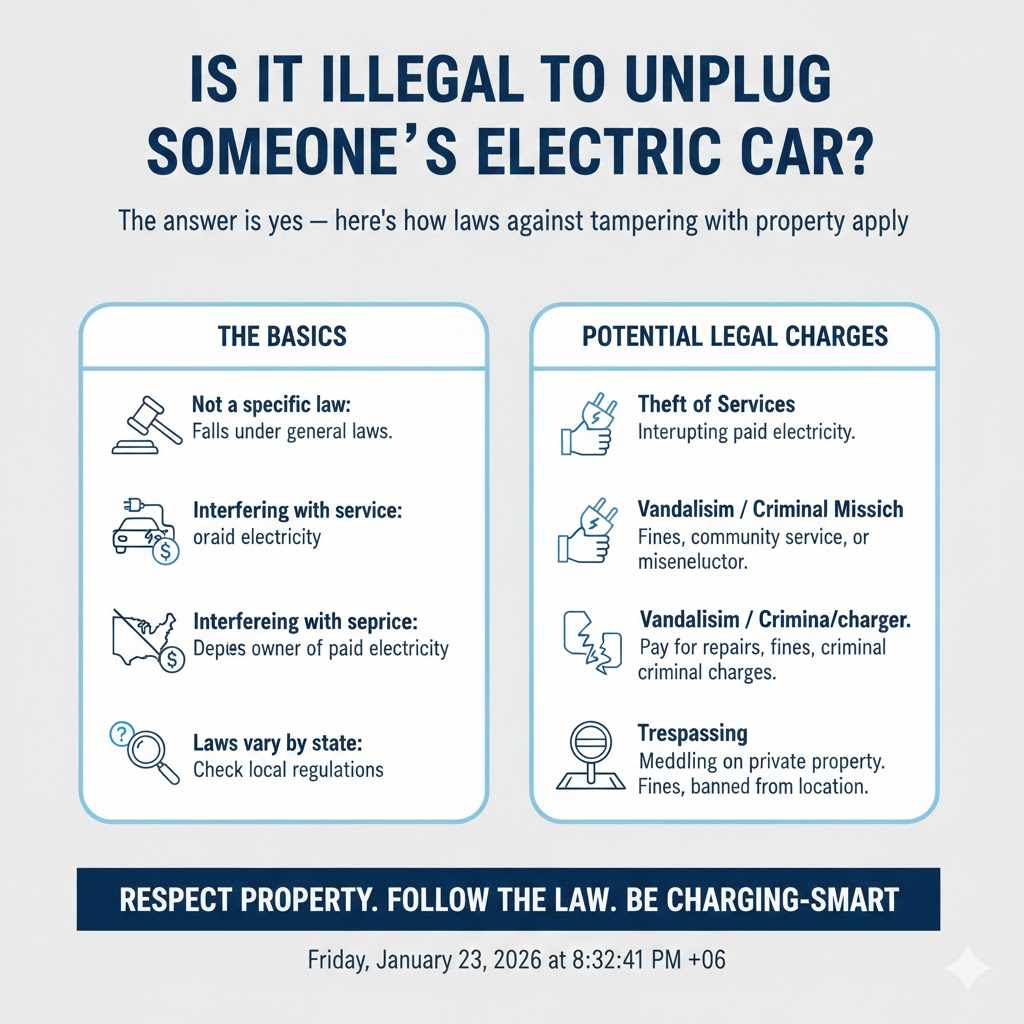
So, you’re wondering if you can get into actual legal trouble for unplugging another electric vehicle (EV). The short answer is yes, you absolutely can. While there isn’t a single, nationwide law with a big sign that says “Don’t Unplug EVs,” the act falls under several existing laws that can be applied to the situation. Think of it less like a specific traffic rule and more like general laws against tampering with someone’s property.
The laws vary from city to city and state to state, but they generally treat this action very seriously. Unplugging a car that isn’t yours is seen as interfering with someone’s property and depriving them of a service they are paying for (the electricity). Let’s look at the common legal charges that could apply.
Theft of Services or Electricity
When an EV is plugged in, the owner is paying for a service: the flow of electricity to charge their battery. When you unplug their car, you are interrupting that service. In the eyes of the law, this can be considered a form of theft. It’s similar to disconnecting someone’s internet cable or shutting off their water supply. Even if the car is fully charged, the station might still be billing the owner for being connected. You are taking away the service they have secured.
Vandalism or Criminal Mischief
What if you accidentally damage the car or the charger while unplugging it? Many EV charging ports lock the cable in place for security and safety. If you try to force the plug out, you could easily break the charging port on the car, the connector on the cable, or both. This is an expensive mistake. A broken charging port can cost hundreds, sometimes thousands, of dollars to fix.
When you intentionally or recklessly cause damage to someone else’s property, it’s called vandalism or criminal mischief. Even if you didn’t mean to break it, your actions could be seen as reckless, and you could be held financially and legally responsible for the repairs.
Trespassing
This one might sound strange, but it can apply. If the charging station is on private property—like a shopping mall garage, an office building, or a paid parking lot—you have permission to be there for its intended purpose. Tampering with other vehicles is not an intended purpose. Property owners or law enforcement could view your act of unplugging another car as exceeding your welcome, which could lead to a trespassing charge, especially if you were asked to leave and didn’t.
To make this clearer, here’s a simple table of the potential legal issues:
| Potential Legal Charge | What It Means in Simple Terms | Possible Consequences |
|---|---|---|
| Theft of Services | You stopped someone from receiving the electricity they were paying for. | Fines, community service, or even misdemeanor charges. |
| Vandalism / Criminal Mischief | You damaged the car or the charging station by unplugging it improperly. | You’d have to pay for all repairs, plus face fines and potential criminal charges. |
| Trespassing | You meddled with property where you weren’t supposed to. | Fines or being banned from the property. |
Some states are even creating specific laws to address this. For example, states like California and Oregon have laws that make it a clear violation to tamper with or block access to an EV charging station. As more people switch to electric cars, we can expect more specific rules to appear. A great resource is your state’s government website, which often lists traffic and property laws. For instance, you can check resources like the U.S. Department of Energy’s database for state-specific regulations.
Beyond the Law: The Hidden Dangers of Unplugging an EV
Even if you could get away with it legally, there are very real dangers to consider before you ever touch someone else’s charging cable. These risks can affect the car, the charger, and even your own safety. It’s not as simple as unplugging a toaster.
1. Risk of Damage to the Vehicle
Modern electric cars are like computers on wheels. They have a sophisticated Battery Management System (BMS) that controls how the battery charges. It monitors temperature, voltage, and current to keep the battery healthy and extend its life. Suddenly cutting off the power can send a jolt to this system.
While most cars are designed with safeguards, an unexpected disconnection could potentially interrupt a critical function, like battery cell balancing. Over time, this could contribute to reduced battery performance. More importantly, as mentioned before, many cars lock the charger into the port. Forcing it out is a surefire way to break the locking pin or the entire port assembly, leading to a very costly repair for the car’s owner (and for you, if you’re caught).
2. Damage to the Charging Station
Public charging stations are built to be durable, but they aren’t indestructible. The charging connector (the “nozzle”) contains sensitive pins that communicate with the car. Yanking it out carelessly can bend or break these pins. A damaged connector might not work for the next person, or worse, it could create an unsafe charging situation.
Repairing a public charging station isn’t cheap, and the station owner could hold you responsible for the costs. When one station is out of order, it causes even more frustration for other EV drivers who rely on it. You wouldn’t want to be the reason a whole charging location is down.
3. Personal Safety and Electrical Risks
This is the most important danger to be aware of. EV charging involves high-voltage electricity. Level 2 chargers, common in public spaces, operate at 240 volts. DC Fast Chargers operate at 400 to 1,000 volts. These systems are designed with multiple safety features, like “interlock” circuits that ensure power doesn’t flow until the connector is securely attached to the car.
However, if a charging station or cable is already damaged, tampering with it could expose you to a serious risk of electric shock. According to safety organizations like the Occupational Safety and Health Administration (OSHA), working with high-voltage systems requires training and proper equipment for a reason. By unplugging a car, especially if you have to force it, you are interacting with a high-power electrical system in a way it wasn’t designed for. It’s a risk that is simply not worth taking.
4. The Risk of Confrontation
Finally, there’s the human element. How would you feel if you came back to find a stranger tampering with your car? The owner of the EV could return while you are unplugging their vehicle. This could lead to an angry and unpleasant confrontation. People are protective of their property, and a simple misunderstanding could escalate into a serious argument or worse. It’s always best to avoid creating a situation that could lead to conflict.
The Golden Rules of Public EV Charging Etiquette
So, if you can’t unplug other cars, what should you do? The answer lies in good etiquette. The EV community works best when everyone is considerate. Following these simple rules helps make charging a smooth and fair experience for everyone.
- Only Park in an EV Spot if You Are Charging: This is the number one rule. An EV spot is for charging, not for parking. Once your car is charged, move it so someone else can use the spot.
- Don’t Hog a DC Fast Charger: Fast chargers are for quick top-ups, not for charging from 0% to 100%. Most EVs slow down their charging speed significantly after 80%. It’s good practice to charge to 80% and then move on, letting others use the high-speed station.
- Check for Time Limits: Many charging stations, especially free ones, have posted time limits. Respect them. Set a timer on your phone so you don’t forget to move your car.
- Use Charging Apps to Communicate: Apps like PlugShare often allow drivers to “check in” at a station. You can see who is charging and sometimes even send a polite message asking when they expect to be done. Many drivers also leave a note on their dashboard with their phone number.
- Keep the Area Tidy: Don’t leave charging cables dangling on the ground where they can be a tripping hazard or get damaged. Wind the cable up neatly and place the connector back in its holster when you are finished.
To help you navigate tricky situations, here is a handy table on what to do:
| The Situation | The Wrong Way to Handle It | The Right Way to Handle It |
|---|---|---|
| A car is fully charged but still plugged in. | Unplugging it yourself. | Check for a note on the dashboard with a phone number. Use an app like PlugShare to see if you can contact the owner. If not, you unfortunately have to wait or find another station. |
| You urgently need a charge to get home. | Getting angry and creating a scene. | Leave a polite, friendly note on the car that is almost done charging. Explain your situation and leave your number. They might see it and be willing to help. |
| A non-electric car is blocking the charger (“ICE-ing”). | Keying the car or blocking them in. | Check for signs that designate the spot for EV charging only. If so, contact the property owner or the non-emergency police line. They can have the vehicle ticketed or towed. |
What to Do If Someone Unplugs Your Car
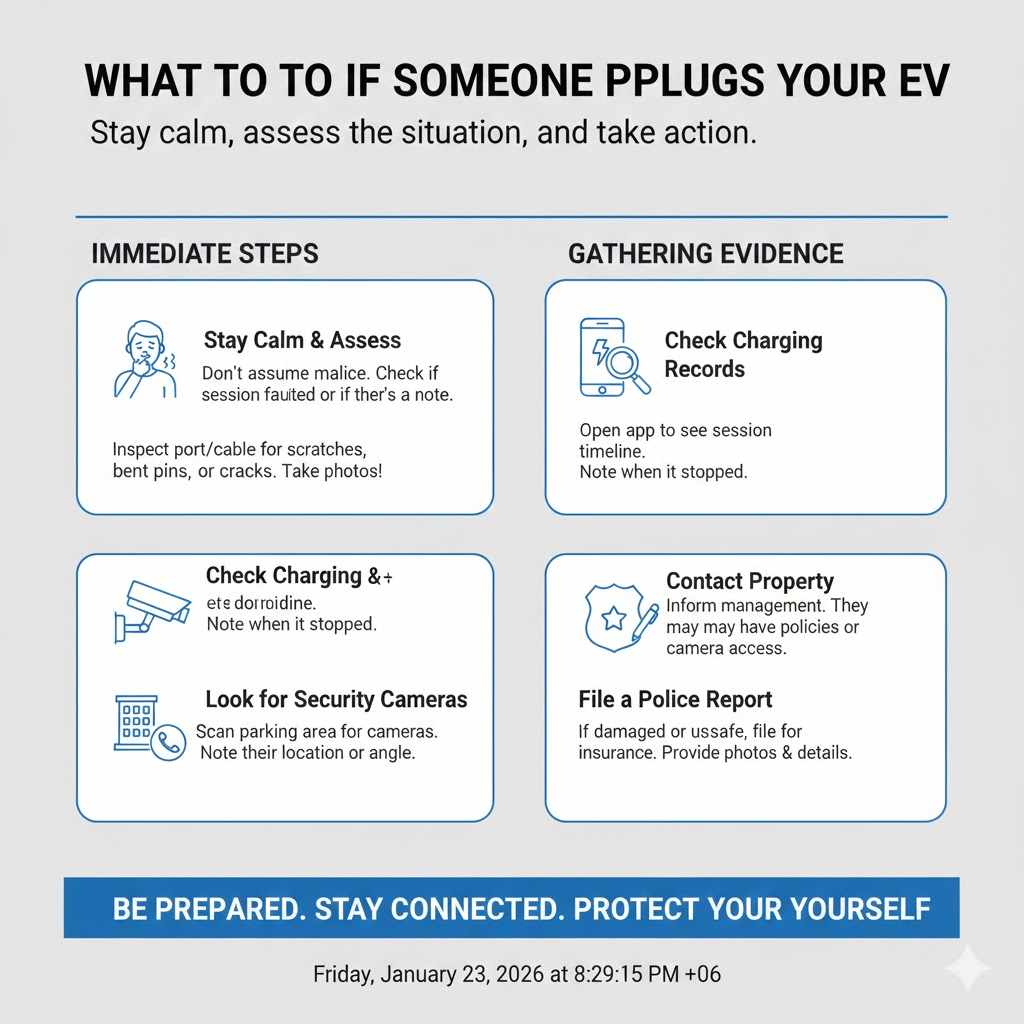
It can be alarming to return to your car and find that it has been unplugged. Your first reaction might be anger, but it’s important to handle the situation calmly and methodically. Here are the steps to follow.
- Stay Calm and Assess the Situation: Take a deep breath. Don’t assume the worst. It’s possible the station faulted and stopped the session, or that someone unplugged you by mistake, thinking your car was finished.
- Check for Damage: Before you do anything else, carefully inspect your car’s charging port and the charging cable for any visible signs of damage, like scratches, bent pins, or cracks. If you see any damage, take photos immediately with your phone.
- Look for a Note: The other driver may have left a note on your windshield explaining why they unplugged you. It might be an emergency or a simple misunderstanding. This can often clear things up quickly.
- Check Charging Station Records: Many charging networks have an app that tracks your charging sessions. Open the app and see when the session stopped. This can give you a timeline of what happened.
- Look for Security Cameras: If you suspect malicious intent or if there is damage, look around for any security cameras in the parking lot or garage. Note their location.
- Contact Property Management: If you are at a mall, office, or apartment complex, contact the property manager. They may have a policy about charging etiquette or be able to review security footage.
- File a Police Report (If Necessary): If your car was damaged or if you are in a location where you feel unsafe, it is perfectly reasonable to file a police report. This is especially important for insurance purposes if you need to make a claim for repairs. Provide them with your photos and any other information you have.
Frequently Asked Questions About EV Charging
1. Is it okay to unplug a car that is 100% charged?
No, you should still not unplug it. Even at 100%, the car’s system might be balancing the battery cells or running the climate control to keep the battery at an optimal temperature. Furthermore, the cable is likely locked, and you risk causing damage. It’s always best to leave the car alone.
2. What if the owner left a note saying it’s okay to unplug when finished?
If a driver leaves a clear note with permission to unplug them once their car reaches a certain charge level (e.g., “Okay to unplug after 90%”), then it is generally acceptable. However, you must still be very careful. Unplug the connector gently and never force it.
3. Do all EVs lock the charging cable?
Most modern EVs lock the charging cable to the car’s port while it is charging. This is a security feature to prevent theft and tampering. However, some older models or certain brands may not have this feature. Even if it doesn’t lock, you should not unplug it.
4. What’s the difference between Level 1, 2, and 3 charging?
It’s all about speed! Level 1 is the slowest; it’s like plugging into a regular wall outlet at home. Level 2 is much faster and is what you’ll find at most public charging stations in places like malls and workplaces. Level 3, also known as DC Fast Charging, is the super-fast option you find along highways, designed to get you back on the road quickly.
5. What is “ICE-ing”?
“ICE” stands for Internal Combustion Engine. ICE-ing” is a slang term for when a gasoline or diesel car parks in a spot designated for EV charging, blocking access for EV drivers who need it. This is illegal in many places and the car can be ticketed or towed.
6. Can I use an extension cord with a public charger?
Absolutely not. Never use a standard household extension cord with a Level 1 or Level 2 EV charger. It is a major fire hazard. EV charging cables are specifically designed to handle the high power and have safety features built in. Using an extension cord bypasses these safety measures and can cause overheating.
7. How can I find out the specific laws for my area?
A good starting point is your city or state’s official government website. Search for terms like “electric vehicle charging laws” or “municipal code parking.” You can also check with local law enforcement’s non-emergency line for clarification on parking and property rules.
Final Thoughts: A Little Courtesy Goes a Long Way
Navigating the world of electric vehicles is a new experience for many of us, and public charging is a big part of that. While the frustration of finding a full charging station is real, unplugging someone else’s car is never the right solution. It’s a move that is loaded with legal risks, financial dangers, and safety hazards.
The best approach is always rooted in patience and community-minded thinking. Plan your trips, use apps to see station availability, and follow proper charging etiquette. By being a courteous and responsible EV driver, you help create a better environment for everyone. We’re all in this transition together, and a little kindness at the charging station makes the journey smoother for us all. Happy driving and happy charging!