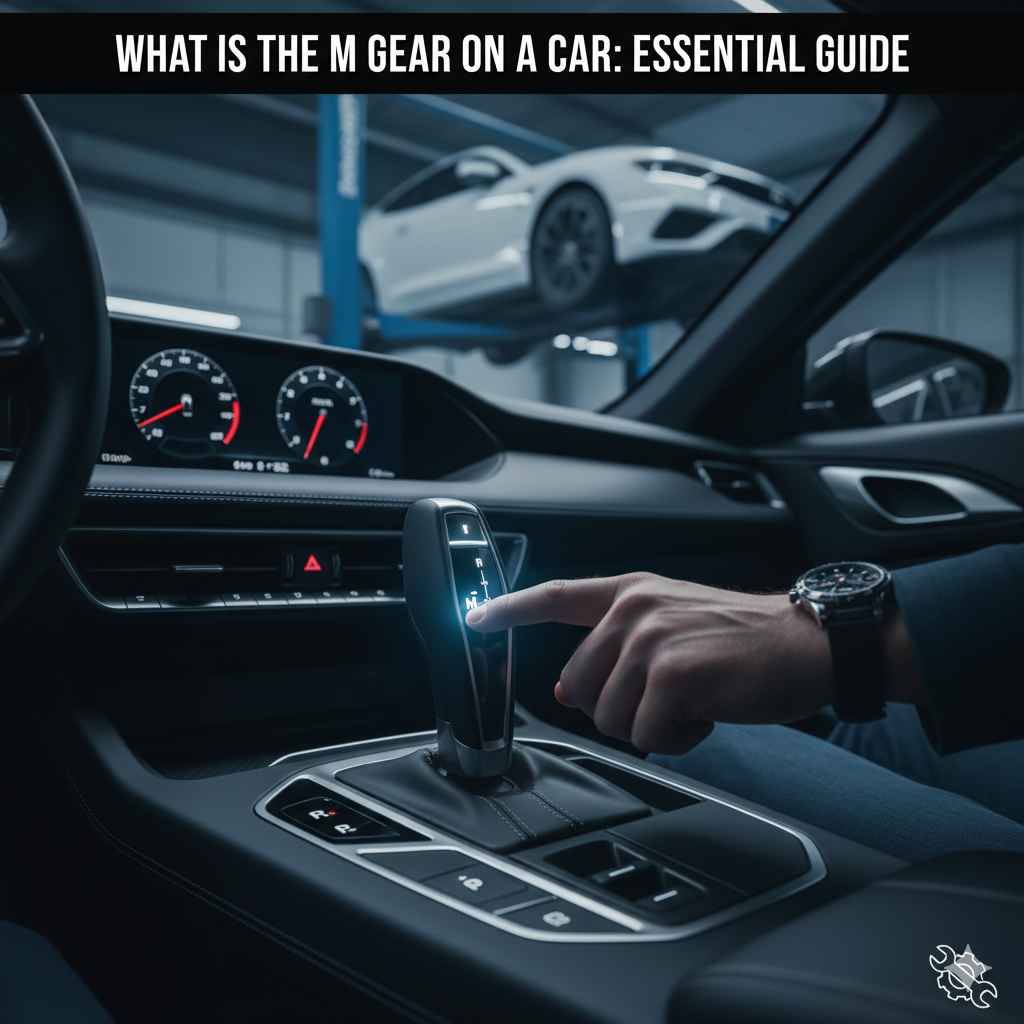
What Is the M Gear on a Car? Manual Mode Explained
The M gear on an automatic car engages manual mode, letting you pick each gear yourself with the shifter or paddles, no clutch pedal needed. Use it on the highway and you’ll burn more fuel than D; use it right on a long downhill and you’ll save your brakes from overheating. This guide covers how M mode works, when to use it, and how it compares to L and S modes.
Quick Answer
“M” stands for Manual mode. Nudging the shifter or a paddle upshifts or downshifts one gear at a time, so you get sport-car-style control without a clutch pedal. It’s safe to use anytime — the transmission computer still blocks shifts that would over-rev or lug the engine — but it’s most useful on hills, when overtaking, or for engine braking, not for everyday highway cruising.
What Does the “M” Gear Mean on an Automatic Car?
In most modern automatic transmissions, “M” stands for Manual mode. It bridges the gap between a traditional automatic and a true stick-shift car: you decide when the transmission shifts, but there’s still no clutch pedal to operate. In “D,” the car’s computer picks every gear for you based on speed, engine load, and fuel efficiency. “M” hands that decision back to you, whenever you want a quick burst of acceleration or extra engine braking on the way down a hill.
How M Mode Works
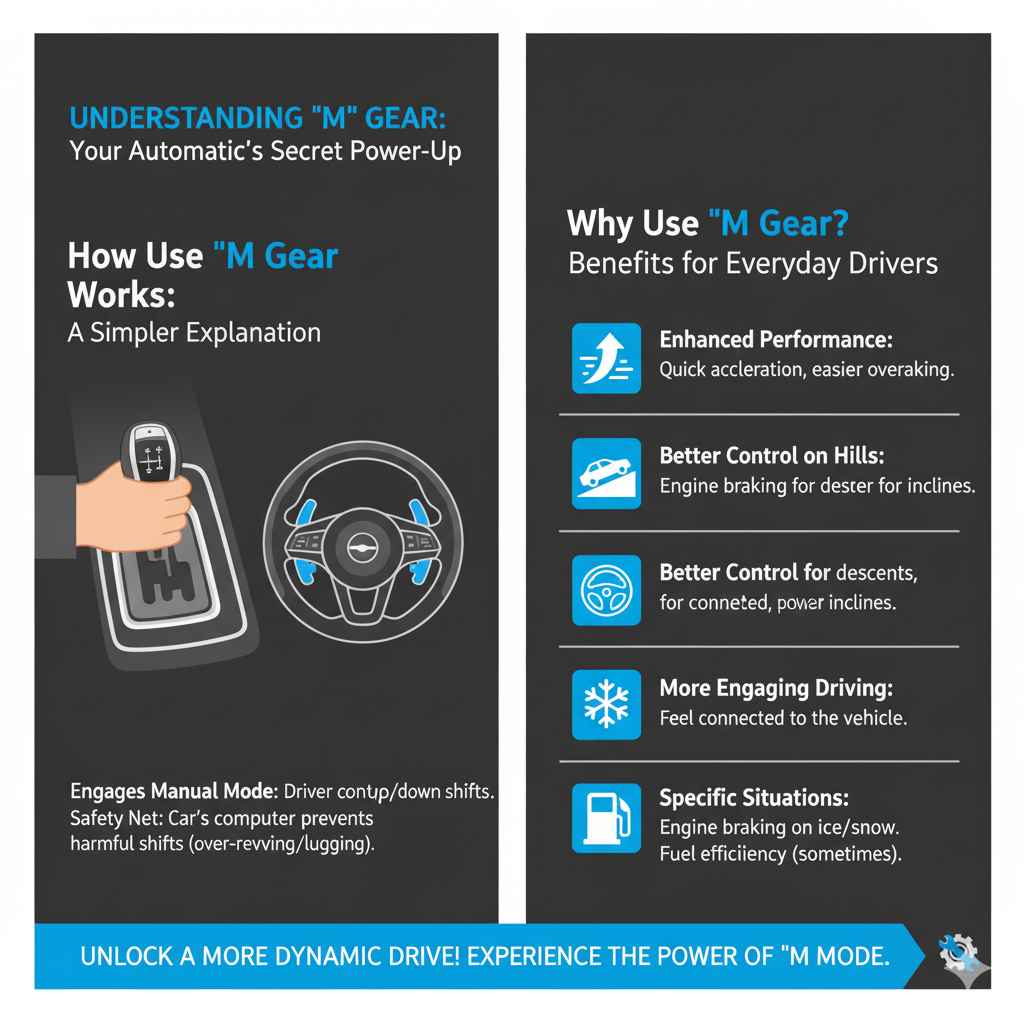
Engaging “M” tells the transmission computer to wait for your input instead of shifting on its own. Here’s what that looks like in practice:
- Shift from D into M: Move the gear selector into the M slot, or in some cars simply pull a paddle while still in D to trigger a temporary manual override.
- Check the gear indicator: Look at the dash or shifter display to confirm which gear you’re currently in before you shift.
- Upshift when ready: Nudge the shifter forward or pull the “+” paddle to move up one gear.
- Downshift for power or engine braking: Pull the shifter back or press the “−” paddle to drop down one gear.
- Let the computer catch unsafe shifts: The transmission still won’t let you over-rev the engine or lug it at too low an RPM, even while you’re in manual mode.
Why Use “M” Gear? Benefits for Everyday Drivers
Your car shifts fine on its own, so why bother with manual mode? A few real reasons it’s worth learning:
- Faster acceleration on demand: Downshift before merging or overtaking and the engine is already spinning at higher RPM, ready to deliver power the instant you press the gas.
- Better control on hills: Uphill, holding a lower gear keeps the engine in its power band instead of hunting between two gears. Downhill, downshifting uses engine braking to control your speed so you’re not riding the brake pedal for miles.
- Smoother control in slippery conditions: Staying in a higher gear for gentler throttle response, or downshifting gradually instead of braking hard, can reduce the risk of a wheel losing grip on snow or ice.
- A more connected driving feel: On a winding road, choosing your own gear keeps the engine in its sweet spot through corners instead of waiting for the transmission to catch up.
M vs. L vs. S: How Automatic Gear Modes Compare
“M” isn’t the only letter on your shifter that changes how the transmission behaves. “L” (Low) and “S” (Sport) solve different problems, and mixing them up can leave you in the wrong gear at the wrong time.
| Mode | What It Does | Best For |
|---|---|---|
| D (Drive) | Computer picks every gear automatically for smoothness and fuel efficiency. | Everyday, default driving. |
| M (Manual) | You choose every upshift and downshift yourself, still with no clutch pedal. | Hills, towing, overtaking, engine braking, spirited driving. |
| L (Low) | Locks the transmission in 1st or 2nd gear and won’t upshift past it. | Steep grades, heavy towing, deep snow or mud. |
| S (Sport) | Computer holds each gear longer and shifts at higher RPM automatically. | Quick acceleration without manually picking gears. |
Some vehicles, including certain Honda models with D1 and D2 gear settings, use their own numbered variations on this same idea — holding the transmission in a lower range without full manual control. If your shifter has letters or numbers beyond P-R-N-D, check your owner’s manual, or see our breakdown of what the lower gears in a car actually do, for what each one locks the transmission into.
What Different Automakers Call Manual Mode
Not every car badges this feature as a plain “M.” Automakers have branded their own version of manual mode for decades, which is why your friend’s German car and your Japanese sedan can do the same thing under completely different names.
| Automaker | Name for Manual Mode | Notes |
|---|---|---|
| Porsche, VW, Audi, Škoda | Tiptronic | Trademarked by Porsche; debuted on the 1990 Porsche 911 (964). |
| BMW | Steptronic | Standard on most BMW automatics; pairs with steering-wheel paddles. |
| Mercedes-Benz | “M” mode / AMG SPEEDSHIFT | Regular models simply label it M; AMG performance models add SPEEDSHIFT for faster shifts. |
| Honda, Acura, Ford | Sequential SportShift | Debuted in the mid-1990s on Acura, Honda, and Ford automatics. |
| Toyota, Lexus | Sequential Shift Mode | Engaged through a second gate on the shift lever or paddle shifters. |
📊 Porsche introduced the first Tiptronic manual-mode automatic on the 1990 911 (964). More than three decades later, nearly every automaker offers some version of driver-controlled manual mode under its own brand name. — Source: Jalopnik, 2026
“It normalized the idea that an automatic transmission could give drivers meaningful control over an automatic and made performance-oriented cars more accessible to people who weren’t interested in three pedals.”
Types of “M” Gear Implementations
The “M” gear isn’t a one-size-fits-all feature. Manufacturers have built different systems to deliver manual control, and knowing which type your car uses helps you understand what to expect. For a broader look at every gear position on your shifter, see our guide to the different gears used for driving and when to use them.
1. Shifter-Based Manual Mode
This is the most common setup. The gear selector runs P-R-N-D, then a separate slot for “M” or “S.” Once you move the lever into “M,” you use the shifter itself to change gears — typically pushing forward to upshift and pulling back to downshift, though this is reversed on some models.
2. Paddle Shifters
Many newer cars, especially sportier trims, add paddle shifters behind the steering wheel — metal or plastic paddles marked with “+” for upshifting and “−” for downshifting. These are often tied to “M” or “S” mode, though some cars let you tap a paddle while still in “D” for a temporary manual override; the transmission usually reverts to automatic shifting a few seconds after you stop using them.
3. Dual-Clutch Transmissions (DCTs) and “M” Mode
Dual-clutch transmissions use two separate clutches to deliver extremely fast, smooth shifts, so their manual modes tend to feel more direct and responsive than a torque-converter automatic’s. DCTs typically have their own dedicated “M” or “S” mode that works like the shifter or paddle systems above, just with quicker gear changes. See our full list of cars that use a DCT transmission if you’re not sure whether yours is one.
4. Continuously Variable Transmissions (CVTs) with “M” Mode
CVTs don’t have fixed gears — they continuously adjust across a range of ratios — but many still offer a simulated “M” mode. Instead of shifting real gears, the CVT locks into a set of pre-programmed ratios that mimic the feel of shifting, giving you more control over engine RPM without the mechanical gear changes of a traditional transmission.
When to Use Your Car’s “M” Gear: Practical Scenarios
Knowing how to use “M” mode is one thing; knowing when is what actually matters day to day. Here are the situations where it earns its keep:
1. Navigating Hills
Going uphill: On a steep incline, the automatic transmission can hunt between two gears or shift up and lose power. Selecting “M” and holding a lower gear keeps the engine in its power band, making the climb smoother.
Going downhill: This is where “M” mode shines. Instead of riding the brakes the whole way down, which can cause them to overheat and fade, downshift into a lower gear and let engine braking control your speed. A good rule of thumb: use roughly the same gear you’d use to comfortably drive up the same hill.
2. Merging and Overtaking Safely
Merging onto a busy highway or overtaking a slower car needs a confident burst of power. Nudge the shifter into “M” before you need it, drop one or two gears, and the engine will already be revved and ready when you press the gas — giving you more immediate torque than waiting for the automatic to kick down on its own.
3. Driving in Challenging Weather Conditions
On wet or icy roads, aggressive acceleration or braking can break tire grip. Staying in a higher gear and gently applying the throttle in “M” mode smooths out acceleration, while gentle downshifts can slow the car without the abruptness of hard braking — reducing the risk of a skid.
4. Enjoying a Spirited Drive on Winding Roads
On a twisty road, “M” mode lets you hold the engine in the RPM range that gives the best power and response through corners, then downshift before a turn to carry momentum out of it — a more engaging, connected experience than letting the transmission guess.
When NOT to Use “M” Gear (or Use With Caution)
“M” mode isn’t always necessary or beneficial:
- Cruising on the highway: “D” is already tuned to find the most fuel-efficient gear for steady speeds. Manually shifting on a flat highway will usually cost you fuel, not save it.
- Start-stop traffic: The convenience of a fully automatic gearbox matters most here. Constantly toggling manual mode in heavy traffic is more distraction than benefit.
- When you’re unsure: If you don’t know which gear to pick or feel uncomfortable, let the automatic transmission do its job.
- Forcing an aggressive downshift: The car’s computer has safeguards, but it’s still possible to hold a gear too long and push the engine toward over-rev. Watch the tachometer.
Comparing “M” Mode with Sport (“S”) Mode
You’ll often see “M” mode alongside Sport (“S”) mode. They can overlap, but they solve different problems.
| Feature | “M” (Manual) Mode | “S” (Sport) Mode |
|---|---|---|
| Primary Goal | Driver control over gear selection. | Enhanced performance and sportier driving feel. |
| Gear Shifts | Driver initiates each upshift and downshift. | Transmission shifts gears at higher RPMs and holds gears longer. |
| Throttle Response | Can be adjusted by the driver in conjunction with shifts. | Throttle response is often sharpened by the car’s computer. |
| Transmission Logic | Becomes a manual gearbox controlled by driver input. | The car’s computer dictates shifts with a sportier, more aggressive logic. |
| Driver Input | Essential for every gear change. | Mostly automatic, with driver potentially able to override with paddles. |
| Typical Use | Steep hills, overtaking, spirited driving, engine braking. | General spirited driving, quick acceleration, performance feel. |
Switching to “S” mode changes the automatic transmission’s shift points so it holds gears longer and shifts at higher RPM, delivering more power without any input from you. “M” mode, on the other hand, gives you complete control over exactly when those shifts happen. Some cars let you use paddle shifters in “M” mode after first selecting “S,” combining both.
Maintenance and “M” Gear: What to Know
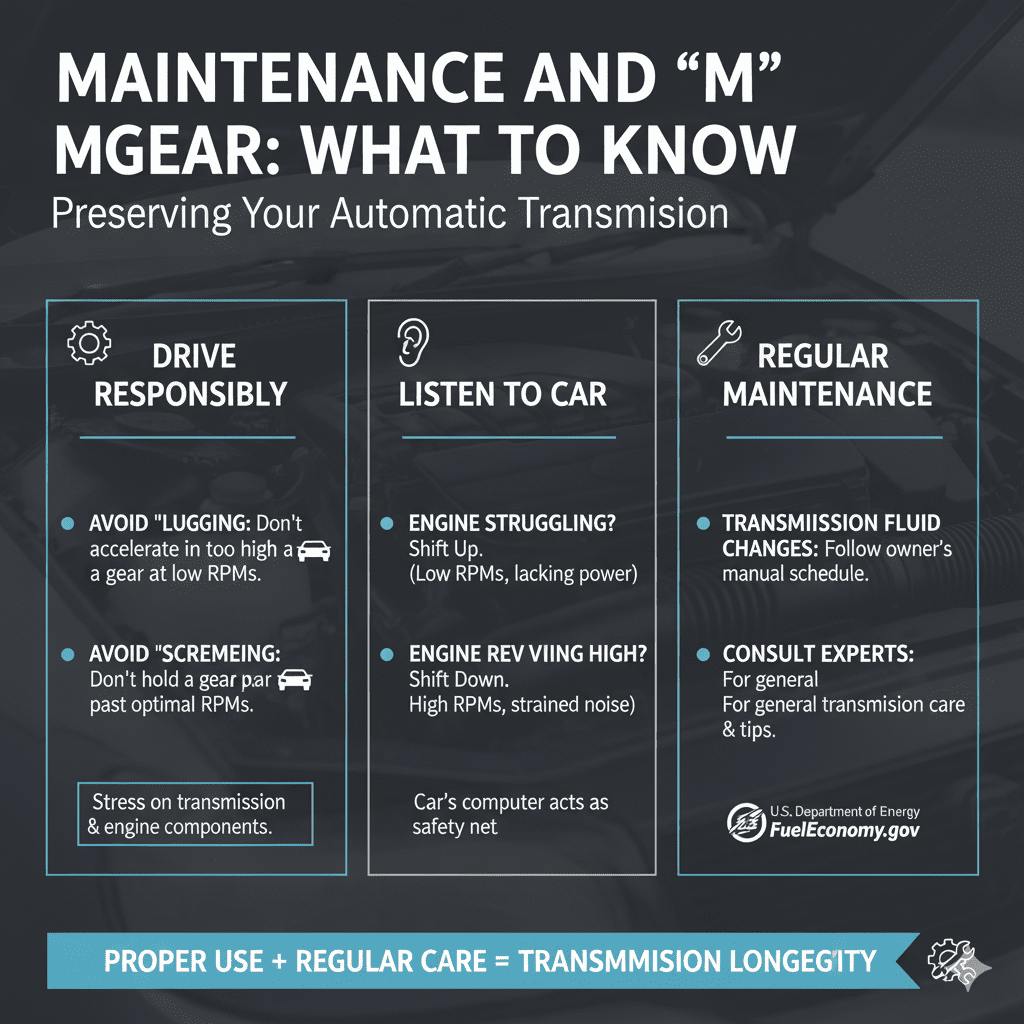
Does using “M” gear affect your car’s maintenance? Generally, no — if you use “M” mode as intended (not constantly redlining the engine), it won’t harm your transmission or require different upkeep than usual.
The key is avoiding two habits: “lugging” the engine (trying to accelerate in too high a gear at very low RPM) and “screaming” it (holding a gear well past its optimal RPM range). Both put unnecessary stress on the transmission and engine. Modern automatics are built to protect themselves from common driver errors, so listen to the car — if the engine sounds like it’s struggling, shift up; if it’s revving too high or sounds strained, shift down or let the automatic take over.
Regular transmission fluid changes, on the schedule in your owner’s manual, matter for the longevity of any automatic transmission regardless of how you drive it. The U.S. Department of Energy’s fuel economy driving tips also note that avoiding aggressive acceleration and hard braking can improve mileage by up to 40% in stop-and-go traffic — the same smooth-input habit that keeps “M” mode from working against your fuel economy.
Best Transmission Diagnostic Pick
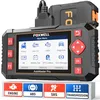
FOXWELL NT604 Elite OBD2 Scanner (ABS, SRS, Transmission)
Reads transmission control module codes, not just the check-engine light, so you can actually see why “M” mode won’t engage or feels off.
- Best for: Diagnosing why M mode won’t engage or shifts feel rough.
- Why we picked it: Reads ABS, SRS, and transmission codes, not just generic engine faults.
- Main drawback: Pricier than a basic reader if all you need is check-engine codes.
Compare more transmission maintenance options
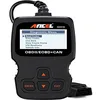 Option 1 ANCEL AD310 Classic OBD2 Scanner
|
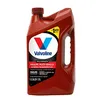 Option 2 Valvoline MaxLife Full Synthetic ATF
|
 Option 3 Wide-Mouth Long-Neck Funnel Set
|
As an Amazon Associate we earn from qualifying purchases.
Troubleshooting Common “M” Gear Issues
“M” gear is typically reliable, but you might run into a few quirks.
My “M” Gear Won’t Engage
This can happen for several reasons: the car may block engagement under certain conditions (engine too cold, parking brake engaged, or a safety fault detected). Check your owner’s manual first. If the issue persists, have it inspected by a qualified mechanic.
The Car Shifts Automatically Even When I’m in “M” Mode
This is common in cars where paddle shifters give only temporary manual control. After a period of inactivity, or during heavy acceleration or braking, the transmission may revert to automatic mode to protect itself. Some cars let you lock into manual mode permanently through a settings menu — check your owner’s manual for how your specific car behaves.
“M” Mode Feels Sluggish or Jerky
Rough or delayed shifts can point to low transmission fluid, dirty fluid, or a transmission control module issue. Confirm your fluid is at the correct level and condition first — our guide on how to check transmission fluid walks through the process step by step. If the problem continues, a professional diagnosis is the next step.
Conclusion: Mastering Your “M” Gear for a Better Drive
The “M” gear on your car isn’t just a fancy button — it puts you more in command of your driving. Whether you’re descending a mountain pass, merging confidently onto a highway, or just enjoying a more connected drive, manual mode offers real benefits for performance, safety, and control.
Listen to your car, check your owner’s manual for specifics on your model, and practice in safe conditions. Once you get a feel for it, “M” mode turns an ordinary commute into a more dynamic drive.
Frequently Asked Questions (FAQs)
What does the “M” stand for on a car’s gear shifter?
“M” typically stands for Manual mode. It lets you manually select gears in an otherwise automatic transmission, giving you more control over how the car accelerates, decelerates, and manages engine braking.
Is it safe to use the “M” gear?
Yes. Modern cars have built-in safeguards that stop you from selecting a gear the engine can’t handle, such as shifting into reverse while moving forward or over-revving on a downshift. It’s still good practice to use it thoughtfully and listen to your engine.
Can using “M” gear help save fuel?
Potentially, but it depends on your driving style. Smooth, deliberate upshifts on flat roads can help; aggressive use for performance will burn more fuel than normal automatic driving. For most everyday driving, “D” mode is already optimized for fuel economy.
What’s the difference between M mode and L (Low) gear?
M mode lets you choose and change gears freely, while L (Low) locks the transmission in 1st or 2nd gear and won’t let it upshift past that point. L is meant for steep grades, heavy towing, or deep snow, where you need maximum torque and don’t want the transmission hunting for a higher gear.
Does using M mode damage the transmission?
No, not when used as intended. The transmission computer still enforces safety limits in manual mode, preventing over-revving or lugging the engine. The main risk is repeatedly holding a gear near redline or ignoring warning signs like grinding or hesitation, the same habits that stress any transmission regardless of mode.
What do BMW, Mercedes, and Porsche call manual mode?
BMW calls it Steptronic, Porsche (and licensees VW, Audi, and Škoda) call it Tiptronic, and Mercedes-Benz simply labels it “M,” adding SPEEDSHIFT on AMG performance models. Honda, Acura, and Ford use Sequential SportShift, while Toyota and Lexus call it Sequential Shift Mode.
Products related to this article
Sponsored / affiliate links. As an Amazon Associate I earn from qualifying purchases. I may earn additional commission from eligible campaigns.