Is It Ok To Use Synthetic Oil In Older Cars: Essential Guide
Yes, it is generally okay to use synthetic oil in older cars, and often beneficial! Modern synthetic oils offer superior protection, better performance in extreme temperatures, and longer drain intervals compared to conventional oils. This guide will help you understand the benefits and potential considerations for your classic or older vehicle.
Keeping your older car running smoothly is a rewarding experience. Many car owners worry about using modern synthetic oil in their beloved older vehicles. Will it cause leaks? Is it too harsh? The good news is that with a little knowledge, you can confidently choose the right oil. This guide will walk you through everything you need to know about using synthetic oil in older cars, making it simple and stress-free. We’ll cover the why, the how, and what to watch out for, so you can keep your vintage ride in top condition for years to come.
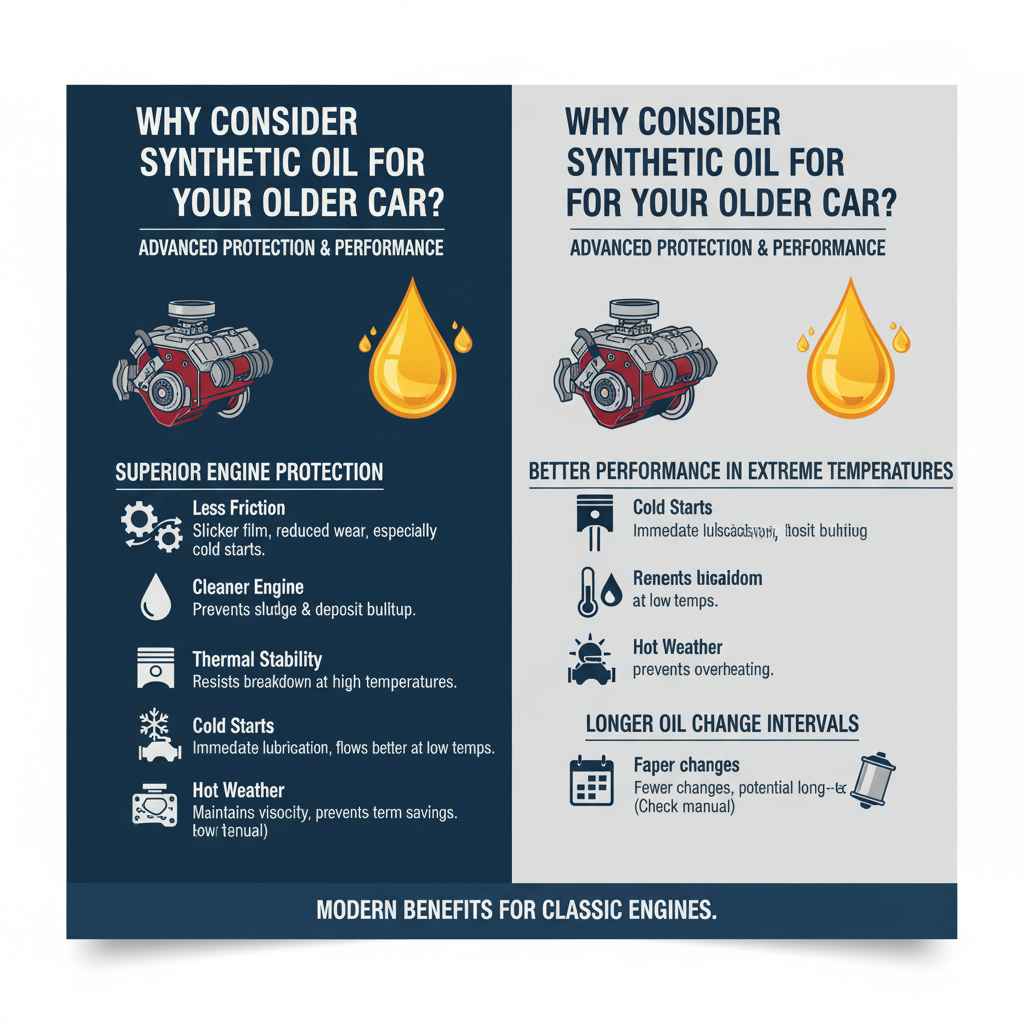
Why Consider Synthetic Oil for Your Older Car?
You might be wondering why you should even think about synthetic oil for a car that wasn’t designed with it in mind. Well, even older engines can benefit greatly from the advanced protection and performance that modern synthetic oils provide. They are engineered to perform better than conventional oils in many crucial ways.
Superior Engine Protection
Synthetic oils are created in a lab with uniform molecules. This means they have a more consistent viscosity and are less prone to breaking down under stress.
Less Friction: The smooth, uniform molecules in synthetic oil create a slicker film between moving engine parts. This reduces wear and tear, especially during cold starts when oil is thickest and most engines experience the most wear.
Cleaner Engine: Synthetics typically have fewer impurities and contain better additive packages that help prevent sludge and deposit buildup. This keeps your engine’s internal components cleaner.
Thermal Stability: They resist breaking down at high temperatures better than conventional oils, which is crucial for hardworking engines.
Better Performance in Extreme Temperatures
Older cars, like all cars, experience a range of temperatures. Synthetic oils excel in these conditions.
Cold Starts: In cold weather, conventional oil can become very thick, making it hard for the engine to turn over and for oil to reach critical parts quickly. Synthetics flow much better at low temperatures, providing immediate lubrication.
Hot Weather: During hot summer driving or when the engine is under heavy load, synthetic oil maintains its viscosity and protective qualities, preventing overheating and breakdown.
Longer Oil Change Intervals
While you should always follow a maintenance schedule, synthetic oils can often last longer between changes. This means fewer oil changes and potentially lower long-term costs, even though the initial oil price might be higher. Always check your owner’s manual for specific recommendations.
Are There Any Downsides or Things to Watch Out For?
It’s natural to have concerns, and yes, there are a couple of things to be aware of when switching to synthetic oil in an older vehicle. The biggest myth is that synthetics cause leaks, but we’ll break down why that’s usually not the case.
The “Synthetic Oil Causes Leaks” Myth
This is the most common concern for older cars, often built with rubber or cork seals that might have hardened over time.
Seal Swelling: Older conventional oils contained solvents that would “swell” these seals slightly, helping to keep them pliable and preventing leaks. When you switch to a high-quality synthetic oil, which is much cleaner and has fewer of these solvents, the seals might initially shrink back to their original size, potentially revealing existing wear or small leaks.
It’s Not the Synthetic Oil Itself: The synthetic oil isn’t causing the leak. It’s simply that prior conventional oils might have been masking small issues by keeping worn seals slightly expanded. If your car has known seal issues or very high mileage, it’s wise to address those separately.
Important Considerations Before Switching
Check Your Owner’s Manual: This is always the first step! Your car’s manual may have specific recommendations for oil types, viscosities, and even advise against certain types of oil if the engine is exceptionally old or has unique requirements.
Engine Condition: If your car already has significant oil leaks or consumes oil heavily, switching to synthetic might make those issues more apparent. It’s often best to address existing problems before making the switch.
Break-in Period: For some very old engines that have only ever run conventional oil, a very gradual transition might be considered, but for most vehicles, a direct switch is fine.
Understanding Oil Viscosity and Specifications
Choosing the right oil involves understanding its viscosity (how thick or thin it is) and any specific ratings it needs to meet.
What is Oil Viscosity?
Viscosity is measured using a system developed by the Society of Automotive Engineers (SAE). You see numbers like 5W-30.
The “W” stands for Winter: The number before the “W” (e.g., 5W) indicates the oil’s viscosity at cold temperatures. A lower number means the oil flows better when cold.
The Second Number: The number after the hyphen (e.g., 30) indicates the oil’s viscosity at normal operating engine temperature (212°F or 100°C). A higher number means the oil is thicker at operating temperature.
How to Choose the Right Viscosity for Your Older Car
Always refer to your owner’s manual for the recommended viscosity. If your manual is lost or difficult to find, consider these points:
Original Recommendation: If your car is from the 1980s or earlier, it might have originally specified a single-grade oil (like 10W-30 or 10W-40). Modern multi-grade synthetic oils with the same recommended viscosity are generally excellent replacements.
Engine Wear: For engines with higher mileage that might have started to consume oil, sometimes a slightly thicker oil (e.g., moving from a 5W-30 to a 10W-30 or 10W-40 if recommended) can help reduce oil consumption. However, never deviate from the manufacturer’s recommended viscosity range without thorough research and understanding.
Climate: In extremely cold climates, a lower “W” number is beneficial. In very hot climates or for engines that run hot, maintaining the correct operating temperature viscosity is key.
API and ILSAC Service Ratings
Modern oils have API (American Petroleum Institute) and ILSAC (International Lubricant Standardization and Approval Committee) service ratings. These indicate the oil’s performance and suitability for certain engine types and emission systems.
Look for the “Starburst” Symbol: For gasoline engines, look for the API “Starburst” symbol, indicating it meets the latest fuel economy and engine protection standards.
Older Standards: Older cars might have been designed for older API standards (like SF, SG, SH). If a current oil meets a newer standard (like SP, the latest for gasoline), it will also meet the requirements of older standards by default. Manufacturer documentation often states, “meets or exceeds [older spec].”
Zinc (ZDDP): Some very old engines (pre-1980s, especially flat-tappet camshafts) may benefit from higher levels of ZDDP (zinc dialkyldithiophosphate), an anti-wear additive. Conventional oils used to have more, but it was reduced for catalytic converter protection. Some specialized synthetic oils are formulated with higher ZDDP levels for classic and performance engines. If your car has a flat-tappet camshaft, research oils specifically designed for this. You can find more on ZDDP levels from resources like the API Engine Oil Guide.
Types of Synthetic Oil
Not all synthetic oils are created equal. They range from high-quality synthetics to full synthetics.
Full Synthetic Oil
Full synthetic oils are manufactured using highly refined base oils and advanced additive packages. They offer the best performance and protection. This is what most people mean when they say “synthetic oil.”
Synthetic Blends (Semi-Synthetics)
These oils are a mix of conventional and synthetic base oils. They offer better protection and performance than conventional oil but are typically less expensive than full synthetics. For an older car, a high-quality synthetic blend can be a great economical choice.
Group III Base Oils vs. Group IV (PAO) and Group V
Group III: Most oils labeled “synthetic” today are Group III base oils. They are highly refined mineral oils that are chemically altered (hydrocracked) to act like synthetics. They offer excellent performance and are very common.
Group IV (PAO – Polyalphaolefin): These are true synthetic oils, built from the molecule up. They offer superior performance, especially in extreme temperatures, and tend to be more expensive.
Group V: This category includes esters and other synthetic fluids used in specialized applications or as additives to enhance performance in Group III or IV oils.
For most older cars, a high-quality Group III full synthetic or a good synthetic blend will be more than adequate and provide significant benefits.
A Step-by-Step Guide to Switching to Synthetic Oil
Making the switch is straightforward. Here’s how to do it with confidence.
Step 1: Consult Your Owner’s Manual
This is the absolute first step. Check the recommended oil viscosity (e.g., 10W-30) and any specific API or manufacturer certifications required. If you don’t have the manual, many manufacturers offer digital copies on their websites, or you can search online for your car’s year, make, and model.
Step 2: Choose the Right Synthetic Oil
Based on your manual and the considerations above:
Select the Correct Viscosity: For example, if your manual says 5W-30, choose a synthetic oil labeled 5W-30.
Check API/ILSAC Ratings: Ensure the oil meets or exceeds the recommended ratings. For most gasoline cars from the 1990s onwards, the latest API SP rating is fine. For older vehicles with specific needs (like flat-tappet cams), research ZDDP content.
Consider Brand Reputation: Stick with reputable brands known for quality.
Here’s a quick look at what to consider:
| Factor | Consideration for Older Cars | Recommendation |
|---|---|---|
| Viscosity | Match original recommendation. Consider slightly thicker if consuming oil, but stay within spec. | Use the SAE viscosity recommended in your owner’s manual (e.g., 10W-30, 5W-30). |
| API/ILSAC Rating | Latest ratings (e.g., SP) generally supersede older ones. | Meet or exceed the rating specified in your manual. For most modern-era gasoline cars, API SP is suitable. |
| ZDDP Content | Crucial for engines with flat-tappet camshafts (often pre-1980s). | Research oils with higher ZDDP if your engine requires it. Consult a classic car forum or specialist. |
| Brand | Quality matters for additive packages. | Choose reputable brands like Mobil 1, Pennzoil, Valvoline, Castrol, etc. |
Step 3: Prepare for the Oil Change
You’ll need:
The correct amount of synthetic oil for your car (check your manual). A typical car takes 4-6 quarts.
A new oil filter that fits your vehicle.
A wrench for the drain plug and oil filter wrench.
A drain pan for the old oil.
Gloves and safety glasses.
Rags or paper towels.
A funnel.
A jack and jack stands if you need to lift the car (always use safely!).
Step 4: Drain the Old Oil
Warm up the engine by running it for a few minutes. This makes the oil flow better. Safely lift and support your car if needed. Place the drain pan under the drain plug, remove the plug with your wrench, and let the old oil drain completely.
Step 5: Replace the Oil Filter
Locate your oil filter. Place the drain pan underneath it, as some oil will spill out. Unscrew the old filter. Lightly coat the rubber gasket on the new oil filter with fresh oil and screw it on hand-tight, plus about a half to three-quarters of a turn, or follow the instructions on the filter.
Step 6: Refill with Synthetic Oil
Reinstall the drain plug (ensure the washer is in good condition and tighten it securely, but don’t overtighten). Lower the car if it was lifted. Open your hood and remove the oil fill cap. Using your funnel, pour in the recommended amount of new synthetic oil.
Step 7: Check the Oil Level
Replace the oil fill cap. Start the engine and let it run for a minute or two. Turn it off and wait a few minutes for the oil to settle. Pull out the dipstick, wipe it clean, reinsert it fully, and pull it out again to check the oil level. It should be between the “Add” and “Full” marks. Add more oil if needed in small increments, re-checking the level each time.
Step 8: Monitor for Leaks and Performance
For the first few days and weeks after the oil change, keep an eye out for any new leaks under your car. Also, pay attention to how the engine sounds and performs. You might notice smoother operation.
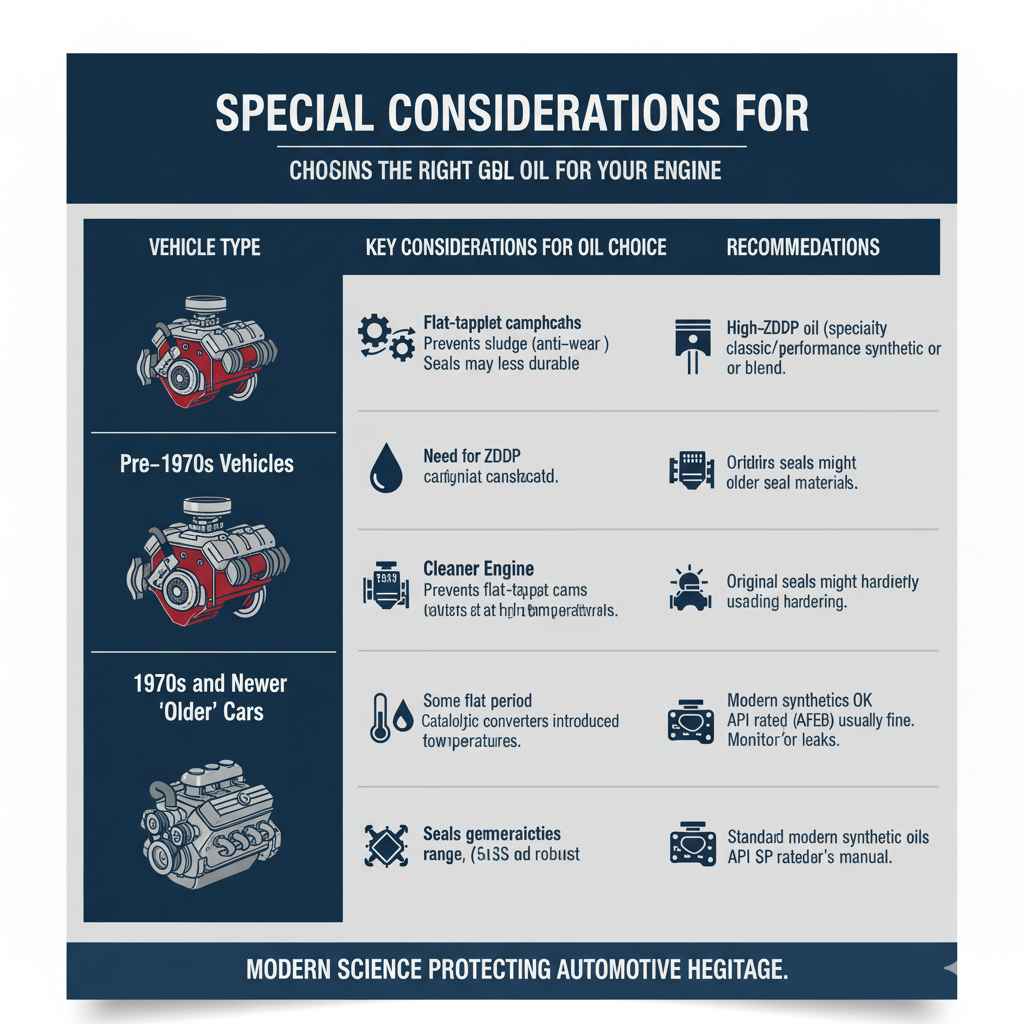
Special Cases for Vintage and Classic Cars
If you’re driving a true classic or vintage vehicle, there are a few extra points to consider.
| Vehicle Type | Key Considerations for Oil Choice | Recommendations |
|---|---|---|
| Pre-1970s Vehicles (carbureted, less emissions control) | Flat-tappet camshafts, need for ZDDP, seals may be less durable. | Use a high-ZDDP oil (specialty classic/performance synthetic or blend). Consider an oil designed to be compatible with older seal materials if available. |
| 1970s – 1980s Vehicles | Transition period. Some may have flat-tappet cams, catalytic converters introduced. Original seals might be hardening. | Check for flat-tappet compatibility. Modern synthetics with current API ratings are usually fine. Monitor for leaks. |
| 1990s and Newer “Older” Cars | Designed for a wider range of oils, including early synthetics. Seals are generally more robust. | Standard modern synthetic oils (API SP rated) are usually excellent choices. Refer to manual. |
The Role of Additives for Older Engines
Beyond ZDDP, some specialized oils or additives can benefit older engines:
Seal Conditioners: If leaks are a concern, some “high-mileage” oils or additives contain conditioners that can help swell and soften rubber seals, potentially stopping minor leaks. These are often found in conventional or synthetic blend formulations but are available for some synthetics too.
Detergents: Modern synthetic oils have excellent detergent packages that clean the engine. This is generally a good thing, but in very old engines with years of sludge, a rapid, aggressive cleaning could dislodge large pieces, potentially blocking oil passages or screens. For this reason, some prefer a milder detergent oil or a gradual transition. However, for most, the benefits of a cleaner engine outweigh this small risk.
Where to Get Authoritative Information
For specific advice on vintage vehicles, consult resources like:
Your Car’s Manufacturer: Many manufacturers have archives or specialist support for classic models.
Classic Car Clubs: These organizations often have deep knowledge bases and experienced members who can offer tailored advice.
Reputable Automotive Forums: Dedicated forums for your car’s make and model can be invaluable.
Specialty Lubricant Manufacturers: Companies like Valvoline VR1, Brad Penn, or others often produce oils specifically for classic cars.
Frequently Asked Questions (FAQs)
Q1: Will switching to synthetic oil make my older car leak?
A1: It’s a common concern, but synthetic oil itself doesn’t cause leaks. Older cars might have hardened seals that were previously kept slightly expanded by solvents in conventional oil. When you switch to a cleaner synthetic oil, these seals might retract, revealing minor existing leaks. If your car already has dry or cracked seals, you might need to address those independently.
Q2: What if my owner’s manual doesn’t mention synthetic oil?
A2: If your car is from the era when synthetics were new or uncommon, it might not explicitly mention them. However, if your manual specifies a certain viscosity (e.g., 10W-30) and API rating, a modern synthetic oil meeting those specifications will generally be compatible and offer enhanced protection.
Q3: Can I mix synthetic oil with conventional oil?
A3: Yes, all synthetic oils manufactured today are compatible with conventional mineral oils and with each other. However, mixing them will dilute the benefits of the synthetic oil. It’s best to use either full synthetic or conventional oil consistently. If you do mix, it’s often a temporary measure until you can perform a full oil change.