Car Horn Kits: How to Choose a Loud, Waterproof Replacement
Choose a 12V horn kit with at least about 110 dB, an IP65 or better enclosure, and a relay kit matched to your vehicle’s plug and fuse size. Skip those basics and you can get weak output, corrosion, blown fuses, or a fitment mess. This guide explains loudness ratings, waterproofing claims, fitment checks, wiring risk, and when to choose a compact, dual-tone, or compressor-style kit.
For legal use, don’t rely on the product page alone. Horn rules are governed by vehicle equipment laws and local noise ordinances, not just the kit’s claimed loudness. Federal guidance from NHTSA emphasizes that vehicle equipment must be used in compliance with applicable safety rules, and many states and cities separately restrict “unreasonable” or “unnecessary” horn use. Check your state DMV or vehicle code before buying a louder replacement, especially if you are considering an air horn or compressor-style kit. NHTSA vehicle safety guidance
About the author
This article is edited for automotive fitment and parts-selection clarity by a staff writer who specializes in vehicle accessories, wiring-friendly upgrades, and product comparison structure. Recommendations are based on published listing details, including mounting notes, voltage, tone layout, sealing claims, and included hardware, so readers can separate a simple replacement horn from a more involved compressor-style install.
Start with voltage, fit, and weather exposure before you chase a bigger dB number. Most aftermarket kits are built for 12V DC electrical systems, which is standard across many cars, trucks, motorcycles, SUVs, and some EVs, but the connector, current draw, and mounting space still decide whether the kit is a clean swap or an install headache.
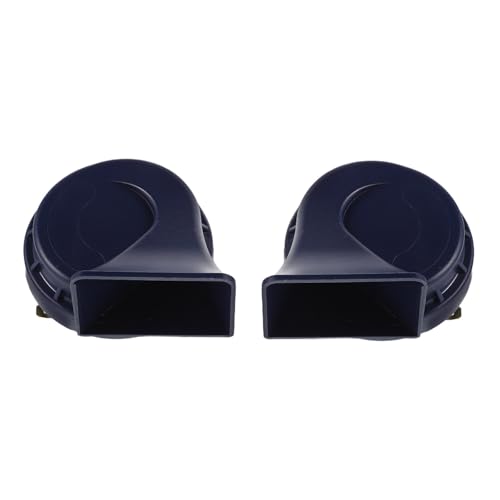
Use loudness as a filter, not the buying decision. Product listings here span a practical spread: the FIAMM single horn is a low-note replacement option, the HELLA twin kit is marketed as a 12V high/low tone pair, the NEOGET kit is listed at 128dB with waterproof sealed housing, and the Wolo Bad Boy is a compact air horn listed at 123.5 dB. Those are the kinds of product-level details that help you compare output, but they do not fix a bad bracket, a weak relay, or a shell that lets water in.
Match the kit to your climate and mounting space. Tight engine bays need shallow housings and a bracket that clears belts, fans, and shields. Wet, salty climates need a sealed shell, corrosion-resistant terminals, and hardware that holds alignment after vibration. A loud horn that loosens or rusts fast is a poor buy.
Horn kit decision matrix
This table turns the marketing claims into a practical filter. Treat each row as a pass/fail check, then narrow by the horn type you actually need. A kit can sound impressive and still be a bad fit if the housing is too deep or the wiring path is too complex for your vehicle.
| Criterion | What to prefer | What to avoid |
|---|---|---|
| dB range | 110-130 dB for most daily drivers; higher only if your vehicle space and local rules allow it | Buying on the highest number alone, especially if the kit is oversized or hard to wire |
| Sealing quality | Sealed shell, splash resistance, corrosion-resistant terminals, and clear weatherproof or IP-rated construction details | Vague “weather-resistant” language with no housing detail for rain, snow, or road spray |
| Mounting depth | Shallow body with included bracket if the bay is tight | Deep housing that blocks the radiator support, fan shroud, or bumper structure |
| Wiring complexity | Relay kit included when the circuit needs protection or the kit draws more current | Assuming a direct swap will be safe on every vehicle |
| Vehicle fit | Voltage match, connector match, current draw check, and enough space for the horn and bracket | “Universal fit” without confirming plug type, fuse size, and mounting point |
Pass/fail checklist for moisture-prone climates: sealed housing, corrosion-resistant terminals, bracket that keeps the horn out of direct spray, and a relay kit that does not leave connectors hanging low.
Pass/fail checklist for tight engine bays: shallow body, compact bracket, enough clearance for moving parts, and no need for extra hoses or a remote compressor.
Pass/fail checklist for vehicles that need a relay kit: the kit includes one, or the listing clearly states compatibility with your vehicle’s horn circuit and fuse size.
What loudness should you buy?
For most daily driving, 110-130 dB is the practical target. That range is loud enough to replace a weak factory horn without pushing you into the noisiest air-horn territory, and the product listings here support that middle ground: the NEOGET kit is listed at 128dB, the HELLA twin kit is a dual-tone replacement, and the Wolo compact air horn is listed at 123.5 dB. A higher number is not a cure for bad fit, weak sealing, or poor wiring.
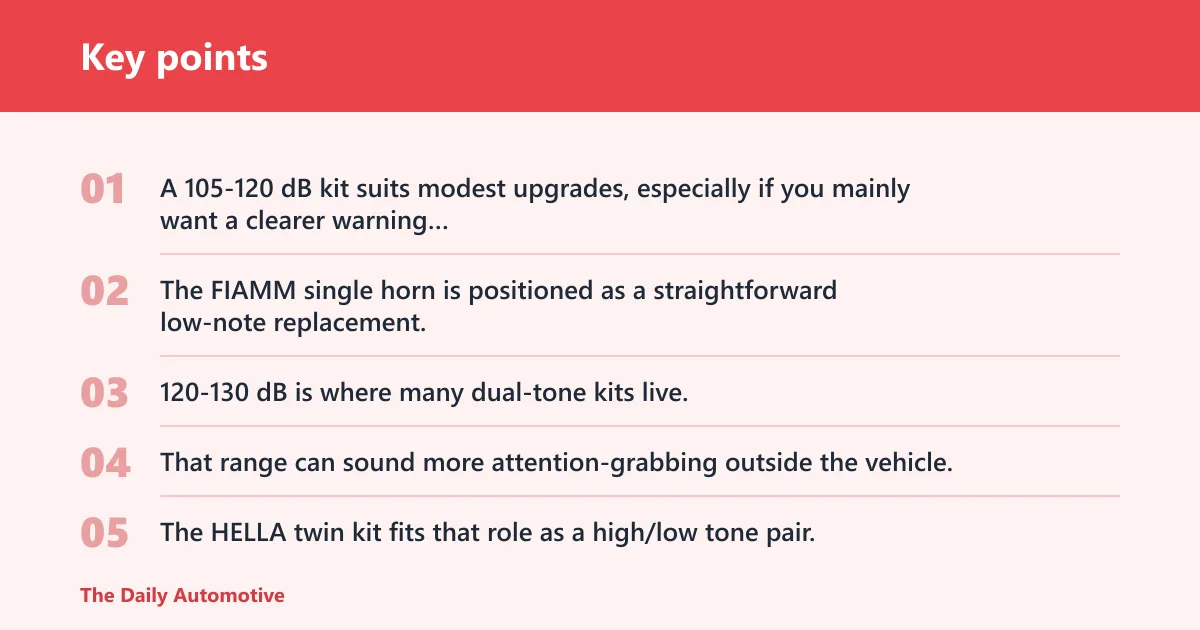
A 105-120 dB kit suits modest upgrades, especially if you mainly want a clearer warning sound rather than a dramatic blast. The FIAMM single horn is positioned as a straightforward low-note replacement, which makes it a cleaner fit than a full compressor system when you want better output without extra complexity.
120-130 dB is where many dual-tone kits live. That range can sound more attention-grabbing outside the vehicle, and a dual-tone layout often helps the signal cut through cabin and road noise better than a single pitch. The HELLA twin kit fits that role as a high/low tone pair, and the NEOGET kit’s 128dB rating puts it in the same practical lane.
When air horns make more sense, choose them for heavier-duty warning needs, not because they are automatically the best choice. A compressor-style kit can be louder and more complex, and the Wolo listing reaches 123.5 dB while using a built-in compressor. That extra output also comes with more components, more space requirements, and more installation risk. For readers comparing a compact electric upgrade to a compressor-style setup, the tradeoff is covered in more depth in this guide to train horns for cars.
Picture a compact hatchback with a shallow front bay and a driver who wants a clearer alert in city traffic. A 110-120 dB electric kit with a simple bracket is usually a better fit than a bulky compressor system that crowds the radiator support.
Is a dual-tone horn better than a single-tone horn?
Dual-tone is better when you want a more noticeable warning sound and you have the space for two horns or a dual assembly. Single-tone is better when packaging is tight, wiring simplicity matters, or you want a cleaner replacement that stays close to the factory layout.
Dual-tone kits often get cited in the 120-130dB range and are widely marketed as more attention-grabbing than a single horn. That can help in traffic, but it also means more hardware, more mounting points, and more chances for alignment issues if the bracket is flimsy.
Single-tone kits are the cleaner fit when space is the constraint. FIAMM’s single horn listing includes universal mounting hardware, which is useful for replacement work, but a single-note horn usually gives up some perceived urgency compared with a high-low pair.
How sound profile affects packaging matters. A dual-tone setup may need more room for two bodies or a twin horn assembly, while a single-tone unit can be easier to place in a cramped bumper area. If your vehicle has limited mounting depth, the simpler horn is often the safer choice.
How do you choose a waterproof horn kit?
Look for a sealed shell, corrosion-resistant hardware, and listing language that explains how the horn handles spray, not just a generic weather claim. For rain, snow, and road salt, you want a housing that keeps moisture away from the coils and terminals, plus a bracket that does not trap water against the body.
ABS plastic housing is common because it is lightweight and durable, and many kits pair it with copper coils or metal components. One competitor even calls out an IP68 shell for a vehicle-specific horn, which is the kind of detail that tells you more than a vague “waterproof” line.
What sealed housing should include: a closed shell, protected terminals, and a design that resists splash and corrosion. One waterproof kit is described as delivering 130dB alarm performance, but the sealing detail matters just as much as the sound figure if you drive through winter slush or coastal spray.
Say your car sits outside in a city that salts roads for three months a year. A horn with exposed connectors and a low-mounted bracket may still work at first, but repeated spray can lead to corrosion long before the sound output becomes the limiting factor.
What to check for in practice: the material of the shell, the quality of the terminal covers, and whether the bracket leaves enough air gap to dry out after rain. Waterproof claims without those details are thin.
Do you need a relay kit?
You need a relay kit when the horn circuit needs protection, when the kit draws more current than the factory switch should handle, or when the listing says the install is meant to be safer with a relay. It is also a smart default for higher-output kits and anything that pushes beyond a simple direct replacement.
A relay kit can reduce the chance of overload and make wiring more predictable. That matters because the loudest kits are not always the simplest to connect, and some vehicles have horn circuits that are not meant to carry extra load directly.
What included wiring changes the install is important. If the kit ships with a relay, fuse, pigtail, and mounting hardware, you may avoid extra trips for connectors and terminals. If it does not, budget for those parts and confirm the fuse size and plug type before you buy.
Why current draw matters: a louder horn can demand more power, and that can turn a “plug and play” promise into a blown fuse or an intermittent horn if the circuit is marginal. Check the vehicle manual and the horn listing together before you commit.
Our picks by need
These picks are based on manufacturer specs, listing details, and published buyer feedback. No product is a fit until you confirm voltage, connector style, mounting depth, and current draw for your vehicle.
Compact cars: FIAMM 72112 freeway Blaster LOW note horn

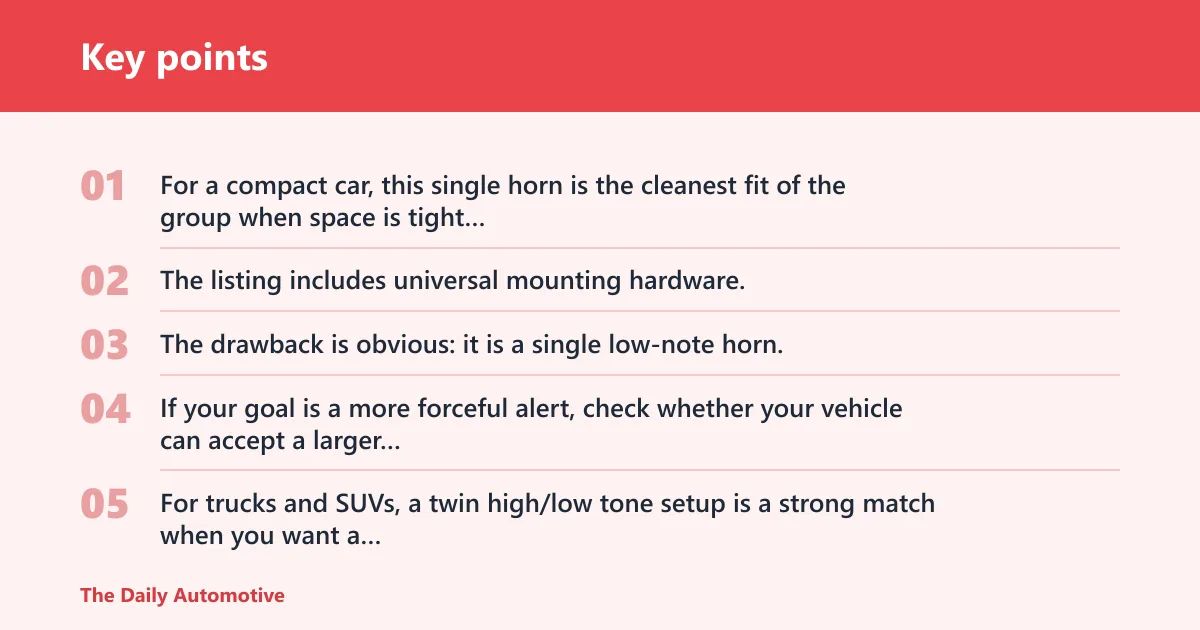
For a compact car, this single horn is the cleanest fit of the group when space is tight and you want a simple replacement path. The listing includes universal mounting hardware, which helps in smaller engine bays where bracket flexibility matters.
The drawback is obvious: it is a single low-note horn, so it is less attention-grabbing than the dual-tone kits here. If your goal is a more forceful alert, check whether your vehicle can accept a larger dual-tone setup before choosing this one.
Trucks and SUVs: HELLA 003399801 supertone twin horn kit

For trucks and SUVs, a twin high/low tone setup is a strong match when you want a broader sound profile and have more room behind the grille. The red protective grill adds a layer of durability, and the one-year limited warranty is a useful sign that the maker expects normal replacement use.
The drawback is packaging. Even on larger vehicles, a twin kit still needs enough room for clean mounting and routing. Check the manufacturer’s listing for your model if the front fascia is crowded or the factory horn sits in a narrow pocket.
Motorcycles: NEOGET 12V loud Car horn

This universal 12V dual-tone kit is the best match here for motorcycles that need a louder replacement in a compact sealed housing. The listing says it delivers 128dB high/low tones and uses waterproof sealed housings, which is useful when the horn sees direct spray and vibration.
The drawback is that universal fit still needs verification. Motorcycle brackets, connector space, and current draw vary a lot, so you should confirm the mounting point and wiring path before assuming the kit will drop in cleanly.
Wet or salty climates: Wolo 419 Bad Boy Air Horn

For wet or salty climates, this compact air horn is the loudest option in the group and includes a built-in compressor, relay, and mounting hardware. The one-piece design avoids external hoses, which can simplify the layout compared with more complex air systems.
The drawback is that it is still an air horn, so it is less simple than an electric replacement and may be harder to place in a tight bay. The 123.5 dB rating also means you should pay close attention to local noise rules and whether the vehicle has room for the assembly.
Mistakes to avoid
Do not buy by decibel number alone. A horn at 150 dB can still be the wrong choice if it needs more room than your vehicle has or if the sealing is vague. Loudness matters, but fit and durability decide whether the horn will keep working.
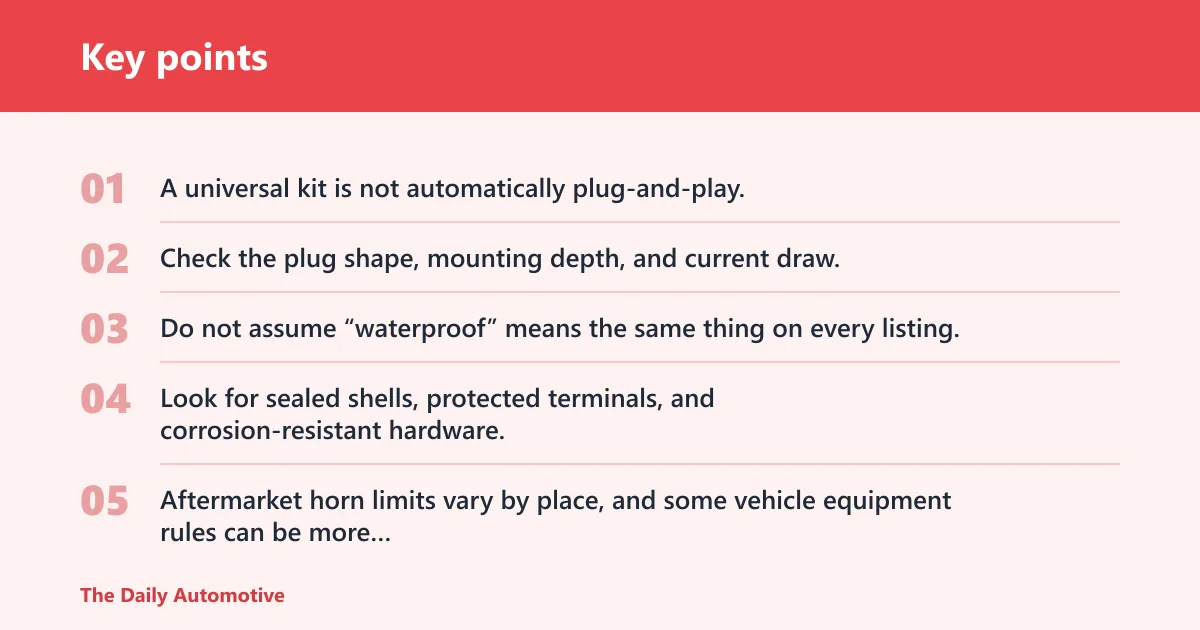
Do not ignore connector and bracket fit. A universal kit is not automatically plug-and-play. Check the plug shape, mounting depth, and current draw, and make sure the bracket lines up with your vehicle’s existing mount points or the space you have available.
Do not assume “waterproof” means the same thing on every listing. Look for sealed shells, protected terminals, and corrosion-resistant hardware, especially if your vehicle sees snow, road salt, or splash from the wheel well.
Do not skip local noise rules. Aftermarket horn limits vary by place, and some vehicle equipment rules can be more restrictive than the product page suggests. If the kit is far louder than stock, confirm it is legal where you drive before installing it. The safest approach is to check your state DMV or vehicle code before purchasing a kit that is louder than a basic replacement horn.
Do not forget total ownership cost. A kit price is only part of the bill. Add relay hardware, connectors, brackets, and possible installation labor if the wiring or mounting is beyond a straightforward swap.
One specific failure case to avoid: a blown fuse on a 2018 RAV4 after a direct horn swap was attempted without the relay path that the kit required. In that kind of install, the horn may work briefly or not at all, and the fuse can fail because the circuit is asked to carry more load than it was designed for. The fix is simple in principle—match the horn to the correct relay, fuse, and connector path—but expensive if you discover it only after the fuse pops and the bumper trim is already apart.
Suppose you are comparing a 128dB dual-tone kit with a cheaper single horn. If the louder kit also needs extra terminals, a relay, and a custom bracket, the final cost can outrun the simpler option quickly.
Frequently asked questions
What decibel level should I get for a car horn kit?
For most drivers, 110-130 dB is the sensible range. That usually gives a stronger warning than stock without pushing into the loudest air-horn territory. Higher numbers do not solve poor fit, weak sealing, or a circuit that needs a relay.
How do I choose a waterproof car horn kit?
Look for a sealed housing, corrosion-resistant terminals, and clear construction details such as an IP rating or waterproof shell language. ABS plastic housings are common, but the important part is how well the shell, hardware, and connector points keep moisture out over time.
Will a 12V horn kit fit my car, truck, or motorcycle?
It may, but 12V alone is not enough. You also need the right connector, enough mounting depth, and a current draw that your circuit can handle. Many kits are sold as universal fit, yet that still requires a model-by-model check.
Do I need a relay kit for an aftermarket horn?
Often yes, especially for louder kits or vehicles with limited circuit capacity. A relay kit helps protect the factory circuit and can make the install safer. If the kit includes one, that is a strong plus for fit and reliability.
What is the difference between an electric horn and an air horn?
An electric horn is usually simpler, smaller, and easier to fit. An air horn uses a compressor and extra components, which can make it much louder but also more complex to install. Choose electric for simplicity and air horn for heavier-duty warning needs.
Products related to this article
Sponsored / affiliate links. As an Amazon Associate I earn from qualifying purchases. I may earn additional commission from eligible campaigns.