Is Putting Mixed Gas In Your Car Bad? Expert Solutions
Many people wonder, “Is putting mixed gas in your car bad?” This question often pops up when you’re new to owning certain vehicles, like a lawnmower or a classic car, or if you’ve just heard bits and pieces of advice. It can feel a bit confusing because not all cars use mixed gas. This guide will make it super simple to understand.
We’ll walk you through it step-by-step so you know exactly what to do and why. You’ll feel confident about taking care of your vehicle after this.
Understanding Mixed Gas And Your Car
This section explains what mixed gas is and why it’s not for most everyday cars. We’ll talk about how regular cars work and why adding oil to gasoline causes problems for them. This will help clear up any confusion so you can make the right choices for your vehicle.
What Is Mixed Gas
Mixed gas, also known as gas and oil mix or pre-mix, is a blend of gasoline and a specific type of two-stroke engine oil. This mixture is specifically designed for engines that do not have a separate oil system to lubricate internal parts. Think of engines in chainsaws, leaf blowers, weed whackers, and some older or specialized motorcycles.
In these engines, the gasoline itself is the vehicle for the oil to reach all the moving parts that need lubrication.
The oil mixes with the gasoline and is burned along with it during combustion. This process provides the necessary lubrication to prevent friction and wear between the piston, cylinder walls, crankshaft, and connecting rod. Without this oil, these parts would quickly seize up due to metal-on-metal contact, leading to catastrophic engine failure.
The ratio of gas to oil is critical and is usually specified by the engine manufacturer, commonly being 50:1, 40:1, or 25:1.
Using the wrong ratio can lead to engine damage. Too little oil means insufficient lubrication, causing overheating and seizure. Too much oil can lead to fouled spark plugs, excessive smoke, carbon buildup, and poor engine performance.
It’s vital to use a high-quality two-stroke oil specifically made for the application, as it’s formulated to mix well with gasoline and burn cleanly.
Why Regular Cars Don’t Use Mixed Gas
Most cars you see on the road today are powered by four-stroke engines. These engines have a completely different lubrication system. They possess a dedicated oil sump, oil pump, and oil filter.
The oil circulates continuously from the sump, lubricating all the engine’s moving parts and then returning to the sump. This is a closed-loop system, meaning the oil is not intended to be burned with the fuel.
If you were to put mixed gas into a standard four-stroke car engine, the oil in the gasoline would enter the combustion chamber along with the fuel. Since the engine is not designed to burn oil, this would lead to several significant problems. The oil would likely cause the spark plugs to foul, preventing a proper spark from igniting the fuel-air mixture.
This results in misfires, rough running, and eventually, the engine may not start at all.
Furthermore, the excess oil would not be efficiently burned. It would likely coat the cylinder walls, pistons, valves, and exhaust system with thick carbon deposits. This buildup can reduce engine efficiency, clog catalytic converters (a very expensive part to
The oil in mixed gas is also different from the motor oil used in four-stroke engines. Two-stroke oil is designed to burn, while four-stroke oil is designed to lubricate and be retained. Trying to use them interchangeably is a recipe for disaster.
A car’s engine relies on precise fuel-air ratios and clean combustion for optimal performance and longevity. Introducing oil into the fuel stream disrupts this delicate balance entirely.

The Damage Mixed Gas Can Cause
Putting the wrong fuel into your car can lead to expensive repairs. This section breaks down exactly what happens when mixed gas meets a standard car engine. We’ll cover the immediate issues and the long-term problems that can arise, explaining why it’s so important to avoid this mistake.
Spark Plug Fouling
One of the most immediate and common problems caused by using mixed gas in a four-stroke engine is spark plug fouling. A spark plug’s job is to create a strong spark that ignites the compressed fuel-air mixture in the cylinder. To do this effectively, the spark plug’s electrodes need to be clean and free of any insulating deposits.
When mixed gas is used, the oil, which is not meant to be burned efficiently in a four-stroke engine, leaves behind oily residues and carbon deposits on the spark plug.
These deposits act as an insulator, preventing the spark from jumping across the gap between the electrodes. This is known as fouling. The spark becomes weak, or it may not occur at all.
If one or more spark plugs foul, the engine will start to run poorly. You might experience misfires, where a cylinder fails to fire, leading to a rough idle and loss of power. The engine may feel like it’s sputtering or hesitating when you try to accelerate.
If all the spark plugs foul, the engine might not start at all. Replacing spark plugs is a relatively simple and inexpensive repair for many vehicles. However, if the fouling is severe or happens repeatedly due to incorrect fuel use, it can indicate deeper engine issues or lead to more costly problems down the line.
It’s a clear sign that something is wrong with the fuel being introduced into the engine.
Carbon Buildup And Engine Deposits
Beyond spark plugs, the oil in mixed gas can cause significant carbon buildup throughout the engine. In a two-stroke engine, the oil is burned along with the fuel, and while it does produce some carbon, it’s designed to handle it to a certain extent. In a four-stroke engine, however, the oil is not meant to be burned.
When it gets into the combustion chamber, it can form sticky, hard carbon deposits on critical engine components.
These components include the piston crowns, cylinder walls, intake and exhaust valves, and even the combustion chamber itself. Over time, these deposits can grow, reducing the effective volume of the combustion chamber, which can alter the compression ratio and affect engine performance. More importantly, these deposits can cause valves to stick open or closed, leading to compression loss and poor engine operation.
Carbon buildup on piston rings can prevent them from sealing properly against the cylinder walls, leading to increased oil consumption and blow-by (combustion gases escaping past the rings). This contamination also affects the fuel-air mixture, making it harder for the engine to run efficiently. The intake ports and exhaust ports can also become partially blocked by carbon, restricting airflow into and out of the engine, further reducing power and efficiency.
Damage To Catalytic Converters And Exhaust Systems
The consequences of using mixed gas extend beyond the engine’s internal components to the exhaust system, particularly the catalytic converter. A catalytic converter is a crucial part of your car’s emissions control system. It uses precious metals like platinum, palladium, and rhodium to convert harmful pollutants like carbon monoxide, unburned hydrocarbons, and nitrogen oxides into less harmful substances like carbon dioxide, water vapor, and nitrogen.
When oil is burned in a four-stroke engine, especially in the quantities that can occur with mixed gas, it produces unburned hydrocarbons and other byproducts. These can overwhelm the catalytic converter. The excess hydrocarbons and oil residue can coat the catalytic converter’s internal honeycomb structure, blocking the flow of exhaust gases and significantly reducing its efficiency.
This is often referred to as “poisoning” the catalytic converter.
A clogged or poisoned catalytic converter can cause a noticeable loss of engine power, poor fuel economy, and may even cause the engine to stall. In some cases, the converter can overheat and become damaged internally, requiring a very expensive replacement. The exhaust pipes and muffler can also accumulate carbon deposits, potentially leading to restricted exhaust flow and reduced performance.
The overall integrity and efficiency of the entire exhaust system can be compromised.
Potential For Engine Seizure
While less common than spark plug fouling or carbon buildup in a typical car, there is a theoretical risk of engine seizure if a significant amount of mixed gas is ingested. This is more of a concern for engines that are already in poor condition or if a very high concentration of oil is present in the fuel. In a two-stroke engine, the oil is mixed directly into the fuel to lubricate the piston and cylinder.
If the oil content is too high, it can create a thick, gummy film that prevents proper combustion and can, in extreme cases, cause the piston to seize in the cylinder.
In a four-stroke engine, the oil from the mixed gas might not provide the correct type of lubrication that the engine’s internal components require. While four-stroke engines have their own oiling systems, introducing foreign oil that burns differently and may not mix properly with the engine’s internal oil can lead to increased friction. If this friction becomes too great, especially under load, it can lead to the piston seizing in the cylinder bore, effectively welding the piston to the cylinder wall.
This type of damage is almost always catastrophic and irreparable for the engine. It means the engine is completely destroyed and will require a full rebuild or replacement. Fortunately, modern fuel injection systems and engine management computers in most cars are sophisticated enough to detect anomalies.
If a car encounters highly irregular fuel, it might refuse to run or shut down as a protective measure, thus preventing severe damage in some scenarios.
Expert Solutions For Fueling Your Car Correctly
Now that we understand the risks, let’s focus on how to keep your car running smoothly. This section provides clear, actionable advice on using the correct fuel for your vehicle. You’ll learn the simple steps to ensure you’re always fueling up right, avoiding costly mistakes.
Read Your Owner’s Manual
The most crucial step in ensuring you are using the correct fuel for your vehicle is to consult your owner’s manual. This document is provided by the manufacturer specifically to guide you on all aspects of vehicle operation and maintenance. It contains detailed information about the type of fuel recommended for your car, including the octane rating and whether it should be leaded or unleaded.
Your owner’s manual will explicitly state that standard gasoline engines are designed for unleaded gasoline and will detail any specific requirements. For instance, some high-performance vehicles might recommend premium unleaded fuel to prevent knocking or pinging. Conversely, if you own a vehicle that does require a specific fuel blend, like a classic car or a small engine powered tool, the manual will clearly outline the correct mixture ratio and the type of oil to use.
Failing to read and follow the recommendations in your owner’s manual is one of the primary reasons why people make fueling mistakes. It’s a readily available, authoritative source that eliminates guesswork. If you don’t have a physical copy, most manufacturers provide downloadable PDFs of their owner’s manuals on their official websites, usually accessible by entering your vehicle’s make, model, and year.
Know Your Engine Type
Understanding whether your vehicle has a two-stroke or a four-stroke engine is fundamental. As discussed, these engine types have vastly different fuel and lubrication needs. The vast majority of cars, trucks, and SUVs manufactured in the last several decades are equipped with four-stroke engines.
These engines have a separate oil system.
Two-stroke engines, on the other hand, are typically found in smaller, lighter-duty equipment such as chainsaws, leaf blowers, weed whackers, and some older or specific types of motorcycles and personal watercraft. These engines rely on the oil mixed with the gasoline for lubrication. They are simpler in design, lighter, and often more powerful for their size than comparable four-stroke engines, but they also tend to be less fuel-efficient and produce more emissions.
If you are unsure about your vehicle’s engine type, check the owner’s manual. You can also often determine it by looking at the vehicle itself. Cars have an oil dipstick for checking engine oil levels, and an oil fill cap.
Small engine equipment designed for mixed gas usually does not have these features; they simply have a fuel tank where you pour the pre-mixed fuel.
Use The Correct Fuel At The Pump
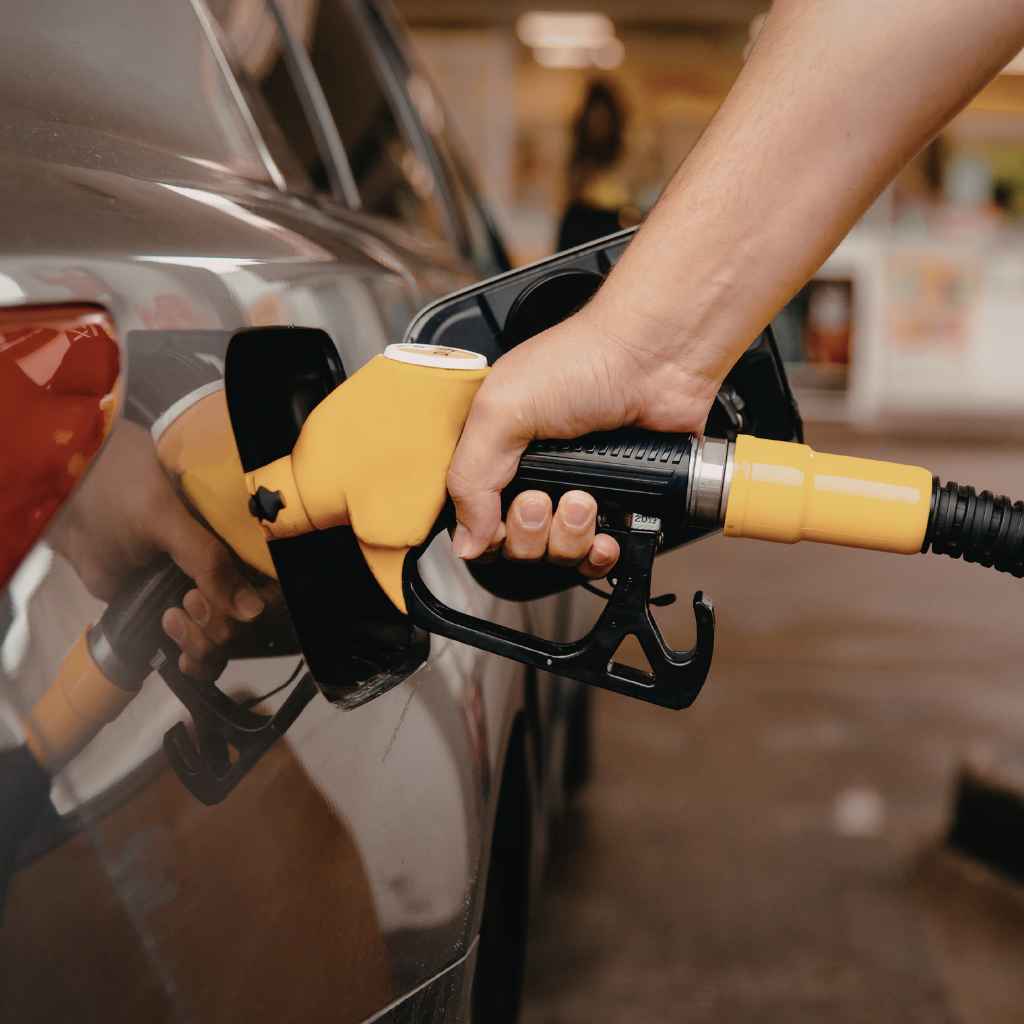
When you go to a gas station, always ensure you are selecting the correct fuel for your vehicle. Standard cars require unleaded gasoline. The pumps are clearly labeled with the octane rating, typically 87 (regular), 89 or 91 (mid-grade), and 93 or higher (premium).
Your owner’s manual will specify which octane rating is appropriate.
Never attempt to put diesel fuel into a gasoline car, or gasoline into a diesel car. These fuels are fundamentally different and will cause immediate and severe engine damage. For vehicles requiring a specific fuel blend, such as a two-stroke engine, you should either purchase the manufacturer’s recommended pre-mix or carefully mix your own using fresh gasoline and high-quality, specific two-stroke oil in the correct ratio recommended by the equipment manufacturer.
If you accidentally put the wrong fuel in your car, do not start the engine. If you’ve already started it, turn it off immediately. You will need to have the fuel tank drained and flushed by a mechanic to prevent serious damage.
This is a critical step to avoid costly repairs.
When In Doubt Ask An Expert
If you are ever uncertain about what type of fuel to use for your vehicle or any equipment you own, the best course of action is to ask an expert. This could be a certified mechanic at a reputable repair shop, the service department at a dealership, or even an experienced associate at a store that sells small engine equipment. They have the knowledge and experience to guide you correctly.
Don’t hesitate to ask questions. It’s far better to seek clarification than to make a mistake that could lead to expensive repairs. Provide them with the make, model, and year of your vehicle or equipment, and they can tell you exactly what fuel and oil specifications you need.
Many mechanics are happy to provide quick advice over the phone.
Remember, using the correct fuel is one of the simplest yet most effective ways to maintain your vehicle’s performance, longevity, and reliability. It’s a small effort that pays significant dividends in keeping your car or equipment running as it should for years to come.
Common Scenarios And Solutions
This section looks at everyday situations where fuel confusion might arise and provides practical, easy-to-follow solutions. We’ll cover common mistakes and how to fix them, ensuring you’re always prepared.
Scenario 1 A Friend Says To Mix Gas
You’re getting ready to use your lawnmower for the first time this season. A friend, who also has yard equipment, walks over and sees you with a can of gasoline. “Hey, don’t forget to add some oil to that gas!” they say.
Your lawnmower is a standard push mower, not a fancy self-propelled one that might have a separate oil reservoir. You’re unsure if they mean for your mower.
Solution: This is a classic case of cross-pollination of advice. Your friend likely uses mixed gas for their chainsaws or weed whackers, which do require it. However, most standard lawnmowers have a four-stroke engine, just like your car, and require plain gasoline.
Always check your lawnmower’s manual or look for an oil fill cap and dipstick on the engine. If it has these, it uses plain gas. If it only has a fuel cap, it likely needs mixed gas.
If in doubt, refer to the equipment’s manual or look for labels on the mower itself. Never rely solely on a friend’s advice without verifying.
Scenario 2 Buying A Used Motorcycle
You just bought a used dirt bike from someone. They mentioned it runs great and always used “pre-mix.” You’ve always driven cars and have no experience with motorcycles. You go to fill it up at the gas station and see regular unleaded gas.
You think, “Pre-mix must just be another name for regular gas,” and you fill up the tank.
Solution: This is a dangerous assumption. “Pre-mix” in the context of motorcycles almost always refers to a mixture of gasoline and two-stroke oil, as many dirt bikes and older street bikes use two-stroke engines. Filling a two-stroke engine with plain gasoline will cause it to seize very quickly due to lack of lubrication.
You need to find out for sure what type of engine your motorcycle has.
If it’s a two-stroke, you’ll need to buy specific two-stroke oil and mix it with fresh gasoline in the ratio recommended by the motorcycle manufacturer (often found on a sticker on the bike or in the owner’s manual). If it’s a four-stroke motorcycle, it will have a separate oil reservoir and use regular gasoline. In this situation, it’s critical to locate the motorcycle’s owner’s manual or consult a motorcycle mechanic immediately to determine the engine type and correct fueling procedure.
Here’s a quick comparison of engine types:
| Feature | Four-Stroke Engine (Most Cars, Some Motorcycles) | Two-Stroke Engine (Chainsaws, Leaf Blowers, Many Dirt Bikes) |
|---|---|---|
| Lubrication | Separate oil sump and circulation system; oil is not burned with fuel. | Oil is mixed directly with gasoline and burned for lubrication. |
| Fuel Required | Plain gasoline (unleaded, specified octane). | Gasoline mixed with specific two-stroke oil at a precise ratio (e.g., 50:1). |
| Common Uses | Cars, trucks, SUVs, most modern motorcycles, generators, boats. | Chainsaws, leaf blowers, weed whackers, some older/performance motorcycles, small outboard motors. |
| Visible Oil Check | Yes, via dipstick and oil fill cap. | No, relies on the oil in the fuel. |
Having the right information is key to avoiding costly errors. Always confirm the fuel needs of any vehicle or equipment you operate.
Maintaining Your Vehicle’s Fuel System
Proper fueling habits are essential for the health of your car’s fuel system. This section offers tips on how to keep your fuel system clean and working efficiently, further preventing issues.
Regular Fuel System Cleaning
Over time, even when using the correct fuel, the fuel system components can accumulate deposits. This includes the fuel injectors, fuel pump, fuel lines, and combustion chambers. These deposits can impede the flow of fuel, disrupt the spray pattern of the injectors, and lead to incomplete combustion.
Many mechanics recommend periodic fuel system cleaning. This can be done using specialized additives poured into the gas tank or through a more comprehensive service where specialized equipment is used to clean the components directly. These services can help remove carbon deposits, varnish, and other build-up that can affect engine performance and fuel efficiency.
A clean fuel system ensures that the right amount of fuel is delivered to the engine at the correct pressure and spray pattern, leading to better combustion, more power, and improved gas mileage. It’s a preventative measure that can help avoid more serious issues down the road.
Using Quality Fuel Brands
The brand of gasoline you choose can also make a difference. While all gasoline sold in the US must meet certain minimum standards set by the EPA, some brands offer “Top Tier” gasoline. Top Tier detergents are designed to help keep fuel injectors and intake valves cleaner than standard gasoline.
Using Top Tier gasoline can help prevent the buildup of deposits that can lead to performance issues. These detergents work by preventing sticky deposits from forming on critical engine parts. While not always necessary, especially if you use fuel system cleaners periodically, it’s a good habit for maintaining optimal engine health.
Avoiding Running On Empty
It’s a common temptation to let your car’s fuel gauge get very low before refilling. However, consistently running your car close to empty can put extra strain on the fuel pump. The fuel in your tank also helps to cool the fuel pump.
When the tank is low, the pump is more exposed and can overheat, reducing its lifespan.
Additionally, low fuel levels can stir up sediment that might have settled at the bottom of the fuel tank. This sediment can then be drawn into the fuel filter and potentially clog it, or even make its way to the fuel injectors. While modern fuel filters are quite effective, it’s best to avoid putting them to the test unnecessarily.
Refueling when your gauge is around a quarter tank is a good practice.
Frequently Asked Questions
Question: Can I use mixed gas in my generator
Answer: It depends on the type of generator engine. Most portable generators have four-stroke engines and require plain gasoline, just like a car. However, some smaller, older, or specialized generators might have two-stroke engines that require mixed gas.
Always check your generator’s owner’s manual for the correct fuel type.
Question: What happens if I accidentally put a small amount of mixed gas in my car
Answer: If you put only a small amount of mixed gas into a nearly full tank of regular gasoline, the resulting mixture might be dilute enough that your car runs without immediate severe issues. However, it’s still not ideal. The oil can still cause some spark plug fouling and minor deposit buildup.
It’s best to avoid it altogether.
Question: How much does it cost to fix engine damage from mixed gas
Answer: The cost can vary greatly depending on the severity of the damage. Replacing spark plugs is relatively inexpensive. However, repairing or replacing a catalytic converter can cost hundreds to thousands of dollars.
If the engine seizes, you could be looking at thousands of dollars for a full engine rebuild or replacement.
Question: Is it okay to mix gas and oil myself for a two-stroke engine
Answer: Yes, it is okay to mix gas and oil yourself for a two-stroke engine, provided you do it correctly. You must use fresh gasoline and a high-quality two-stroke oil specifically designed for the engine. Most importantly, you must use the exact ratio recommended by the engine manufacturer (e.g., 50:1).
Using the wrong ratio or poor-quality oil can cause significant damage.
Question: Can I use a fuel additive to fix the problem if I’ve put mixed gas in my car
Answer: While fuel additives can help clean the fuel system and remove some deposits, they are generally not a solution for damage already caused by using mixed gas. If you’ve put mixed gas in your car, especially a significant amount, the best course of action is to have the fuel drained and the system inspected by a mechanic. Additives are best used as a preventative measure with the correct fuel.
Conclusion
Putting mixed gas in your car is indeed bad. Standard cars use plain gasoline because their engines have separate oiling systems. Using mixed gas can lead to fouled spark plugs, carbon buildup, damaged exhaust systems, and potentially engine seizure.
Always read your owner’s manual, know your engine type, and use the correct fuel. When in doubt, ask an expert to avoid costly repairs.
Products related to this article
Sponsored / affiliate links. As an Amazon Associate I earn from qualifying purchases. I may earn additional commission from eligible campaigns.