3 Best Kayak Racks for Cars (2026): We Compared
The best kayak rack for a car depends on your load: choose J-cradles for one kayak, stackers or saddles for two, and a foam block or folding carrier for occasional use. Pick the wrong setup, and you can overload the roof, scuff the hull, or waste time at every launch with a rack that is harder to use than it should be. This guide compares three rack picks by transport scenario, roof limit, and crossbar fit.
Quick comparison
| Product | Badge | Best for | Price | ||
|---|---|---|---|---|---|
 |
Upgraded Universal Folding Kayak Rack, J-Bar Carrier forYUANSHI | Our pick | Universal · J-style · Folding | $49.99
Price as of 24 Oct 2026
|
View |
 |
IKURAM R Aluminum Kayak Roof Rack Folding J-Style UniversalIKURAM R | Also great | Universal · J-style · Folding | $89.99
Price as of 24 Oct 2026
|
View |
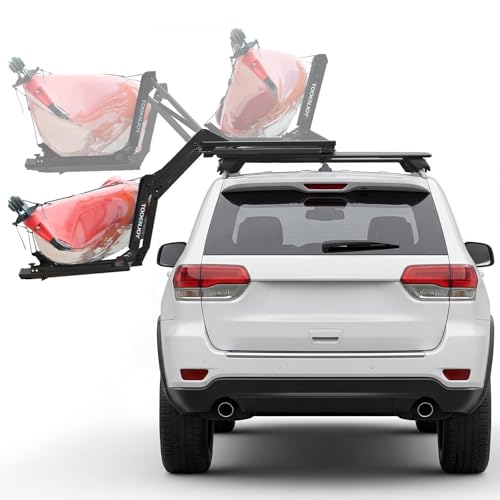 |
TOOENJOY Heavy-Duty Kayak Lift Assist Roof Rack, 100 LBSTOOENJOY | Upgrade pick | Heavy-duty · lift-assist · rooftop loader | $444.44
Price as of 24 Oct 2026
|
View |
Start with the job, then check the roof. A rack that fits your crossbars but exceeds the vehicle’s dynamic roof load limit is still the wrong choice.
For most drivers, the decision comes down to whether you haul one kayak often, two kayaks sometimes, or only need a simple occasional system.
How we chose
Each option was judged on loading ease, highway stability, vehicle and crossbar fit, storage and garage clearance, and total setup cost. That last point matters because the real price is more than the rack body.
Anchors, tie-downs, and fit adapters can change the bill. So can a second set of straps for bow and stern control.
The comparison also separates rack style from roof hardware. A J-cradle still needs crossbars. Soft roof pads need a vehicle roof that can accept strap routing safely. Foldable dual carriers need enough bar span for stable placement.
J-cradle roof rack: which one fits best?
A J-cradle fits best if you transport one kayak often and want better roof-space efficiency than a flat saddle. It works with crossbars, keeps the boat canted on its side, and can suit a single kayak or, on some models, two kayaks carried separately on a wider roof.
Who should buy a J-cradle?
Buy a J-cradle if your routine is a single recreational kayak, a touring kayak, or a setup where you want more roof room left for another carrier or cargo box. One top rack uses a two-pair J-style design for carrying two kayaks, while the VEVOR model reviewed is a single-pair J-style rack.
The main strength is roof-space efficiency. The boat sits on its side, so the rack footprint is narrower than a flat cradle.
Crossbar fit and roof-space efficiency
J-cradles are made for crossbars, not bare factory rails alone. Check whether your vehicle has factory crossbars or an aftermarket system, then confirm bar shape and width before purchase. Round, square, oval, and aerodynamic wing-bar profiles are all common, but the clamp range still has to match the bar width.
That fit check matters more than a generic “universal” label. A rack can be compatible with your bar shape and still miss the width limit.
Fold-flat and folding versions
Some J-cradles fold flat when not in use, and others use a folding or dual-position design. That helps with garage clearance and reduces the chance of a rack catching on low ceilings or tree branches. The Yakima JayLow is described as folding flat when not in use, and the Thule Hull-a-Port XTR is described as a dual-position J-cradle.
Folding hardware also makes the rack easier to leave on the vehicle between trips.
Best use case for one or two kayaks
For one kayak, a J-cradle is usually the cleanest fit. For two kayaks, it works only if the model is built for that load arrangement and your roof limit allows it. A common first-timer mistake is buying a two-boat-capable rack before checking the vehicle’s dynamic roof load limit, which includes the rack plus both kayaks.
Suppose your owner’s manual lists a 150-pound roof limit. If the rack weighs about 20 pounds and each kayak with wet gear weighs about 45 pounds, the system reaches about 110 pounds before straps and accessories are added. That leaves margin. A heavier pair can cross the limit fast.
Are soft roof rack pads safe?
Soft roof rack pads are safe for highway trips when the vehicle, load, and strap routing are appropriate. They are best for lighter, occasional transport, especially if you do not have permanent roof racks installed. Their safety depends on secure tie-downs, careful centering, and a load that stays inside the vehicle’s roof limit.
Who should buy soft pads?
Choose soft pads if you need a tool-free, occasional setup for a lighter kayak and you want the lowest entry cost. The Abahub option is a soft roof rack pad system with tie-down straps, and soft-rack competitors may claim support up to 176 lbs (80 kg). That number still has to sit inside your vehicle’s roof rating.
They are a practical answer for drivers who only haul a kayak a few times a season.
Foam and EVA padding
Soft roof pads typically use foam or EVA padding at the contact points. That helps prevent scratches, spreads pressure across the hull, and cuts some noise and vibration. Padding does not replace correct strapping, but it does reduce hard contact between the kayak and the roof.
Rubber or foam contact surfaces matter most on painted roofs and bare metal roofs without permanent racks.
Tool-free installation
The appeal is speed. Soft pads usually install without tools, and many systems strap through the doors or around the roof structure. That makes them useful when you do not want a permanent rack on the car.
The drawback is that setup quality depends heavily on the person installing it. There is less hardware to hold the load steady than with a J-cradle.
Included straps and tie-down points
Most soft systems include tie-down straps, but the included length and buckle style vary. Cam-buckle straps are the better default for kayaks because they allow controlled tension. Ratchet straps can over-compress many hulls and should be used only if the kayak maker explicitly allows them and tension is carefully controlled.
Bow and stern lines are still important for highway travel. They are not optional decoration; they stabilize the load against fore-aft movement.
Best use case for occasional transport
Soft pads make the most sense for occasional, lighter trips where storage space is tight and the roof lacks permanent carriers. They are less ideal for frequent launches, repeated long highway runs, or heavy tandem loads. If your kayaking is regular, a hard-mounted carrier is usually easier to live with.
Say your sedan has factory crossbars but no permanent kayak carrier, and you only need to move one lighter boat to a nearby launch. A soft pad kit is the fast, low-commitment answer. If the same trip happens every weekend, a J-cradle is usually the better long-term choice.
Foldable two-kayak rack: is it worth it?
A foldable two-kayak rack is worth it when you move two boats often and want a cleaner storage profile between trips. It is the best match for tandem runs, frequent partners’ outings, or households that want one roof setup for both kayaks without leaving a tall carrier permanently upright.
Who should buy a foldable dual-carrier?
Buy a foldable dual-carrier if you routinely transport two kayaks and want higher roof efficiency than two separate carriers. The Yakima JayLow can carry one boat up to 100 lbs or two boats up to 130 lbs, and it is described as folding flat when not in use. That combination is built for frequent use.
Another top rack uses a two-pair J-style design for carrying two kayaks, which points to the same use case: dual transport with better roof organization.
Garage clearance and folded profile
Garage clearance is a real issue for tall racks. A foldable carrier lowers the profile when parked, which helps in low garages and reduces wind drag during empty driving. The ARTIPOLY rack is also described as folding down when not in use, and that same idea matters here.
Lower folded height can also reduce the chance of forgetting a rack is mounted when entering a garage or parking structure.
Quick-release or cam-lever adjustment
Quick-release or cam-lever adjustment saves time when the carrier shifts between open and folded positions. That is useful if you keep the rack on the roof full time. It is also a convenience feature, not a substitute for correct fit. The bar clamp still has to match the crossbar shape and width.
Built-in rollers, like those on the premium Yakima HandRoll, are another convenience feature, but they are aimed at loading help rather than the same fold-flat benefit.
Roof-width efficiency for tandem trips
Two-kayak carriers are efficient when the roof is wide enough to place both boats securely without awkward overhang. That matters for tandem trips because the system usually needs a higher total load rating and more careful strap layout than a single-boat carrier. Wide roofs on SUVs and trucks often make this easier than compact sedans.
One reviewed J-bar rack is listed at 100 lbs max capacity, while another competitor lists a 165-pound load capacity in its comparison table. Those numbers show why the exact model matters when you move two boats.
Kayak rack decision matrix
This matrix turns rack type into the transport job. Use it to match the rack to the vehicle first, then check the roof limit and crossbar fit before you buy.
| Rack type | Loading ease | Highway stability | Vehicle compatibility | Storage and garage clearance | Total setup cost | Best fit |
|---|---|---|---|---|---|---|
| J-cradle | Good once installed; side loading is controlled | Good with proper bow and stern tie-downs | Best on vehicles with crossbars; check bar shape and width | Moderate; folding versions help | Moderate | Sedan owners carrying one kayak often |
| Soft roof pads | Very easy; tool-free setup | Fair to good for lighter loads when strapped correctly | Works on vehicles without permanent racks if strap routing is safe | Excellent; pads store small | Low | SUV or sedan owners with occasional use |
| Foldable two-kayak rack | Good, but more parts to align | Very good for tandem loads with correct load rating | Best on crossbars with enough width and roof rating margin | Good; folded profile helps clearance | Higher | Truck or SUV owners hauling two kayaks |
For roof math, use the vehicle’s dynamic roof load limit from the owner’s manual or vehicle label. That rating includes the rack and the kayak. A roof rated around 100-150 pounds is common on many vehicles, but the only safe number is the one assigned to your vehicle.
Say a truck has sturdy crossbars and a 165-pound roof limit, but the planned load is two kayaks plus a heavy rack that approaches the limit. The rack may still fit physically, yet the load math fails. Fit and strength are separate checks.
YUANSHI folding J-bar: best for a single kayak
The YUANSHI folding J-bar suits drivers who want a basic J-style carrier with a lower entry price and a fold-down profile. It fits round, square, and most standard crossbars, and the included straps and anchor straps help round out a simple rooftop setup for one kayak.
Its main advantage is space efficiency. The folding design cuts wind resistance and lets the rack sit flatter when not in use. The drawback is that it is still a budget carrier, so you should verify your crossbar width and confirm the tie-down routine before long highway trips.
IKURAM R folding J-style rack: best for frequent use
The IKURAM R folding J-style rack is a good fit if you want a more refined J-cradle with protective rubber padding and a stowable design. Based on the manufacturer’s specs and buyer feedback, it suits car, SUV, and truck crossbar systems that match the mounting range.
What stands out is the balance of padding and storage convenience. The drawback is that it is still a J-style roof rack, so two-kayak transport depends on your roof width, your load limit, and whether you can fit a second carrier safely.
TOOENJOY lift-assist rack: best for heavy loading
The TOOENJOY lift-assist roof rack is aimed at drivers who want help getting the kayak up to roof height. The lift-assist design and locking mechanisms focus on easier loading, and the published 100 LBS Capacity makes its use case clear: easier handling of heavier boats within the vehicle’s roof limit.
Its drawback is obvious. It costs far more than basic carriers, and the extra hardware only pays off if loading difficulty is the main problem. If your goal is low-cost occasional transport, this is more rack than most buyers need.
Which one should you buy?
Choose by vehicle and use pattern first, then by price. If you haul one kayak often and already have crossbars, a J-cradle is the strongest all-around choice. If you only move a kayak occasionally and want the lowest cost, soft roof pads are the better fit. If you haul two kayaks regularly, a foldable dual carrier is the most practical option.
Best for sedan owners
Sedan owners usually benefit most from a J-cradle or a soft pad system, depending on how often they transport a kayak. Sedans tend to have less roof width and lower clearance margins, so the roof math and bar width check matter more than the marketing label on the box.
Best for SUV owners
SUV owners have the easiest path to a foldable two-kayak rack because roof span and crossbar spacing are often friendlier to tandem loads. An SUV also gives you a better chance of keeping the folded rack below garage obstructions when parked.
Best for truck owners
Truck owners often have the best roof-width flexibility, but they still need to check bar shape, bar spacing, and total roof rating. For frequent hauling, a foldable dual carrier or a J-cradle with enough spacing usually makes the most sense.
Best for tight budgets
If the budget is tight, soft roof pads are the cheapest route into kayak transport, as long as your roof and load fit the system. For a more durable long-term setup, a basic folding J-cradle is usually the next step up without jumping to premium lift-assist pricing.
A common first-timer mistake is choosing a kayak rack without checking whether the roof rails can support the mounting hardware. Round, square, oval, and aerodynamic bars all need the right clamp range, and factory versus aftermarket crossbars can differ in width and profile even on similar vehicles.
Frequently asked questions
What is the best kayak rack for a car?
The best rack depends on what you carry most often. J-cradles are the best all-around choice for one kayak, soft roof pads work best for occasional use, and foldable dual carriers are the better answer for two kayaks. The right pick still has to match your roof load limit and crossbars.
What type of kayak rack is best for my vehicle?
Start with the vehicle roof, not the rack label. If you have crossbars and want regular transport, a J-cradle or foldable carrier is usually best. If you lack permanent racks and only transport occasionally, soft pads can work. Check the owner’s manual for the dynamic roof load limit before deciding.
Can I carry two kayaks on one car rack?
Yes, if the rack is built for it and the roof rating allows it. Some models use a two-pair J-style design, and others are made as dual-position or foldable two-boat carriers. The total system weight, including rack and kayaks, must stay under the vehicle’s roof limit.
Do kayak racks fit round, square, and oval crossbars?
Many do, but not all. Compatibility depends on the clamp design and the bar-width limits, not just the bar shape. Round, square, oval, and aerodynamic wing bars are all common, and factory versus aftermarket systems can differ. Verify the rack’s published fit range before purchase.
Are soft roof rack pads safe for highway trips?
They can be, if the load is light, the straps are secure, and the roof setup is appropriate. Foam or EVA padding helps protect the hull, but highway stability still depends on correct tie-downs and bow and stern lines. They are best for occasional transport, not heavy or frequent use.
Do I need bow and stern tie-downs for a kayak rack?
Yes. Bow and stern tie-downs are standard best practice for highway travel because they control fore-and-aft movement that roof straps alone may not stop. Cam-buckle straps are usually the safer default for the main tie-downs. Ratchet straps can over-compress many hulls and should not be the default choice.
Products related to this article
Sponsored / affiliate links. As an Amazon Associate I earn from qualifying purchases. I may earn additional commission from eligible campaigns.