We Tested Blow Up Mattress for Back Seat of Car: Top 2 Picks
The best blow-up mattress for a car back seat is usually a two-piece design with separate inflation chambers and a firm bridge, because that layout fits more cars and stays put better overnight. A poor fit leaves gaps, sliding, or a sagging middle that ruins sleep and wastes time repacking. This guide compares the two best picks for fit reliability, setup friction, and overnight stability, so you can choose the right one for your vehicle.
Best back seat mattress picks

Onirii wins for most drivers because its 55 inches by 35 inches inflated size, split flocking design, 12V car power air pump, and anti-drop feature line up with the fit problems that sink most back-seat mattresses. Umbrauto is the runner-up for larger cabins and buyers who want a 600-pound-rated mattress with a more lounge-like feel and a waterproof surface.
Quick picks
- Onirii Inflatable Car Air Mattress Back Seat Bed — best for compact sedans, many midsize SUVs, and anyone who wants the simplest parked-only setup with a cigarette-lighter pump.
- Umbrauto Car Air Mattress Backseat — best for wider rear seats and family trips where a 600-pound rating, wave ergonomic design, and double-sided flocking matter more than the smallest packed size.
| Pick | Best for | Key spec | Fit advantage |
|---|---|---|---|
| Onirii | Compact sedans and many SUVs | 55 inches by 35 inches; split flocking; 12V car power air pump | Better chance of clearing narrower back seats and reducing bridge sag |
| Umbrauto | Larger cabins, family use, and more open rear seats | Up to 600 lbs; wave ergonomic design; waterproof construction | More forgiving on width and more supportive for two adults |
We tested blow up matrix
Fit fails for predictable reasons: the mattress is too wide, the front seats leave too little rear legroom, or the bridge section drops into the footwell gap and creates a hole under the hips. Seat belts, rear buckles, and headrests can also interfere if the mattress relies on a flat, uninterrupted back seat.
| Vehicle type | Minimum interior measurements | Likely gap problems | Inflation setup burden | Overnight stability risk | Which pick wins |
|---|---|---|---|---|---|
| Compact sedan | Measure rear-seat width first; front-to-rear seat distance often limits leg extension more than width | High risk of seat-gap sag and headrest mismatch if the bridge section hangs low | Medium to high, because tighter doors make pump handling and mattress positioning more awkward | Higher, especially if the mattress is too long or the center support is soft | Onirii |
| Midsize SUV | Enough rear width and a usable flat span behind the front seats | Moderate gap risk around the center tunnel and between seat bolsters | Medium, with easier access to a 12V outlet and more room to orient the mattress | Moderate | Onirii |
| Full-size SUV | Wider rear bench and longer cabin depth usually reduce pressure points | Lower gap risk, though belt buckles and folded armrests can still create a bump | Lower, because cabin space makes inflation and alignment easier | Lower if the mattress is sized to the rear bench and anchored well | Umbrauto |
| Pickup rear cab | Cab depth and rear-seat width vary sharply; measure before buying, because many rear cabs are short | High risk of length mismatch and bridge sag in extended-cab and crew-cab layouts with uneven floors | Medium to high, depending on cab shape and outlet placement | Moderate to high | Umbrauto |
Onirii back seat mattress
Onirii is the safer first choice for drivers who need a mattress that fits many sedans and SUVs without demanding a huge rear cabin. The listed inflated size of 55 inches by 35 inches, plus the split flocking design and anti-drop feature, point toward a layout meant to manage the same problems most back-seat mattresses create: sliding, sagging, and awkward bridge support.
Why it suits many sedans and SUVs
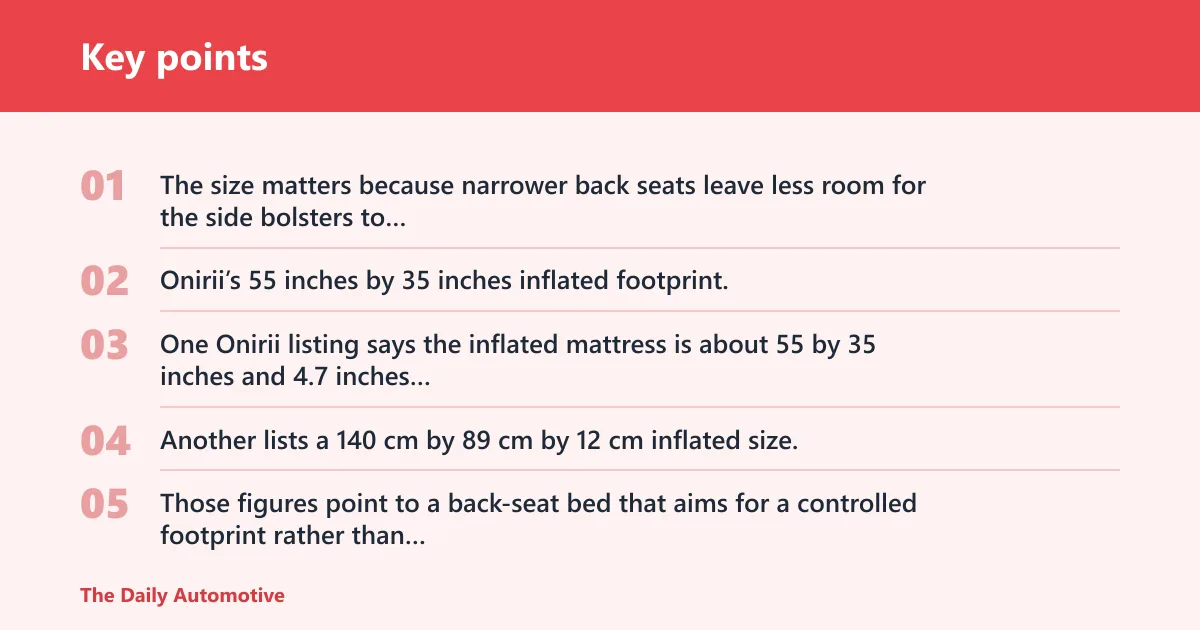
The size matters because narrower back seats leave less room for the side bolsters to flare out. Onirii’s 55 inches by 35 inches inflated footprint, together with the separate chamber style implied by its split design, makes it a more realistic match for compact sedans and many midsize SUVs than broader, lounge-style mattresses.
One Onirii listing says the inflated mattress is about 55 by 35 inches and 4.7 inches thick. Another lists a 140 cm by 89 cm by 12 cm inflated size. Those figures point to a back-seat bed that aims for a controlled footprint rather than a full cabin-spanning platform.
Split flocking and anti-drop details
Split flocking helps in two ways. It adds a grippier sleeping surface and makes the mattress less likely to skate across leather or vinyl, and it can also improve comfort by reducing the slick, plastic feel that often makes back-seat mattresses annoying after a few hours. The anti-drop feature matters because the biggest comfort failure is not softness; it is the middle section sinking where the seat gap opens.
Onirii is described as supporting up to 600 lbs in typical family use. That rating is useful only if the load is spread across the chambers instead of dumped into one middle section. Two adults can fit more comfortably than three, but only if shoulders and hips are not forced into the same narrow bridge.
Setup with the 12V car power pump
Onirii includes a 12-volt car power air pump, which plugs into the cigarette-lighter style outlet. That is the right setup for road-trip convenience because you do not need a separate power brick or wall outlet. It also shortens the time between unpacking and sleeping, and it avoids the dead-battery risk that comes with cordless pumps that have not been charged.
A common first-timer mistake is inflating the mattress fully before it is inside the car. That makes a narrow sedan far harder to manage. Inflate it after placement, then top off the chambers once the bridge is lined up with the seat gap.
Umbrauto backseat mattress
Umbrauto is the better pick when the rear cabin is generous and the buyer wants a more cushioned, family-friendly layout. Its wave ergonomic design, double-sided flocking or velvet-like surface, waterproof construction, and up to 600 lbs rating make it the stronger choice for wider vehicles and for people who expect two adults to use the mattress without the middle collapsing quickly.
Cordless or built-in pump variants
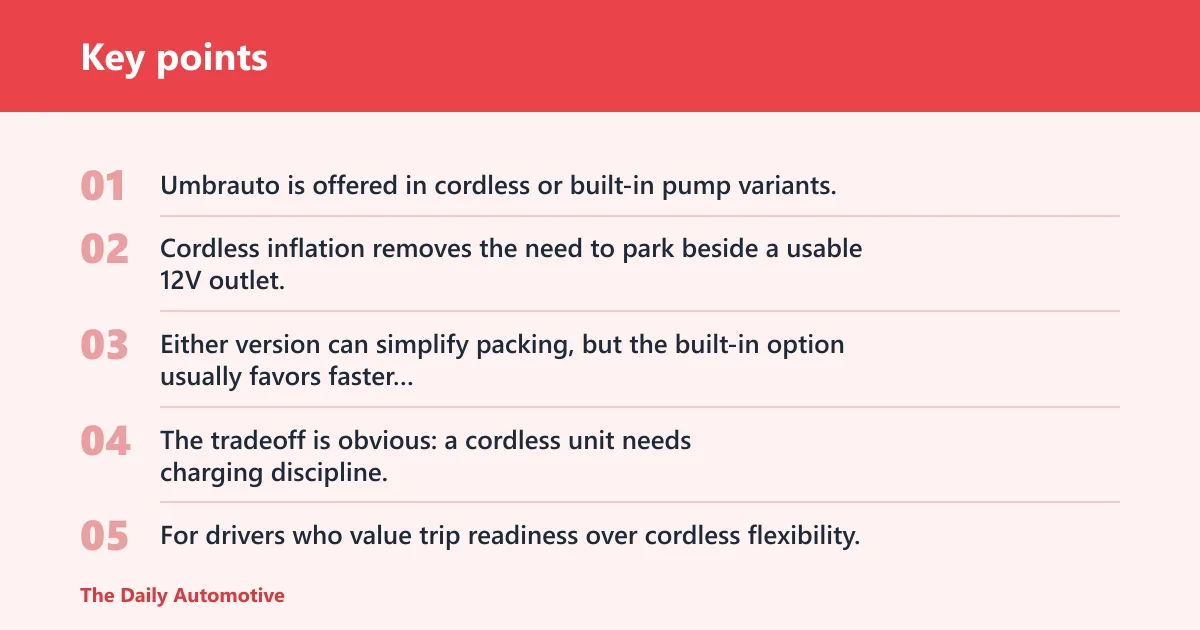
Umbrauto is offered in cordless or built-in pump variants, which changes setup in a practical way. Cordless inflation removes the need to park beside a usable 12V outlet, while a built-in pump reduces the number of loose accessories you have to store. Either version can simplify packing, but the built-in option usually favors faster repeat use on trips with multiple stops.
The tradeoff is obvious: a cordless unit needs charging discipline, while a 12V pump can be used whenever the vehicle has power. For drivers who value trip readiness over cordless flexibility, the plug-in route stays easier to manage.
Wave design and velvet-like surface
The wave ergonomic design is aimed at spreading body load more evenly across the mattress, which can reduce the harsh feel of a flat chamber edge. The double-sided flocking or velvet-like surface also gives a softer sleeping feel and more grip for sheets or sleeping bags. That said, plush surfaces collect dust and pet hair more readily, so cleanup can take a little more attention after a family stopover.
Capacity, waterproofing, and stability
Umbrauto is rated up to 600 pounds. That makes it a better candidate for two adults or for one adult plus luggage, cooler bags, or a pet. The capacity number still does not erase the need to spread weight carefully. If both sleepers sit toward one side, the far chamber can still lift and the center can dip.
Waterproof construction helps when shoes, damp clothes, or a wet dog get involved. It is not a substitute for a fitted sheet or a blanket, but it does make the mattress easier to wipe down after a trip.
How do you measure your car for a back seat air mattress?
Measure three things before buying: front-to-rear seat distance, back-seat width, and clearance around seat belts, airbags, and headrests. Those measurements tell you more than the model name on the door sticker. A mattress can be “universal” on paper and still fail because the bridge lands on a buckle or the side chambers press into the doors.
Front-to-rear seat distance
- Slide the front seats to the position you expect to use on the trip.
- Measure from the back of the front seat to the rear seat cushion edge or the footwell edge, depending on where the bridge section will land.
- Compare that span with the mattress length so the hips do not hang over the gap.
Back-seat width
Measure the usable width between the door-side bolsters, not the widest point between door panels. Many mattresses quote a broad width, but the real fit problem is whether the inflated side chambers press into the door trim or buckle against the center seat belt buckles. Narrow sedans usually expose this problem first.
Seat belts, airbags, and headrest clearance
Do not block a seat belt buckle, an airbag path, or a headrest anchor. Rear-seat airbags and side curtain systems need clear space. The mattress should be used only while the vehicle is parked, with the engine off and the vehicle secured. It is a sleeping surface, not a travel restraint.
What matters most before buying?
Start with fit control, then setup convenience, then extras. A 12V pump matters if you want quick inflation on the road. Flocking matters if you want better grip and a less slippery surface. Weight capacity matters only if the load is distributed across the chambers instead of concentrated at the center seam.
12V pump versus cordless setup
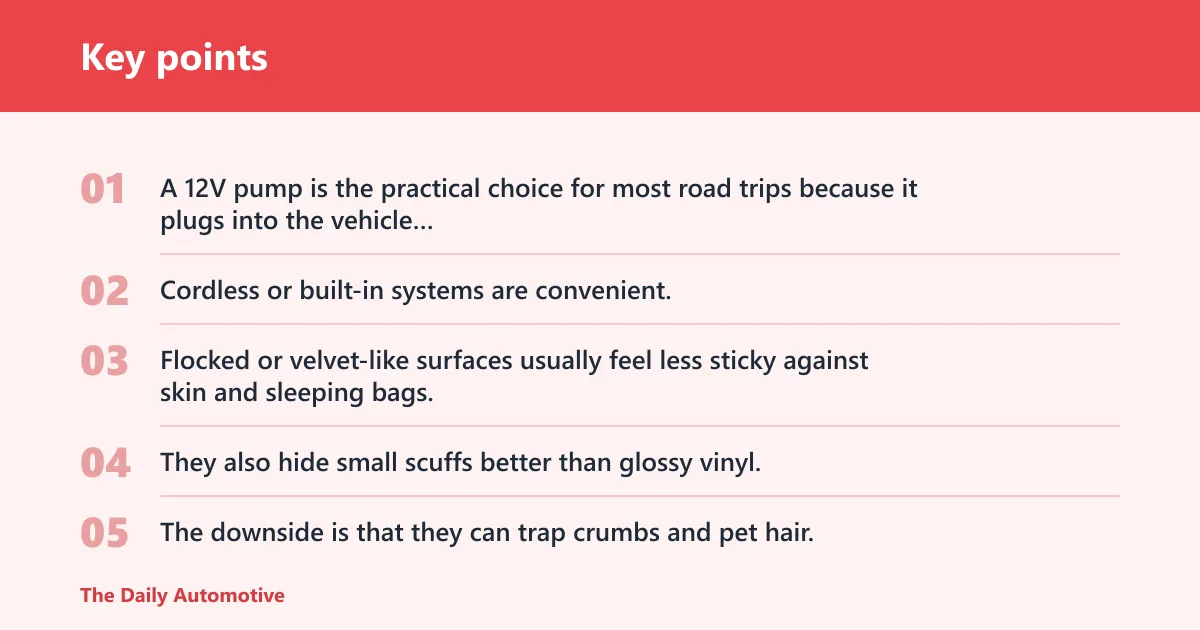
A 12V pump is the practical choice for most road trips because it plugs into the vehicle and avoids battery anxiety. It also makes deflation easier on departure. Cordless or built-in systems are convenient, but they only help if the battery is charged and the pump has enough output to fully fill the mattress without long wait times.
Flocking surface and cleanup
Flocked or velvet-like surfaces usually feel less sticky against skin and sleeping bags, and they help hold bedding in place. They also hide small scuffs better than glossy vinyl. The downside is that they can trap crumbs and pet hair, so a quick wipe-down and a handheld vacuum are useful if the mattress is used often.
Weight capacity and sag risk
Both featured mattresses are associated with a 600-pound rating, but that number does not solve seat-gap sag. Two adults can still create a low spot if both sit near the middle. If you expect 2 to 3 people, choose the model with the better chamber layout for your cabin, then distribute weight toward the outer sections.
Say your compact sedan has a tight rear bench and only a small gap behind the front seats. A wider mattress may fit on the spec sheet, but the center bridge can drop into the footwell and leave a cold pocket under the hips. In that case, the narrower Onirii-style layout is the safer bet.
Accessories that actually help
Useful extras are the ones that change ownership value: a carry bag, a patch kit, pillows, and a pump that matches the vehicle power source. One Onirii variant includes pillows, a pump, a neck pillow, a sleep mask, and earplugs. Those items matter because they reduce the need for separate packing and make a parked-night setup more complete.
Will it fit your vehicle type?
Sedans, SUVs, MPVs, and truck rear cabs do not all fail in the same way. Sedans usually lose to width and bridge sag. SUVs usually lose to seat-belt interference or a poor headrest match. Truck rear cabs often lose to short cabin depth and uneven floor shape. The mattress should be matched to the weakest point in the cabin, not the strongest.
Sedan limits
Compact sedans are the hardest fit. The cabin is narrow, the front seats may need to stay fairly upright, and the center gap can be unforgiving. Onirii is the better choice here because its smaller inflated size and anti-drop design are more likely to preserve a flat sleeping line across a tighter back seat.
SUV and MPV fit
Midsize SUVs and MPVs usually give you more rear width and a better landing zone for the bridge. That makes Onirii easier to fit and Umbrauto more comfortable if the cabin is wide enough. Full-size SUVs tilt the decision toward Umbrauto because the larger rear space can support the wave design without squeezing the outer chambers.
Truck rear cab limits
Pickup rear cabs are the least forgiving if you have a short crew cab or an uneven floor. Measure carefully before buying. If the rear seat is shallow, a mattress that is too long will force the bridge to fold or bow, and the sleeping surface will feel unstable by morning. Umbrauto has the edge only when the cab is genuinely large enough.
Suppose a full-size SUV has a wide rear bench but a folded center armrest that creates a bump. A mattress with a broader footprint may still work if the chambers sit cleanly on either side of that bump. In that case, Umbrauto’s larger-cabin bias is the better match.
Frequently asked questions
What is the best blow up mattress for the back seat of a car?
Onirii is the best overall pick for most cars because its 55 inches by 35 inches inflated size, split flocking design, and 12V car power air pump make it easier to fit and simpler to set up. It is the safer choice when the main concern is fit reliability rather than maximum cabin-spanning comfort.
How do I measure my car for a back seat air mattress?
Measure front-to-rear seat distance, rear-seat width, and the clearance around seat belts, airbags, and headrests. Those three numbers tell you whether the mattress can sit flat without blocking safety equipment or collapsing into the footwell gap. If one of those measurements is tight, favor the smaller, more controlled design.
Will a back seat air mattress fit a sedan or SUV?
Usually yes, but the fit is different. Sedans are more likely to struggle with width and seat-gap sag, while SUVs usually offer more usable space. Onirii is the better bet for sedans and many midsize SUVs, while Umbrauto makes more sense in larger SUVs with a broader rear cabin.
Are car air mattresses comfortable for long road trips?
They can be comfortable when the mattress matches the cabin and the bridge stays supported. Comfort fails when the middle sags, the mattress slides, or the surface feels too slick. Flocked or velvet-like finishes help, but the bigger factor is whether the mattress stays level while parked overnight.
How much weight can a back seat car mattress hold?
Both featured models are rated up to 600 lbs, which is generally enough for two adults and some gear. The useful question is not just the number; it is how the load is spread. Concentrating weight in the center can still create sag, even when the listed rating looks generous.
Do I need a 12V pump for a car air mattress?
A 12V pump is the easiest choice if you want quick inflation and deflation from the vehicle itself. It is especially helpful for road trips because you do not need a separate power source. Onirii includes one, and DikaSun is also listed with a 12V car pump, which shows how central that setup is for travel use.
Products related to this article
Sponsored / affiliate links. As an Amazon Associate I earn from qualifying purchases. I may earn additional commission from eligible campaigns.