Best Bicycle Racks for Cars for Two Bikes (2026): We Compared
For two bikes, choose a hitch-mounted rack if you need rear access and a trunk- or hatch-mounted rack if your car lacks a hitch; the best bicycle rack for cars is the one that matches your rear-door clearance and bike weight. Pick the wrong style and you’ll block the hatch, scrape paint, or exceed rack limits. This guide compares two-bike rack types by fit, access, load rating, and vehicle compatibility.
Quick comparison
| Product | Badge | Best for | Price | ||
|---|---|---|---|---|---|
 |
Allen Sports Deluxe 2-Bike Trunk Mount Rack, Model 102DN-R,Allen | Our pick | 2-bike · trunk mount · black | $58.00
Price as of 25 Oct 2026
|
View |
 |
Thule Outway Hanging 2-Bike Black, One Size | OutWay 2 BikeThule | Also great | 2-bike · hanging trunk rack · black | View | |
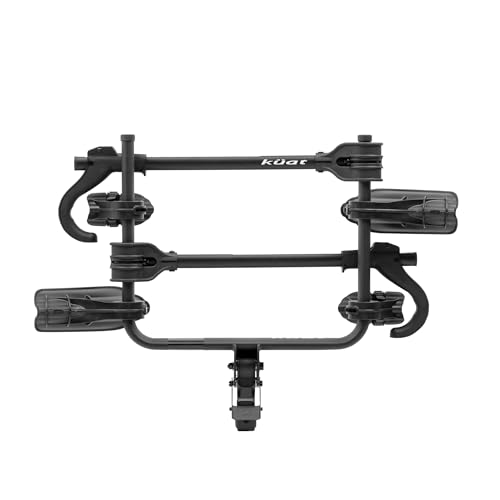 |
Kuat Transfer V2 2-Bike Hitch Bike Rack, 2" | LightweightKuat | Also great | $549.00
Price as of 25 Oct 2026
|
View | |
 |
Yakima FullSwing 4 Swing-Away Hitch Mount Bike Rack for 2Yakima | Also great | $698.95
Price as of 25 Oct 2026
|
View | |
 |
Hollywood Racks HR1400 Sport Rider SE 4-Bike Platform StyleHollywood Racks | Our pick | $899.77
Price as of 30 Oct 2026
|
View |
The split is straightforward: hitch racks suit rear access, steadier carrying, and heavier bikes. Trunk racks make sense when you want lower upfront cost and your vehicle shape works with straps.
For two-bike use, the right answer depends less on branding and more on whether your car has a hitch, a spoiler, and enough clearance at the rear.
Compared with a roof rack, both hitch and trunk styles are easier to live with for two bikes because you avoid lifting a bike overhead every time. Roof carry still matters if you want a clear hatch or trunk opening, but it changes the loading tradeoff and usually fits a different use case.
How we chose
Vehicle fit came first. For two-bike use, the deciding questions are whether your car has a 1.25-inch or 2-inch hitch receiver, whether the rear door opens cleanly, and whether the bike rack conflicts with a spoiler or hatch curve.
We then weighed bike type, access, and storage. A rack that fits a sedan may be a poor match for an e-bike pair, and a rack that folds flat may still be the wrong pick if it blocks the trunk you use every day.
Hidden costs matter too. Hitch installation, locks, anti-rattle or anti-wobble hardware, adapters, and add-on ramps can change the real price more than the sticker does.
Published product details and buyer feedback also matter here. Wirecutter says the Küat Sherpa 2.0 is its best option for carrying two bicycles, and it also lists the Saris Bones EX 3-Bike as its trunk-rack pick and the Yakima HighRoad as its roof-rack pick.
Two-bike decision matrix
Use this table to choose by fit first, then by bike type and access. If your car rules out a category, do not force it with straps, adapters, or optimistic assumptions.
| Vehicle fit | Bike type | Rear-access impact | Install difficulty | Storage size | Hidden costs |
|---|---|---|---|---|---|
| Hatch, SUV, trailer hitch owner with 1.25-inch or 2-inch receiver | Best for mixed-size pairs, standard bikes, and some heavier bikes | Tilts or swings away on many hitch racks; access depends on the model | Moderate; receiver fit and anti-wobble hardware matter | Medium to large; some fold, some stay bulky | Hitch install, locks, anti-rattle hardware, adapter if receiver size differs |
| Sedan, hatchback, minivan, some SUVs with rear geometry that accepts straps | Best for standard bikes; not ideal for heavy e-bikes | Can block the trunk or hatch and may need partial removal for access | Lower upfront complexity, but strap setup must be exact | Folds flat and stores smaller | Extra tie-downs, frame pads, paint protection, possible license-plate or light visibility issues |
| Vehicle with roof bars and enough overhead clearance | Best for one bike at a time, or if you want a clear rear opening | No trunk block; rear access stays open | Higher loading effort because bikes go overhead | Rack parts are often smaller, but use requires roof bars | Roof bars, possible fairing, higher fuel use, and a second rack if you need more than one bike |
Vehicle fit by body style
Hatchbacks and SUVs can work with either hitch or trunk racks, but the rear door shape changes the result. Sedans usually point you toward trunk racks if there is no hitch, while hitch racks are the cleaner choice once a receiver is installed.
Trailer-hitch owners should confirm that the receiver size matches the rack before buying. Most hitch racks are built around a 1.25-inch or 2-inch receiver, and a mismatch can mean an adapter, extra wobble, or a rack that simply does not fit securely.
Bike type and weight limits
Two standard bikes are the easiest case. Mixed-size pairs are still fine on many hitch racks, but carbon frames, kids’ bikes, and e-bikes change the decision because frame contact, wheel size, and weight per bike matter.
Use this basic boundary: if one bike is unusually heavy, a tray-style hitch rack is usually safer than a hanging rack, because wheel trays carry weight more predictably than frame hooks or straps. Fat tires and some e-bikes can also require special trays, wider cradles, or a separate ramp.
Rear-access impact
Access is where many buyers get burned. A hitch rack may tilt out of the way, but a trunk rack can still block the hatch or trunk when loaded, and some hanging racks need bikes removed before they fold down.
Suppose your hatchback is packed for a weekend trip and you need one bag from the cargo area. A tilting hitch rack can save time. A trunk rack may force you to unload or work around the bikes, which is the wrong tradeoff for frequent access.
Hidden costs to price
Do not price only the rack. Add hitch installation if your car lacks one, plus locks, anti-rattle or anti-wobble hardware, and any adapter needed to match a 1.25-inch or 2-inch receiver.
Trunk racks often look cheaper at checkout, but they can still require strap protectors, extra tie-downs, and more careful cleaning because paint rub is a real failure case. Roof systems can also add roof bars before the rack itself.
Küat Sherpa 2.0: best for lightweight two-bike hauling
The Sherpa 2.0 is the best all-around two-bike hitch rack here because it combines 40 pounds per bike capacity, tilt-away access, and lighter weight. The same source says it is the best option for carrying two bicycles, which makes it the strongest fit-first pick for drivers who want a clean two-bike solution.
This tray-style hitch rack is aimed at riders who want wheel trays instead of frame contact. That matters for mixed pairs and for bikes you do not want clamped by the frame, and the tilting design helps when you need to reach the hatch or trunk with bikes loaded.
The drawback is simple: it is not the cheapest path, and 40 pounds per bike is not the ceiling some heavier e-bikes need. If your bikes are heavy, unusually long, or likely to exceed that limit, this is the wrong rack to stretch.
Why it wins for most two-bike buyers
For many drivers, the Sherpa 2.0 lands in the middle of the useful range: light enough to handle without drama, but more stable and access-friendly than a basic hanging rack. It also avoids the access penalty of a trunk rack that has to live on the back of the car.
That balance matters when the rack stays on the vehicle for weeks at a time. A smaller footprint and tilt-away behavior are more useful than brand prestige when the real goal is quick, repeatable two-bike transport.
Fit, tilt, and weight limits
Start with the hitch receiver and then check per-bike weight. The Sherpa 2.0 works as a 2-bike hitch rack, but the 40 pounds per bike figure is the number that should govern your decision, not the assumption that every bike fits because the rack has two trays.
Anti-rattle or anti-wobble hardware also matters here. A well-fitted hitch rack should sit tight in the receiver, because play in the mount creates sway, noise, and extra stress on the rack and bikes.
What you give up versus cheaper racks
You give up some price simplicity. A cheaper trunk rack can cost less up front, and a hanging hitch rack can fold smaller, but neither automatically gives you the same load-style confidence or the same rear-access behavior.
If your bikes are basic, light, and you rarely open the rear cargo area, a less expensive option may be enough. If you care about repeated access and a cleaner carry path, the Sherpa is the better long-term fit.
Küat Beta: best for simple hitch storage
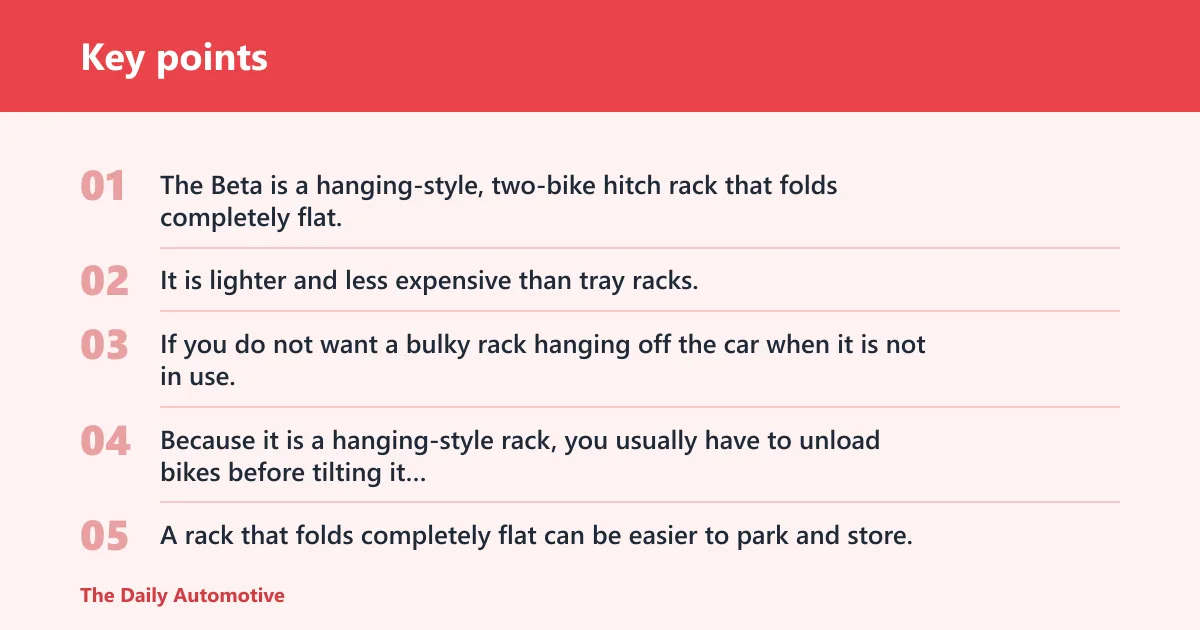
The Beta is a hanging-style, two-bike hitch rack that folds completely flat, so it makes sense when storage and purchase price matter more than tilt access. It is lighter and less expensive than tray racks, and that is exactly why some buyers prefer it.
Its big advantage is the folded profile. If you do not want a bulky rack hanging off the car when it is not in use, this design is easier to store and often easier to live with in a tight garage or apartment setup.
The tradeoff is access. Because it is a hanging-style rack, you usually have to unload bikes before tilting it down, which weakens the case for drivers who need the cargo area often.
Why its folding design matters
A rack that folds completely flat can be easier to park and store. That is useful if you keep the rack on the vehicle part-time and want less visual bulk when the bikes are off.
It also tends to make the Beta feel like a simpler ownership choice. Less storage hassle can matter more than a slightly more capable tilt-away system if your use case is short, occasional, and light.
When the lower price makes sense
The Beta fits drivers who have two lighter bikes and want a hitch solution without paying for a premium tray rack. It is also a reasonable fit if you do not need to load and unload heavy bikes or access the rear cargo area with bikes still mounted.
Based on the published product details and buyer feedback, the value case is strongest when the bikes are standard, the trips are short, and the hitch is already installed.
When to skip it
Skip the Beta if your bikes are heavy, if you need frequent hatch access, or if you want the simplest path for mixed-size bikes. Hanging racks are more sensitive to frame shape, sway, and bike-to-bike contact than tray racks.
It is also the wrong answer for many e-bikes. Weight, frame geometry, and rear access all push harder toward a tray-style hitch rack or a different transport method altogether.
Thule Epos: best for heavier two-bike loads
The Epos is the heavier-duty two-bike option in this comparison because Wirecutter says it can hold two bikes up to 75 pounds each. That kind of capacity changes the decision if your pair includes an e-bike or another heavy frame that would push past lighter rack limits.
Its frame-clamp loading and available foldable ramp make it a better match for bikes that are awkward to lift. The ramp is sold separately, so the real cost can be higher than the first price suggests.
The main drawback is cost and complexity. It is a more serious rack than most two-bike buyers need, and the add-on ramp means you should expect extra ownership cost before you treat it as the full answer.
Why the capacity matters
A 75-pound-per-bike rating is not a casual detail. It is the line that separates a normal two-bike carry from a setup that can accommodate heavier electric bikes or loaded frames without forcing a bad compromise.
That makes the Epos the better fit when the bikes, not the rack, set the limit. If your pair is standard and light, the extra capability may go unused.
What the ramp changes
The foldable ramp, available separately, reduces lifting strain. That matters when a bike is too heavy to hoist confidently onto a high tray or when the rear of the vehicle sits tall.
Still, it adds another purchase and another part to store. If you do not need the ramp, the rack may feel more expensive than the job requires.
Who should consider it?
Choose the Epos if you need a two-bike rack that can handle heavier bikes without pretending a lighter model will be enough. It also makes sense if frame-clamp loading is acceptable and you value capacity over budget.
If your bikes are carbon and light, or if you only want a simple two-bike commuter setup, the Epos is more rack than you need.
Saris Bones EX 3-Bike: best for trunk-rack flexibility
The Bones EX 3-Bike is Wirecutter’s trunk-rack pick, and that tells you who it serves: drivers who want a trunk-mounted solution that stays light, relatively affordable, and compatible with vehicle access needs. It is designed for vehicle access and spoiler clearance, which is the part trunk-rack buyers should care about most.
As a trunk rack, it fits many sedans, hatchbacks, minivans, and some SUVs, and it folds flat for storage. The tradeoff is that trunk racks depend heavily on trunk lid and spoiler geometry, so fit is more vehicle-specific than many shoppers expect.
The drawback is that trunk racks can interfere with hatch access and can rub paint if straps or contact points are not positioned carefully. They are useful, but they are not universal.
Why trunk-rack fit is so vehicle-specific
Two cars that look similar can react very differently to the same trunk rack. Rear glass angle, spoiler shape, wiper placement, and hatch curvature all affect whether the rack sits level or fights the bodywork.
That is why spoiler clearance matters as much as bike count. If the rack touches the spoiler or blocks the hatch seal, the fit is wrong even if the straps feel tight.
When a trunk rack still makes sense
A trunk rack makes sense when you need a lower-cost path, you do not have a hitch, and your rear geometry accepts straps cleanly. It also works well for light to moderate bikes when you can live without a fully open hatch while loaded.
For occasional use, the Bones EX 3-Bike can be the practical answer. For frequent hauling or heavier bikes, a hitch rack is usually the better long-term choice.
What to watch
Paint rub is the common failure case. So is sway, especially if the straps are not set evenly or the frame contact points shift during a drive.
Before buying, check the trunk lip, spoiler, and rear glass angle. If any of those areas look cramped, the rack may technically fit but still be annoying every time you load or unload it.
Yakima HighRoad: best for roof carry and open rear access
The HighRoad is Wirecutter’s roof-rack pick, and roof carry solves one specific problem very well: it keeps the rear cargo area clear. If you need full trunk or hatch access and have roof bars already installed, this style avoids the rear-door tradeoff entirely.
The downside is obvious. You have to lift the bike overhead, which is harder than rolling it onto a hitch rack or tightening straps on a trunk rack. Roof systems also make more sense for one bike at a time than for most two-bike errands.
It is the wrong choice if your main goal is the easiest two-bike daily setup. It is the right choice if rear access matters more than loading height.
When roof carry fits the problem
Roof racks fit drivers who already have bars and want the hatch or trunk unobstructed. That is useful for travel, gear-heavy weekends, and vehicles where rear access matters more than a low loading height.
If you rarely want a second bike mounted, the roof route can still be sensible. If you want two bikes on and off fast, it usually loses to a hitch rack.
What it costs you in practice
Roof carry adds overhead lifting, possible fuel penalty, and another set of fit checks for crossbars. That makes it a good access solution, not a simple convenience solution.
It also changes the use pattern. A bike that is easy to mount at hip height becomes less pleasant once you have to raise it above the roofline each time.
Should you choose a hitch rack or trunk rack?
Choose a hitch rack if you want better rear access, better stability, and a cleaner path for heavier or mixed-size bikes. Choose a trunk rack if your vehicle lacks a hitch and its hatch or trunk geometry works with straps, because the best answer is the one that fits the car first and the bike second.
What fits a sedan, hatch, minivan, or SUV
Sedans often point toward trunk racks unless a hitch is already installed. Hatchbacks and minivans can take either style, while SUVs may work with both, but the rear-door shape and spoiler placement decide whether the trunk rack behaves well.
If your vehicle already has a hitch receiver, the hitch option is usually the simpler long-term answer for two bikes.
Spoiler clearance and hatch access
Spoiler clearance is not optional. If a trunk rack presses on a spoiler or blocks the hatch from opening fully, the fit is poor even if the rack seems secure at a stoplight.
Hitch racks handle this better because many tilt away from the vehicle. That tilt feature is one of the main reasons a hitch rack often beats a trunk rack for frequent use.
Choose Sherpa 2.0 if… / Choose Beta if…
Choose the Sherpa 2.0 if you want the cleaner all-around answer for two bikes, especially if rear access matters and your bikes stay within 40 pounds each. Its tray style, tilt-away access, and lighter construction make it the most balanced hitch pick in this comparison.
Choose the Beta if storage size and price matter more than tilt access, and your bikes are light enough that a hanging-style rack makes sense. It folds completely flat, so it is easier to stash, but you give up the stronger rear-access story of the Sherpa.
Choose a trunk rack instead if your car does not have a hitch and your trunk or hatch geometry clears the straps cleanly. Choose a roof rack instead if rear access is more important than lifting the bike overhead, and you already have roof bars.
Say your hatchback can carry three bikes, but the rack still needs to fit your trunk opening, rear wiper, and license plate without blocking them. A two-bike rack can still be wrong if one bike is an e-bike, the hatch cannot open, or the receiver size does not match the rack.
Which one should you buy?
Buy the Sherpa 2.0 if you want the best all-around two-bike answer and your bikes fit its 40 pounds per bike limit. It is the strongest choice for drivers who want tilt access, tray-style stability, and a simpler long-term hitch setup.
Buy the Beta if you want a cheaper hitch rack and you care more about folded storage than rear access. It is the better fit for lighter bikes and occasional use, not for heavy bikes or frequent cargo-area access.
Choose the Saris Bones EX 3-Bike if your vehicle has no hitch and its rear geometry works for a trunk rack. Choose the Yakima HighRoad if rear access matters most and you already have roof bars.
If you are shopping around the edges of this category, note the other published picks: Wirecutter’s Inno Velo Gripper is its pickup-bed carrier pick, CarAssists lists the Kuat Transfer V2 as its best overall bike rack, and it says the Thule T2 Pro XTR supports 60 pounds per bike and expands to four bikes with an add-on.
Frequently asked questions
What bike rack will fit my car
The rack that fits your car depends on body style, rear-door geometry, and whether you already have a hitch receiver. Sedans often favor trunk racks, hatchbacks and SUVs can take either style, and hitch racks usually win once you have a 1.25-inch or 2-inch receiver and enough clearance at the rear.
What is the best bicycle rack for a car?
The best bicycle rack for a car is the one that matches your vehicle fit and bike weight first. For two bikes, a hitch rack is usually the strongest all-around answer, and the Küat Sherpa 2.0 is the best overall choice here because it balances 40 pounds per bike capacity with tilt-away access.
Should I get a hitch rack or trunk rack?
Get a hitch rack if you want better rear access, stronger stability, and a cleaner fit for heavier or mixed-size bikes. Get a trunk rack if your car lacks a hitch and your trunk or hatch geometry works with straps, because trunk racks are cheaper and easier to store but more vehicle-specific.
Will a bike rack block my trunk or hatch?
It can. Trunk racks are the most likely to block rear access, and some hitch racks will still limit access unless they tilt away from the vehicle. If you need the cargo area often, rear access should be part of the buying decision, not an afterthought.
Can I use a bike rack for two bikes on an SUV?
Yes, but the best style depends on the SUV’s rear shape and whether it has a hitch. Many SUVs work well with hitch racks, while trunk racks depend heavily on spoiler clearance and hatch geometry. The vehicle may be capable even if the rack model is not.
Can a bike rack carry an e-bike?
Some can, but not all two-bike racks are suitable. E-bikes are heavier than standard bikes, so you need to check per-bike weight limits carefully. A tray-style hitch rack is usually the safer direction, and heavier models such as the Thule Epos are built for that job.
Products related to this article
Sponsored / affiliate links. As an Amazon Associate I earn from qualifying purchases. I may earn additional commission from eligible campaigns.