LED Light Accessories for Cars: Interior Kits and Legal Tips
Choose a dimmable interior LED kit with low glare, concealed wiring, and no colors or modes visible from outside the car, especially red or blue flashing effects. Bad fitment can mean glare, blown fuses, inspection failure, or a traffic stop. This guide covers how to pick LED light accessories for cars, install them cleanly, and keep the setup legal on public roads.
Must-have
The three must-haves are a kit that fits your vehicle or socket size, a controller that matches how you want to use the lights, and the wiring and mounting parts needed to install them without loose leads or visible hot spots. Start with fitment, then color control, then the hardware that makes the job reliable.
 As an Amazon Associate we earn from qualifying purchases. Prices and availability are accurate as of the date shown and are subject to change.

Govee Car LED Lights
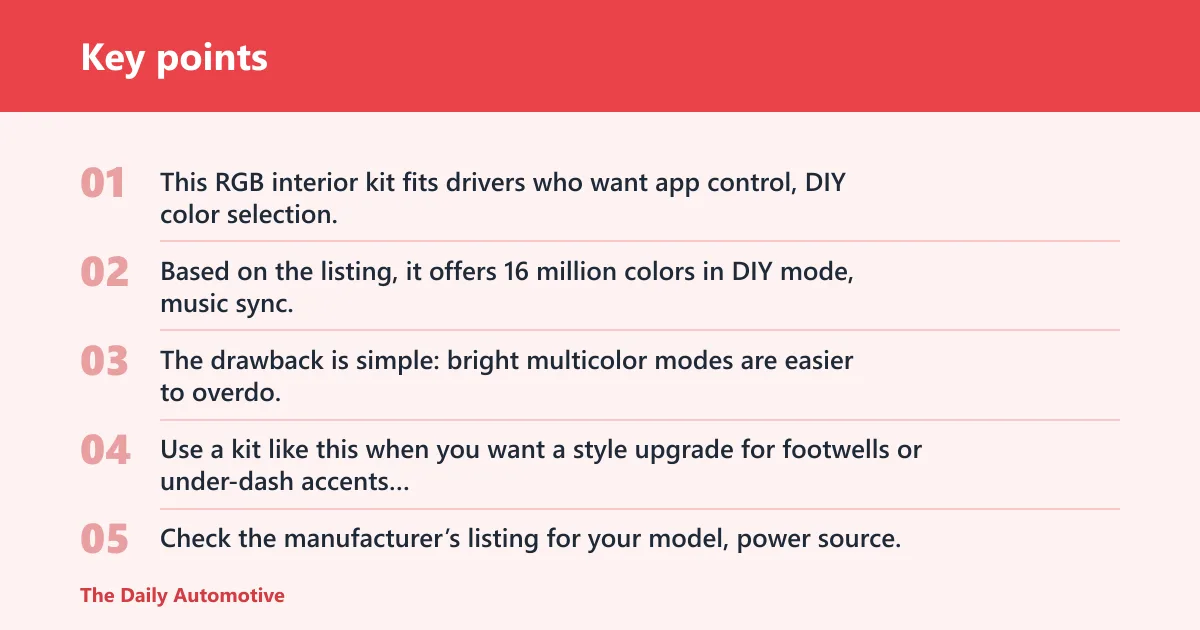
This RGB interior kit fits drivers who want app control, DIY color selection, and a slim two-line layout for cabin accent lighting. Based on the listing, it offers 16 million colors in DIY mode, music sync, and app control for color and brightness. The drawback is simple: bright multicolor modes are easier to overdo, so keep them dim and out of the driver’s direct view.
Use a kit like this when you want a style upgrade for footwells or under-dash accents and you can manage brightness carefully. Check the manufacturer’s listing for your model, power source, and whether the cable path can stay hidden behind trim panels.
As an Amazon Associate we earn from qualifying purchases. Prices and availability are accurate as of the date shown and are subject to change.

Nilight 40Leds van interior light kit
This white ceiling kit is aimed at broad cabin coverage rather than color effects. The listing says it includes ten light modules, IP67 waterproof lamp beads, adhesive tape, screws, and extension wire. The drawback is that a ceiling-focused kit can be too bright or too task-oriented for a soft ambient look, and adhesive mounting still depends on surface prep.
It makes sense for work vehicles, vans, trucks, and cargo areas where usable light matters more than color control. If you are adding it to a passenger cabin, verify the module count, wire routing, and switch location before you buy.
Which interior LEDs fit your car?
Interior LEDs fit best when you match the vehicle, the socket, and the install location before you shop. Vehicle-specific kits are the safest starting point because they are built around a known cabin shape, while universal strips and bulbs require more checking of length, base type, and mounting space.
Diode Dynamics offers pre-assembled interior LED bulb replacement kits that are custom-designed for certain vehicles. The company names the Jeep JK Wrangler and Ford Mustang as popular fitment examples, which is the kind of model-specific detail you want before ordering. If your car is not listed, stop and verify the exact bulb base, connector style, and trim compatibility.
For bulb swaps, common interior bases include T5, T10, T15, and festoon variants. Those sizes are not interchangeable without checking the socket and retainer shape. A bulb that lights up in the wrong base can still sit loosely, flicker, or fail to clear the lens.
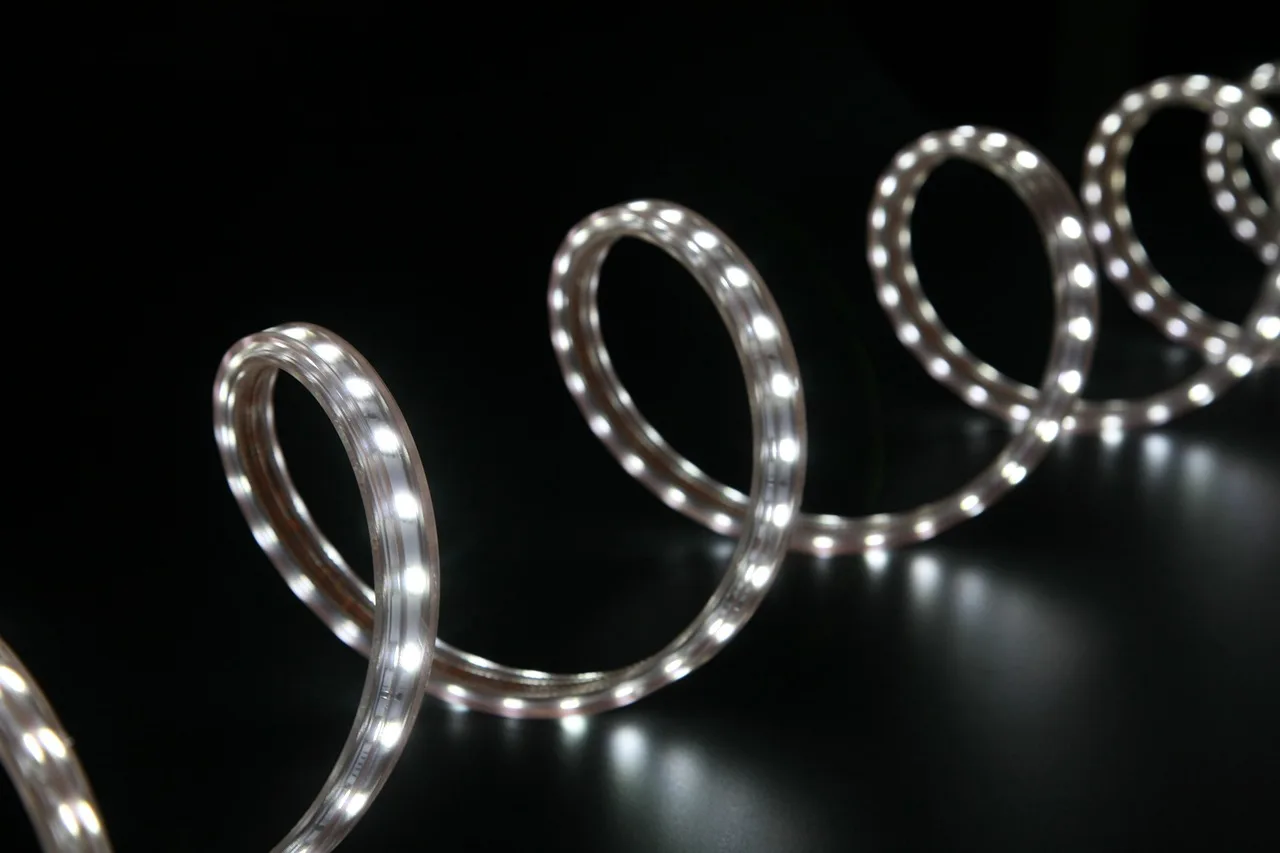
Strip kits are more flexible. Flexible strips can follow curves under the dash or along a footwell edge, while rigid tubes or bars give a straighter light pattern in cargo zones or ceiling runs. The right choice depends on whether the area needs a hidden glow or a direct wash of light.
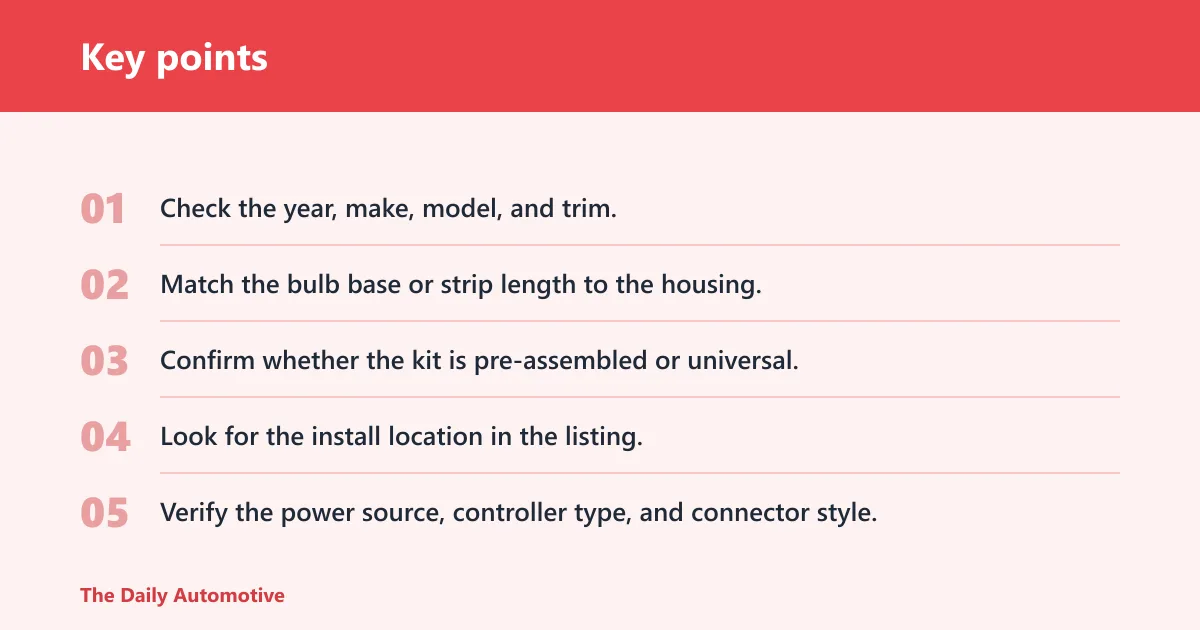
- Check the year, make, model, and trim.
- Match the bulb base or strip length to the housing.
- Confirm whether the kit is pre-assembled or universal.
- Look for the install location in the listing.
- Verify the power source, controller type, and connector style.
Say your truck uses a festoon dome bulb but the listing only mentions T10 replacements. That is not a small mismatch. The bulb may not lock in, and the lens can overheat or sit crooked if you force the wrong base.
Are interior LED strips legal?
Interior LED strips can be legal, but legality depends on color, placement, and whether the light is visible from outside the vehicle. Interior accent lighting is usually treated differently from exterior underglow, and that difference matters. The safest approach is to keep cabin light low, fixed, and aimed away from the windshield and side glass.
Exterior underglow carries higher risk because it is visible from the road and may trigger color or flashing restrictions in your jurisdiction. Interior strips under the dash or seats are not automatically legal just because they are inside the cabin. If the glow spills onto the pavement, or if it flashes blue or red, your risk rises quickly.
Rules vary by state and local jurisdiction, so there is no single nationwide answer. You need to check your state vehicle code, inspection rules, and any local restrictions on red, blue, flashing, or moving lights. Keep dash and windshield items out of airbag zones and the driver’s view, and check local laws before installing lights that can be seen from outside.
The practical rule is simple: treat cabin lighting as an accent, not a display. A dim footwell strip hidden behind trim is usually a different compliance question than neon underglow visible from the curb.
LED accessory matrix
This matrix compares common accessory types by risk, install complexity, and the questions you should answer before you buy. Use it as a decision filter, not a styling guide. If the answer to any legality question is unclear, assume the setup needs more checking.
| Accessory type | Risk level | Typical install complexity | Questions to verify before buying |
|---|---|---|---|
| Footwell strips | Low to moderate | Moderate | Will the strips stay hidden from the driver’s direct view? Can the adhesive handle heat and dust? Does the controller allow dimming? |
| Under-dash kits | Low to moderate | Moderate | Is the mounting point clear of pedals, wiring looms, and airbags? Can you route wires without visible slack? Is the kit approved for interior use only? |
| Cargo lights | Low | Low to moderate | Do you need white task lighting or ambient lighting? Is the lens cover deep enough to hide the strip? Is the switch easy to reach? |
| RGB controllers | Moderate | Low | Does the controller support single-color operation? Can it default to a legal dim setting? Does it use a remote or smartphone control? |
| Exterior underglow | High | Moderate to high | Is it legal in your state? Are certain colors banned? Can it be switched off for road use? Does the placement expose it to road debris? |
Picture a compact car with a bright blue strip mounted low under the dash. If it reflects in the windshield at night, that is not a styling detail anymore. It becomes a visibility and distraction problem, and it may be a compliance problem too.
What should you buy first?
Start with the lighting mode you actually want every day. For most drivers, that means a single-color or very restrained interior kit with a dimmer. RGB makes sense when you want color changes or show-mode options, but it adds more chances to create glare or a road-legal problem.
Boogey Lights says its car kits can be configured for Ford, Dodge, Chevy, Honda, Toyota, and Acura. It also says its multi-color kits can display 7 color options with a wireless remote, and its Bluetooth smartphone controller offers a very large range of color combinations. That range is useful, but it also means you need to decide whether you want novelty or restraint before you order.
As an Amazon Associate we earn from qualifying purchases. Prices and availability are accurate as of the date shown and are subject to change.

OPT7 Aura RGB interior car lights
This four-piece strip kit is aimed at drivers who want flexible strips, remote control, and several lighting effects in one package. The listing says it offers nine color modes and six light shows, and it includes installation steps for surface prep. The drawback is that RGB and sound-sync features can tempt people into settings that are too bright or too distracting for everyday driving.
Flexible strips are useful on curved surfaces and under seats, but only if the surface is clean and the wire path is planned before installation. If you want a show-style cabin that still stays manageable on the street, this kind of kit deserves a look.
As an Amazon Associate we earn from qualifying purchases. Prices and availability are accurate as of the date shown and are subject to change.
ALOVECO PWM dimmer switch
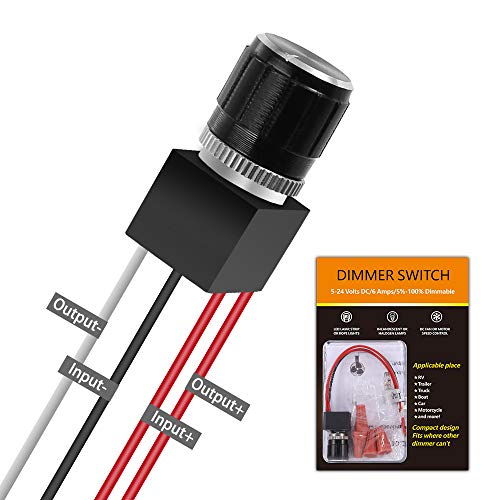
This dimmer is for drivers who want more control over LED brightness rather than more colors. The listing says it is a 12V PWM dimmer, works from 5-24V, and uses full-range dimming with no flicker. The drawback is that a dimmer solves brightness control, not fitment or legality by itself, so you still need the right strips, bulbs, and mounting plan.
It fits the accessory category well because dimming is often the difference between a legal cabin glow and a distraction. For a work truck or camper, a dimmer can be the part that makes the whole setup usable.
Consumables and spares
Small parts are where many installs go wrong. Tape, connectors, retainers, and wire ends are not glamorous, but they determine whether the lights stay put and keep working after heat cycles and vibration. Treat these parts as part of the install cost, not afterthoughts.
Wiring and adapters may include flasher parts, relay wiring, bulb retainers, connectors, and general electrical supplies. Mounting hardware can include brackets, cases, double-sided tape, and zip ties. Those pieces matter because adhesive alone can fail on dusty trim, and loose wiring can chatter, rub, or show through gaps.
Before final assembly, make sure every connection is accessible for future repairs. A neat install is one you can service without tearing the cabin apart.
Accessory checklist
- Double-sided tape for clean, flat mounting points
- Zip ties for wire management behind trim panels
- Mounting clips or brackets for parts that need extra support
- Connectors sized to the kit’s harness or plug style
- Bulb retainers that match the socket and lens shape
- Extension wire for longer cabin runs
- Fuse protection and relay parts where the kit calls for them
A common first-timer mistake is sticking an LED strip to a warm, dusty surface and calling it done. The strip works for a week, then the tape lifts at one end, the wire sags, and the light starts flashing because the connection is strained.
Budget setups
If you want the cheapest workable setup, buy only the parts needed for one clean function. A low-cost bulb swap is best when you already have the right socket size. A basic strip install is better when you need ambient light in a footwell or cargo area and can keep the run short. Cheap is fine only if the fit, the color, and the mounting are all confirmed first.
| Setup | Best for | What to buy | What to confirm before purchase |
|---|---|---|---|
| Starter | Simple bulb swap in a matched socket | LED replacement bulbs in the correct base size | Match T5, T10, T15, or festoon to the vehicle’s socket |
| Mid | Footwell or under-dash accent lighting | Flexible strip kit plus tape and wire management parts | Check strip length, dimming, and hidden routing space |
| Serious | Cabin-wide ambient lighting with control | Vehicle-specific kit, controller, dimmer, connectors, and mounting hardware | Verify model fitment, controller type, and legal color modes |
Frequently asked questions
What LED light accessories are best for car interiors?
The best choice depends on the job. For the cleanest result, start with a vehicle-specific interior kit or a bulb replacement kit that matches your socket size. If you want soft cabin accent lighting, choose a dimmable strip with hidden wiring and a controller that can stay on a low setting.
Are interior LED strip lights legal in cars?
Sometimes, but not automatically. Interior strips are usually treated differently from exterior underglow, yet color, brightness, and visibility from outside still matter. Keep the light out of the driver’s direct view, avoid red or blue flashing effects, and check your state and local rules before driving on public roads.
Can I install LED ambient lighting under the dash or seats?
Yes, if the kit is made for interior use and the mounting point is clear of pedals, airbags, and moving parts. Under-dash and under-seat locations are common, but they need careful wire routing and dimming. Use concealed wiring and make sure the light does not reflect into the windshield.
What’s the difference between single-color and RGB car LED kits?
Single-color kits are simpler and usually easier to keep subtle. RGB kits can change colors and may include presets, remotes, or smartphone control. That flexibility is useful, but it also makes it easier to choose a setting that is too bright or not legal for road use.
How bright should interior car LED lights be?
Bright enough to see controls or cargo, but not so bright that they create glare or reflect in glass. There is no universal legal brightness number for every vehicle and state, so the practical target is low, even illumination. Dimming is valuable because it lets you keep the lights useful without turning the cabin into a distraction.
Will LED interior lights drain my car battery?
They can if they are left on with the engine off for too long, but the real risk depends on the kit’s power draw and how often you use it. A smart setup uses switched power, a proper fuse, and a controller that turns off cleanly when the vehicle is parked.
Products related to this article
Sponsored / affiliate links. As an Amazon Associate I earn from qualifying purchases. I may earn additional commission from eligible campaigns.