Mothers Back-to-Black Trim Restorer Review
Mothers Back-to-Black is a cosmetic trim dressing, not a permanent restorer. With proper prep, it can darken faded black plastic for weeks to a few months, but chalky trim often fades back quickly. Skip cleaning and degreasing, and you waste money, leave streaks, or trap residue that makes the trim look blotchy. This guide explains what it can do, how prep can change the result, and the failure modes that may decide whether it is worth buying.
Verdict on Mothers Back-to-Black
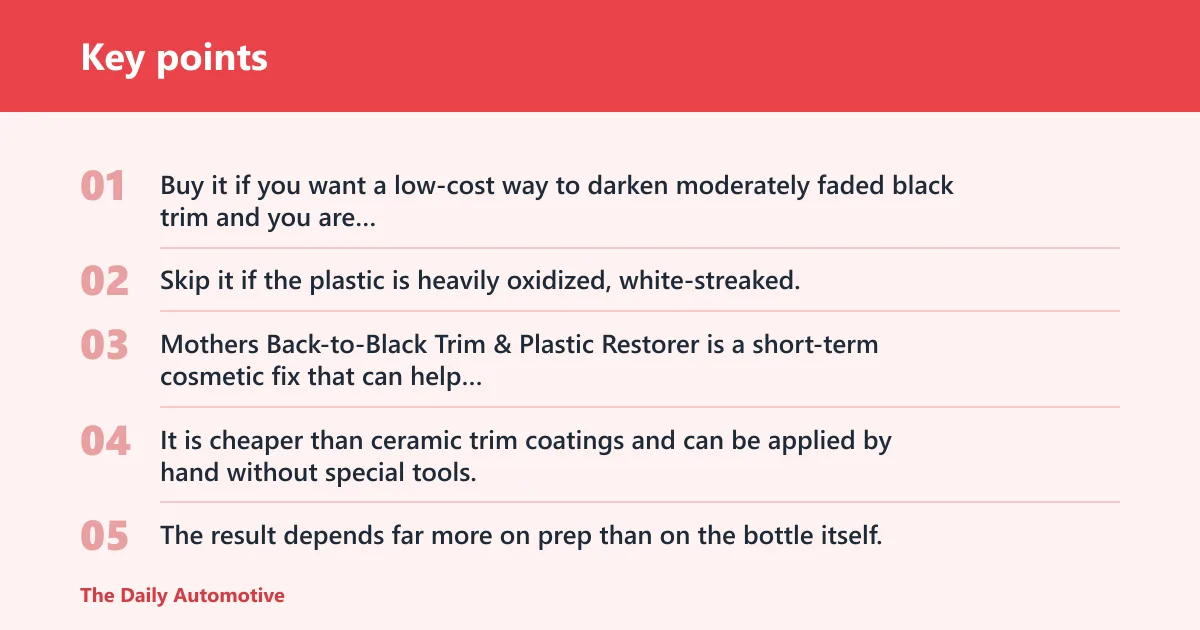
Buy it if you want a low-cost way to darken moderately faded black trim and you are willing to prep the surface first. Skip it if the plastic is heavily oxidized, white-streaked, or rough and chalky enough that you want a longer-term fix than a dressing can give.
Bottom line for faded black trim
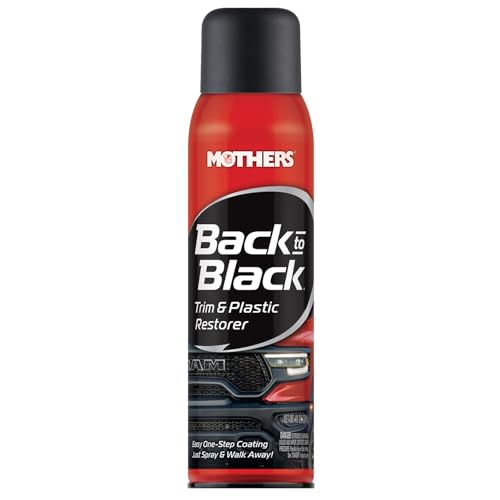
Mothers Back-to-Black Trim & Plastic Restorer is a short-term cosmetic fix that can help black exterior plastic, black rubber, vinyl, and some interior plastics look darker again.
The appeal is simple. It is cheaper than ceramic trim coatings and can be applied by hand without special tools. The result depends far more on prep than on the bottle itself.
Where it makes sense to buy it
It makes sense when the trim is gray, dull, and sun-faded, but still structurally sound. A moderately faded cowl or textured bumper trim can respond well if you wash, dry, and degrease first.
Where you should spend more
If you want longer wear, better rain resistance, or less frequent reapplication, a ceramic trim coating is the better choice. If the trim is severely oxidized, replacing the part or moving to a coating makes more sense than trying to “restore” a surface that has already broken down too far.
Pros and cons
Pros
- Low entry price for a trim refresh.
- Works on rubber and vinyl, and it can restore black interior plastics too.
- Hand application is simple with a microfiber cloth or applicator pad.
- The aerosol version gives a spray-and-wipe option for larger or textured areas.
Cons
- It is not a lasting fix for heavily oxidized trim.
- Overapplication can leave a greasy film, streaks, or white haze.
- Dirty or wax-contaminated trim can repel the product unevenly.
- Coverage and longevity vary a lot by surface texture and sun exposure.
- It should generally not be used on paintwork, auto glass, headlights, mirrors, screens, fabric, carpet, or seatbelts.
Who is it for?
This is for DIY drivers who want a cheap trim refresh on black exterior plastic, black rubber, black interior plastics, vinyl, and cowl trim. It is also a fit if you are trying to hide light fading before a sale, detail a daily driver, or clean up mixed plastic and rubber trim without moving up to a coating.
Best use cases for cheap trim refreshes
Think of it as a reasonable choice for moderately faded parts that still hold texture. A sun-dulled mirror housing or faded cowl trim can often be brought back to a darker look for a limited time.
Suppose a hatchback has gray-black bumper trim that still feels textured but looks dusty even after washing. Back-to-Black can improve the color quickly, and the spray version can help cover larger sections evenly if you keep the coat thin.
When a coated or replacement fix makes more sense
If the trim has turned patchy, powdery, or rough, the surface may be too far gone for a dressing to hold. In that case, a coated approach or part replacement makes more sense than chasing a finish that may fade again within a few weeks.
What does it fix?
It is best on moderately faded black plastic, rubber, and vinyl that has gone gray or chalky from UV damage. It can also help interior black plastics and some exterior touchpoints, but it is not a rescue product for deep oxidation, cracked surfaces, or trim that has already lost its uniform color layer.
Moderately faded versus heavily oxidized trim
Moderately faded trim usually still has some uniform texture and only looks washed out. That is the sweet spot. Heavily oxidized trim often looks patchy, dry, or chalky white in spots, and that is where a dressing tends to fade fast or leave a blotchy finish.
A common first-timer mistake is treating sun-baked trim like it is merely dirty. If the surface turns the applicator pad gray on contact, or if the plastic looks rough and powdery after washing, the product may darken it briefly but will not rebuild the damaged layer.
Textured plastic, smooth plastic, rubber, and vinyl
Textured plastic usually gives the most forgiving result because the texture helps hide a thin, even coat. Smooth plastic can look good too, but it is less forgiving. Rubber and vinyl are listed as compatible, and those surfaces often need lighter application to avoid a greasy sheen.
Interior pieces and exterior touchpoints
The listing says it can restore black interior plastics, so door-top trim or lower-kick trim can be fair targets if they are cleaned first. On the outside, it is commonly used on bumpers, side mirrors, cowl trim, and grilles.
Trim restorer failure checklist
When Back-to-Black disappoints, the problem is usually the surface, not the bottle. Use this checklist to match the symptom to the likely cause and decide whether the product still fits the job.
| Symptom | Likely cause | Fix | Is Mothers Back-to-Black still a good choice? |
|---|---|---|---|
| White haze after drying | Too much product, applied on a warm panel, or residue left in texture | Wipe off excess with a clean microfiber towel and reapply a thinner coat on cool trim | Yes, if the trim is only mildly faded and the haze came from overapplication |
| Streaking or blotches | Uneven prep, sealant or wax residue, or dragging the product across dirty trim | Wash, dry, wipe with isopropyl alcohol if needed, then reapply in small sections | Yes, if contamination is the issue; no, if the trim is badly oxidized |
| Greasy residue | Heavy coat, repeated layering without buffing, or use on smooth plastic with too much product | Buff the surface with a clean microfiber towel and reduce the amount used per panel | Yes, but only with tighter application control |
| Rapid fading after rain or sun | Heavy UV exposure, weak prep, or a trim surface that is too oxidized to hold the dressing | Reprep the surface and expect shorter life; consider a coating or replacement if fading returns quickly | Sometimes, but it may be the wrong tool for long-term results |
| Uneven darkening across textured versus smooth trim | Different surface porosity and texture, plus inconsistent coat thickness | Apply lighter coats to smooth sections and work more slowly on textured areas | Yes, if you accept that the finish will vary by surface type |
How do you apply it?
Start with a washed, dry, cool surface. A thin coat matters more than a heavy one. For the liquid bottle, use a microfiber cloth or applicator pad and buff away excess after drying. For the aerosol, spray a light mist and wipe to spread it evenly.
Prep before application
Clean the trim first. Remove dirt, road film, wax, and dressing residue. If the panel has been recently waxed or feels slick, an isopropyl alcohol wipe can help strip contamination that would otherwise cause haze or patchy darkening. Keep the product out of direct sun before application.
That prep step is not optional if you want a clean finish. It is the difference between a dark, even panel and a surface that flashes brown, oily, or streaky once the carrier evaporates.
Hand application versus aerosol spray
- Wash the trim and dry it fully.
- Let the panel cool out of direct sun.
- Wipe with isopropyl alcohol if wax, grease, or old dressing is present.
- For the liquid, put a small amount on a microfiber cloth or applicator pad.
- Spread it in a thin, even layer across the trim.
- For the aerosol, use a light mist for even coverage, then wipe the area.
- After drying, buff away excess fluid with a clean microfiber towel.
How many coats to use
A common rule of thumb is to start with one thin coat. A second light coat can help on porous or uneven trim, but piling on more product usually increases the chance of haze, greasy residue, and streaking. If the first coat already looks dark and even, stop there.
How long does Mothers Back-to-Black last?
Its durability varies with rain, heat, and surface prep. The product is also described as giving a visible effect in minutes.
That combination matters. Quick visual payoff is the main win here, while rain resistance is a bonus rather than proof of long service life. If you want a longer hold, a coating is the better fit.
Rain resistance and water beading
The product is sold with UV and water protection claims. That does not make it a substitute for a trim coating. It means the surface may resist water better than bare plastic for a while, not that the finish will stay dark all season.
When the result fades early
If the trim was badly oxidized, the finish often fades sooner. If the area sits in direct sun all day, it may also lose color faster. Poor prep is another common reason the result disappears early, because leftover wax or residue keeps the product from bonding evenly.
Can Mothers Back-to-Black be used on interior trim?
Yes, the product page says it can restore black interior plastics too, but it should be used only on the right surfaces and sparingly. It fits hard interior trim pieces better than touch surfaces, and it should stay away from screens, fabric, carpet, and seatbelts.
Safe interior targets
Use it on black plastic trim pieces that are not touched constantly, such as lower dash trim or hard door plastics. Keep the coat light and wipe off any excess so the cabin does not end up with a slippery or glossy patch.
Interior surfaces to avoid
Do not use it on screens, fabric, carpet, or seatbelts. Those surfaces can stain, smear, or hold residue. If the interior trim sits near a display or soft material, apply the product carefully to a cloth first rather than spraying directly.
What surfaces should I avoid using trim restorer on?
Avoid paintwork, auto glass, headlights, mirrors, screens, fabric, carpet, and seatbelts. Those surfaces are poor targets for a trim restorer because residue can smear, haze, or create glare, and on some materials it can be difficult to remove cleanly once it sets.
Why the surface list matters
Back-to-Black is meant for trim, not everything black on the vehicle. The safest use cases are black exterior plastic, black exterior rubber, black interior plastics, vinyl, and cowl trim. Anything outside that group deserves caution or a different product.
Is Mothers Back-to-Black better than ceramic trim coatings?
No, not if your goal is long-term protection. Back-to-Black is the cheaper, faster cosmetic fix. Ceramic trim coatings usually make more sense when you want a tougher, longer-lasting finish and fewer repeat applications, even if they cost more up front.
Think of the difference this way: Back-to-Black can make tired trim look better now. A coating is more of a maintenance choice for owners who want to reduce how often they redo the job. Those are different jobs.
Alternative trim restorers
Common alternatives in this space include Nexgen Ceramic Spray, Meguiar’s Ultimate Black Plastic Restorer, Chemical Guys VRP, 303 Aerospace Protectant, and Griot’s Garage Trim Restorer. Some lean more toward protection, while others lean more toward appearance refresh. Check the manufacturer’s listing for your model and surface type.
How to choose between them
If your goal is a quick darkening on cheap trim, Back-to-Black is a sensible buy. If you want more durability and are willing to pay more, a ceramic trim coating is the stronger choice. If the trim is already too oxidized, neither may be enough, and replacement becomes the cleaner solution.
Frequently asked questions
Does Mothers Back-to-Black work on faded plastic trim?
Yes, it can darken moderately faded black plastic trim and similar surfaces. It works best when the plastic is still intact but looks gray or dull from UV exposure. If the trim is heavily oxidized or chalky, expect a short-lived result and possible blotching.
Why does Back-to-Black leave a white haze or streaks?
White haze or streaks usually come from overapplication, warm trim, or contamination left on the surface. Wax residue, sealant, grease, and old dressing can all block even coverage. A thinner coat, better prep, and a clean microfiber towel for buffing usually fix the problem.
What should I clean trim with before applying Back-to-Black?
Start with a wash and full dry, then remove any remaining grease, wax, or residue. An isopropyl alcohol wipe is a good optional step when the trim feels slick or has old product on it. Clean trim gives the most even color and the least streaking.
How many coats of Mothers Back-to-Black should I apply?
Start with one thin coat. Add a second only if the trim still looks uneven after the first has dried. Heavy layering tends to create greasy residue and haze, especially on smooth plastic. On porous or textured trim, lighter coats usually work better than one heavy pass.
Products related to this article
Sponsored / affiliate links. As an Amazon Associate I earn from qualifying purchases. I may earn additional commission from eligible campaigns.