Car care and upkeep guide: checks and replacements
Use a car care and upkeep guide built on three intervals: check fluids, tires, lights, and battery monthly; follow the owner’s severe-service schedule for oil, filters, and fluids; replace age-sensitive parts by time even if mileage is low. Skip that routine and a cheap tire, battery, or fluid problem can turn into a tow, a brake repair, or an engine or transmission bill worth thousands. This guide lays out monthly checks, mileage-and-age replacement points, top safety priorities, and which jobs make sense at home versus at a shop.
Start with the owner’s manual, then build your upkeep system
What the factory schedule covers that generic guides miss
The owner’s manual is the master document for any Car care and upkeep guide. I always start there, because the make, model, and year set the real maintenance schedule, fluid specs, service notes, and exceptions for severe use.
Generic lists usually miss details that change the job. One engine may need a specific oil grade. Another may have a sealed transmission with no normal dipstick check. Some cars need timing belts replaced at specific mileage intervals. Others use chains and call for condition-based service instead.
How to read intervals by miles, months, and driving severity
A usable system needs four filters: time, mileage, urgency, and DIY difficulty. Time catches low-mileage cars that sit. Mileage catches wear items on daily drivers. Urgency separates safety items from things that can wait a week or two. DIY difficulty keeps a simple top-off from turning into a bad brake bleed.
Driving severity changes the schedule. Short trips, towing, heavy heat, dust, long idling, and stop-and-go use count as harder service than light highway driving. If the manual gives normal and severe schedules, I would default to severe service unless the use pattern is clearly easy. That matches how OEM maintenance booklets and AAA-style consumer guidance treat harsh use: the harder the duty cycle, the less useful a single generic mileage number becomes.
Which fluid specs and service notes to write down
Write these items on one page or in a notes app: engine oil grade, oil capacity, coolant type, brake fluid requirement, spark plug type, tire pressure, and any model-specific service intervals. Add the service minder reset process if the car uses one.
This avoids common mistakes. Wrong coolant chemistry can attack seals and water pumps. Wrong brake fluid can damage the system. Wrong oil can affect cold starts, oil consumption, and variable valve timing operation.
Choosing the Right Under‑Hood Light
A bright, hands‑free LED light is essential for any under‑hood job, and the under‑hood light guide shows which models actually deliver the lumen output and mounting style you need. It breaks down magnetic, hook, and clamp mounts, explains how many lumens are required for clear visibility, and compares rechargeable batteries, USB‑C options, and runtime of 2‑4 hours.
The article also provides quick picks by job and hood material, a proof table that matches lights to specific repairs, and a concise buying checklist. Using this information lets you avoid shadowy inspections, wasted time, and costly mistakes when you’re diagnosing or fixing engine components.
Track every repair with a dedicated maintenance log
Missing service records lead to warranty denials, skipped maintenance, and lower resale value. A reliable car maintenance log prevents these gaps by pairing digital entries with paper receipts. Each record should capture the date, odometer reading, work performed, cost, and supporting proof.
The supporting guide compares top paper logbooks—like glove-box-friendly options and longer-format journals—against app-based tracking. It details exactly which fields matter most, how to organize mileage gaps and reminders, and includes a printable worksheet for immediate use. Whether you prefer writing by hand or logging digitally, keeping consistent documentation ensures you never lose track of past repairs or upcoming service intervals.
Know When Routine Service Becomes a Repair
Routine maintenance follows a schedule or wear limit, while repair begins the moment a part fails, a warning light stays on, or a symptom changes how your car drives, stops, or starts. Confusing the two leads to paying for unnecessary work or ignoring a small fault until it causes expensive damage.
A clear maintenance versus repair distinction helps you make faster, cheaper decisions at home or in the shop. The supporting guide breaks down borderline cases—like whether an oil change is maintenance or repair—and provides a 15-issue decision matrix so you know exactly when to follow your upkeep schedule and when to diagnose a failure.
Matching the Shop to the Specific Job
Choosing between a dealership and an independent garage depends heavily on the specific repair task, not just habit or loyalty. Dealers remain the correct choice for warranty-eligible work, recalls, and complex diagnostics requiring brand-specific software. For post-warranty vehicles, independent mechanics often provide better value for routine maintenance, brakes, and suspension work without sacrificing quality. dealer service comparison
Getting this match wrong can lead to denied warranty claims, misdiagnosed issues, or unnecessary premium costs. By aligning the complexity of the job with the appropriate shop type, you avoid overpaying while ensuring your vehicle receives the right technical expertise for every service visit.
How do you maintain a car and make it last longer?
Maintain a car by sorting every task through four filters: time, mileage, urgency, and DIY difficulty. In practice, it helps to check engine oil, coolant, brake fluid, washer fluid, tire pressure, tread, lights, battery terminals, wiper blades, and the ground for leaks about monthly; follow the manual for scheduled service, treat brakes, tires, leaks, overheating, and charging faults as urgent, and replace age-sensitive parts before they fail from age or neglect rather than mileage.
Use the four-filter system
Time-based items include battery discharge, moisture in brake fluid, drying rubber hoses, and old tires on low-mileage vehicles. Mileage-based items include spark plugs, brake pads, and many filter services. Urgency decides whether the car can keep driving. DIY difficulty decides whether the owner should inspect, top off, replace, or book a shop.
Separate safety items from routine wear items
Do now items include brake noise, vibration under braking, overheating, low oil level, active fluid leaks, tire sidewall damage, charging warnings, and inoperative lights. Schedule soon items include thin pads without noise, weak battery test results, cracked belts, aging hoses, and overdue plugs. Watch items include slight oil use that stays stable, old wiper blades, and minor bulb dimming before replacement.
What skipped maintenance turns into
Skipped oil service can lead to low oil level, then timing chain wear and sludge-related failures. Neglected coolant can corrode internals and damage a water pump. Worn brake pads can grind into rotors, turning a pad job into pads plus rotors and sometimes caliper work.
These are the expensive failures people call “sudden.” In the shop, I usually find they started months earlier with a low reservoir, the wrong fluid, uneven tire wear, or a noise the driver kept putting off. That pattern is consistent with what manufacturer schedules and NHTSA safety messaging emphasize: inspect regularly, then treat leaks, brakes, tires, and overheating as immediate risk items.

The one-page maintenance matrix
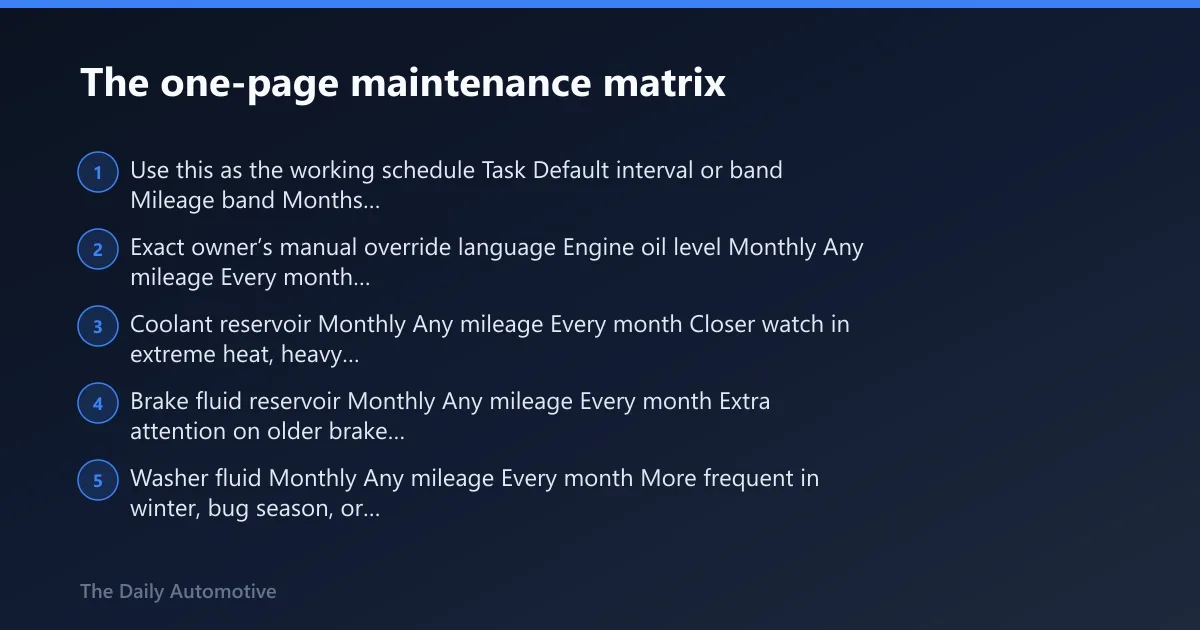
Use this as the working schedule
| Task | Default interval or band | Mileage band | Months | Severity trigger | Symptoms that move it sooner | Urgency | DIY difficulty | What to check or replace | Owner’s manual override? | Exact owner’s manual override language |
|---|---|---|---|---|---|---|---|---|---|---|
| Engine oil level | Monthly | Any mileage | Every month | Higher priority on older engines, long trips, hot weather, or known oil use | Low reading, oil warning, fresh spots under car, rising consumption | Do now if low | Easy | Check dipstick, top off only with correct oil if slightly low | Yes, for oil spec and consumption notes | Use the oil grade/spec and any consumption instructions in the owner’s manual; if the vehicle uses an oil-life monitor, that controls service timing, not the monthly level check. |
| Coolant reservoir | Monthly | Any mileage | Every month | Closer watch in extreme heat, heavy load, or older cooling systems | Level below line, sweet smell, overheating, dried coolant crust, repeated loss | Do now if below lower line or leaking | Easy | Check cold level between lower and upper lines, use correct coolant type | Yes, coolant chemistry and service interval | Use only the coolant type specified by the manufacturer; service interval and any bleed procedure in the owner’s manual override generic flush advice. |
| Brake fluid reservoir | Monthly | Any mileage | Every month | Extra attention on older brake systems, mountain driving, towing, or track use | Warning light, sudden level drop, soft pedal, visible leak, dark contaminated fluid | Do now if suddenly low or warning light is on | Easy check, moderate service | Inspect level and color, investigate drop before topping off | Yes, fluid type requirement | Use only the brake fluid specification listed in the manual or reservoir cap; replacement interval, if listed, overrides generic time-based advice. |
| Washer fluid | Monthly | Any mileage | Every month | More frequent in winter, bug season, or dirty-road use | Low spray, empty reservoir, frozen fluid, clogged nozzles | Watch | Easy | Top off as needed | No, except climate-specific fluid use | Use a climate-appropriate washer fluid if the manual or local conditions call for freeze protection. |
| Tires and lights | Monthly | Any mileage | Every month | Check sooner after potholes, temperature swings, curb strikes, or long trips | Low pressure, uneven wear, sidewall cuts, vibration, failed bulbs | Do now for damage or failed bulbs | Easy | Pressure, tread, uneven wear, bulb function | Yes, tire pressure label | Use the door-jamb tire-pressure label and any tire rotation interval in the owner’s manual; replace bulbs and damaged tires immediately when safety is affected. |
| Oil and filter service | 5,000 to 10,000 miles | Often within 5,000 to 10,000 miles on many modern vehicles, but varies by OEM and use | Often 6 to 12 months, but varies by OEM and monitor logic | Short trips, towing, dust, idling, heat, repeated cold starts, severe-service operation | Oil-life monitor due, overdue by calendar, contaminated oil, uncertain history | Schedule soon | Moderate | Replace oil and filter, reset monitor if equipped | Yes, factory schedule wins | Follow the owner’s manual or oil-life monitor first; if the manual lists normal and severe service, use the severe schedule whenever your use matches those conditions. |
| Battery condition | Every six months | Any mileage | Every six months | Heat, short-trip use, long storage, and winter cold all justify earlier testing | Slow crank, corrosion, repeated jump-starts, low charging voltage message | Schedule soon; do now if cranking is weak | Easy to moderate | Inspect terminals, test condition, clean corrosion | No, but battery type may vary | Use the battery group/technology specified for the vehicle; if the car requires battery registration or coding, the service manual procedure overrides DIY swap habits. |
| Spark plugs | 30,000 miles | Example only: some copper plugs are around 30,000 miles; many platinum or iridium plugs run far longer | Time matters less than mileage unless the vehicle sits for years | Severe use, turbo heat, misfire history, or oil consumption can shorten life | Misfire, rough idle, hard starts, weak acceleration, plug-related codes | Schedule soon | Moderate to advanced | Replace plugs, inspect coil boots if accessible | Yes, many modern cars run much longer | Use the exact plug type and replacement interval in the owner’s manual or maintenance schedule; do not substitute a generic 30,000-mile rule for modern long-life plugs. |
| Brake pads | 20,000 miles | Example only: pads can wear much sooner or much later depending on use | Inspect at routine service; no universal month-based replacement | Stop-and-go traffic, hills, towing, load, and aggressive braking increase wear | Squeal, grind, pulsation, low pad thickness, warning sensor, pull | Do now if thin or noisy | Advanced | Measure wear, inspect rotors and hardware | Yes, wear varies widely | Inspect by thickness and condition at the intervals in the owner’s manual; replace when below specification or when symptoms indicate unsafe wear, not by a single universal mileage number. |
| Coolant drain and flush | Once a year | Example only: many OEM schedules are much longer unless contamination or repairs require service | Example only: annual service is not a default for modern long-life coolant | Overheating history, contaminated coolant, cooling-system repairs, unknown fluid mix | Rusty or contaminated coolant, overheating, repeated loss, repair opening the system | Schedule soon unless overheating or contamination | Advanced | Service system only with correct coolant | Yes, factory interval overrides this default | Follow the coolant replacement interval and coolant specification in the owner’s manual; service earlier only for contamination, repairs, overheating, or other stated severe conditions. |
| Belts and hoses | At every routine inspection; 60,000+ miles gets closer attention | Inspect throughout life; many accessory belts and hoses need closer inspection as mileage climbs | Inspect during routine service and as rubber ages with time | Heat, oil contamination, age, and heavy accessory loads speed failure | Cracks, swelling, glazing, fraying, soft spots, seepage, squeal, coolant crust | Do now if cracked, swollen, glazed, or leaking | Easy check, moderate replacement | Inspect for wear and replace when damaged | Yes, especially timing belt schedules | Condition determines accessory belt and hose replacement unless the manual lists a specific interval; timing belts must follow the exact mileage/time schedule in the factory maintenance plan. |
| High-mileage review | 100,000-plus | 100,000-plus | Annual planning review helps on older vehicles | Age, seepage, worn rubber, suspension wear, and deferred maintenance stack up | Oil use, seepage, cooling weakness, charging issues, vibration, clunks | Schedule soon | Shop-level planning | Check seepage, rubber parts, mounts, cooling, charging, plugs, and suspension | Yes | Use the owner’s manual plus inspection findings; once a vehicle is older or high-mileage, condition and test results become as important as the original baseline schedule. |
How to use the matrix without over-servicing the car
The matrix gives default bands, not a license to ignore the factory book. Older generic guides often mention changing oil every 3,000 miles, replacing spark plugs every 30,000 miles, checking the battery at least every six months, draining and flushing the coolant system once a year, and replacing brake pads at 20,000 miles. I would treat those only as conservative examples for severe use, unknown service history, older designs, or specific materials, not as modern defaults. The owner’s manual can overrule them, especially on newer vehicles with synthetic oil, iridium plugs, long-life coolant, and service minder systems. (wikihow.com)
In other words, if your manual says to use an oil-life monitor, lists a long-life coolant interval, or gives a brake inspection standard instead of a replacement mileage, that exact factory language wins. When I am deciding between a generic rule and the maintenance booklet in the glove box, I follow the booklet.
What maintenance should I do on my car every month?
Every month, check engine oil level, coolant reservoir, brake fluid reservoir, windshield washer fluid, tire pressure, tread wear, all exterior lights, battery terminals, wiper blade condition, and the ground under the car for fresh leaks. This catches small failures early, before a warning light or roadside breakdown does.
Monthly checklist
- Park on level ground and check engine oil with the dipstick.
- Check coolant in the reservoir when the engine is cold.
- Look at the brake fluid reservoir without opening it unless needed.
- Top off washer fluid.
- Check all four tires for pressure loss, cuts, and uneven tread wear.
- Test headlights, brake lights, turn signals, and reverse lights.
- Inspect wiper blades for splits and streaking.
- Look for corrosion on battery terminals and signs of a weak crank.
- Check under the vehicle for fresh oil, coolant, or brake fluid spots.
What “normal” looks like
Oil level should read in the safe range on the dipstick. Coolant level should sit between the marked lines. The lower line on a reservoir is the fill point. The upper line indicates full. Brake fluid should stay near its normal range, and washer fluid simply needs enough volume for use.
If you want the monthly routine broken out by task, my own quick references are an oil change guide for oil checks and service timing, battery maintenance for corrosion and testing, and tire care for pressure, tread, and age checks.
What car fluids should I check regularly?
Check engine oil, coolant, brake fluid, and windshield washer fluid regularly because they are easy to inspect and they reveal larger problems early. Oil should be checked at least once a month, fluid reservoirs in the engine bay should be inspected, and unexplained fluid loss should trigger diagnosis rather than repeated top-offs.
Engine oil: level, dipstick reading, and top-off limits
Check oil with the car on level ground and the engine off long enough for oil to drain back. Pull the dipstick, wipe it, reinsert it, then read it again. If the level is slightly low, topping off with the correct oil is fine. If the level keeps dropping, or the oil looks contaminated, the car needs diagnosis and probably full service.
A top-off is not an oil change. It corrects level. It does not remove contamination, restore additive package life, or replace the filter.
Coolant system: reservoir lines, type, and loss that matters
The guide says to check fluid reservoirs in the engine bay. For coolant, inspect the reservoir only when the system is cold. Use the exact coolant type specified for the vehicle. A drop below the lower line may mean a leak, evaporation through age, or previous underfill. Repeated loss is a repair issue, not a refill habit.
Do not mix unknown coolants. The wrong type can lead to deposit formation, seal wear, heater core trouble, and water pump damage. If you need the service side of the job rather than the inspection side, see our coolant flush page.
Brake fluid and washer fluid
Brake fluid is different from washer fluid in one important way: low level can be a warning. If brake pads are worn, fluid level may fall as the caliper pistons extend. It can also fall because of a leak. Do not assume topping it off solves the problem. Check pad thickness and look for leaks first.
Washer fluid is the easy one. Keep the reservoir filled, especially in winter or during bug season, and use a climate-appropriate fluid.
How often should I change engine oil and filters?
Change engine oil and filters according to the owner’s manual, the service minder if the car has one, and the real driving pattern. Fixed intervals still matter, but short trips, towing, dust, heat, and long idle time push service earlier than easy highway use on synthetic oil.
Oil-life monitors versus fixed intervals
Older advice often defaults to short oil intervals. The page recommends changing oil every 3,000 miles. That is a conservative fallback for severe use, uncertain history, or some older service habits, but many newer engines on synthetic oil use longer intervals directed by the manual or an oil-life monitor. When the factory system is working correctly, it should guide the service date.
When a full oil change is due
A full oil change is due when the schedule says so, when the monitor calls for it, or when the oil condition and use pattern justify earlier service. Repeated short-trip use, towing, dusty roads, and hot weather all age oil faster. If the oil level is stable but the service is due, replace the oil and filter rather than topping off and waiting.
Oil filter, engine air filter, and cabin air filter
The oil filter should be replaced with the oil service. Engine and cabin air filters vary more by dust, traffic, and environment than by mileage alone. In my shop experience, these are low-cost DIY items if the housing is accessible, but some late-model cars bury the cabin filter behind trim and turn a quick job into a patience test. If you want the longer version on service timing and monitor logic, use our oil change guide.
What parts wear out first on a car?
The first wear items on many cars are tires, wiper blades, brake pads, batteries, bulbs, and filters. After that come belts, hoses, and spark plugs by age and mileage. These parts announce themselves through noise, weak performance, warning lights, cracks, dim output, and visible wear before total failure.
Common early wear items
Tires wear from alignment, inflation, load, and road surface. Wiper blades age from sun and grit. Brake pads wear with use and driving style. Batteries fail from age, heat, and repeated short trips. Bulbs dim or burn out. The article says to test and replace blown-out lightbulbs.
What wear looks and sounds like
Brake pads may squeal, grind, or trigger pulsation if rotors are already damaged. Belts may show glazing, frayed edges, or cracking. Hoses may swell at the ends, soften, seep at clamps, or develop a dry cracked surface. Worn spark plugs can show up as a rough idle, harder starts, weak acceleration, or a misfire code.
When should I replace brake pads, belts, hoses, battery, coolant, and spark plugs?
Replace these parts by a mix of mileage, age, condition, and risk. Brake pads, cracked belts, leaking hoses, weak batteries, contaminated or overdue coolant, and worn spark plugs should not wait for complete failure. The owner’s manual decides the final interval, but visible damage and safety symptoms always outrank a calendar.
Brake pads: wear ranges, warning signs, and rotor damage
Brake pads are listed with a 20,000-mile replacement interval. In real use, some last longer and some much less, depending on traffic, hills, load, and pad material. That number should be read as an example, not a default. OEM schedules usually call for inspection and minimum-thickness decisions rather than one universal replacement mileage. If there is squeal, grinding, reduced braking feel, or vibration, treat it as high urgency. Pad wear ignored too long often ruins rotors. For the repair side, see our brake pad replacement page.
Belts and hoses: replace on condition, not hope
The guide says worn, damaged, or cracked belts and hoses should be replaced. That includes swelling, glazing, frayed belt edges, seepage at hose ends, soft spots, and coolant crust around joints. These are cheap compared with an overheated engine or a thrown belt that takes out charging and cooling at once.
Battery, coolant, and spark plugs
The page recommends checking the battery at least every six months. Corroded terminals, slow cranking, or repeated dead-battery events mean test first, then replace if needed. It recommends draining and flushing the coolant system once a year, but that should be treated only as a severe-use or unknown-history example because many modern cars use long-life coolant and should follow the factory schedule instead. The page recommends replacing spark plugs every 30,000 miles, though that is mainly relevant to some older plug types; many newer engines with platinum or iridium plugs run much farther per the manual. For related how-to coverage, see battery maintenance and coolant flush.
What car maintenance can I do myself at home?
Most owners can safely handle monthly inspections, washer fluid top-offs, lightbulb replacement, battery terminal cleaning, wiper blade replacement, and some oil and filter changes at home. Brake work, coolant bleeding, tire mounting, alignment, and jobs that need lifting gear, scan tools, or exact fluid procedures usually belong in a shop.
Safe DIY jobs for most owners
- Check and top off washer fluid.
- Check engine oil and add the correct oil if slightly low.
- Inspect coolant and brake fluid reservoir levels.
- Replace easy-access bulbs and wiper blades.
- Clean battery terminal corrosion carefully.
- Do a basic battery condition check with a simple tester.
Jobs that usually need tools, data, or bleeding procedures
Brake pad replacement can be straightforward on some cars and messy on others with electronic parking brakes or service modes. Coolant service may require vacuum filling or careful bleeding. Some transmissions are sealed and need scan data, temperature checks, and special fill procedures. Timing belt work is not a driveway experiment unless the owner has proper tools and exact procedure data.
Rough DIY versus shop cost reality
In rough shop observation, a DIY oil change can run roughly the cost of oil and a filter, while a shop oil service usually runs noticeably higher because labor and disposal are built in. Battery replacement at home is often one of the better value DIY jobs if registration is not needed. Brake pads, coolant service, and spark plugs swing more widely because access, bleeding, and seized hardware decide the labor. Once a repair needs a lift, scan tool, or fluid bleeding, shop pricing tends to make sense. The dividing line I use is simple: if the job affects braking, cooling-system bleeding, or electronic procedures, I verify the factory method before calling it DIY-safe.
Should you buy car repair insurance or self-insure?
Car repair insurance reviews focus on whether mechanical breakdown coverage actually saves money compared to setting aside your own repair fund. The analysis breaks down premiums against deductibles, highlighting that these plans often exclude pre-existing issues and high-mileage vehicles. Understanding this distinction is critical because many drivers mistake repair insurance for an extended warranty, leading to unexpected denied claims. car repair insurance review identifies specific decision criteria to help you avoid paying for a policy that costs more than the repairs it covers, ensuring your financial strategy aligns with your vehicle’s remaining lifespan and repair history.
What does a basic car maintenance checklist include?
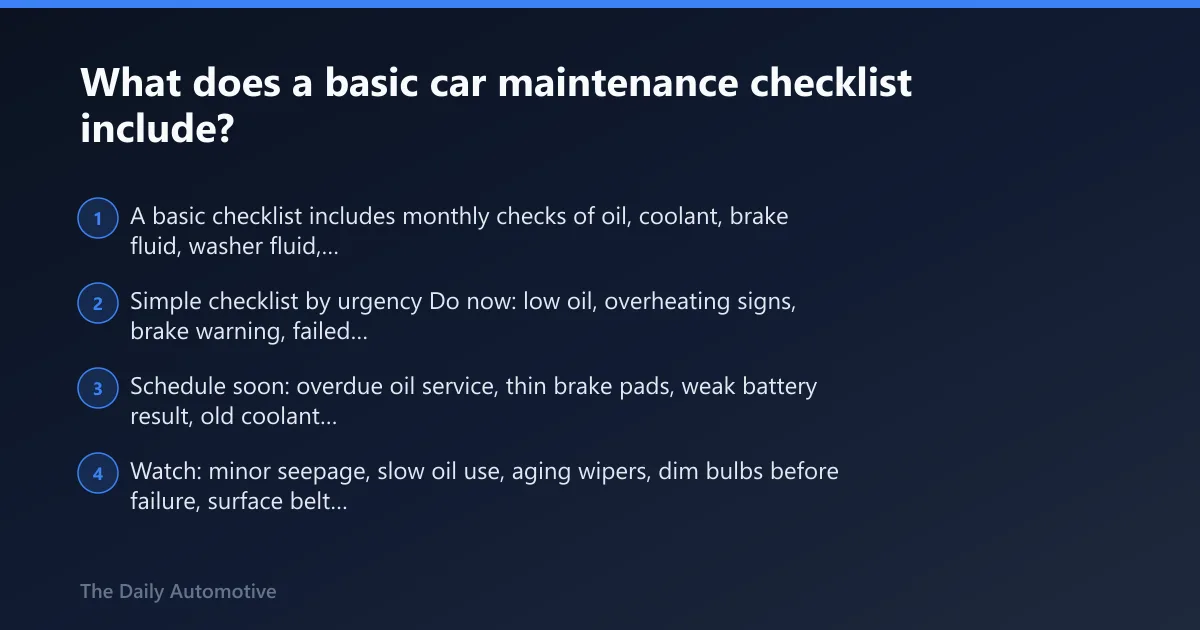
A basic checklist includes monthly checks of oil, coolant, brake fluid, washer fluid, tires, lights, leaks, battery condition, and wiper blades; scheduled oil and filter service; mileage-based spark plug and brake inspection; and condition-based replacement of belts, hoses, bulbs, and other wear items according to the manual.
Simple checklist by urgency
Do now: low oil, overheating signs, brake warning, failed lights, tire damage, active leaks, battery that will not hold charge.
Schedule soon: overdue oil service, thin brake pads, weak battery result, old coolant due by schedule, worn plugs, cracked belt.
Watch: minor seepage, slow oil use, aging wipers, dim bulbs before failure, surface belt aging without active damage.
Deciding Between a Basic Wash and Full Detailing
A standard car wash handles dust and light grime in under an hour, but it cannot correct swirl marks, deep stains, oxidation, or lingering odors. When those issues appear—or when you face a lease return or resale—skipping the deeper clean risks permanent paint damage and a lower trade-in value.
The right choice depends on your vehicle’s current condition, how much time you have, and your ownership goals. Comparing car care vs detailing costs and outcomes helps you avoid paying for unnecessary services while protecting surfaces that directly affect long-term reliability and appearance.
Essential Tools Every First-Year Driver Should Keep in the Car
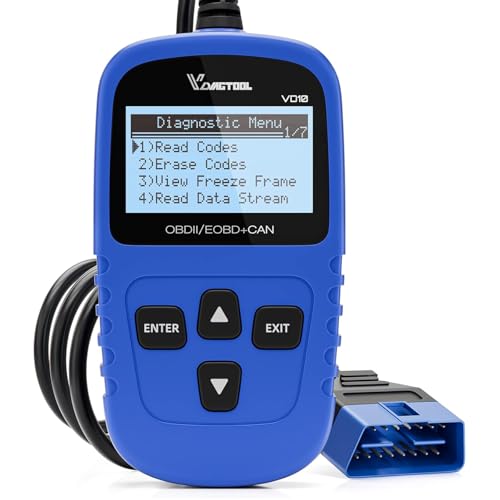
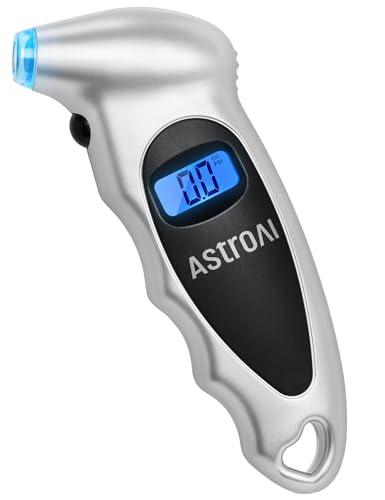
A tire gauge, portable jump starter, lug wrench, jack, flashlight, microfiber towels, and a basic OBD2 scanner form the minimum toolkit that prevents small faults from becoming tow bills or missed work. Keeping these items on hand lets you handle dead batteries, low tire pressure, and check engine lights before they strand you in a parking lot.
The guide to essential car maintenance tools ranks each item by priority, separates emergency gear from routine upkeep equipment, and shows exactly where to stop spending so you avoid buying specialty items you will never use during your first year of driving.
Assemble a First-Weekend DIY Maintenance Kit
A reliable car maintenance kit for beginners centers on ten essentials: a tire pressure gauge, torque wrench, socket set, floor jack, jack stands, wheel chocks, safety glasses, gloves, a drain pan, and a funnel. These tools cover tire checks, safe vehicle lifting, basic fastener work, and simple fluid changes without the cost of professional-grade equipment.
Choosing the right combination matters because mismatched or missing tools lead to stripped bolts, unsafe lifts, or abandoned projects. A curated beginner maintenance kit breaks down specific product recommendations—from budget-friendly 65-piece sets to low-profile floor jacks—so you can handle your first weekend tasks safely and accurately.
Assessing Endurance Repair Plans Against DIY Savings
Before committing to a repair contract, compare the total cost of premiums against the likelihood of a single major failure. For older, high-mileage vehicles, self-funding often beats insurance unless one expected repair exceeds the contract price plus the deductible. Endurance insurance breakdown details specific plan inclusions, waiting periods, and exclusions that affect claim success. Understanding these limits prevents paying for coverage that denies wear items or requires out-of-network mechanics, ensuring you only buy protection when the financial math actually supports it.
Adjust the schedule for new cars, high-mileage cars, and cars that sit
Newer vehicles with service minders and long-life parts
Newer cars often stretch beyond old habits. Synthetic oil, iridium plugs, sealed components, and service minder systems can make generic short intervals wrong. That does not mean “ignore it until the warning light.” It means the manual and the monitor set the plan, and monthly checks still catch leaks, tire issues, and battery trouble.
High-mileage cars
High-mileage vehicles need closer watching for seepage, oil consumption, tired rubber parts, and weak cooling or charging systems. A car that never needed top-offs when new may start using oil or sweating coolant later in life. That is when monthly checks stop being routine and start being the difference between a cheap correction and a tow bill.
Low-mileage or infrequently driven cars
Cars that sit have their own failure pattern. Batteries discharge. Tires age. Brake fluid absorbs moisture. Belts and hoses harden. Fuel can go stale. The odometer can look fine while the calendar says otherwise, so time-based service matters more here than mileage. NHTSA tire-safety messaging and manufacturer tire literature are especially relevant here, because tire age can matter even when tread looks fine. For that side of ownership, I lean on tire care more than a mileage chart.
Evaluate Subscription Plans Against Your Actual Usage
Car care subscriptions bundle washes, inspections, and oil changes into a flat monthly fee, but value depends entirely on your mileage and service frequency. Low-mileage drivers often find that basic maintenance plans deliver better cost efficiency than premium recurring memberships. car care subscription review compares these plans by calculating real ownership costs, service intervals, and convenience factors to help you avoid paying for unused services. Use this comparison to decide whether a fixed fee or pay-as-you-go maintenance aligns with your driving habits.
Selecting a Maintenance Charger for Winter Storage
Prevent battery failure during cold months by matching your maintainer to your vehicle’s specific chemistry and storage duration. Using an incompatible charger can damage AGM batteries or drain modules, so selecting a smart unit with temperature compensation and appropriate float modes is essential for preserving electrical health while cars sit idle.
This guide compares top-rated options like the CTEK MXS 5.0 and Battery Tender Plus to help you avoid common storage mistakes. It details critical features and provides a decision table for choosing the right winter storage charger based on whether your vehicle remains connected or requires permanent onboard installation.
Frequently asked questions
When should I replace brake pads, belts, and hoses?
Replace brake pads when they are thin, noisy, or causing vibration, not after they grind into the rotors. Replace belts and hoses as soon as they show cracking, swelling, glazing, fraying, seepage, or soft spots. Condition matters as much as mileage because rubber ages even on lightly driven cars.
Products related to this article
Sponsored / affiliate links. As an Amazon Associate I earn from qualifying purchases. I may earn additional commission from eligible campaigns.