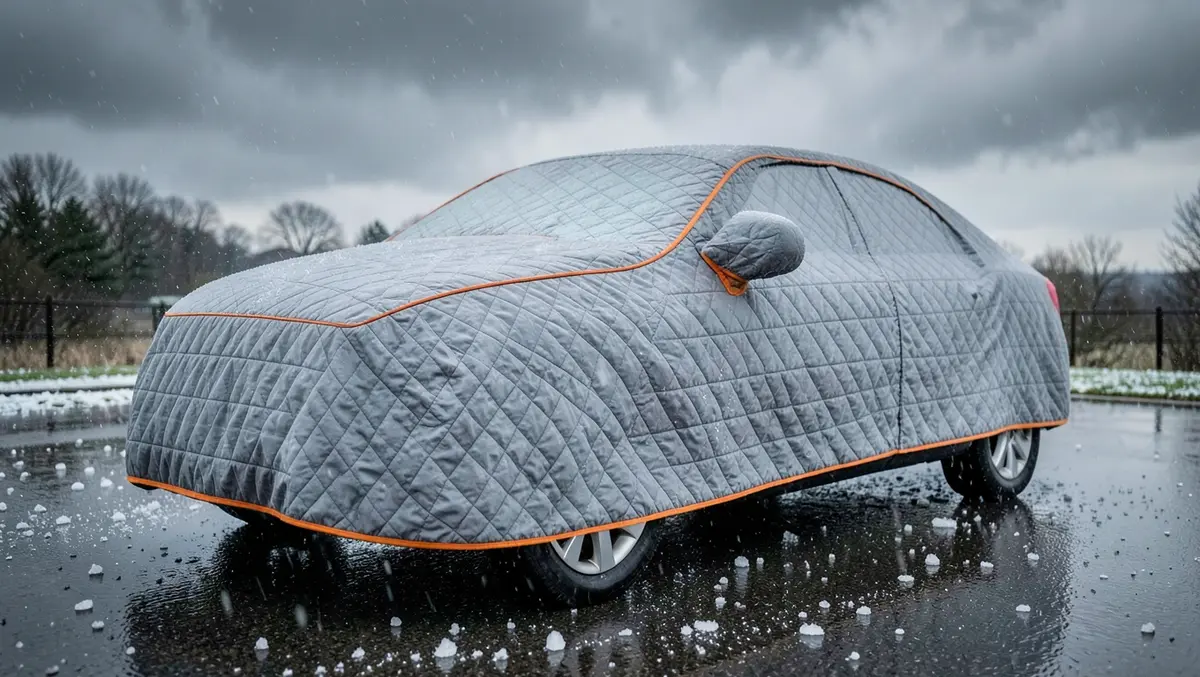
Padded Car Covers for Hail: How Thick EVA Padding Stops Dents
Padded car covers protect against hail by using dense foam layers – usually EVA or XPE foam, roughly 3mm to 8mm thick – sewn into the roof, hood, and trunk panels of an otherwise ordinary all-weather cover. The foam compresses on impact and spreads out the force of the hailstone before it reaches your paint. That is the actual mechanism that stops a dent, and it is a different feature from the “waterproof” or “all-weather” label most cheap covers carry, which only keeps rain and UV rays off the paint and does nothing to soften a physical impact.
This guide focuses specifically on the padding itself – how thick it needs to be, how the common EVA and XPE foam types compare, and what to check before you buy – rather than repeating a generic all-weather buying guide. If you also want a broader rundown of every hail-season option (parking strategy, DIY methods, what to do right after a storm), see our companion guide on how to protect your car from hail.
What Makes a Cover “Padded” (and Why That Beats “Waterproof” Alone)
A standard all-weather car cover is built from a single or double layer of polyester or Oxford fabric with a waterproof coating. It keeps rain, dust, and UV rays off your paint, but it has almost no cushioning – a hailstone hits the fabric and transfers most of its force straight through to the sheet metal underneath. A padded hail cover adds a dedicated foam layer – closed-cell EVA (ethylene-vinyl acetate) or XPE (cross-linked polyethylene) – sandwiched between the outer shell and an inner lining, concentrated over the roof, hood, and trunk where hail actually lands. That foam layer is the entire point of paying more for a “hail” or “anti-hail” cover instead of a generic one.
THICKEST EVA PADDING PICK
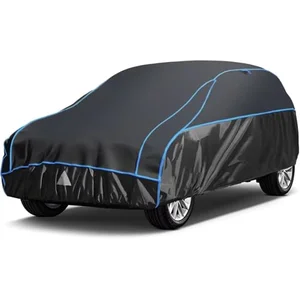 |
Holthly EVA Padded Hail Protector Car Cover (SUV) – $218.46 Built specifically around the padding-first idea this article is about – new-formula EVA foam over the roof and windows instead of a plain waterproof shell.
|
How Much Padding Do You Actually Need? Hail Size vs. Foam Thickness
The National Weather Service sizes hail against everyday objects, and that same scale is what most padded-cover listings quietly reference when they claim protection “up to golf-ball size” or similar. Larger hail carries more kinetic energy, so a thin foam layer that stops a pea-sized stone will not necessarily stop a golf-ball-sized one. No cover – padded or not – is rated or guaranteed to stop damage from very large hail; treat these figures as a rough manufacturer estimate, not a warranty.
| Hail Size (NWS Reference) | Diameter | Typical Foam Thickness Needed |
|---|---|---|
| Pea to marble | 0.25–0.5 in. | Any padded cover (3mm+ EVA/XPE) |
| Dime to nickel | 0.7–0.9 in. | 4–5mm EVA/XPE |
| Quarter (NWS “severe” threshold) | 1 in. | 5mm+ multi-layer EVA/XPE |
| Golf ball | 1.75 in. | 6–8mm EVA/XPE, or inflatable airbag-style |
| Baseball or larger | 2.75 in.+ | No cover is reliably rated for this – move the car under shelter instead |
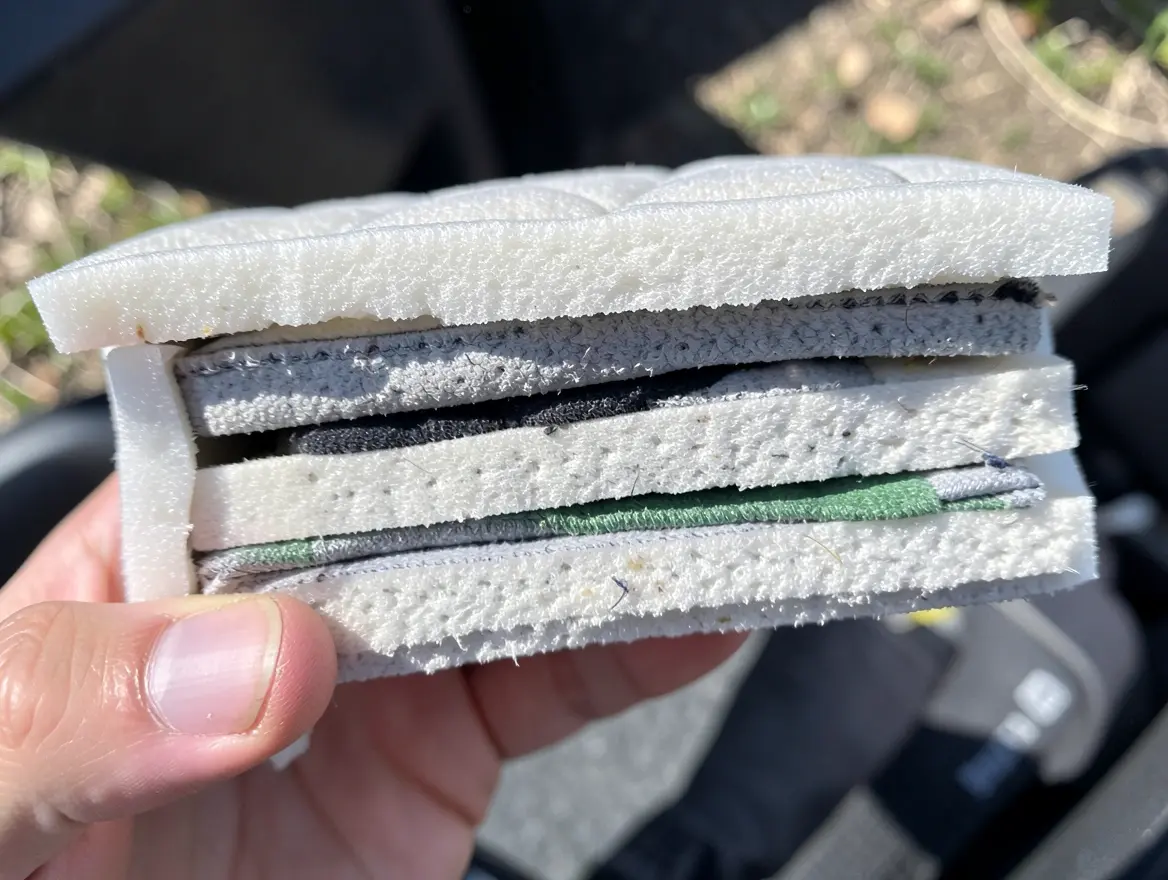
Most consumer padded covers list a foam thickness between 3mm and 8mm in the product description – check that number directly rather than trusting a vague “heavy duty” or “multi-layer” label, since some listings use those words for covers that are only thicker fabric with no actual foam core.
Full Cover vs. Half Cover vs. Inflatable: Which Type Fits Your Situation
- Full padded cover – wraps the entire vehicle, with the foam concentrated over the roof, hood, and trunk. Best overall protection and the most common option; needs to be sized correctly to your vehicle’s length.
- Half or top-only padded cover – covers just the roof, hood, and windshield area, leaving the doors and lower body exposed. Cheaper and faster to put on for a quick storm warning, but it will not protect the sides or bumpers.
- Inflatable airbag-style cover – a sealed shell that inflates into a cushion of air around the entire car. These typically cost more than a foam-padded cover and take longer to set up and deflate, but the air cushion can absorb a harder hit than foam alone.
For most drivers who just want meaningfully better protection than a plain all-weather cover without the cost or setup time of an inflatable system, a full padded EVA or XPE cover is the practical middle ground.
Padded Car Cover Buying Checklist
- Measure your vehicle first. Padded covers are sold in length ranges (commonly around 170–193 in. for sedans and 186–211 in. for SUVs) – a cover that is too short leaves the bumpers unprotected, and one that is too long flaps in the wind.
- Confirm the foam material and thickness in the listing (EVA or XPE, in mm) rather than trusting marketing terms like “heavy duty” alone.
- Look for a full elastic hem plus separate wind straps – an elastic hem alone can still let wind get underneath and flip the cover during a storm.
- Check for side vents. A sealed cover traps moisture underneath, which can lead to water spots or mildew on the paint over time.
- Confirm it includes a storage bag so the cover is easy to fold, carry, and keep clean between uses.
Frequently Asked Questions
How Much Hail Can A Padded Car Cover Really Stop?
Most EVA or XPE padded covers are marketed as effective against hail up to roughly cherry to golf-ball size (about 0.75 to 1.75 inches), based on the manufacturer’s own foam-thickness rating rather than independent lab testing. Hail larger than that carries enough force to dent a car even through several millimeters of foam, so during a warning for very large hail, moving the vehicle under solid shelter is still safer than relying on any cover.
Is Eva Foam Better Than A Regular Multi-layer Cover For Hail?
Yes, for hail specifically. A regular multi-layer cover usually stacks fabric layers for waterproofing and UV resistance, with little to no dedicated cushioning. EVA (or XPE) foam is a closed-cell material chosen because it compresses and rebounds on impact, which is what actually absorbs a hailstone’s energy instead of just keeping the surface dry.
Do Padded Car Covers Fit Suvs And Trucks The Same As Sedans?
No – padded covers are sold by length range, and sedan and SUV sizes are not interchangeable. A sedan-length cover will not stretch over a taller SUV roofline, and an SUV-length cover on a sedan will hang loose and catch wind. Always check the manufacturer’s size chart for your vehicle’s exact length before ordering.
Can I Leave A Padded Hail Cover On All The Time?
You can, but daily use adds wear from repeated folding, wind friction, and moisture trapped underneath if the cover lacks side vents. Most owners keep a padded cover in the trunk and only use it when a storm is forecast, then store it dry afterward to avoid mildew.
Do Padded Car Covers Affect A Hail Damage Insurance Claim?
A padded cover does not change how a comprehensive insurance claim is processed, but preventing the dent in the first place means there is no damage to claim at all. If hail does get through and cause a dent, photograph the damage and your deductible still applies as normal – check your specific policy for comprehensive coverage details.
Conclusion
The word “padded” on a car cover listing should mean an actual EVA or XPE foam layer over the roof, hood, and trunk – not just thicker fabric. Check the foam thickness in millimeters, match the cover to your vehicle’s exact length, and pick a full cover with an elastic hem, multiple wind straps, and side vents. That combination is what separates real hail protection from a basic all-weather cover that only keeps the rain off.
Products related to this article
Sponsored / affiliate links. As an Amazon Associate I earn from qualifying purchases. I may earn additional commission from eligible campaigns.
 Kayme Padded Hail Protector Car Cover Custom Fit for Mazda 5 SUV, Anti Hail Blanket with Multilayer Thickened Design, Hail Proof & All Weather Outdoor Waterproof Full Car Cover for Hail Protection
 Kayme Padded Hail Protector Car Cover Custom Fit for Ford Edge SUV, Anti Hail Blanket with Multilayer Thickened Design, Hail Proof & All Weather Outdoor Waterproof Full Car Cover for Hail Protection