Parking Decals for Cars: Stickers vs. Hang Tags Explained
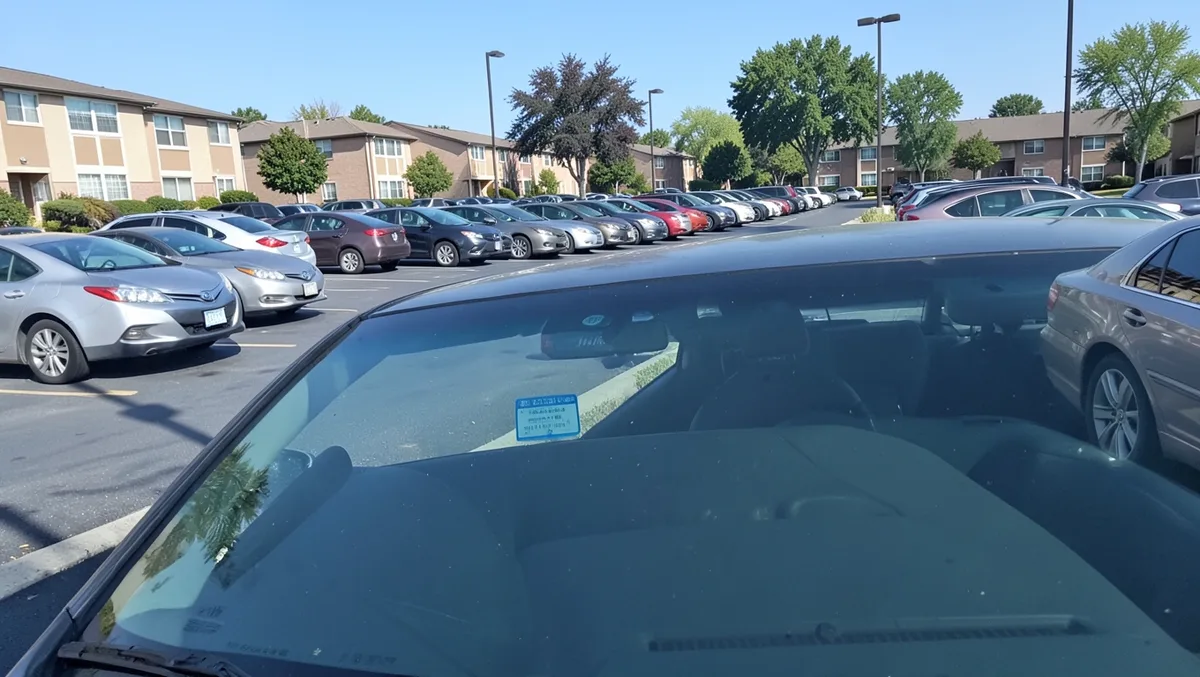
Parking decals for cars are either static-cling window stickers or rear-view-mirror hang tags that show a vehicle has permission to park in a specific lot, apartment complex, or HOA community.
Stickers stay fixed to one windshield for as long as the plastic holds up, while hang tags can move between vehicles, which matters if a household shares one parking space between two cars. Numbered sets like the Clabby 001-100 pack help property managers track exactly which vehicle belongs to which space, and bright violation stickers give an on-the-spot warning before towing becomes the next step.
Below are three current, in-stock decal options for different jobs, followed by the sticker-vs-hang-tag question property managers ask most often.
Clabby Parking Permit Stickers (001-100)
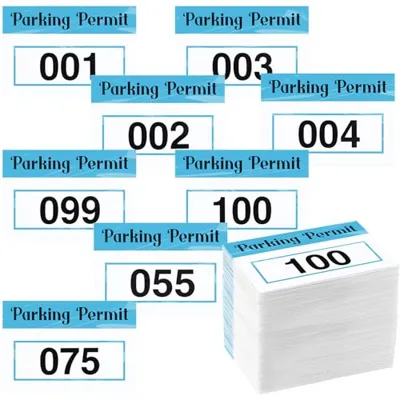
The Clabby 100-pack is built for anyone assigning one numbered spot per vehicle: apartment managers, small business lots, or event organizers who need a fast way to confirm a car is authorized. Each sticker is a static-cling film, not adhesive, so security or staff can tell at a glance whether the number on the windshield matches the tenant or space list.
Pros
- Static-cling film applies and peels off without adhesive residue
- Sequential numbering from 001 to 100 for straightforward tracking
- PVC film resists peeling and fading better than paper stickers
- Compact 2×3 inch size sits low on the glass without blocking the view
Cons
- Caps out at 100 numbers, so larger lots need multiple packs
- Static cling grips best on clean glass; it will not hold on a dirty or pitted windshield
Because the cling film has no adhesive, a resident can move the same sticker to a different window if they trade cars temporarily, which regular adhesive decals do not allow. See current pricing and availability on Amazon.
Illegal Parking Warning Stickers
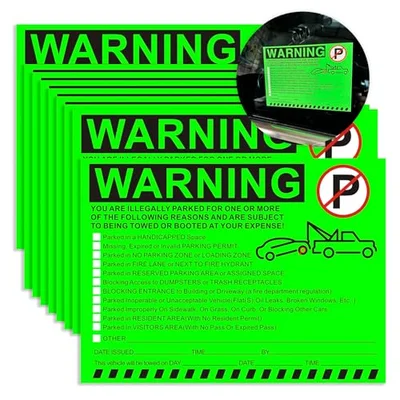
This is a different product entirely from the two permit decals on this page: it is not proof of authorization, it is a warning left on a vehicle that has already parked somewhere it should not have. Property owners write the reason for the violation, the date and time, and the towing details directly on the sticker before pressing it onto the glass.
Pros
- Half-cut backing peels off in two pieces for a quick, even application
- 50-sheet pack at 5.5 x 7.5 inches, large enough to read from several feet away
- Writable surface for the violation reason, date, time, and tow information
- Adhesive is strong enough that a scraper is usually needed to remove it, which discourages a driver from just peeling it off
Cons
- The same super-strong adhesive that stops a violator from peeling it off also makes it harder for the owner to remove cleanly afterward
- Only useful after a violation has already happened, so it does not prevent the first unauthorized park
If a lot has a repeat-offender problem, pairing this with a documented towing process gives a paper trail before the tow truck actually arrives. Check the current price on Amazon.
Window Decal or Hang Tag: Which Should You Buy?
Every product on this page is a window decal, but apartment complexes and HOAs also commonly issue rear-view-mirror hang tags, and the two are not interchangeable in practice. A window decal is assigned to one vehicle and stays there; it is the better choice when a property wants a permanent, hard-to-transfer record of exactly which car belongs to which numbered space.
A hang tag moves between vehicles, which is useful for a household with more cars than assigned spaces, or for a guest permit that gets loaned out for a weekend. The tradeoff is that a hang tag can be forgotten in the wrong car, left off the mirror entirely, or passed along after a resident moves out, which is why most HOAs issue guest hang tags separately from the permanent resident decal rather than using one system for both.
Static-cling decals like the Clabby set also have a practical edge over adhesive decals in one specific situation: they go on and come off without adhesive residue, so a property manager can reissue the same numbered spot to a new tenant without scraping old glue off the glass first.
SmartSign Green Parking Permit Window Cling
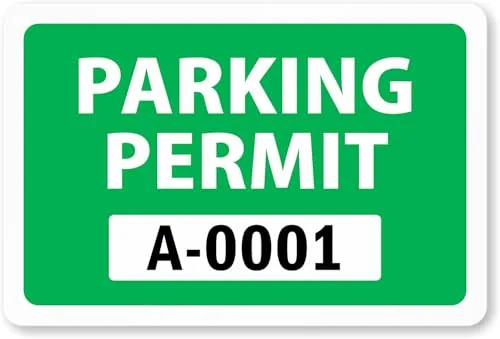
This 50-pack from SmartSign is a made-in-USA alternative to static cling for properties in colder climates or with older, slightly dirty windshields, where thin cling film does not always hold. It uses a low-tack, repositionable adhesive on 3.6-mil polyester instead of static cling, applied to the inside of the glass facing out.
Pros
- Low-tack adhesive stays repositionable for up to 30 days before setting permanently
- Holds on cold or slightly dusty glass better than pure static cling
- Full-color printing with sequential numbering, made from durable 3.6-mil polyester rated for over two years outdoors
Cons
- Priced noticeably higher per sticker than the Clabby static-cling set
- Once past the 30-day repositioning window, removal is meant to be permanent rather than reusable
For a property that has struggled with static-cling decals falling off in winter, this is the more reliable option even at the higher price. View current pricing on Amazon.
Frequently Asked Questions
How Do Parking Permit Stickers Work?
A parking permit sticker is applied to the inside of a car’s windshield, either with static cling or a low-tack adhesive, and carries a unique number tied to a specific tenant, unit, or space. Staff or security can then check any parked car against the assigned number list in seconds instead of tracking license plates one by one.
What Are Illegal Parking Warning Stickers?
Illegal parking warning stickers are a different product from a permit decal: they are placed on a vehicle after it has already parked somewhere it should not have, not before. The bright fluorescent color and hard-to-remove adhesive are meant to be noticed immediately and to discourage the driver from simply peeling the warning off and ignoring it.
Should You Choose a Window Decal or a Hang Tag?
Choose a window decal for a permanent, one-vehicle assignment, since it cannot be moved to another car without residue or damage. Choose a hang tag when a permit needs to travel between vehicles, such as a shared household car or a temporary guest pass, since it simply moves to whichever mirror it is hung on.
Can Parking Decals Be Reused?
Most parking decals are not meant to be reused on a second vehicle. Static-cling stickers can be repositioned on the same windshield while the film is still fresh, but they lose their grip once peeled and reapplied elsewhere. Adhesive decals are intended for a single application and generally cannot be moved without tearing or leaving residue.
Are There Numbered Parking Permit Options Available?
Yes, numbered permit stickers are the standard for tracking assigned spaces. The Clabby set covers numbers 001 to 100 on light blue static-cling film, while the SmartSign green window cling covers a similar numbered range on a repositionable adhesive that holds up better in cold weather. Both let a property manager match a specific number to a specific vehicle at a glance.
How Do I Apply Static Window Stickers?
Clean the inside of the windshield first so no dust or film keeps the cling from sealing flat. Peel the sticker from its backing and press it onto the glass from the inside, working outward from the center to push out any air bubbles. Because there is no adhesive, static cling holds through suction alone, so a clean, dry surface matters more than it does with a regular sticker.
Conclusion
Which parking decal makes sense comes down to what the property actually needs to solve. A numbered static-cling set like Clabby’s works for straightforward one-car-per-space tracking, a violation sticker like KIUKIUO’s handles after-the-fact enforcement, and a repositionable window cling like SmartSign’s is worth the extra cost where cold or dirty glass keeps causing static-cling failures.
None of these require special tools or professional installation, and all three ship ready to apply the same day they arrive. For decals with a custom logo or unit numbers instead of a generic pre-made set, see our guide on how to make your own car decals. If the number decal you actually need is for a mailbox, dealership pricing, or DOT-regulated commercial lettering rather than parking management, compare those separate options in our car number decals guide.
Products related to this article
Sponsored / affiliate links. As an Amazon Associate I earn from qualifying purchases. I may earn additional commission from eligible campaigns.