3 Best Car Jacks for Home Use (2026): We Compared
Pick a jack by failure mode first: low-clearance cars need a low-profile floor jack, roadside emergencies favor a compact scissor jack, and heavier home use needs a stable 3-ton hydraulic floor jack. Choose wrong and the jack may not fit, may lift too slowly, or may feel unstable under load. This guide compares three real picks for clearance, lift height, portability, and stability so you can match the jack to your actual use.
Quick comparison
| Product | Badge | Best for | Price | ||
|---|---|---|---|---|---|
 |
BIG RED T80501 Torin Hydraulic Heavy Duty Long FrameBIG RED | Our pick | 5 ton · hydraulic · long frame | $682.02
Price as of 18 Oct 2026
|
View |
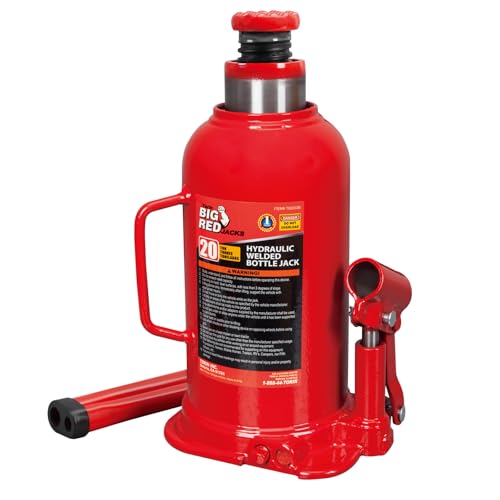 |
BIG RED 20 Ton (40,000 LBs) Torin Welded Hydraulic CarBIG RED | Budget pick | 20 ton · hydraulic · bottle jack | $59.99
Price as of 18 Oct 2026
|
View |
 |
1.5 Ton Car Scissor Jack,3.93"-13.18" Adjustable LowStacool | Also great | 1.5 ton · low profile · scissor jack | $19.99
Price as of 18 Oct 2026
|
View |
Use this first if you already know your use case. The key split is garage work versus trunk storage, then clearance versus lift height.
Headline capacity matters, but it is not enough. Minimum saddle height, maximum lift height, and whether you need jack stands decide whether a jack works in your driveway or only looks right on paper.
How we chose
These picks were compared on four things: minimum saddle height, maximum lift height, capacity, and how the jack is meant to live in real use. That means garage jacks were judged against garage work, and trunk jacks were judged against emergency storage.
We also separated floor jacks, bottle jacks, and scissor-style emergency jacks instead of treating them as interchangeable. A 20-ton bottle jack is not a good low-car answer just because the number is large.
Safety matters too. Use the approved lift points listed in the owner’s manual, keep the car on level ground, and set wheel chocks before you lift. Those details belong in the buying decision.
What car jack should you buy?
Buy the jack that fits your lowest clearance point and your normal use case. For garage work, a low-profile floor jack is usually the right answer. For trucks and SUVs, a bottle jack can work better. For trunk storage, compact emergency jacks matter more than speed or luxury features.
If you plan to work under the vehicle, budget for jack stands at the same time. A jack lifts; stands hold. That is the cleanest line to draw.
Separate garage work from trunk emergency storage
Do not buy a garage jack for the trunk and do not buy a trunk jack for routine maintenance. A low-profile hydraulic jack can be excellent in a garage but awkward in a roadside repair because of size and storage. A compact emergency jack may fit the trunk, yet offer too little speed and range for repeat home use.
Say your sedan sits low enough that the saddle has to slide under 4 inches of clearance. A bottle jack may still be the wrong first choice, even with high capacity, because the body can be too tall to fit under the pinch weld area at the start of the lift.
Low-profile floor jack: best for low cars
The BIG RED T80501 is presented as a strong fit on paper because it is a 3-ton steel low-profile floor jack for broad vehicle coverage. Rigs Rated says it starts at about 3 inches and lifts to about 19.7 inches, which gives low cars room to get the saddle under the chassis and still reach useful service height.
It is the best match if you have a lowered sedan, coupe, or hatchback and want a garage jack that can handle routine maintenance. The foot pedal speeds initial positioning, and the wide stance helps confidence when the load comes up.
The drawback is size and weight. A steel long-frame jack is not the best choice if you need something small enough to live in a trunk.
Minimum saddle height
For low cars, the starting height is the first filter. Minimum saddle height is the clearance the jack needs to slide under the vehicle before lifting starts. Common useful examples sit at about 3 inches to 5.5 inches. Lower is better when the car sits close to the ground.
ARCAN’s A20003 is another reference point here: it is a 3-ton steel low-profile floor jack, and Rigs Rated says it starts at 3 inches and lifts to 19.7 inches. That is the kind of range that works for many passenger cars without forcing you to drive onto blocks first.
Lift range and capacity
Maximum lift height matters because tire clearance and service height are different needs. A jack that only reaches a modest height can still change a tire, but it may leave too little room for suspension work or access under the car.
For home use, a 3-ton rating is a common sweet spot because it covers most passenger vehicles with margin. Wearify says a 3-ton jack covers most passenger vehicles and leaves a safety margin. Capacity must exceed the vehicle corner weight, not just the full curb weight divided by four on paper.
Why steel or aluminum-steel matters
Steel jacks are durable and usually less expensive, but they are heavier. Aluminum or aluminum-steel floor jacks are easier to move and store, which helps if you roll the jack around a crowded garage. The trade-off is cost.
For a jack that stays in one place and sees regular maintenance, steel is the straightforward choice. If you need to carry it often, the lighter construction may be worth the premium.
Bottle jack: best for trucks and SUVs
The BIG RED 20 Ton bottle jack is the clear truck-and-heavy-vehicle pick in this set because bottle-jack geometry fits taller vehicles better. It has a compact footprint, a screw-top for added height control, and enough capacity for heavier service work where a low-profile floor jack is not practical.
This style makes sense for trucks, body-on-frame SUVs, and some farm or house-lift tasks where the jack starts from a taller lift point. It is also easier to stash than a long floor jack.
The drawback is just as important: bottle jacks are often the wrong choice for low cars. Their tall body can run into clearance problems before the lift begins.
Why a taller starting height helps
Vehicles with more ground clearance give you more room for a bottle jack to sit under the lifting point. That is why trucks and SUVs often pair better with this format than sedans do. The vertical design also makes the jack compact for storage.
The same source lists the Powerbuilt all-in-one bottle jack at 3 tons with a 21-inch max lift. That shows why bottle-jack geometry can work well when the target service height is higher than a small floor jack can comfortably reach.
Capacity and compact footprint
Capacity ratings in this category often jump higher than typical passenger-car needs. Common ratings range from 1.5 ton to 5 ton, and that spread exists because vehicles vary widely in corner weight and frame height.
Higher capacity is useful, but it does not solve clearance. A 20-ton bottle jack can still be the wrong answer for a lowered car if it cannot get under the vehicle in the first place.
When a bottle jack is the wrong choice
Do not reach for a bottle jack if your vehicle sits low, if the approved lift point is tucked behind plastic trim, or if you need the jack to roll under the car. It is also not the best option for under-car work unless you are pairing it with jack stands on a stable surface.
A common first-timer mistake is choosing a jack rated for the truck’s weight and then realizing it won’t slide under the low side skirt. That can leave you with a jack that is strong on paper and useless under the rocker panel.
Trunk-ready jack kit: best for emergencies
The Stacool 1.5 Ton scissor jack is the trunk-first pick here because it is built for emergency tire changes, not garage lifting. It runs from 3.93 inches to 13.18 inches, which keeps the package compact while still giving enough travel for a roadside spare swap.
That matters if the jack must live in the trunk and be easy to store next to a spare, chocks, and basic tools. For emergency use, compact size beats a tall lift range.
The drawback is obvious: it is not the right tool for repeated under-car service, and its 1.5-ton capacity is aimed at light emergency use rather than heavier maintenance.
Portability and storage size
The same source says the Pro-LifT trunk jack weighs 15 lb and comes with a storage case. That is the kind of detail that matters when the jack must stay in the car rather than the garage.
For trunk duty, weight, case size, and simple hand operation matter more than fast pump speed. You want a jack that is easy to grab in poor weather and easy to stow after use.
12V power and bundled tools
Electric car jack kits are built for roadside convenience. The autozenith lists a VEVOR electric jack as a 5-ton kit with a 6.1-17.7 inch lifting range, and electric kits often include an impact wrench or inflator to reduce the number of separate tools you need to carry.
That convenience is real, but it comes with a different buying logic. A 12V kit makes sense when speed and effort matter more than garage-grade control. It is not the same purchase as a floor jack for planned maintenance.
Why roadside use needs different specs
Roadside work asks for quick access, quick setup, and compact storage. That is why a scissor jack or electric jack kit belongs in the trunk conversation, while a long-frame floor jack belongs in the garage conversation.
Do not assume an electric kit replaces jack stands for under-car work. It does not. The jack gets the wheel off the ground; the stands hold the vehicle safely if you go underneath.
What size car jack do you need?
You need a jack whose minimum height fits under the car and whose maximum height reaches the repair point with usable tire clearance. Capacity then needs to exceed the corner weight of the vehicle. Jack stands change the equation because any under-car work should move from the jack to stands once the vehicle is up.
Minimum height versus maximum lift height
Minimum saddle height is the starting gate. If the jack will not slide under the pinch weld or lift pad, nothing else matters. Common useful starts run around 3 inches to 5.5 inches for low cars.
Maximum lift height is the stop point. Many useful jacks land around 11.75 inches to 21.5 inches of lift, depending on style and size. Higher lift helps with taller tires, suspension access, and trucks that sit farther off the ground.
How to read capacity ratings
Capacity ratings are usually shown in tons or pounds. A 2-ton jack is not automatically better than a 1.5-ton jack if it starts too tall for your car. Likewise, a 5-ton jack can still be a bad choice for a sedan if the body is too bulky to fit under the vehicle.
The same source lists the VEVOR budget pick at 2.5 tons with a 3.35-inch minimum height. The autozenith lists AV Steel at 3 tons with a 3-1/8-inch minimum and 19-7/8-inch maximum lift, and Jack Boss at a 3-15/16-inch minimum height with an 18-5/16-inch lift range. Those figures show how much the starting height can vary within the same broad category.
Why jack stands change the equation
If you are only changing a tire, the jack’s job ends sooner. If you are going under the vehicle, jack stands are required. Many are sold separately, though some starter kits include them.
- Park on level ground and set the parking brake.
- Use the owner’s manual to find approved lift points.
- Raise the vehicle with the jack.
- Place jack stands at the proper support points.
- Lower the vehicle onto the stands before working underneath.
Jack decision matrix
This matrix turns the buying choice into a use-case filter. The first two columns are the ones most shoppers miss, because they matter more than headline capacity alone.
| Buyer scenario | Minimum height | Capacity | Lift height | Jack type | Jack stands required? |
|---|---|---|---|---|---|
| Low car garage | About 3 in to 4 in | 3 ton | About 18 in to 20 in | Low-profile floor jack | Yes, for any under-car work |
| Sedan trunk emergency | About 3.9 in to 5.5 in | 1.5 ton to 2 ton | About 11.75 in to 13.5 in | Compact scissor jack | No, if you are only changing a tire |
| SUV driveway maintenance | About 5 in to 5.5 in | 3 ton | About 17 in to 21.5 in | Bottle jack or floor jack with enough reach | Yes, for any work under the vehicle |
| Truck service | About 5 in to 5.5 in | 3.5 ton to 5 ton | About 19 in to 21.5 in | Bottle jack or long-frame floor jack | Yes, for any under-car work |
Which one should you buy?
If you have a low sedan or coupe and you work in a garage, start with the BIG RED T80501 style of low-profile floor jack. If you need a truck- or SUV-friendly jack with compact storage, a bottle jack is the better fit. If the jack must live in the trunk, choose a compact scissor jack or an electric kit made for roadside use.
Budget and storage should decide the last step, not the first one. A cheaper jack that does not clear your car is money wasted. A heavier jack that lives in the garage can be the better buy if it fits under the vehicle and reaches the service height you need.
Say your crossover needs a tire rotation every few months and sits high enough that a 3-inch start is no problem. A 3-ton floor jack with jack stands is the more useful purchase than a trunk jack, even if the trunk jack looks simpler. The use case drives the choice.
What if you only want one jack?
If you can buy only one, pick the jack for the job you do most often. Garage maintenance points toward a 3-ton low-profile floor jack. Roadside readiness points toward a compact scissor jack or electric kit. Truck and SUV work points toward a bottle jack with enough lift.
The wrong compromise is trying to make one tool cover every job. That usually means a jack that is too tall, too short, or too awkward somewhere important.
Frequently asked questions
What car jack should I buy for my car?
Buy based on clearance first and capacity second. Low cars usually need a low-profile floor jack, trucks and SUVs often suit a bottle jack, and trunk storage points to a compact scissor jack or electric kit. If you will go under the car, plan on jack stands too.
Do all cars come with a jack?
No. Some vehicles still include a basic emergency jack, but many newer cars do not. Even when a jack is included, it is usually meant for tire changes, not frequent maintenance. Check the trunk, under-floor storage, and the owner’s manual before assuming one is present.
What is the best car jack for a truck?
A bottle jack is often the best fit for a truck because it starts higher and takes less storage space. For heavier service or long-frame lifting, a 5-ton floor jack can also make sense. The key is matching the jack to the truck’s frame height and service needs.
What is the best compact car jack?
A compact scissor jack is usually the best trunk-ready choice because it stores easily and works well for emergency tire changes. If you want powered convenience, an electric kit can be practical. For routine garage work, though, compactness should not replace lift range or stability.
Should I buy a floor jack or bottle jack?
Buy a floor jack for low cars and frequent garage work. Buy a bottle jack for taller vehicles, especially trucks and SUVs, where starting height and compact storage matter more. If your car sits low, bottle-jack clearance is often the deciding problem.
Products related to this article
Sponsored / affiliate links. As an Amazon Associate I earn from qualifying purchases. I may earn additional commission from eligible campaigns.