Power Steering Fluid in Transmission: A Critical Mistake
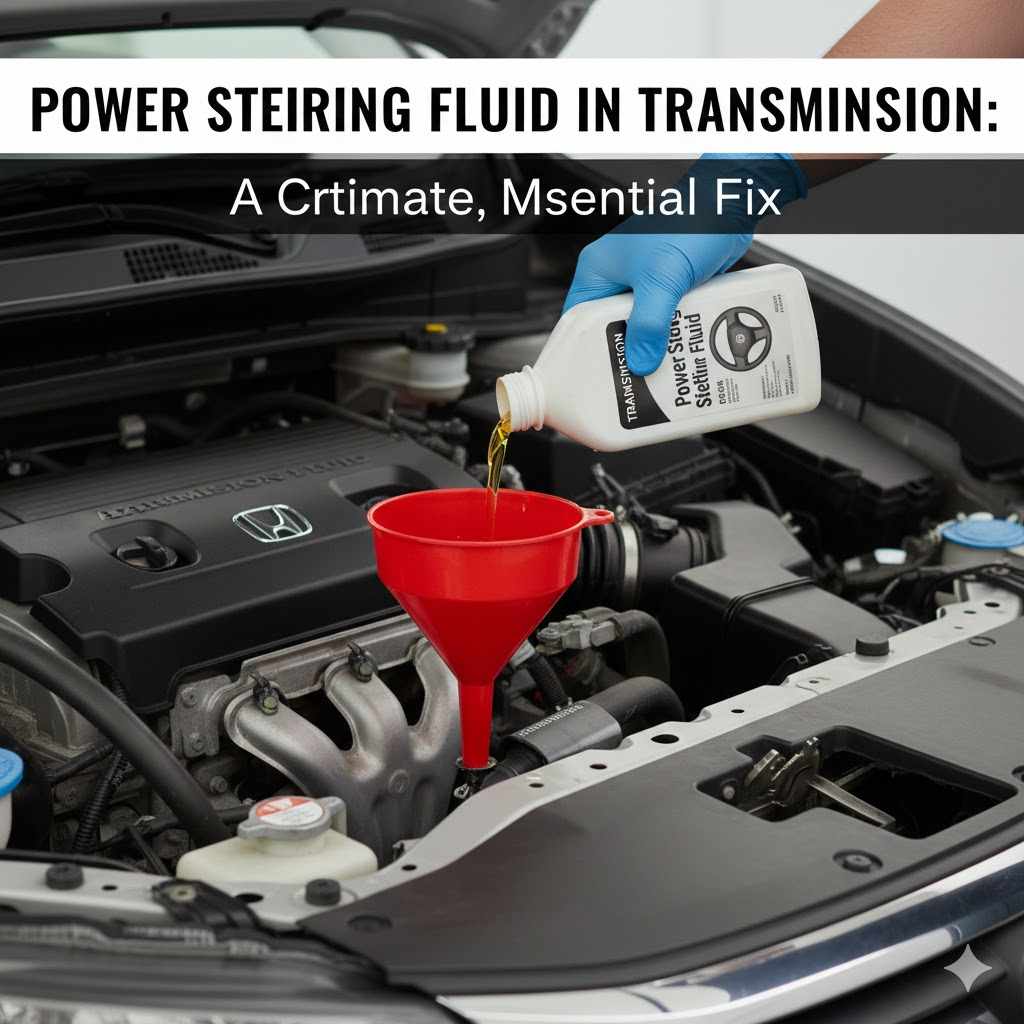
Putting power steering fluid in your transmission is a critical mistake that can cause severe, expensive damage. Power steering fluid lacks the essential friction modifiers and detergents needed for a transmission. This will lead to slipping gears, overheating, and eventual transmission failure. Do not start or drive the vehicle; have it towed to a mechanic immediately.
Hello there! I’m Md Meraj, and today we’re tackling a common car care question that can feel a bit scary. Have you ever stood in front of your car with two different fluid bottles, wondering which one goes where? It happens to the best of us. Mixing up fluids, especially putting power steering fluid in the transmission, is a simple mistake with big consequences.
But don’t worry. If you’ve done this or are just curious, you’re in the right place. I’m here to walk you through exactly why this is a problem, what to do if it happens, and how to prevent it in the future. We’ll break it all down into simple, easy-to-follow steps. Let’s get your car knowledge boosted and your confidence on the road!
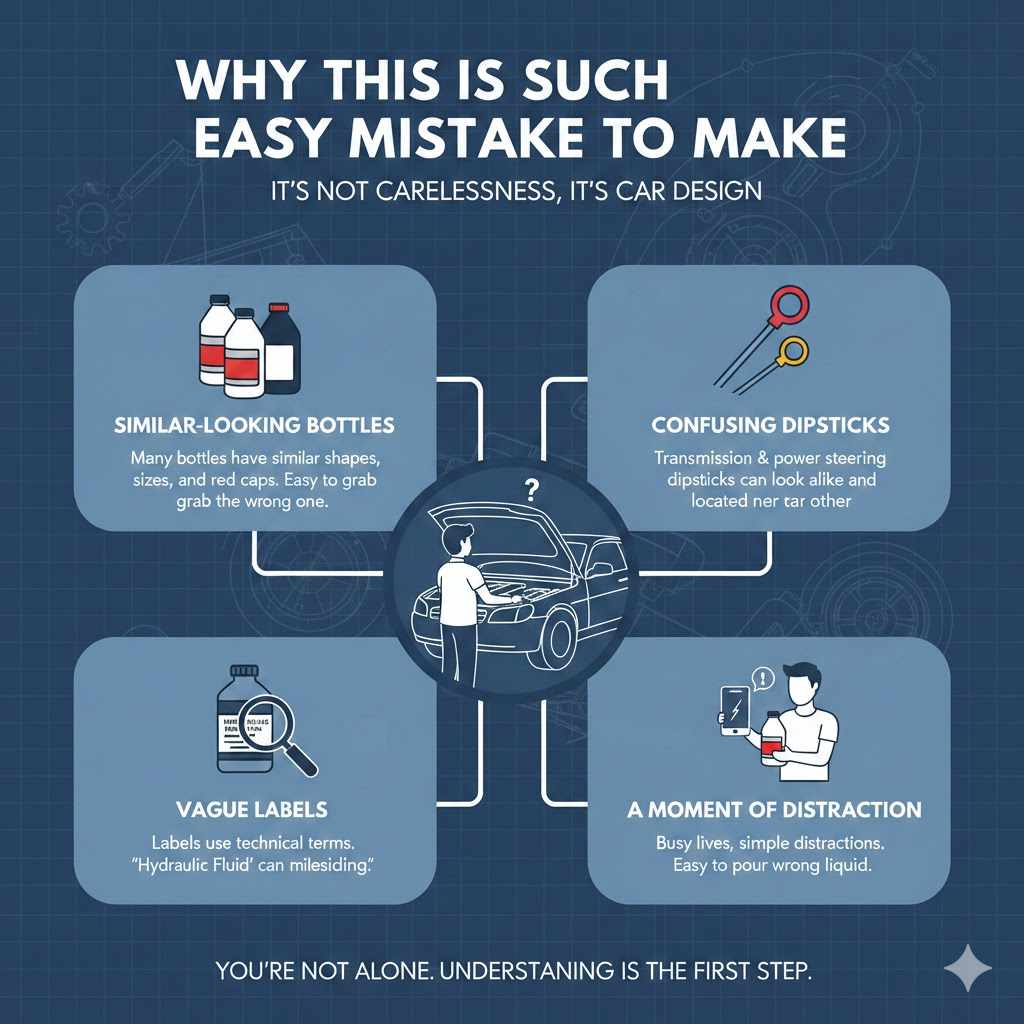
Why This Is Such an Easy Mistake to Make
Before we dive into the technical side, let’s acknowledge why this happens. It’s not about being careless; it’s about car design and packaging that can be confusing for anyone who isn’t a seasoned mechanic. Here are a few common reasons for the mix-up:
- Similar-Looking Bottles: Walk down any auto parts store aisle, and you’ll see a wall of plastic bottles. Many have similar shapes, sizes, and even red-colored caps or fluid. It’s easy to grab the wrong one in a hurry.
- Confusing Dipsticks: Under the hood, dipstick handles for the transmission and power steering reservoir can look alike. They are often located near each other, adding to the confusion.
- Vague Labels: Sometimes the labels on fluid bottles use technical terms that aren’t clear to the average driver. “Hydraulic Fluid” is a term that could technically describe both, even though they are formulated for completely different jobs.
- A Moment of Distraction: We all have busy lives. A simple distraction while you’re topping off fluids is all it takes to pour the wrong liquid into the wrong place.
If you’ve made this mistake, remember you’re not alone. The important thing is what you do next. Understanding the problem is the first step toward fixing it correctly.
Power Steering Fluid vs. Transmission Fluid: What’s the Real Difference?
To understand why this mix-up is so damaging, you need to know that these two fluids are engineered for vastly different purposes. They are not interchangeable, not even for a short time. Think of it like trying to cook with motor oil instead of olive oil—they are both liquids, but the results would be disastrous.
Automatic Transmission Fluid (ATF) is one of the most complex fluids in your vehicle. It’s a coolant, a hydraulic fluid, a lubricant, and a friction modifier all in one. Power Steering Fluid (PSF) is a much simpler hydraulic fluid designed only to make steering easier.
Let’s look at a simple breakdown:
| Property | Automatic Transmission Fluid (ATF) | Power Steering Fluid (PSF) |
|---|---|---|
| Main Job | Lubricates gears, cools the transmission, provides hydraulic pressure for shifting, and manages friction for clutch plates. | Provides hydraulic pressure to assist in turning the steering wheel. |
| Viscosity (Thickness) | Specifically engineered to flow at a certain rate under high heat and pressure to ensure smooth shifting. | Typically thinner and designed for a lower-pressure, less complex system. |
| Friction Modifiers | CRITICAL. Contains special additives that allow the clutch plates inside the transmission to engage smoothly without slipping or grabbing. | Contains none or very different friction modifiers. Using it in a transmission will cause severe clutch slippage. |
| Detergents & Dispersants | High levels of detergents to keep the complex transmission valve body clean and free of varnish and sludge. | Very few detergents. It is not designed to clean a complex system. |
| Heat Resistance | Designed to withstand extremely high operating temperatures (200°F or more). | Operates at much lower temperatures and lacks the additives to prevent breakdown under high heat. |
As you can see, ATF is a high-tech workhorse. Putting power steering fluid in its place is like sending in an office worker to do a firefighter’s job—it’s just not equipped for the intense environment of a modern transmission.
What Happens Inside Your Transmission When You Add Power Steering Fluid?
When the wrong fluid enters the transmission, a chain reaction of damage begins. The severity depends on how much fluid was added and if the car was driven. Here’s what happens, from bad to worse.
Immediate Effects (Within Minutes of Driving)
- Slipping Gears: This is the first and most obvious sign. The transmission clutches need specific friction to engage. Power steering fluid is too “slippery” and lacks the right modifiers, causing the clutches to slip instead of grabbing. You’ll feel the engine rev up, but the car won’t accelerate properly.
- Delayed or Harsh Shifting: The hydraulic properties of PSF are different from ATF. This can confuse the transmission’s computer and hydraulic valves, leading to jerky, hard shifts or a long delay before it changes gears.
- Overheating: ATF is a coolant. It carries heat away from the hard-working parts of the transmission. PSF cannot handle the high temperatures. The transmission will quickly overheat, which is a major cause of transmission failure. Many cars will flash a transmission temperature warning light on the dashboard.
Short-Term Damage (After a Few Miles of Driving)
- Clutch Pack Damage: The slipping clutches generate immense heat and friction. This quickly burns up the delicate friction material on the clutch plates, glazing them over and making them useless.
- Seal and Gasket Failure: The additives in ATF are designed to keep rubber seals pliable. The different chemical makeup of power steering fluid can cause these seals to swell, harden, or degrade, leading to internal and external fluid leaks.
- Contamination of the Valve Body: The valve body is the transmission’s “brain,” with a complex maze of channels and solenoids. The wrong fluid won’t clean this area properly, and burnt material from the clutches will quickly clog these small passages, causing erratic shifting even after the fluid is changed.
Long-Term Catastrophic Failure
If the problem isn’t addressed immediately, you are guaranteeing a complete transmission failure. The torque converter can be damaged, planetary gears can be starved of proper lubrication, and the entire unit can be filled with sludge and metal shavings from destroyed parts. At this point, the only solution is a complete, and very expensive, transmission rebuild or replacement.
A Note for the 2006 Ford Explorer Owner
I see you’re asking, “Can I use power steering fluid instead of transmission fluid for a 2006 Ford Explorer?” The answer is an absolute and emphatic NO.
Your 2006 Ford Explorer likely uses a 5-speed or 6-speed automatic transmission (like the 5R55S or 6R60). These are sophisticated units that are extremely sensitive to the type of fluid used. They require a specific type of transmission fluid, known as MERCON V or MERCON SP, depending on the exact model.
Using anything else, especially power steering fluid, will rapidly destroy the internal components. The friction modifiers in MERCON fluids are precisely formulated for the clutch materials in your Explorer’s transmission. Power steering fluid will cause immediate slipping, overheating, and will lead you down the path to a repair bill that could easily be $3,000 or more. Never, ever substitute these fluids.
“I Already Added Power Steering Fluid to My Transmission!” – An Emergency Action Plan
Okay, take a deep breath. If this just happened, what you do in the next 30 minutes is critical. Follow these steps precisely to minimize the damage.
Step 1: DO NOT START THE ENGINE
This is the most important rule. If you haven’t started the car yet, the wrong fluid is just sitting in the pan. It has not circulated through the transmission. Do not turn the key. Do not even put it in the “on” position. Starting the engine will turn the transmission’s internal pump, which will instantly start circulating the contaminated fluid everywhere.
Step 2: If You Drove It, STOP DRIVING IMMEDIATELY
If you already started the car and drove it—even just to the end of the driveway—pull over to a safe location and turn off the engine immediately. Every second the engine is running, the contaminated fluid is being forced through the delicate parts of your transmission, causing more damage.
Step 3: Assess the Situation (Be Honest)
Take a moment to think about what happened:
- How much fluid did you add? Was it just a few ounces to top it off, or did you pour in a whole quart? Less is better, but any amount is a problem.
- Did you start the car? As we said, this is the key question.
- How far did you drive? A few feet? A few miles? The farther you drove, the more extensive the potential damage.
This information will be vital for the mechanic.
Step 4: Call for a Tow Truck
Do not try to drive the car to the repair shop. It doesn’t matter if it’s only a mile away. Driving it will turn a potentially manageable repair (a fluid flush) into a definite transmission rebuild. The cost of a tow truck (around $100-$200) is an incredible bargain compared to the cost of a new transmission (thousands of dollars). According to the Federal Trade Commission’s consumer advice on auto repair, getting your car to a reputable shop without causing more damage is a key first step.
Step 5: Explain Everything to Your Mechanic
When the car gets to the shop, be completely honest with the service advisor. Tell them:
- “I accidentally added power steering fluid to the transmission.”
- Tell them exactly how much you added (your best guess).
- Tell them if the car was started and how far it was driven.
This information is not for them to judge you; it’s crucial for them to decide on the correct repair plan. Hiding the mistake will only lead to a misdiagnosis and more expensive repairs down the road.
The Repair Process: What to Expect at the Shop
Once your car is in the hands of a professional, they will likely recommend one of two paths, depending on the severity of the situation.
Best-Case Scenario: You Didn’t Start the Car
If the engine was never started, the wrong fluid is sitting at the bottom of the transmission oil pan. The fix is relatively simple:
- Drain and Pan Drop: The mechanic will drain all the fluid from the pan, remove the pan, and clean it thoroughly.
- Filter Change: They will replace the transmission filter, which may have absorbed some of the wrong fluid.
- Refill with Correct ATF: They will refill the transmission with the correct type of ATF specified by your vehicle’s manufacturer.
This is the least expensive outcome and you will likely have dodged a major bullet.
Worst-Case Scenario: You Drove the Car
If the engine was run, the contaminated fluid has circulated everywhere. A simple drain-and-fill won’t be enough, as a lot of old fluid stays in the torque converter and cooler lines. The solution is a complete transmission flush.
- Transmission Flush: A special machine is hooked up to your transmission cooler lines. It pushes out all of the old, contaminated fluid while simultaneously pumping in new, clean ATF. This is the only way to get nearly 100% of the bad fluid out.
- Inspection: A good mechanic will inspect the fluid that comes out. If they see a lot of dark, burnt fluid or sparkly metal particles, it’s a sign that damage has already occurred.
- Further Repairs: If damage is suspected, they may need to perform more diagnostics or even remove the transmission for inspection and repair of damaged seals or clutches.
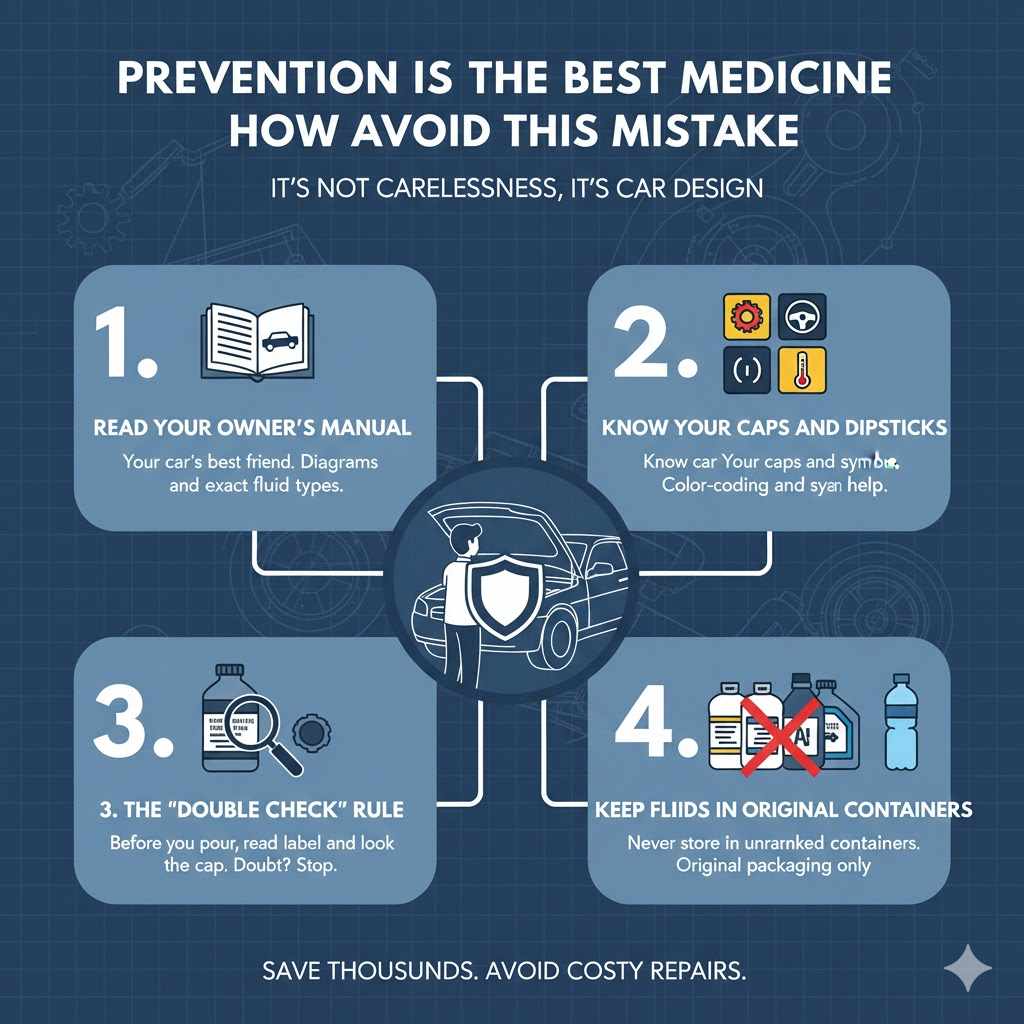
Prevention Is the Best Medicine: How to Avoid This Mistake
The best way to fix this problem is to never let it happen. Here are a few simple habits that can save you thousands of dollars.
1. Read Your Owner’s Manual
Your car’s owner’s manual is your best friend. It has diagrams showing where each fluid reservoir is located and clearly states the exact type of fluid required. Keep it in your glove box.
2. Know Your Caps and Dipsticks
Car manufacturers use color-coding and symbols to help you. While not universal, these are common conventions:
| Fluid Type | Common Cap/Dipstick Color | Common Symbol |
|---|---|---|
| Engine Oil | Yellow or Black | An old-fashioned oil can symbol |
| Transmission Fluid | Red, Pink, or Black | Often has a gear symbol or text like “ATF” |
| Power Steering Fluid | Black or Gray | A steering wheel symbol |
| Brake Fluid | Yellow or Black | A circle with parentheses around it |
| Coolant / Antifreeze | Black or Yellow Radiator Cap | A thermometer or radiating lines symbol |
| Windshield Washer Fluid | Blue | A windshield with a spray symbol |
3. The “Double Check” Rule
Before you pour anything, always double-check. Read the label on the bottle. Look at the cap on the car’s reservoir. If you have even a tiny bit of doubt, stop. It’s better to take a few extra minutes to be sure than to spend a few thousand dollars on a repair.
4. Keep Fluids in Original Containers
Never store automotive fluids in unmarked containers like old water bottles. This is a recipe for disaster. Keep them in their original packaging so you can always read the label.
Frequently Asked Questions (FAQ)
1. How much power steering fluid in the transmission is too much?
Technically, any amount is too much. Even a few ounces can dilute the transmission fluid enough to cause slipping and damage over time. The problem is severe whether you added a little or a lot.
2. Can I just drain the fluid myself and refill it?
Unless you are an experienced DIY mechanic, this is not recommended. A simple drain only removes about 40-50% of the fluid. The rest remains in the torque converter and cooler. You need a professional flush to remove all the contamination.
3. Will this mistake void my car’s warranty?
Yes, almost certainly. Damage caused by adding the wrong fluid is considered negligence or improper maintenance and is not covered by powertrain warranties. You will be responsible for the full cost of the repair.
4. How much does it cost to fix this mistake?
If you didn’t start the car, you might get away with a drain and fill for $150-$300. If you drove the car, a professional transmission flush could cost $250-$500. If significant damage occurred, a transmission rebuild can cost anywhere from $2,500 to $5,000 or more.
5. What does transmission fluid look and smell like?
New automatic transmission fluid (ATF) is typically translucent and bright red. It has a slightly sweet, oily smell. Burnt or old ATF will be dark brown or black and have a nasty, burnt toast smell. This is a sign your transmission needs service.
6. Is there a universal fluid I can use for both?
No, there is absolutely no universal fluid that is safe for both your power steering system and your automatic transmission. They are completely separate systems that require specially formulated fluids.
7. My car seems to be driving fine after I added the wrong fluid. Am I okay?
No. Just because you don’t feel a problem immediately doesn’t mean damage isn’t happening. The clutch material could be slowly glazing over, and seals could be degrading. You must get the fluid changed immediately to prevent future failure.
Your Confident Path Forward
Making a mistake like adding power steering fluid to your transmission can feel overwhelming, but it’s not the end of the world if you handle it correctly. The key is to stop, think, and act quickly—but not by driving the car.
Remember the simple rules: Don’t start the engine, call for a tow, and be honest with your mechanic. By taking these immediate steps, you can turn a potential catastrophe into a manageable lesson in car care.
Use this as a learning experience. Get to know your vehicle, read your owner’s manual, and always double-check before you pour. Building these small habits will give you the confidence to handle basic maintenance and keep your car running reliably for years to come. You’ve got this!