
Understanding Racing Car Types Simply Made Easy
Figuring out the different types of race cars can seem tricky at first. There are so many kinds, from Formula 1 to stock cars, and they all have unique features. This guide, Racing Car Types Explained Simply, will break it down so you can easily tell the difference between these awesome machines. Don’t worry if it feels like a lot to learn; we’ll go step by step, covering everything you need to know, without the technical jargon. Get ready to explore the exciting world of race cars!
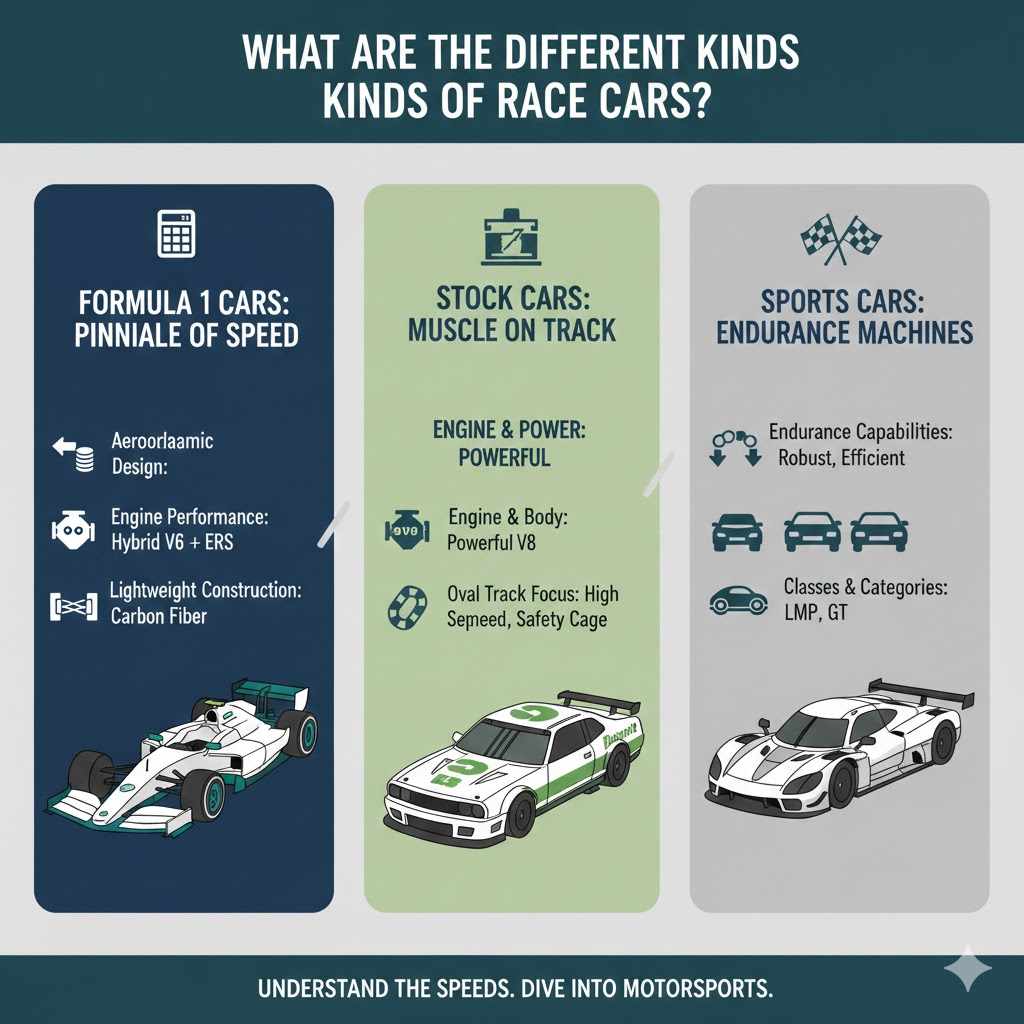
What Are the Different Kinds of Race Cars?
The world of motorsports is filled with a variety of race car types, each engineered for specific racing disciplines and track conditions. From the sleek, open-wheel Formula 1 cars to the powerful, closed-wheel stock cars, each type has its own distinct design, performance characteristics, and racing regulations. Some cars are built for speed on oval tracks, while others are built for maneuvering tight corners. Many people find the numerous categories a bit challenging to fully grasp. This section will give you a clear overview of the main types, helping you to distinguish between them.
Formula 1 Cars: The Pinnacle of Speed
Formula 1 (F1) cars represent the absolute peak of racing technology. These cars are known for their incredibly advanced engineering and unmatched performance. They are single-seater, open-wheel cars, meaning the driver sits in an open cockpit, and the wheels are not covered by the car’s body. These cars are built to perform on various circuits, including road courses and street circuits. They are known for their extremely powerful engines and advanced aerodynamics, which are designed to generate massive downforce, allowing the cars to corner at incredible speeds. F1 cars are at the forefront of automotive innovation, with constant technological improvements. The FIA (Fédération Internationale de l’Automobile) sets the technical regulations for these cars, ensuring a level of competition while also prioritizing safety. These regulations heavily influence the design and performance.
- Aerodynamic Design: F1 cars are designed to generate significant downforce. This allows them to corner at very high speeds, as the downforce pushes the car toward the track, increasing the grip. Key elements include the front wing, rear wing, and the underbody, all working together to manage airflow.
- Engine Performance: F1 cars use powerful hybrid engines that combine a V6 internal combustion engine with advanced energy recovery systems (ERS). These systems capture energy from braking and exhaust heat, which can be deployed to provide an extra boost of power. The goal is to maximize power output while adhering to strict fuel regulations.
- Lightweight Construction: To maximize speed and acceleration, F1 cars are built to be as light as possible. They use advanced materials such as carbon fiber for the chassis, bodywork, and other components. This allows for superior performance, while also ensuring the car is strong enough to withstand the stresses of high-speed racing.
Stock Cars: Muscle Cars on the Track
Stock cars, particularly those seen in NASCAR (National Association for Stock Car Auto Racing), represent a different flavor of racing. These cars are built to resemble production vehicles, though they’re heavily modified for racing. They feature closed cockpits and are designed primarily for oval tracks. Stock cars are known for their powerful V8 engines and high-speed battles. They’re built for close-quarters racing, where drivers often run in packs, creating intense competition. Safety is a key element in the design of stock cars. The cars are built with roll cages, reinforced chassis, and other safety features to protect the drivers during crashes. The sport is very popular in North America, with races often attracting large crowds.
- Engine and Power: Stock cars typically use powerful V8 engines, which generate a lot of horsepower. These engines are built for durability and performance on high-speed oval tracks. The engine’s power delivery is a key factor in winning races.
- Chassis and Body: The chassis is a crucial part of the stock car. It provides structural support and safety for the driver. The body is designed to resemble the look of a production car but is built for aerodynamics and safety. These cars are designed to withstand collisions.
- Oval Track Focus: Stock cars are specifically optimized for oval tracks. Suspension setups are adjusted for the banking of the tracks, and aerodynamics are adjusted to help the cars perform at high speeds. These adjustments are vital for success.
Sports Cars: Endurance Racing Machines
Sports cars are designed for endurance racing and are built for a combination of speed, reliability, and performance. Unlike F1 cars or stock cars, sports cars often compete in races that last many hours, testing both the cars and the drivers. These cars are typically closed-cockpit vehicles and can come in different classes, such as prototypes and GT cars. Endurance races, like the 24 Hours of Le Mans, are a test of both car and driver. These events place a huge amount of strain on the car. Teams need to manage tires, fuel, and driver changes to come out ahead. The cars use advanced technology for both performance and reliability.
- Endurance Capabilities: These cars are designed to withstand the stress of long races. They have robust engines, reliable components, and efficient fuel consumption systems. Durability is a key focus.
- Classes and Categories: Sports car racing includes several classes, such as LMP (Le Mans Prototype) and GT (Grand Touring). LMP cars are purpose-built racing cars, while GT cars are based on production vehicles. The categories ensure a variety of racing styles and performance levels.
- Aerodynamics and Balance: Because sports cars compete on various track types, they are designed with versatile aerodynamics. They must handle high speeds, corners, and changes in elevation. The goal is to provide a good balance between speed and stability.
Understanding Key Parts of Racing Cars
Understanding the parts of a race car is crucial to fully appreciating the sport. While each type of race car has unique features, certain components play a role in their performance and handling. Familiarizing yourself with these key elements helps in following the races and appreciating the engineering. From the engine and tires to the chassis and aerodynamics, all parts work together to achieve speed, stability, and driver control.
The Engine: The Heart of the Beast
The engine is the heart of any race car, providing the power needed for acceleration and speed. Depending on the car type, engines can vary greatly, from the highly advanced hybrid engines of Formula 1 cars to the powerful V8s found in stock cars. The engine’s performance characteristics, such as horsepower, torque, and fuel efficiency, greatly influence the car’s speed and overall performance. Engine technology is constantly developing, with teams looking for ways to generate more power while also improving fuel efficiency and reliability.
- Horsepower: This is a measure of the engine’s power output. Higher horsepower generally means faster acceleration and higher top speeds. Horsepower plays a major role in the car’s overall performance on the track.
- Torque: Torque is a measure of the engine’s rotational force. It’s what gives a car its acceleration. Higher torque is particularly important for getting the car moving quickly from a standstill or out of corners.
- Engine Types: Race car engines can be internal combustion (like V8s), hybrid (combining combustion engines with electric motors), or even fully electric. The type of engine used dictates the car’s performance characteristics and the racing regulations it must adhere to.
Tires: The Connection to the Track
Tires are the only point of contact between the race car and the track surface, making them a crucial factor in the car’s performance. The grip, durability, and compound of the tires significantly affect the car’s handling, cornering speed, and overall lap times. Different tire compounds are made to suit the track conditions, temperature, and racing strategy. Teams must carefully manage their tires during a race, as tire degradation can have a significant effect on performance. Tire selection is often key to winning a race.
- Grip: The amount of friction that the tire can generate against the track surface. Higher grip allows for faster cornering and better acceleration.
- Tire Compounds: Racing tires are made with different rubber compounds, each offering varying levels of grip, wear, and performance. Softer compounds offer more grip but wear out faster, while harder compounds last longer but provide less grip.
- Tire Management: Teams need to carefully monitor tire wear during a race. This includes analyzing tire pressure, temperature, and wear patterns. The right tire strategy can significantly impact the race’s outcome.
Chassis and Aerodynamics: Shaping Performance
The chassis provides the structural support for the race car. It holds all the components together and protects the driver. The aerodynamics is concerned with how the car interacts with the air, influencing its stability, downforce, and speed. The chassis and aerodynamic elements work together to give the car the right balance, allowing it to perform at high speeds. These are designed to maximize downforce, reducing drag and increasing grip, especially when cornering. Modern racing cars use sophisticated designs. The chassis is often made from lightweight materials, such as carbon fiber, to minimize weight and improve performance.
- Chassis Design: The chassis’ strength and stiffness influence the car’s handling and safety. The design varies depending on the racing series and car type, but the key is to provide a solid foundation for the car’s components.
- Downforce: This is the force that pushes the car down onto the track, increasing grip. Aerodynamic elements like wings, diffusers, and splitters are designed to generate downforce.
- Drag: Drag is the force that resists the car’s movement through the air. Race car designs are developed to minimize drag, allowing for higher top speeds. Aerodynamic efficiency is achieved by carefully managing airflow around the car’s body.
Common Terms in Motorsports Explained
Getting familiar with the language of motorsports can help improve your understanding of the races. From qualifying to pit stops, certain terms pop up frequently. Knowing what these terms mean will help you follow the action with more clarity and enjoy the sport more fully. This section explains some of the most common words and phrases you’ll hear when you watch or talk about racing.
Qualifying: Setting the Grid
Qualifying is a session held before the race where drivers compete to set their starting positions (the grid) for the main event. The drivers each take to the track and try to set the fastest lap time possible within a set amount of time. The driver with the fastest lap time typically gets to start the race in pole position, which gives them a huge advantage. Qualifying sessions are essential to a race weekend, as they set the stage for the race, helping fans follow the action and predict which drivers will be in contention. Teams and drivers often use various strategies, such as tire selection and track position, to maximize their qualifying performance.
- Pole Position: The driver who sets the fastest lap time in qualifying. This is the best starting position.
- Lap Time: The time it takes a driver to complete one lap of the track. Lap times are key in determining qualifying positions.
- Grid: The starting positions of the cars on the track for the start of the race, determined by the qualifying results.
Pit Stops: The Strategy Zone
Pit stops are when a race car enters the pit lane during a race for servicing. These stops can involve changing tires, adding fuel, and making adjustments to the car. Pit stops are a vital part of race strategy, as they can affect the outcome of the race. The timing, duration, and execution of pit stops can influence a team’s strategy. Teams must plan pit stop strategies that consider tire wear, fuel consumption, and track conditions. The pit crew plays a crucial role, as their speed and accuracy in carrying out these tasks can mean the difference between winning and losing.
- Tire Changes: Changing tires during a pit stop is common, especially in races where tire wear is high. The choice of tire compound can influence the timing of the stops.
- Fueling: Refueling is necessary, particularly in longer races, to ensure cars have enough fuel to finish the race. Refueling strategies are tied to how the race plays out.
- Pit Crew: A group of mechanics, engineers, and specialists responsible for servicing the car during pit stops. Their speed, teamwork, and precision are vital to their teams’ performance.
Flags: Signals from Race Control
Flags are an important method for the race control to communicate information to drivers. Flags are used to signal hazards, warn of potential dangers, or indicate the status of the race. Each flag has a different meaning, and it is crucial for drivers to understand the meaning of the flags to ensure their safety and comply with race rules. Flags can affect strategy. Race control officials wave flags from trackside posts. Drivers must watch for these signals. The flag colors and patterns are consistent across motorsports disciplines.
- Green Flag: Indicates the race has begun, or the track is clear. It signifies that the drivers can race at full speed.
- Yellow Flag: Warns drivers of a hazard on the track. Drivers must slow down and be cautious.
- Red Flag: Indicates that the race has been stopped due to a severe incident or dangerous conditions. Drivers must return to the pit lane or designated area.
Comparing Racing Car Types
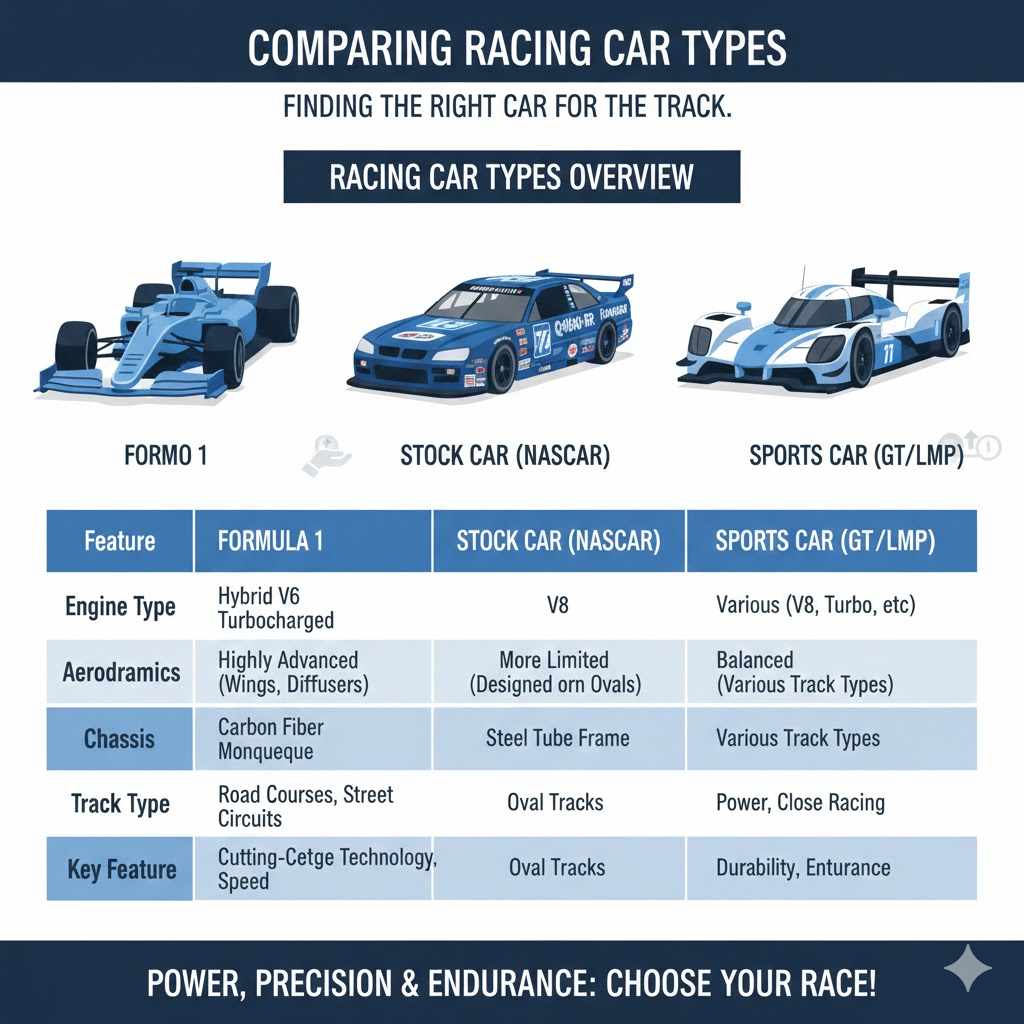
Comparing racing car types can help you understand the strengths and weaknesses of each category. Different car types suit different track types. Factors such as power, weight, and aerodynamics all impact a car’s performance. Comparing these features can assist you in figuring out which car types may appeal to you, depending on the racing you enjoy. We will explore each type of racing car in a comparative table.
| Feature | Formula 1 | Stock Car (NASCAR) | Sports Car (GT/LMP) |
|---|---|---|---|
| Engine Type | Hybrid V6 Turbocharged | V8 | Various (V8, Turbo, etc.) |
| Aerodynamics | Highly Advanced (Wings, Diffusers) | More Limited (Designed for Ovals) | Balanced (Various Track Types) |
| Chassis | Carbon Fiber Monocoque | Steel Tube Frame | Various (Carbon Fiber, Steel) |
| Track Type | Road Courses, Street Circuits | Oval Tracks | Road Courses, Various |
| Key Feature | Cutting-Edge Technology, Speed | Power, Close Racing | Durability, Endurance |
This table offers a clear comparison of different car types, highlighting their unique attributes. The features are presented in a way that helps you understand the key distinctions.
Frequently Asked Questions
Question: What makes Formula 1 cars so fast?
Answer: F1 cars are fast because of their advanced engineering. They have powerful hybrid engines, extremely light construction, and complex aerodynamics designed to generate huge amounts of downforce.
Question: Why do stock cars race on oval tracks?
Answer: Stock cars are specifically designed for oval tracks because their chassis, engine, and aerodynamics are optimized for high-speed racing on these types of circuits. This setup provides for the most exciting racing.
Question: What’s the main goal in sports car racing?
Answer: In sports car racing, the goal is to balance speed, reliability, and endurance. Teams compete to complete the most laps within a specific time, such as in endurance races like the 24 Hours of Le Mans.
Question: What is a pit stop in racing?
Answer: A pit stop is when a race car enters the pit lane to get serviced. It involves changing tires, adding fuel, and making adjustments to the car, which can greatly impact the race’s strategy.
Question: Why are flags important in racing?
Answer: Flags are used by race control to communicate information to drivers about track conditions, hazards, and the status of the race. They help ensure driver safety and fair competition.
Final Thoughts
Understanding Racing Car Types Explained Simply has given you an initial look at the world of motorsports. You now understand the basic differences between racing car types, from the technological marvels of Formula 1 to the intense action of stock car racing and the endurance tests of sports car racing.
You’ve also explored key car parts, common race terms, and the key elements that contribute to the thrill of racing. Whether you’re a new fan trying to learn the basics, or someone looking to brush up on their knowledge, we hope this guide has helped clear up any confusion and sparked your interest in the sport.
Now that you’ve got a grasp of the basics, the next step is to watch a race. Observe the different types of cars, listen to the commentators, and see how the strategies unfold. Start with a race that interests you, and you will quickly develop a deeper appreciation for the cars and the amazing driving talent of the racers. Enjoy the ride!