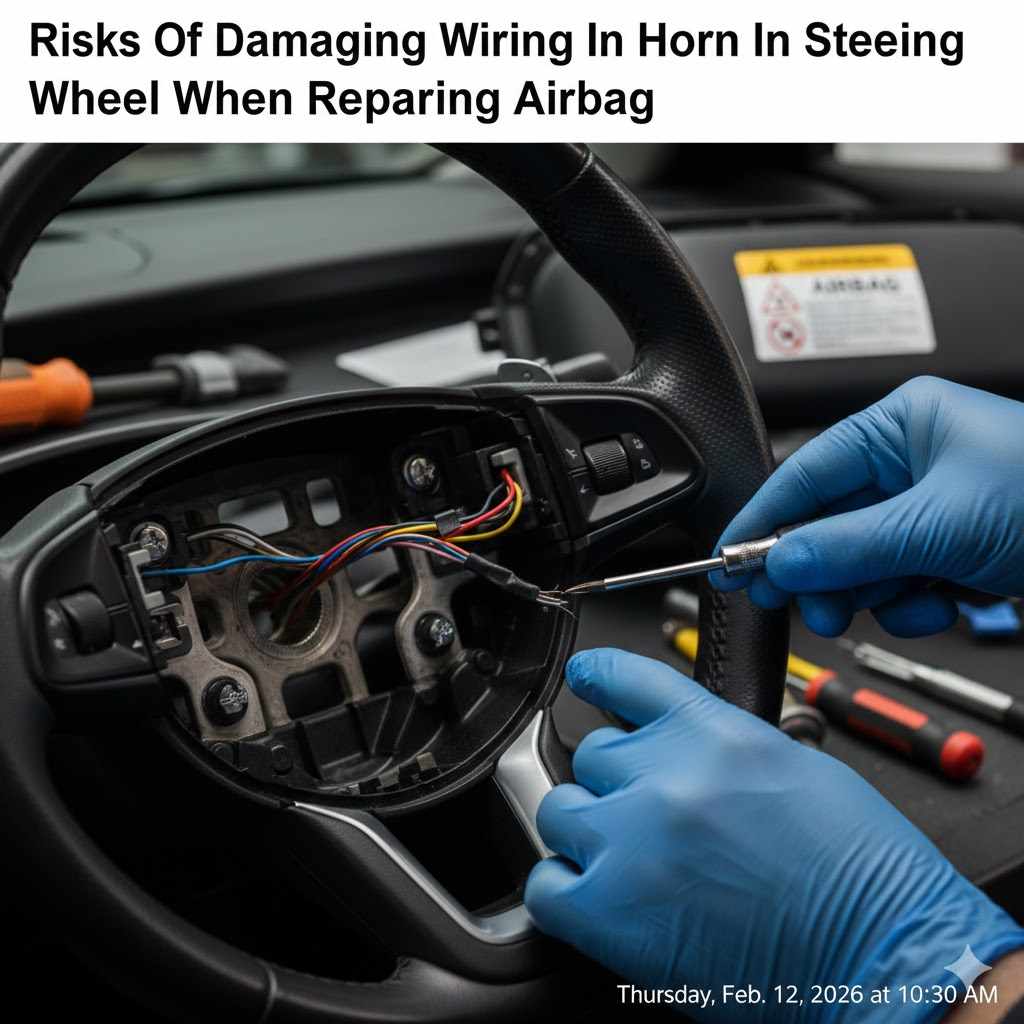
Risks Of Damaging Wiring In Horn In Steering Wheel When Repairing Airbag
Understanding the Steering Wheel’s Inner Workings
Your steering wheel is more than just a way to turn your car. It’s a hub of activity. Inside, it houses vital safety features and convenience controls.
The airbag system is the most critical. It’s designed to deploy instantly in a crash. But other components share that space.
These include the airbag wiring harness, the horn circuit, and buttons for your radio or cruise control.
All these parts connect through a central clock spring. This is a special kind of coil that allows your steering wheel to turn freely. It also keeps the electrical connections intact.
The wires for your horn are usually quite thin. They are bundled together with other wires. These wires all run through the clock spring assembly.
This shared pathway is where potential problems arise.
When you need to access the airbag module, you have to remove the steering wheel. This means disconnecting a lot of small wires. The horn wiring is just one small part of this.
It’s easy to overlook or handle it roughly. This can cause damage that you won’t notice until later. Then, you’ll have a non-working horn and maybe other issues too.
My Own Close Call with Steering Wheel Wiring
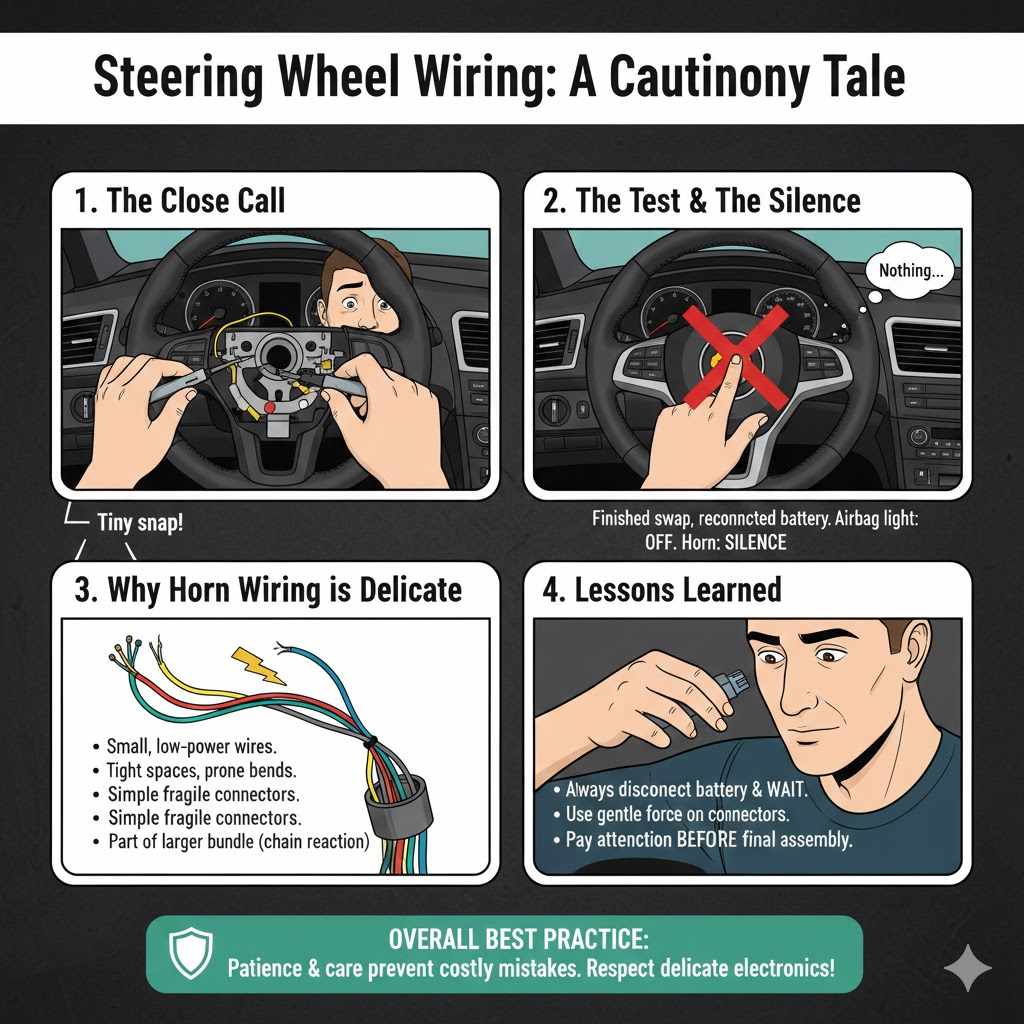
I remember one late Saturday afternoon. I was helping a friend replace their old steering wheel. It had a cracked leather wrap.
We were focused on carefully removing the airbag module. We wanted to be super safe, of course. We disconnected the battery and waited.
Then, we gently pried off the airbag cover.
The moment of truth came when we unclipped the airbag connector. It felt a bit stiff. I tugged a little harder than I should have.
Suddenly, I heard a tiny snap. My stomach dropped. I looked closely at the connector.
It seemed fine. But then I noticed one of the small wires leading away from it looked… stressed. It was bent at a weird angle.
I felt a wave of panic wash over me. Was that the horn wire? I hoped not.
We finished the wheel swap, reconnected everything, and tested. The airbag warning light stayed off, thankfully. But when I pressed the horn button?
Nothing. Just silence. That tiny snap was indeed the sound of a broken horn wire.
It was a frustrating lesson learned.
Why Horn Wiring is Delicate
The wires for your car’s horn are typically very small. They are designed for low power. They need to fit within tight spaces.
This makes them more prone to damage. A sharp bend or excessive force can easily break them. They are often part of a larger wiring bundle.
This means one snag can affect multiple circuits. The connections are often simple push-on or clip-in types. These are not as robust as some other connectors.
Gentle handling is key.
Common Ways to Damage Horn Wiring During Airbag Repair
When you’re working on your steering wheel, several things can go wrong. The goal is usually to get to the airbag module. This means removing the steering wheel itself.
During this process, the wiring is exposed and vulnerable.
One major risk is how you disconnect the airbag. These connectors often have small locking tabs. If you pull too hard or at the wrong angle, you can break these tabs.
This can also stress the wires connected to the connector. If the horn shares a connector or is very close, its wires could be affected.
Another common issue is removing the steering wheel from the column. This often requires a steering wheel puller. If not used correctly, or if the wheel is stubborn, you might apply uneven pressure.
This pressure can transfer to the components inside. The clock spring and its associated wiring are especially sensitive to this. A rough removal can twist or pinch these wires.
Once the wheel is off, you have direct access to the wiring. This is where many mistakes happen. Tools can slip.
You might accidentally cut or pinch a wire with a screwdriver or pliers. You might also snag a wire on a rough edge of the steering column. Or perhaps you don’t fully understand how the wires are routed.
This leads to them being pulled taut when they shouldn’t be.
The clock spring itself is a frequent culprit. This is a spiral-wound ribbon cable. It allows for the steering wheel’s rotation.
If you spin the steering wheel after removing the airbag and before disconnecting the clock spring, you can damage it. This can break internal connections. The horn wires pass through this delicate component.
So, damage to the clock spring often means damage to the steering wheel horn wire.
The Role of the Clock Spring
The clock spring is a crucial part. It looks like a small roll of tape. Inside, it’s a coiled ribbon wire.
It connects the steering wheel controls to the car’s electrical system. This includes the airbag, horn, and buttons. It’s designed to allow many turns of the steering wheel.
If you spin the wheel too far when it’s disconnected, you can break it. This is a common mistake. If the clock spring is damaged, the airbag and horn not working can be a direct result.
Signs of Damaged Horn Wiring
So, you’ve finished your steering wheel repair. Everything seems okay. But then you go to honk your horn, and… silence.
This is the most obvious sign. Your horn simply does not sound when you press the button. This is a direct indicator of a problem with the horn circuit.
Sometimes, the issue isn’t total silence. You might hear a faint click from under the hood. This could mean power is reaching the horn relay.
But the horn itself isn’t getting the signal or the power to sound. Or, you might hear a weak or distorted sound. This suggests a poor connection or a partially damaged wire.
Another subtle sign can be intermittent horn function. It might work sometimes, but not others. This often happens when a wire is partially broken.
Wiggling the steering wheel or hitting a bump might temporarily restore the connection. This is a classic symptom of a failing connection. It could be at the connector, within the clock spring, or at the horn itself.
It’s also possible to get other electrical issues. If you accidentally shorted wires or damaged a common ground point, other functions might be affected. You might notice dashboard lights flickering.
Or, other steering wheel buttons might stop working. This suggests a broader electrical problem caused by the repair work.
In some modern cars, the horn system is tied into the car’s computer. A damaged wire could trigger a warning light on the dashboard. This light might be for the airbag, but it can also indicate other electrical faults.
Always pay attention to any new lights that appear after a repair.
Quick Checks After Repair
- Horn Test: The first thing to do. Press the horn button firmly.
- Listen Carefully: Do you hear any clicks from the steering column or under the hood?
- Dashboard Lights: Check for any new warning lights, especially airbag or service lights.
- Other Controls: Test any other buttons on the steering wheel, like cruise control or radio.
- Steering Wheel Feel: Does the wheel turn smoothly? Any strange noises?
What Happens If the Horn Wiring is Damaged?
The immediate consequence is clear: no honk. This is more than just an annoyance. In many places, a working horn is a legal requirement.
It’s a safety device. You use it to warn other drivers or pedestrians of danger. Not having a functioning horn can put you and others at risk.
Beyond the missing sound, there are other potential issues. If the damaged wire caused a short circuit, it could blow a fuse. This would mean the horn wouldn’t work, but it would be a simple fix: replace the fuse.
However, a more serious short could damage other electrical components. It could even overheat wiring and pose a fire risk. This is why careful handling is crucial.
Damage to the clock spring is a significant concern. As mentioned, it carries wires for multiple systems. If the horn wires are damaged, it’s possible the airbag wires are also stressed.
While you might have successfully reinstalled the airbag, its readiness for a true emergency could be compromised. This is a serious safety implication.
Sometimes, a damaged wire can lead to electrical “noise” or interference. This can affect sensitive electronics in the car. The car’s computer might register phantom errors.
This can lead to unpredictable behavior in other systems. It can also make diagnosing future problems much harder.
Contrast: Normal vs. Concerning
Normal: The horn works perfectly. All steering wheel buttons function. No dashboard warning lights are on.
The steering wheel turns smoothly without unusual sounds.
Concerning: The horn does not work. Other steering wheel buttons are also dead or work only sometimes. A dashboard warning light related to the airbag or electrical system is illuminated.
The steering wheel feels stiff or makes clicking noises when turned.
Preventing Damage: Best Practices for Steering Wheel Repairs
The best way to deal with damaged wiring is to prevent it from happening in the first place. This requires patience, careful attention, and the right tools. If you’re not comfortable working with these delicate systems, it’s always best to let a professional handle it.
1. Disconnect the Battery: Always disconnect the negative battery terminal. Wait at least 10-15 minutes.
This allows any residual power in the airbag system to dissipate. This is the most critical safety step.
2. Understand the System: Before you start, look at diagrams or videos of your specific car’s steering wheel. Know where the airbag connectors are.
See how the wiring is routed. Understand the function of the clock spring.
3. Use the Right Tools: Invest in a good set of trim removal tools. These are plastic and won’t scratch or damage your interior.
For removing the steering wheel, use a proper steering wheel puller. Never try to force the wheel off.
4. Gentle Disconnection: When disconnecting the airbag connectors, be gentle. Look for the locking tabs.
Release them carefully. If a connector feels stuck, re-check your service manual. Don’t force it.
5. Protect the Clock Spring: This is vital. Once the airbag is disconnected and the steering wheel is about to be removed, the clock spring is exposed.
It often has small plastic clips or marks to keep it centered. Do not spin the steering wheel freely once it’s off the column. If you must move it, try to keep it in its original orientation or note its center position.
Some mechanics even tape the airbag connector in place to prevent it from moving too much.
6. Careful Handling of Wires: When the steering wheel is off, the wiring is very exposed. Avoid letting tools snag on wires.
Don’t pull wires taut. Be aware of where they lead. If you need to move a wire bundle, do so gently.
7. Double-Check Connections: Before reassembling everything, ensure all connectors are fully seated and locked. Sometimes, a wire might look connected but isn’t making proper contact.
When to Call a Professional
- If you are unsure about any step.
- If you don’t have the correct tools.
- If you have a history of electrical issues with your car.
- If the vehicle is particularly complex or high-end.
- If the repair involves multiple safety systems.
Real-World Scenarios and Their Implications
Let’s paint a picture of how this plays out in everyday life. Imagine a busy parent. They’re rushing to pick up their kids.
They need to honk at a car that’s blocking their driveway. They press the horn button, expecting a loud blast. Instead, silence.
The parent might feel a rush of frustration and worry. The missing horn could cause a near-miss with another vehicle.
Or consider a young driver. They’ve just gotten their first car and decided to personalize the steering wheel. They try to swap out the horn button.
They accidentally yank a wire. Now, their horn doesn’t work. They might not realize the danger until they’re in a situation where they desperately need it.
This can be a scary realization.
In colder climates, you might be wearing gloves during a repair. This can make your hands less nimble. It’s harder to feel small connectors or delicate wires.
The added bulk of gloves increases the risk of applying too much pressure or snagging something. This is why very fine motor tasks are often best done with bare hands or very thin gloves.
In warmer climates, heat can be a factor. If you’re working on your car in a hot garage or driveway, fatigue can set in faster. You might make a small mistake due to being overheated and tired.
This can lead to the very problems we’re discussing.
Observational Flow: What Happens When Wires Get Damaged
- Initial Repair Attempt: You start working on the steering wheel, perhaps for an airbag or cosmetic reason.
- Accidental Snag/Pull: A wire is pulled too hard, bent sharply, or cut by a tool.
- Connection Interrupted: The electrical signal for the horn can no longer pass through the damaged wire.
- No Horn Sound: You test the horn, and it doesn’t work.
- Possible Secondary Issues: Depending on the severity, other electrical problems or warning lights might appear.
- Diagnosis and Repair: The damaged wire or component (like the clock spring) needs to be identified and fixed or replaced.
What This Means for You: When is it Normal, When to Worry
It’s normal for a horn to work every single time you press it. Any deviation from that is something to pay attention to. If your horn suddenly stops working after a steering wheel repair, it’s not a coincidence.
It’s a direct indicator of an issue caused by the repair work.
You should worry if the horn failure is accompanied by other symptoms. These include dashboard warning lights, especially for the airbag. If other steering wheel controls also stop working, it suggests a more widespread electrical problem.
This could be due to damage to the clock spring or a short circuit.
If you notice any fraying, cutting, or unusual wear on any wires around the steering wheel after a repair, that’s a major red flag. Also, if the steering wheel itself feels different – stiffer to turn, or making odd noises – it points to potential internal damage that could affect the horn wiring.
A simple check is to listen. When you press the horn button, do you hear anything? A faint click from the steering column or a relay under the hood means the signal is getting out of the steering wheel.
If you hear nothing at all, the problem is likely within the steering wheel itself, possibly the wiring.
Quick Scan: Horn Issues Post-Repair
| Symptom | Likely Cause | Urgency |
| Horn silent, no clicks | Broken horn wire, faulty clock spring, disconnected connector | High |
| Horn silent, faint click heard | Horn fuse blown, horn relay faulty, horn itself bad | Medium |
| Intermittent horn function | Partially broken wire, loose connection | Medium |
| Airbag light on, horn dead | Damaged clock spring affecting multiple circuits | Very High |
Quick Fixes and Tips for Horn Wiring Issues
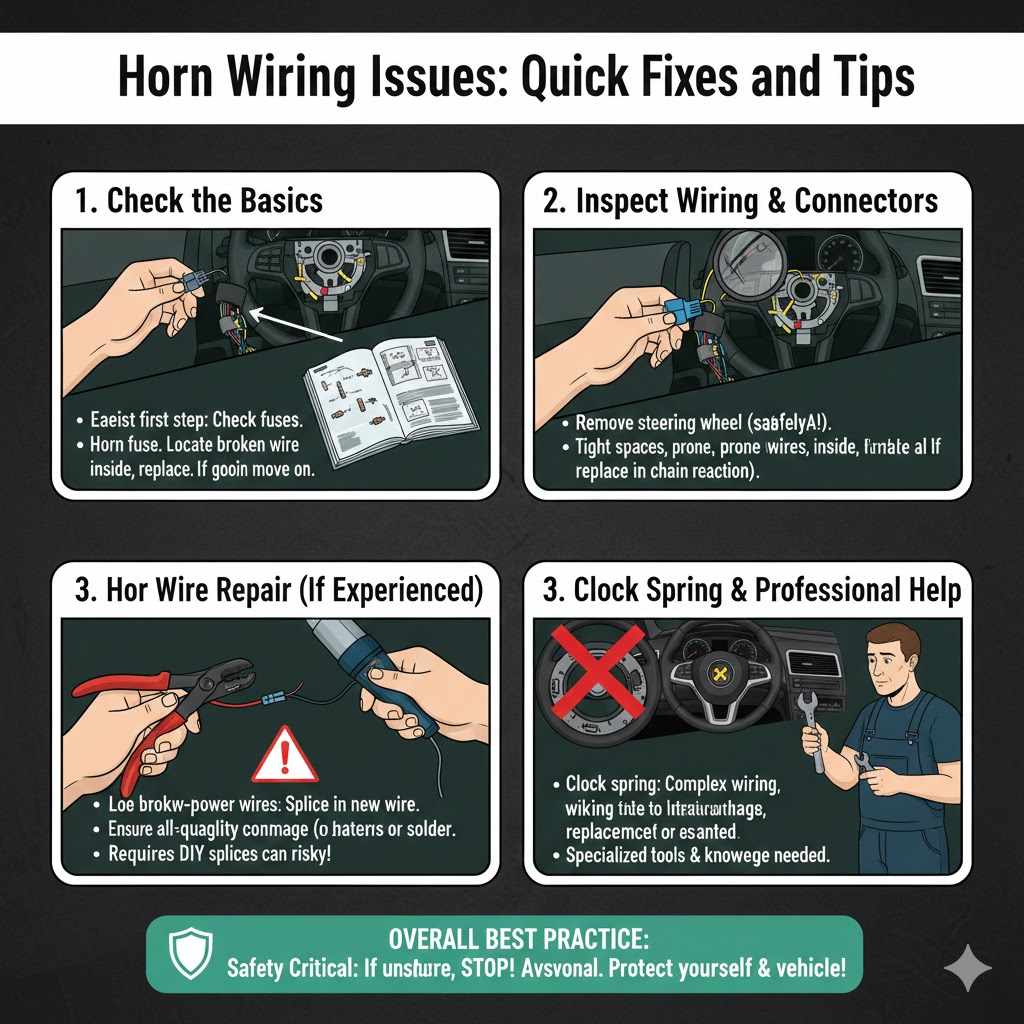
Fixing damaged horn wiring usually involves pinpointing the exact break. This can be tricky. First, check the fuses.
It’s the easiest thing to rule out. Your car’s owner’s manual will tell you which fuse is for the horn.
If the fuse is good, the problem is likely in the wiring or the clock spring. You might need to remove the steering wheel again to inspect the connections. Look closely at the airbag connector and any wires leading from it.
Check the wiring harness for any signs of damage. Carefully examine the clock spring for cracks or physical damage.
Sometimes, a wire might simply have become disconnected. Ensure all connectors are pushed in firmly and are latched. If a wire is visibly broken, it might be possible to repair it.
You would need to splice in a new piece of wire using a high-quality crimp connector or solder. However, this should only be done if you are experienced with electrical repairs.
For damaged clock springs, replacement is usually the only option. These are specialized parts. If you suspect the clock spring is the issue, it’s often best to take it to a mechanic.
They have the tools and knowledge to replace it safely.
Remember, working on the steering wheel involves safety-critical components. If you’re unsure, always seek professional help. A small mistake can have big consequences.
Frequent Questions About Steering Wheel Horn Wiring
Can I accidentally break the horn wire when removing an airbag?
Yes, it’s possible. The horn wires are often routed near or through the same connectors as the airbag. Pulling too hard on connectors or snagging wires with tools can damage the horn circuit.
What is a clock spring and how does it relate to the horn?
The clock spring is a coiled ribbon cable that allows electrical connections to pass through the rotating steering wheel. It connects the horn button to the car’s horn system. If the clock spring is damaged, the horn may stop working.
Is it safe to repair a broken horn wire myself?
It can be, but it requires care. If the wire is simply disconnected, reconnecting it is straightforward. If it’s broken and needs splicing, ensure you use proper techniques and materials.
If you’re not experienced, professional repair is recommended, especially since it’s near the airbag system.
My horn doesn’t work after changing the steering wheel. What’s the first thing I should check?
Start by checking the horn fuse. If the fuse is good, re-inspect the connections you made in the steering wheel. Make sure all connectors are fully seated and latched.
Then, carefully examine the wiring harness for any signs of damage.
Can a damaged horn wire affect the airbag?
Yes, it can. Both the horn and airbag systems often use the same clock spring to maintain electrical connections. Damage to the clock spring or wiring near it could potentially compromise the airbag system as well, though the airbag is typically on a separate, more robust circuit.
How much does it cost to fix horn wiring in a steering wheel?
The cost varies greatly. If it’s just a loose connection or a blown fuse, it could be very little. If the clock spring needs
Final Thoughts on Steering Wheel Safety
Working on your car’s steering wheel is a task that demands respect. The safety systems housed within are critical. While fixing your horn wiring might seem like a simple job, the proximity to the airbag system means mistakes can be costly and dangerous.
Always prioritize safety and understanding. If in doubt, trust a qualified mechanic.