Best Scratch Repair Pens for Cars (2026): Based on Specs
For 2026, the best scratch repair pens are the ones matched to the damage: fine clear-coat swirls, shallow paint scratches, and touch-up chips; none of them can truly fix primer- or metal-deep gouges. Miss that match, and you can waste money, trap dirt, and make the mark more visible. This guide ranks three pen types by what they can realistically hide, fill, or leave untouched.
Quick comparison
| Product | Badge | Best for | Price | ||
|---|---|---|---|---|---|
 |
SYOAUTO Black Touch Up Paint for Cars, Auto Touch Up PaintSYOAUTO | Our pick | Black · 0.4 oz · 2-in-1 | $9.99
Price as of 21 Oct 2026
|
View |
 |
Carfidant Scratch Repair and Swirl Remover – Car PaintCarfidant | Upgrade pick | 8.4 fl. Oz. · All Paints · Compound | $21.97
Price as of 21 Oct 2026
|
View |
The best overall fit for light, visible paint damage is the option that handles clear-coat scratches without pushing you toward a full repaint. For black paint and beginner use, color control and simple application matter more than aggressive correction.
How we chose
We compared the products by scratch depth, color-match support, application method, and how much correction they can realistically deliver on clear coat versus paint-through damage. We also weighed ease of use, including hand application, microfiber buffing, brush or pen tips, and whether a drill attachment pad is part of the process.
Value matters here too. A pen is a cheap fix for a narrow problem; a compound or multi-step kit makes more sense when the damage is broad, hazy, or spread across swirls rather than one visible mark.
One rule stayed constant: if the scratch catches a fingernail hard, shows primer, or exposes metal, skip the pen and move to body-shop repair or a more complete refinishing plan.
What scratches can a pen fix?
Scratch repair pens are built for light surface scratches, scuffs, and some small chips. They work best when the damage sits in the clear coat or just at the paint layer, because that is where touch-up paint or clear coat can blend without forcing a full panel repair.
Clear-coat scratches and scuffs
Clear coat is the transparent top layer on vehicle paint, and many scratch removers are designed for it. If the mark is a light swirl, a fingernail-light scuff, or a shallow linear scratch, a pen or remover can hide it well enough for daily driving. Apply too much product or over-buff it, though, and haze can appear.
Paint-through damage
Once a scratch reaches base coat, primer, or metal, a pen becomes a partial fix at best. It may color in the line, but it will not restore the panel structure or erase the edge of a deep gouge. That is where mismatched color and visible build-up become more obvious.
Chips versus long scratches
Small chips are a better fit for a touch-up paint pen than long, wandering scratches. A chip lets the applicator fill a small spot and seal it. A long scratch asks for steadier blending, and if the line is wide or rough, a scratch remover compound may do more useful work than a pen.
SYOAUTO black touch up paint: best for black paint
This is the better fit when the damage is on black paint and the goal is to seal a small scratch or chip before it stands out more. Based on the product details, it is a 2-in-1 black touch-up pen sized at 0.4 oz, and its stated purpose is to match 90% of black car colors.
It is the strongest choice here for black cars because dark paint makes residue, edge lines, and uneven fill easier to see. A narrow black applicator can hide a shallow mark better than a generic one-size-fits-all product, especially on single-stage-looking touch-ups or small exposed spots.
The drawback is the same one every color-specific pen has: black is not one universal shade. If your paint is faded, metallic, or slightly off from the factory code, the repaired spot can still show in sunlight. It also will not fix a scratch that has gone through primer or into metal.
Use this when the defect is small, localized, and you need the touch-up to blend more than it needs to erase texture. Shaking before use matters, and the finish will look better if you stop at fill, then inspect before adding more.
Carfidant scratch repair and swirl remover: best for beginners
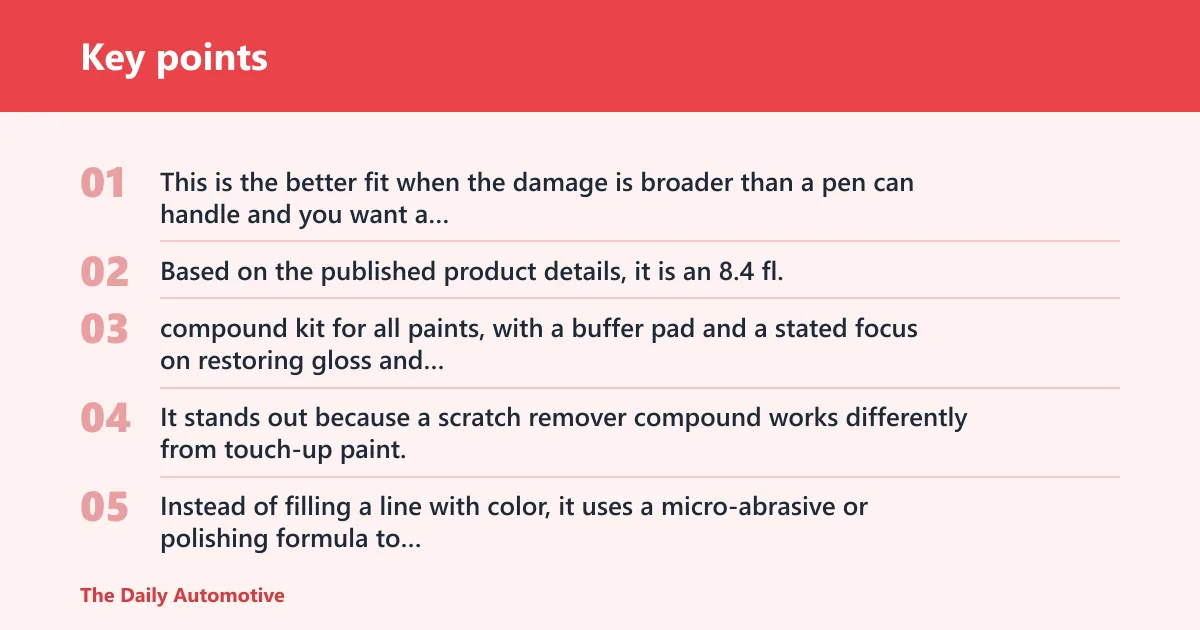
This is the better fit when the damage is broader than a pen can handle and you want a simpler path for light scratches and swirls. Based on the published product details, it is an 8.4 fl. oz. compound kit for all paints, with a buffer pad and a stated focus on restoring gloss and shine.
It stands out because a scratch remover compound works differently from touch-up paint. Instead of filling a line with color, it uses a micro-abrasive or polishing formula to reduce the visibility of clear-coat defects. That makes it a stronger answer for swirl marks, wash marring, and thin scuffs across a larger area.
The drawback is that compounds can haze the finish if you overdo pressure, speed, or pad load. They also do nothing useful for true paint-through damage. If the scratch is deep enough to feel sharp or reveal a lighter layer below the clear coat, this is not the right fix.
For beginners, this is usually the safer starting point when the goal is to improve appearance rather than patch a chip. The buffer pad helps, but low pressure and short passes matter more than force.
Magic car scratch removal pen: best for budget
The budget pick in this group is the pen applicator with pad, which is labeled as a budget-friendly option and said to work on all car colors. That makes it attractive for very small surface marks where you want a cheap first pass before spending more on compound or a body-shop visit.
Its appeal is convenience. A pen tip can target a narrow scratch, and the pad can help with a small blend area. For light clear-coat blemishes, that is enough to make the defect less noticeable from normal viewing distance.
The drawback is color certainty. “All car colors” sounds broad, but dark paint, metallic finishes, and aged panels often show mismatch, streaking, or residue more easily than buyers expect. It is best treated as a short-term cosmetic fix, not a universal correction.
If you are trying to cover a deep gouge, stop here. A cheap pen cannot rebuild missing paint structure, and it will not make a paint-through scratch disappear.
How to match a scratch pen to your car paint color
Use paint code first, and VIN lookup when the kit offers it. That is the cleanest way to narrow the OEM shade before you put anything on the panel. A scratch pen that matches the code closely will usually look better than a “close enough” universal shade, especially on black, silver, or metallic colors.
VIN lookup matters because some touch-up kits use it to confirm the factory color family. It helps reduce guesswork, but it still does not guarantee a perfect visual match on older paint that has faded, oxidized, or been resprayed before.
Black car paint deserves extra caution. Dark finishes show borders, excess product, and dull spots more clearly than lighter colors. If you choose the wrong shade, the repair can be more visible than the scratch you were trying to hide.
Picture a 1-inch scratch on a black rear door. If the mark stays in the clear coat, a pen or compound may reduce it. If the line turns light gray or white, you are looking at a deeper layer and the mismatch risk climbs fast.
Scratch remover compound: best for swirls
A scratch remover compound is the better tool when the damage is shallow, widespread, or mostly made up of swirls rather than one obvious gouge. It works best on clear-coat defects and often gives a more even result than a pen because it corrects the surface instead of just coloring a line.
Hand use versus drill attachment pad
Some kits can be used by hand, and some include a drill attachment pad to speed correction. The pad is not mandatory, and it is only useful with low speed and light pressure. On thin clear coat, too much machine force can remove more finish than you intended.
Clear-coat haze risks
Compounds are effective, but they are not risk-free. Over-buffing can create haze, especially on darker colors where the dull patch is easier to spot. If the panel starts looking cloudy, stop and wipe clean before making another pass.
A common first-timer mistake is to keep polishing because the scratch is still faintly visible after one pass. That can turn a light scuff into a larger hazy zone, which is harder to hide than the original mark.
Microfiber cloth and applicator use
A microfiber cloth is the safest basic accessory for hand application and buffing. It lets you remove residue without dragging more grit across the paint. That matters because dirt trapped under a cloth can create new micro-scratches while you are trying to fix the old one.
Pressure matters more than people expect. Light pressure helps keep you in the clear coat, while hard pressure can dig in, spread haze, or leave visible wipe marks. If a product needs heavy force to seem effective, it is probably the wrong product for the defect.
Suppose the scratch is half an inch long and you have already made two careful passes. If the line looks the same and the finish starts to dull, stop. At that point, more rubbing is more likely to worsen the clear coat than improve the repair.
Scratch repair fit table
| Scratch type | Likely depth | Recommended tool category | Expected result | Red flags |
|---|---|---|---|---|
| Light clear-coat swirl | Very shallow | Scratch remover compound | Often less visible after polishing | Haze from over-buffing, especially on dark paint |
| Scuff from a shopping cart or bag | Shallow surface mark | Compound or light touch-up | Usually reduced enough for daily driving | Embedded grime can hide the real depth |
| Narrow paint scratch on black paint | Clear coat to shallow paint | Color-matched touch-up paint pen | Can hide the line better if the color match is close | Mismatch is more visible on black and metallic finishes |
| Small chip | Localized paint loss | Touch-up paint pen | Can fill and seal the spot | Cannot level a large crater or repair exposed metal cleanly |
| Scratch that catches a fingernail hard | Deeper than clear coat | Body-shop repair | Pen may only tint the mark | Primer or metal visible, or the line keeps returning after cleaning |
Which one should you buy?
If your goal is to spend the least and cover a tiny blemish, start with a budget touch-up pen only when the scratch is narrow, localized, and color-match confidence is high. If the defect is a broader clear-coat swirl, the compound is the smarter buy because it fixes more surface area per application.
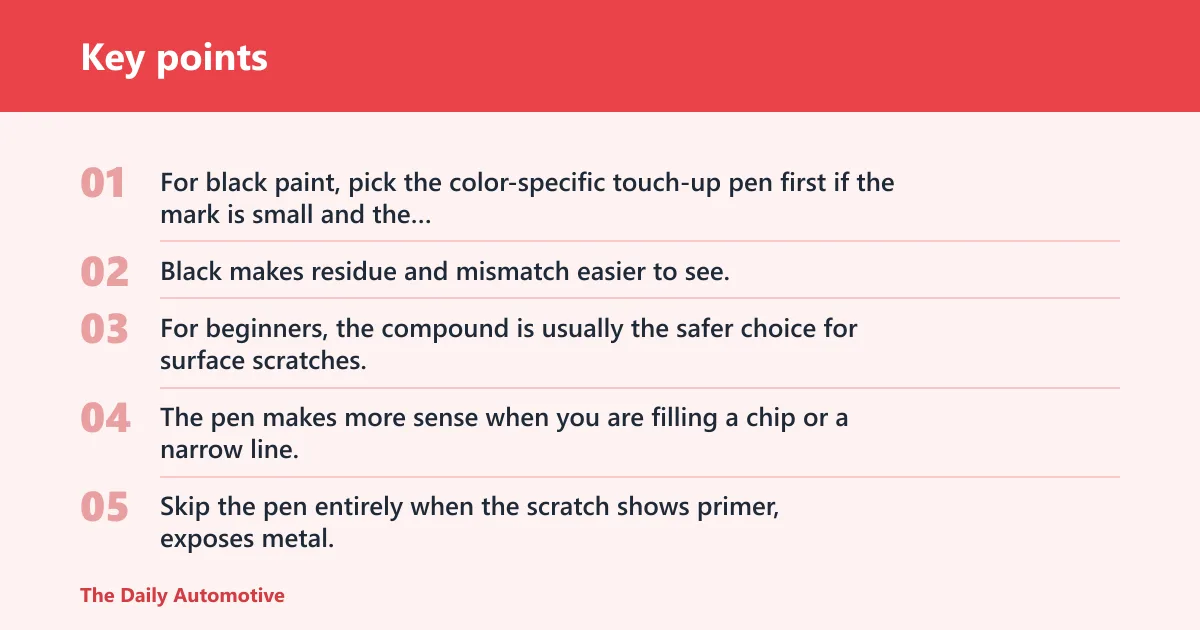
For black paint, pick the color-specific touch-up pen first if the mark is small and the paint code is known. Black makes residue and mismatch easier to see, so a close shade match matters more than a generic product claim.
For beginners, the compound is usually the safer choice for surface scratches, because it is easier to inspect progress and stop before the finish gets hazy. The pen makes more sense when you are filling a chip or a narrow line, not polishing a whole panel.
Skip the pen entirely when the scratch shows primer, exposes metal, or feels deep enough to hang a fingernail. At that point, a pen can hide the color difference, but it cannot fix the structure of the damage.
Are car scratch repair pens worth it for minor scratches? Yes, if the damage is shallow and your expectations are realistic. They are a targeted fix, not a full paint repair, and they earn their keep when the mark is small enough that a light hide is all you need.
Frequently asked questions
What is the best scratch repair pen for cars?
The best scratch repair pen is the one matched to the damage, not the one with the broadest promise. For black paint, a color-specific touch-up pen is the better fit for small chips and narrow scratches. For swirls and clear-coat marks, a compound is usually more effective than any pen.
Do scratch repair pens work on deep scratches?
No, not in the way most buyers hope. Deep scratches that reach primer or metal may be tinted by a pen, but the damage will still be there. Once the scratch is through the clear coat and base coat, a pen cannot restore the lost material.
How do I match a scratch pen to my car paint color?
Use the paint code first, then VIN lookup if the kit supports it. That narrows the OEM shade more reliably than guessing by eye. Even then, aged paint, fading, and metallic flake can make the repaired spot look different in bright light.
Are scratch repair pens safe for clear coat?
Yes, when used lightly and on the right type of defect. They are commonly used on clear-coat damage, but heavy application or aggressive buffing can haze the finish. The safest approach is a thin layer, short drying window, and gentle inspection before adding more.
Can I use a scratch repair pen on black car paint?
Yes, but black paint is less forgiving than lighter colors. Mismatch, streaking, and leftover residue show up faster under sunlight and angle changes. A close color match and careful wipe-down matter more on black than on almost any other finish.
What is the difference between a scratch pen and a scratch remover kit?
A scratch pen fills or colors a narrow mark, while a scratch remover kit usually polishes the surrounding clear coat to reduce the visibility of swirls and light scratches. Kits may include microfiber cloths, applicator pads, or drill attachment pads, and they are better for surface correction than spot filling.
How long does a scratch repair pen take to dry?
Drying time varies by formula, temperature, and how much product you apply. Most touch-up products are meant to flash off before buffing or layering, but you should follow the kit directions rather than rush. Thick application usually takes longer and increases the risk of visible edges.
Can scratch repair pens fix chips and not just surface scratches?
Yes, small chips are one of the better uses for a touch-up pen. The goal is to fill and seal the spot, not make it disappear perfectly. Larger chips or chips with exposed metal need more than a simple pen if you want a durable result.
Which scratch repair pen is best for beginners?
A beginner is usually better served by the simplest surface correction path: a compound for light swirls, or a color-matched pen for a tiny chip. The easiest product is the one that matches the defect, because forcing the wrong tool usually creates haze, mismatch, or a more obvious repair.
Are car scratch repair pens worth it for minor scratches?
Yes, if the scratch is minor, shallow, and you want to improve appearance quickly. They are worth less when the defect is deep, broad, or on faded paint. In those cases, a compound or body-shop repair offers a more realistic outcome.
Products related to this article
Sponsored / affiliate links. As an Amazon Associate I earn from qualifying purchases. I may earn additional commission from eligible campaigns.