Should Oil Pressure Always Stay Constant in a Car?
Many car owners wonder about their car’s oil pressure. Is it supposed to be steady all the time? For folks new to car maintenance, this can be a confusing part of understanding their vehicle. It’s easy to feel unsure when the needle on the gauge wiggles a bit. But don’t worry! This guide will make it super simple. We will walk you through exactly what you need to know about your car’s oil pressure, step by step.
What Is Car Oil Pressure Really
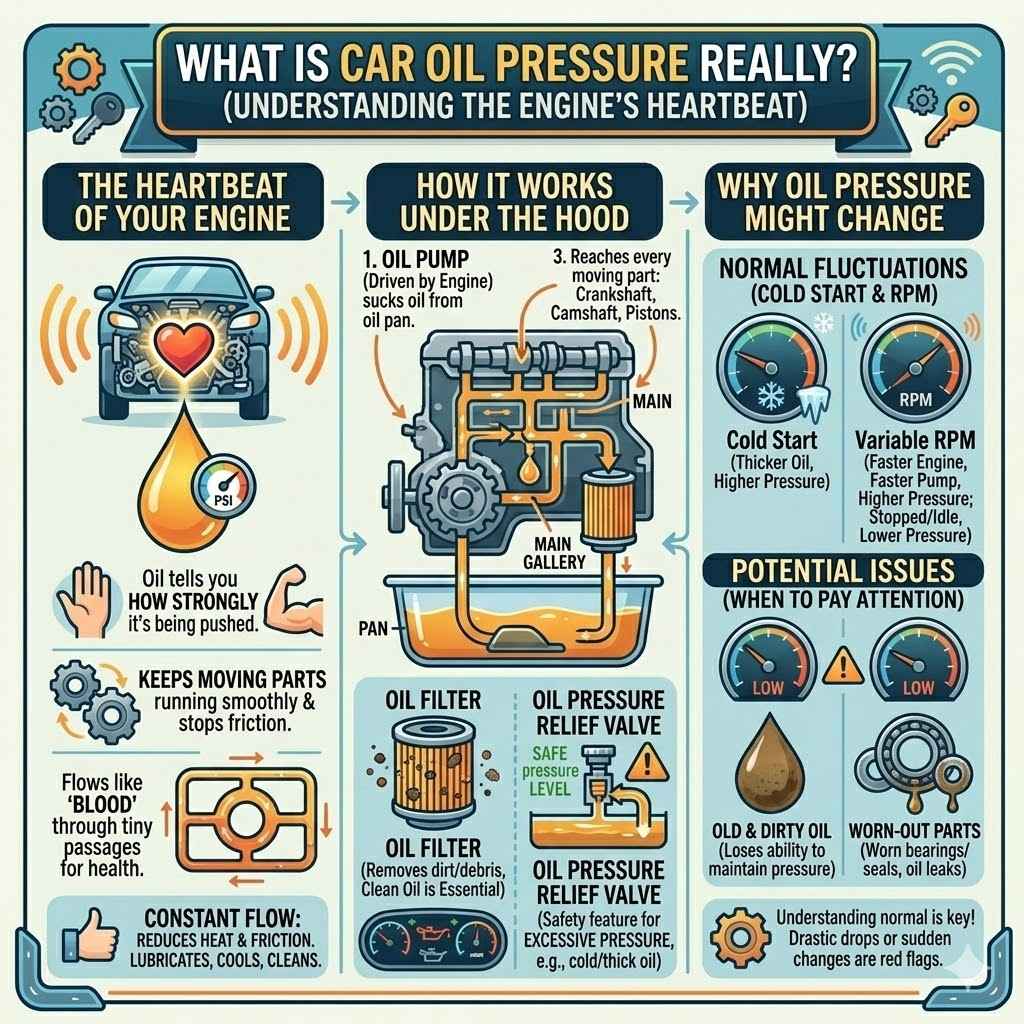
Oil pressure is like the heartbeat of your engine. It tells you how strongly the engine oil is being pushed through all the tiny parts inside. This oil is super important. It keeps everything running smoothly and stops parts from rubbing together too much, which could cause damage. Think of it like the blood in your body; it needs to flow well to keep everything healthy.
When your car’s engine is running, the oil pump works hard. It sucks up oil from the oil pan and forces it out under pressure. This pressurized oil then travels through special passages and channels inside the engine. It reaches every single moving part, from the crankshaft to the camshaft and even the pistons.
This constant flow of oil does a few key things. First, it lubricates all those moving metal parts. This reduces friction, which in turn creates less heat. Less heat means less wear and tear on your engine components. Second, the oil also helps to cool the engine. As it circulates, it picks up heat from hot engine parts and carries it away, usually back to the oil pan or an oil cooler. Third, oil helps to clean the engine. It picks up tiny bits of metal and dirt that can wear down parts and carries them to the oil filter, where they are trapped.
So, the oil pressure is a critical sign of your engine’s health. If it’s too low, it means not enough oil is getting to where it needs to go, and things could start to get damaged. If it’s too high, that could also indicate a problem. Understanding what’s normal for your car is key to keeping it running for a long time.
How Oil Pressure Works Under the Hood
The engine oil pump is the main player here. It’s usually driven by the engine itself, often by a gear or chain connected to the crankshaft. When the engine turns, the pump turns too, and it starts moving oil. The pump has an inlet that draws oil from the oil pan and an outlet that sends it into the engine’s oil supply system.
After leaving the pump, the oil flows through a main oil gallery, which is like a central highway for oil. From this gallery, oil is directed to various parts of the engine that need lubrication. This includes bearings, pistons, connecting rods, and valve train components. The pressure ensures that oil can reach even the most distant parts of the engine.
Sometimes, there’s an oil pressure relief valve. This valve is a safety feature. If the oil pressure gets too high, perhaps because the oil is very cold and thick, the relief valve opens. It lets some of the oil flow back into the oil pan, which lowers the pressure to a safe level. This prevents damage from excessive pressure.
The oil filter is another important part. It sits in the oil flow path and removes dirt and debris. Clean oil is essential for good lubrication and to prevent wear. The oil pressure gauge in your car’s dashboard is connected to the oil system. It shows you how much pressure the oil pump is creating.
Why Oil Pressure Might Change
Your car’s oil pressure isn’t always a perfectly steady number. It can change based on a few things. When the engine is cold, the oil is thicker. This thicker oil can sometimes lead to slightly higher pressure when you first start the car. As the engine warms up, the oil thins out, and the pressure might drop a little. This is usually normal.
The speed of your engine also affects oil pressure. When you’re driving faster and the engine is spinning at a higher RPM (revolutions per minute), the oil pump is working faster too. This usually means higher oil pressure. When you’re stopped at a red light and the engine is idling (spinning slowly), the oil pump is also spinning slowly, and the oil pressure will typically be lower.
Another factor is the condition of your oil. As oil gets older and dirty, or if it breaks down due to heat, it can lose some of its ability to maintain pressure. Worn-out engine parts can also affect oil pressure. If bearings or seals are worn, oil can leak out, and the pump might struggle to keep up the required pressure.
So, seeing a little fluctuation in the oil pressure gauge is often perfectly fine. It’s when the pressure drops too low or suddenly changes drastically that you need to pay attention.
The Importance of Correct Oil Pressure
Having the right oil pressure is absolutely essential for your engine’s life. If the pressure is too low, it means there isn’t enough oil being sent to the engine parts that need it most. Imagine trying to run without enough water; things start to break down.
When oil pressure is low, metal parts within the engine start to grind against each other. This friction creates a lot of heat and causes wear and tear. Components like the crankshaft bearings, camshaft bearings, and piston rings can be damaged very quickly. This damage can lead to a noisy engine, poor performance, and, in the worst case, complete engine failure.
On the other hand, very high oil pressure can also be a problem, though it’s less common. It can happen if the oil is too thick, the oil filter is clogged, or the oil pressure relief valve isn’t working correctly. Excessively high pressure can blow out seals and gaskets, causing oil leaks. It can also put extra strain on the oil pump and other engine components.
Regularly checking your oil level and condition is a simple way to help maintain proper oil pressure. Using the correct type and weight of oil recommended by your car manufacturer is also very important. These simple steps can go a long way in protecting your engine and ensuring it runs smoothly for years to come.
What Low Oil Pressure Signals
A warning light on your dashboard that looks like an oil can is usually your first clue. If this light comes on, or if your oil pressure gauge drops to zero or very close to it, it’s a serious issue. This almost always means there’s not enough oil getting to the engine’s critical parts.
There are a few common reasons for low oil pressure. The most obvious is a low oil level. If your car is running low on oil, the pump might not be able to pick up enough oil from the pan to maintain pressure. This is why checking your oil dipstick regularly is so important.
Another cause could be a problem with the oil pump itself. The pump might be worn out, or its drive mechanism could have failed. If the pump isn’t working efficiently, it can’t create enough pressure.
A clogged oil filter or a blocked oil passage can also restrict oil flow, leading to low pressure. Think of it like a clogged straw; it’s hard to get the liquid through.
Finally, worn engine bearings are a common culprit for low oil pressure, especially in older or high-mileage engines. If the bearings are worn, there’s more space for oil to leak out around the crankshaft, reducing the pressure in the rest of the system.
If you see your oil pressure light come on, the best thing to do is pull over safely and turn off the engine immediately. Continuing to drive with low oil pressure can cause severe and expensive engine damage.
What High Oil Pressure Means
While low oil pressure is more common, high oil pressure can also happen. If your oil pressure gauge is reading unusually high, or if the warning light for high pressure comes on (some cars have this), it’s also a sign that something isn’t right.
One common reason for high oil pressure is using an oil that is too thick for the temperature. For example, using a very heavy weight oil in cold weather can make it hard for the oil pump to push the oil through the engine. The pump will work harder, and pressure can build up. Always use the oil viscosity recommended in your car’s owner’s manual.
A clogged oil filter can also restrict oil flow. If the filter is so clogged that oil can’t pass through easily, the pump will build up pressure behind it. This is why changing your oil and filter regularly is so important.
The oil pressure relief valve is designed to prevent high pressure. If this valve is stuck closed or not functioning properly, it won’t be able to release the excess pressure. This can lead to pressure building up beyond safe limits.
In some cases, an oil pump that is malfunctioning or an engine design that is more sensitive can also contribute to high oil pressure. If you suspect high oil pressure, it’s best to have a mechanic inspect your car to find the cause and fix it.
Should Oil Pressure Always Stay Constant in a Car
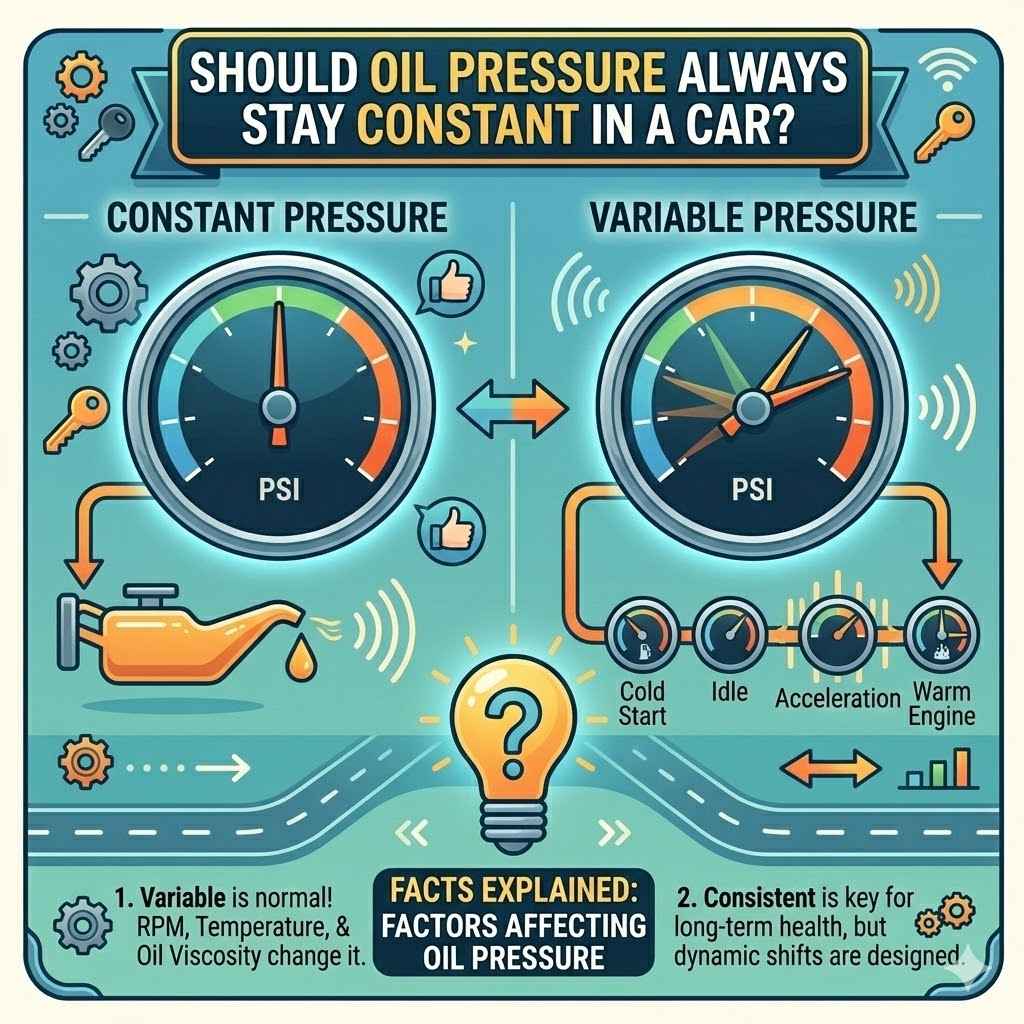
So, to answer the question directly: No, oil pressure does not always stay perfectly constant in a car. As we’ve discussed, it naturally fluctuates a bit. It’s normal for oil pressure to be slightly higher when the engine is cold and lower when it’s warm. It’s also normal for pressure to increase when you accelerate (engine RPMs go up) and decrease when the engine is idling (RPMs go down).
Think of it this way: the oil pressure gauge is giving you a reading of the force with which the oil is being pushed. When the engine is working harder (higher RPMs), the pump spins faster, pushing more oil with more force. When the engine is relaxed (idling), the pump spins slower, and the force is less. This variation is a sign that the system is responding to the engine’s workload, which is generally a good thing.
What you want to see is the oil pressure staying within the recommended range for your car. This range is usually indicated on the oil pressure gauge itself, or you can find it in your car’s owner’s manual. If the needle consistently stays within this range, even with normal fluctuations, your engine’s lubrication system is likely working correctly.
The critical point is that the pressure should never drop too low, nor should it stay excessively high for prolonged periods. These extreme conditions are what signal a problem. A healthy engine will maintain adequate oil pressure to ensure all critical components are lubricated, even during normal operational changes like idling or acceleration.
Normal Oil Pressure Variations
It is very common and perfectly normal for your car’s oil pressure to vary. The biggest factor is engine temperature. When you first start your car on a cold morning, the oil is thicker. This thicker oil is harder to push through the narrow passages of the engine. Because of this resistance, the oil pump will generate higher pressure to overcome it. You might see the oil pressure gauge reading higher than usual for the first few minutes of driving.
As your engine warms up, the oil becomes thinner. Thinner oil flows more easily. So, as the engine reaches its normal operating temperature, you will typically see the oil pressure gauge drop a bit. This is expected and indicates that the oil is flowing well.
Another significant factor is engine speed, or RPMs. When your engine is idling, it’s running at its slowest speed. The oil pump, which is often connected to the engine’s rotating parts, will also be spinning slowly. This slower rotation means the pump moves less oil, and the pressure will be lower.
However, when you press the accelerator pedal and the engine speeds up, the oil pump also spins faster. A faster-spinning pump moves more oil, and this increased flow results in higher oil pressure. This is why you’ll often see the oil pressure gauge climb as you accelerate and then drop back down as you slow down or come to a stop.
These changes in pressure are not a cause for concern; they are a normal part of how the engine’s lubrication system works. The key is that even at its lowest point (during idle when warm), the oil pressure should still be within the safe operating range for your vehicle.
When to Worry About Oil Pressure
You should become concerned if you notice any of the following with your oil pressure:
The oil pressure warning light stays on constantly after the engine has warmed up. This is a critical warning.
The oil pressure gauge consistently reads at the very bottom of the scale, even when the engine is running and warm.
The oil pressure gauge suddenly drops to zero or a very low reading while you are driving.
You hear new, loud noises from the engine, such as knocking or ticking sounds, especially if this happens after the oil pressure has been low.
The oil pressure is significantly higher than normal and stays that way, even after the engine has warmed up.
You see oil leaks around your engine, which could be a sign of pressure issues.
If you experience any of these symptoms, it’s important to pull over safely and turn off your engine as soon as possible. Continuing to drive with abnormal oil pressure can lead to very serious and costly engine damage. It’s best to have your car towed to a mechanic to diagnose the problem. Ignoring these warning signs can turn a fixable issue into a complete engine rebuild or replacement.
What Happens If Oil Pressure Is Wrong
The consequences of incorrect oil pressure can be severe, ranging from minor wear to catastrophic engine failure. The lubrication system is one of the most vital for an engine’s health and longevity. When it’s not functioning optimally, the entire engine is at risk.
Low oil pressure is particularly dangerous. It means that the critical moving parts inside your engine are not receiving enough oil to create a protective film between them. This leads to metal-on-metal contact. Imagine two pieces of metal rubbing together at high speed without any lubricant; they will quickly overheat and wear down.
Components like the main bearings that support the crankshaft, the connecting rod bearings that connect pistons to the crankshaft, and the camshaft bearings are all highly susceptible to damage from low oil pressure. Even a short period of low pressure can cause scoring or flattening of these bearing surfaces. This can lead to knocking noises, loss of power, and eventually, the bearing can fail completely, causing the crankshaft to seize.
Pistons and cylinder walls can also suffer from insufficient lubrication, leading to increased wear and the potential for scoring or scuffing. The valve train, including lifters, rocker arms, and camshafts, also relies on a constant supply of pressurized oil for lubrication and hydraulic lifter operation. Without it, these parts can wear rapidly, leading to noisy operation and potential failure.
High oil pressure, while less common, is also detrimental. It can blow out seals and gaskets, leading to oil leaks. These leaks can not only be messy and cause you to lose oil, but they can also lead to low oil pressure if the leaks are significant enough. In extreme cases, very high pressure can even damage the oil pump or other components in the oil system.
Diagnosing Oil Pressure Problems
Diagnosing oil pressure problems typically involves a few key steps. The first and easiest step is to check the oil level and condition. A simple dipstick check can reveal if the oil level is too low, which is a common cause of low pressure. If the oil is very dark, sludgy, or has debris in it, it might not be flowing properly or providing adequate lubrication.
The next step is to verify the readings from the oil pressure gauge or warning light. A mechanic will often connect a mechanical oil pressure gauge to the engine. This provides a direct and accurate measurement of the oil pressure, which can then be compared to the manufacturer’s specifications. If the mechanical gauge confirms low or high pressure, the diagnostic process continues.
Inspectors will look for obvious external signs of problems. This includes checking for oil leaks around the engine, which can indicate blown seals or gaskets due to high pressure. They will also check the oil filter to see if it’s clogged or damaged.
The oil pump is a prime suspect if pressure is consistently low. Mechanics can test the oil pump’s output and condition. If the pump itself is functioning correctly, then the problem often lies deeper within the engine.
Worn engine bearings are another common cause, especially in older vehicles. Diagnosing worn bearings usually involves checking for excessive play or noise in the crankshaft and camshafts. Sometimes, specific components like the oil pressure relief valve might be faulty and can be tested or replaced.
Examples of Oil Pressure Issues
Let’s look at a couple of real-life scenarios where oil pressure issues caused problems:
Scenario 1: A driver noticed their oil pressure light flickering on and off at idle. They assumed it was just a faulty sensor and ignored it. A few weeks later, the light stayed on constantly, and they heard a knocking sound from the engine. They continued driving for a short while before stopping. When the car was inspected, the crankshaft bearings were severely damaged due to prolonged low oil pressure. The engine needed a complete rebuild, costing thousands of dollars.
Scenario 2: A car owner decided to use a very thick “all-season” oil in their car during a particularly cold winter. Shortly after, they noticed their car was sluggish, and the oil pressure gauge seemed higher than usual. They also noticed a small oil leak under the car. The mechanic discovered that the thick oil was causing excessive pressure, which had blown out a rear main engine seal. This resulted in an oil leak and a potential for future low oil pressure if not addressed.
Scenario 3: A teenager was learning to drive and accidentally ran over a large piece of road debris. They didn’t notice any immediate issues. However, the impact had damaged the oil pan, causing a slow leak. Over the next few days, the oil level dropped significantly. The driver noticed the oil pressure gauge dropping at idle but thought it was normal. Eventually, the engine seized due to lack of lubrication.
These examples highlight how crucial it is to pay attention to your oil pressure gauge and warning lights. Ignoring them can lead to significant and costly repairs.
Maintaining Proper Oil Pressure
The best way to avoid oil pressure problems is through consistent and proper maintenance. Think of it like taking care of your own health; regular check-ups and good habits prevent bigger issues down the line. For your car, this means focusing on the oil and the oil filter.
Regular Oil Changes Are Key
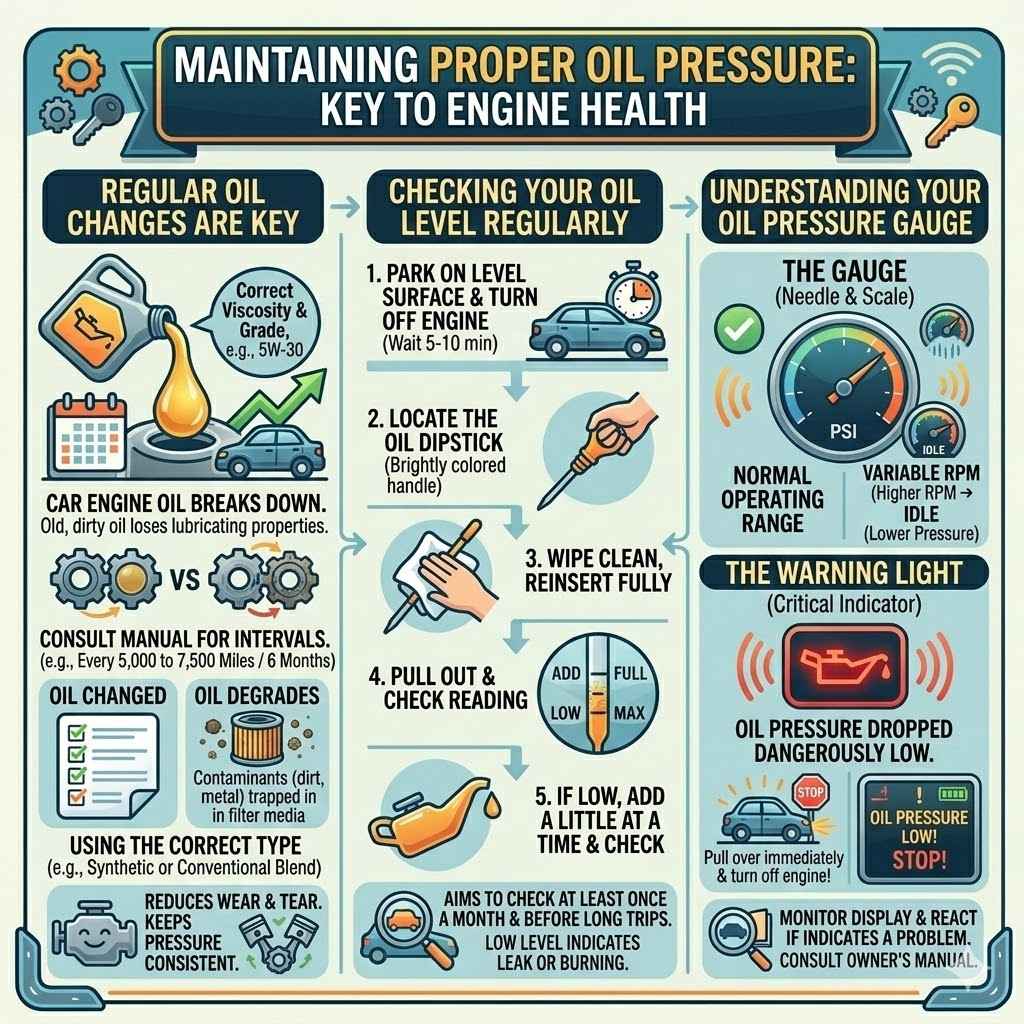
This is the single most important thing you can do. Your car’s engine oil breaks down over time. It gets contaminated with dirt, metal particles, and combustion byproducts. As oil degrades, it loses its lubricating properties and its ability to maintain consistent pressure. Old, dirty oil is less effective at protecting your engine.
Consult your owner’s manual for the recommended interval for oil changes. This is usually stated in miles or months, whichever comes first. For many modern cars, this might be every 5,000 to 7,500 miles, or about every six months. However, some manufacturers recommend longer intervals, while others suggest more frequent changes, especially if you drive in severe conditions (like stop-and-go traffic, extreme temperatures, or heavy towing).
When you get an oil change, make sure to also
Using the correct type and viscosity of oil is also vital. Your owner’s manual will specify the recommended oil grade (e.g., 5W-30) and whether it needs to be conventional, synthetic blend, or full synthetic. Using the wrong oil can affect how well it flows and maintains pressure, especially in different temperatures.
Checking Your Oil Level
Besides regular changes, you should also check your oil level regularly. Don’t wait for the warning light to come on. Aim to check it at least once a month, and before long road trips.
Here’s how to do it:
1. Park your car on a level surface. This is important for an accurate reading.
2. Turn off the engine and wait for about 5-10 minutes. This allows the oil to drain back into the oil pan.
3. Open the hood and locate the engine oil dipstick. It usually has a brightly colored handle (often yellow or orange).
4. Pull out the dipstick, wipe it clean with a rag or paper towel, and then reinsert it fully.
5. Pull the dipstick out again. You will see two marks, usually labeled “Add” or “Low” and “Full” or “Max”. The oil level should be between these two marks.
6. If the oil level is near the “Add” mark, you need to add oil. Use the correct type and amount of oil recommended in your owner’s manual. Add a little at a time, check the level, and repeat until it’s in the correct range. Do not overfill.
A consistently low oil level could indicate an oil leak or that your engine is burning oil. If you have to add oil frequently, it’s a good idea to have your car inspected by a mechanic.
Understanding Your Oil Pressure Gauge
Your car’s dashboard has an oil pressure gauge or a warning light. Understanding what it’s telling you is key.
The gauge is usually a needle that moves along a scale. The scale typically has a “Normal” or “Operating” range marked. As discussed, it’s normal for the needle to move within this range based on engine speed and temperature. If the needle consistently stays within the marked normal range, your oil pressure is likely fine.
The warning light is a more critical indicator. It’s shaped like an oil can. If this light comes on while you’re driving, it means the oil pressure has dropped to a dangerously low level. You should pull over immediately and turn off the engine.
Some modern cars have digital displays instead of a physical gauge. These might show a numerical pressure reading or simply a warning light. Regardless of the type of display, the principle is the same: monitor it and react if it indicates a problem.
If you’re unsure about what the readings on your oil pressure gauge mean for your specific car, your owner’s manual is the best resource. It will explain the normal operating ranges and what to do if a warning light comes on.
Frequently Asked Questions
Question: Do I need to worry if my oil pressure gauge fluctuates a little
Answer: No, a little fluctuation in your oil pressure gauge is usually normal. It’s common for the pressure to be a bit higher when the engine is cold or when you accelerate, and lower when the engine is warm and idling. As long as the needle stays within the normal operating range shown on your gauge, it’s generally fine.
Question: How often should I change my car’s oil
Answer: The frequency of oil changes depends on your car’s make and model, as well as your driving habits. Most car owner’s manuals recommend changing the oil and filter every 5,000 to 7,500 miles or every six months, but it’s best to check your specific vehicle’s manual for the most accurate recommendation.
Question: What should I do if my oil pressure warning light comes on
Answer: If your oil pressure warning light comes on, you should pull over to a safe location as soon as possible and turn off the engine immediately. Driving with low oil pressure can cause severe engine damage. Do not restart the engine until the issue has been diagnosed and fixed by a qualified mechanic.
Question: Can I use any type of motor oil in my car
Answer: No, it’s important to use the type and viscosity of motor oil recommended in your car’s owner’s manual. Using the wrong type of oil can affect its performance, its ability to maintain pressure, and could even damage your engine over time, especially in different temperature conditions.
Question: Is it okay if my oil pressure is lower at idle than when driving
Answer: Yes, it is perfectly normal for your oil pressure to be lower when the engine is idling (running at its slowest speed) compared to when you are driving and the engine speed is higher. The oil pump spins slower at idle, resulting in lower pressure. The key is that this lower pressure should still be within the safe operating range specified for your car.
Wrap Up
Your car’s oil pressure doesn’t always stay the same, and that’s okay. Normal changes happen with engine temperature and speed. What matters most is keeping that pressure within the safe zone. Regular oil checks and changes protect your engine from wear and prevent costly damage. Pay attention to your gauge and any warning lights to ensure your engine stays healthy and runs smoothly for many miles to come.