SRS Car System: Proven Essential Safety
The SRS car system, or Supplemental Restraint System, is your vehicle’s core airbag safety network. Understanding this essential system—what it is, how it works, and why the warning light matters—is crucial for every driver to ensure maximum protection in an accident.
We all hope we never need our car’s safety features, but knowing they are ready is a huge comfort. The dashboard light showing a problem with the SRS car system can feel confusing and even scary. What exactly is the SRS? Is it just the airbags? How do I know if it’s working right?
Don’t worry! As your trusted automotive guide, I will break down the complex SRS system into simple, easy-to-understand steps. We will cover what this proven essential safety feature involves, why maintenance matters, and how you can feel confident driving a safe vehicle. Let’s demystify the SRS car system together and ensure you and your passengers are protected.
What is the SRS Car System? A Simple Definition
SRS stands for Supplemental Restraint System. Think of it as the hidden brain and muscle that works alongside your seatbelts. Seatbelts are the primary restraint—they keep you in place. The SRS is the supplement—the extra layer of high-speed protection, primarily involving airbags, that deploys only when absolutely necessary during a crash.
The Two Pillars of Modern Car Safety
For beginners, it helps to remember that modern car safety relies on two main components working in perfect sync:
- Primary Restraint: This is your seatbelt. You must wear it every time you drive. It keeps you close to the airbag.
- Supplemental Restraint: This is the SRS car system. It includes the airbags, sensors, and the control module. It deploys to cushion you if the seatbelt alone isn’t enough to prevent serious injury.
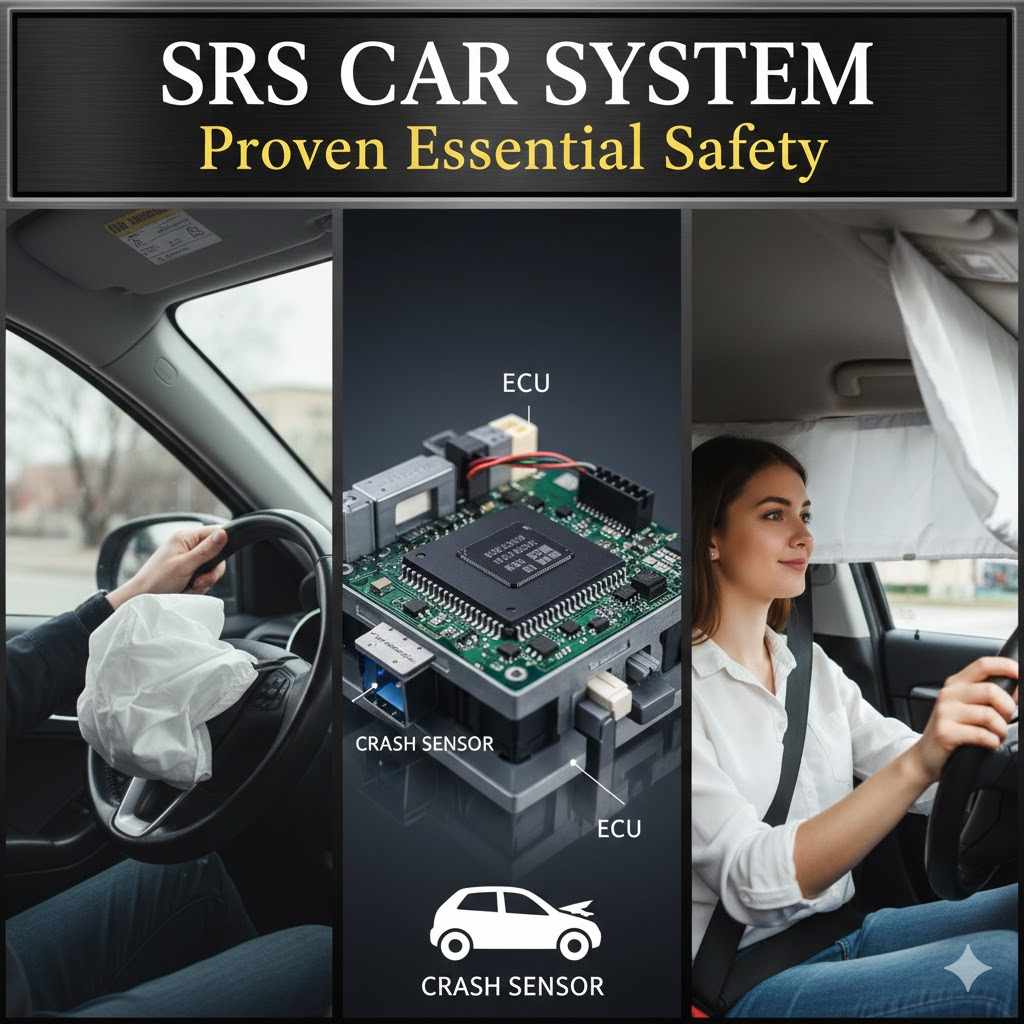
The SRS isn’t just one single component; it’s an entire network designed to react in milliseconds. Understanding these parts helps you appreciate why it’s considered proven essential safety.
The Key Components of the SRS Car System
If the SRS light comes on, it means one or more parts of this sensitive system might not be ready for action. Here are the main parts that make up the SRS car system:
- Airbag Control Unit (ACU) or Sensing and Diagnostic Module (SDM): This is the computer hub. It constantly monitors the crash sensors. It decides in a fraction of a second whether to deploy an airbag and which ones to use.
- Crash Sensors: These are small devices located around the car—in the front bumper, the sides, and sometimes near the seats. They measure the severity and direction of an impact.
- Seatbelt Pretensioners: This is often overlooked! When a crash is detected, these devices instantly tighten the seatbelt webbing a tiny bit before the airbag deploys. This removes slack and keeps you perfectly positioned for the airbag cushion.
- The Airbags: These are the visible part. They include the driver’s frontal airbag, the passenger’s frontal airbag, and often side-impact airbags (in the seats) or curtain airbags (running along the roofline).
- Warning Indicators: This is the light on your dashboard, usually an icon shaped like a person with an inflated circle in front of them.
How the SRS Car System Works: A High-Speed Sequence
The speed at which the SRS car system operates is incredible. If a serious collision occurs, the system moves through these steps in less than 1/50th of a second—faster than you can blink!
The Crash Sequence Explained Step-by-Step
- Impact Detection: A collision occurs. The crash sensors detect the rapid deceleration (sudden stopping).
- Data Transmission: The sensors immediately send electrical signals to the ACU/SDM.
- Decision Making: The ACU analyzes the data. It checks the speed, the angle of impact, and whether the seatbelts were worn (in newer cars). If the criteria for deployment are met, it sends the firing signal.
- Deployment Initiation: The ACU sends an electrical current to the detonator inside the airbag module.
- Inflation: The electrical charge ignites a chemical propellant (like sodium azide, though modern systems use safer alternatives). This creates a large volume of harmless nitrogen gas very quickly, inflating the nylon bag through small vents.
- Cushioning and Deflation: The bag cushions the occupant, and then the gas rapidly escapes through small holes in the back of the bag. This prevents the bag from acting like a solid wall and causing injury itself. The entire process is finished in under 30 milliseconds.
This precise timing is why any interruption in the SRS car system—like a loose wire or a faulty sensor—must be addressed immediately. If the system can’t communicate, it can’t react.
Why the SRS Light Means Business
Seeing the SRS warning light is never something to ignore. Unlike a low washer fluid light, this indicator signifies a potential failure in your primary passive safety feature. If the light is on, it generally means one of two things:
- System Malfunction: A sensor, wire, or the main ACU has failed or reported an error.
- Previous Deployment: The system has been triggered before (e.g., after a minor fender-bender), and the deployed components have not been properly replaced and reset.
It is vital to understand that when the light is on, the entire system, or significant parts of it, may be disabled. This is not a problem you can “wait out.”
DIY Safety Check: What Beginners Can Inspect
While serious SRS repairs require a certified technician and specialized diagnostic tools, there are several straightforward checks every driver can perform to ensure the system is functioning correctly from a user perspective. These checks build driver confidence and prevent simple issues from becoming expensive repairs.
Simple Visual Inspection Checklist
Always perform these checks when the car is turned off.
- Check the Dashboard: When you first turn the key to the “On” position (before starting the engine), the SRS light should illuminate briefly (usually 3–7 seconds) and then turn off. If it stays lit, or never comes on at all, there is an issue.
- Inspect Seatbelt Function: Pull your seatbelt out completely and let it retract. It should snap back smoothly. Ensure the latch clicks securely into the buckle. If the belt seems loose or won’t retract, the pretensioner mechanism might be affected, or the reel is broken.
- Look for Wiring Near Seats: On many vehicles, the wiring harness for side airbags or occupancy sensors runs underneath the front seats. Occasionally, these wires get snagged or disconnected when moving items in or out of the back seat. Gently check that no wires are visibly cut, pinched, or disconnected near the seat tracks. (Do not pull hard!)
- Check for Aftermarket Modifications: If you have recently installed a new seat cover, a child safety seat improperly installed, or replaced seat components, ensure no connectors under the seat were accidentally unplugged.
When to See a Professional Technician
The SRS car system relies on precise electrical resistances and calibration. Guessing or trying to bypass warning lights is extremely dangerous. If you suspect a problem, the only safe next step is professional diagnosis. Here is when you must book an appointment:
- The SRS light remains constantly illuminated.
- The light flashes in a specific pattern (this often indicates a specific diagnostic code).
- You notice strange noises (like a click or buzz) from under the seats or dash when driving over bumps.
- You have recently been in a minor accident, and the system hasn’t been fully inspected or reset.
Technicians use specialized tools like an OBD-II scanner capable of reading SRS-specific codes (often B-codes, not just P-codes) to pinpoint the exact sensor or component that has failed. For example, reliable diagnostic tools are essential for reading these proprietary codes.
Understanding Airbag Lifespan and Replacement
Many drivers assume airbags last forever, but they are chemical devices. Like any chemical component, they have a shelf life. Understanding this lifespan is key to proactive maintenance.
Table: Typical Airbag Service Life Recommendations
| Component | Recommended Replacement Interval (General Guideline) | Why It Matters |
|---|---|---|
| Airbag Modules (Actual Bags) | Typically 10–15 Years (Check Owner’s Manual) | Chemical propellants can degrade over time, leading to unreliable deployment speed or failure. |
| Seatbelt Pretensioners | Should be replaced immediately after deployment or at module lifespan end. | These are single-use devices that must function perfectly with the airbag. |
| ACU/SDM Module | Usually lasts the life of the vehicle unless involved in a collision or power surge. | If the main computer fails, the entire system shuts down. |
The Myth of “Old Airbags Won’t Go Off”
Some older advice suggested that very old airbags might not deploy. While degradation is a factor, modern vehicle manufacturers design these systems to be incredibly robust. The bigger risk with very old systems is failure to deploy due to degraded wiring or compromised sensors, not necessarily that they will deploy accidentally.
However, for true proven essential safety, adhering to the manufacturer’s schedule for inspection and replacement of the airbag modules themselves is the best practice, especially in vehicles approaching 15 years of age.
The Cost Factor: Why Proactive SRS Care Saves Money
It’s true that replacing deployed airbags is expensive. But ignoring a flickering SRS light can be even more costly and dangerous. If you are pulled over, some jurisdictions may deem a vehicle with an illuminated SRS light unsafe to operate. Furthermore, when the system faults, it can sometimes affect other electronic systems linked to the main computer.
Think of preventative diagnosis as insurance. A technician diagnosing a faulty crash sensor might charge a few hundred dollars. Replacing a fully deployed driver’s airbag, the seatbelt pretensioner, and reprogramming the ACU after an accident can easily run into several thousand dollars.
Deep Dive: Understanding Seat Occupancy Sensors
In modern cars, the SRS car system isn’t just about the crash itself; it’s about who is in the car and how they are sitting. This is managed by the Occupant Classification System (OCS), which relies on weight sensors, often embedded in the passenger seat cushion.
How the OCS Protects Passengers Differently
The OCS tells the ACU whether an adult, a small child, or nothing is sitting in the front passenger seat. This allows the system to make smart deployment decisions:
- Child Seat Detected: If a properly installed child safety seat is detected, the passenger airbag may be automatically disabled to prevent serious injury to the child from the force of the airbag deployment.
- Light Weight Detected: Similarly, if the sensor registers a very light weight (like a small child sitting on their own), the airbag may remain off or deploy at a lower force.
- Adult Weight Detected: The system assumes the passenger is in the correct position and arms the full-force airbag.
Common SRS Issues Related to Sensors
Because these sensors are integrated into the seat, they are susceptible to physical damage. If you notice the passenger airbag warning light (often reading “Airbag Off”) blinking or staying on even when an adult is sitting there, the seat sensor mat has likely failed. This requires a specialized repair, usually involving replacing the sensor pad itself.
For reliable operation, always make sure child seats are installed according to their own manual and the car’s manual. Improper loading can confuse the OCS.
SRS System and Vehicle Inspections
In many states and countries, a working SRS system is a mandatory part of passing any vehicle safety inspection. This ensures that every car on the road meets a minimum standard of proven essential safety.
What Inspectors Look For
During official state or government vehicle safety inspections (like those regulated by bodies such as the National Highway Traffic Safety Administration (NHTSA)), inspectors focus heavily on restraint systems:
- Warning Light Status: The primary check is verifying that the SRS light illuminates briefly upon startup and then extinguishes completely. Any light remaining on is an automatic failure.
- Component Integrity: Inspectors check for visible signs of tampering or unauthorized replacement of steering wheel components or dashboard panels that might hide deployed or removed airbags.
- Seatbelt Function: They test the locking mechanism and the condition of the webbing.
If your vehicle fails due to an SRS fault, it must be repaired by a certified shop before it can be re-inspected and legally driven on public roads.
Can You Reset an SRS Light Yourself?
This is one of the most common beginner questions, and the answer is crucial for safety: Generally, no, you cannot safely reset an SRS light yourself.
Unlike a standard “Check Engine” light that might reset after fixing a loose gas cap, an SRS warning light usually signals that a “crash event” has been recorded in the ACU’s memory. Even if the impact was minor, the computer locks itself into a non-operational state until it is professionally cleared.
Attempting to reset the system without addressing the underlying fault (e.g., replacing a faulty sensor) is dangerous because you risk driving a vehicle with non-functional airbags.
Why Professional Resetting is Necessary
- Code Reading: The technician reads the specific crash codes stored in the ACU.
- Component Replacement: All deployed components (airbags, pretensioners) are replaced, and damaged sensors are swapped out.
- Module Reprogramming: The technician connects specialized manufacturer software to command the ACU to clear its crash data log, effectively resetting the system so it can monitor itself again.
Preventative Care for Your SRS Car System
The best way to ensure your SRS car system remains ready is through preventative maintenance and careful driving habits.
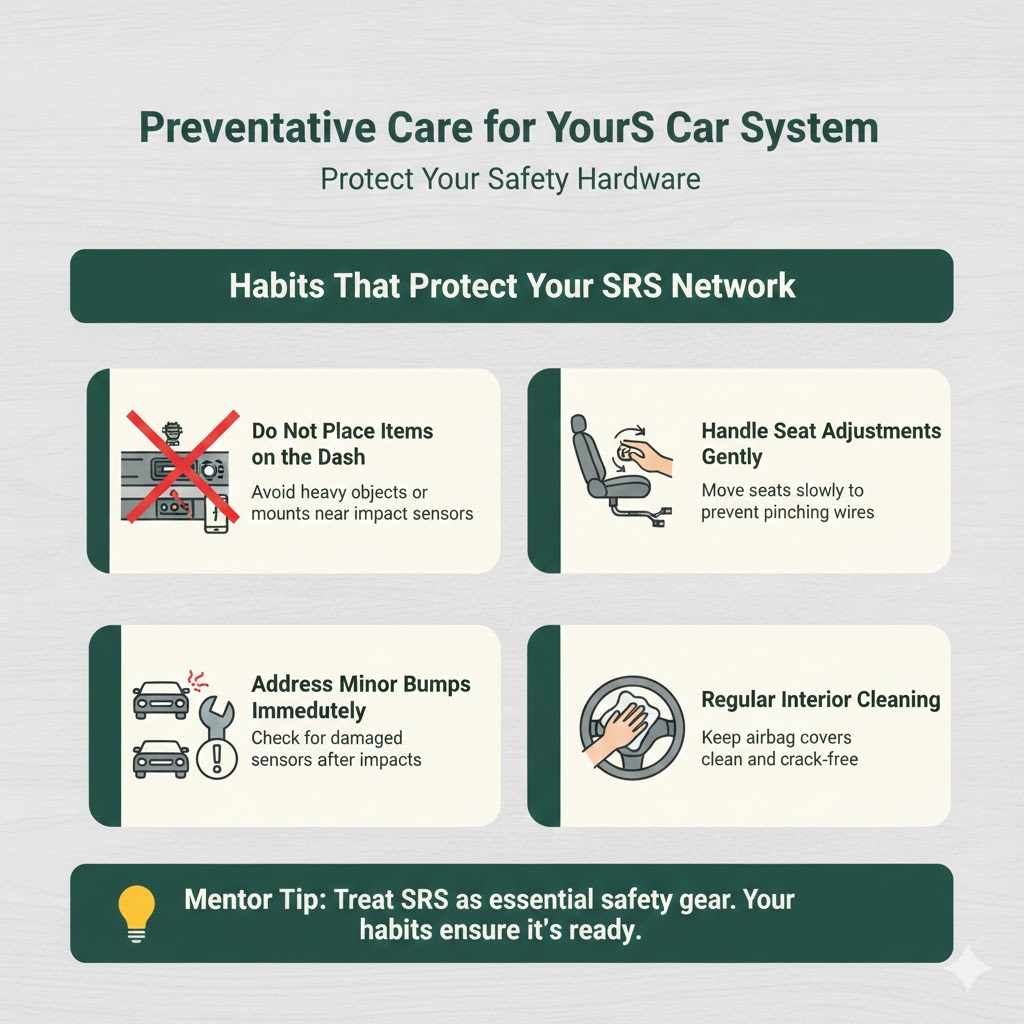
Habits That Protect Your SRS Network
- Do Not Place Items on the Dash: Heavy objects, suction-cup mounts, or strong magnets placed near the center dashboard can sometimes interfere with or obscure frontal impact sensors located there.
- Handle Seat Adjustments Gently: When moving seats forward or backward for passengers, be mindful of the wiring harnesses underneath. Slow, deliberate movements prevent pinching or severing delicate wires.
- Address Minor Bumps Immediately: If you are in a very low-speed fender-bender that didn’t deploy the bags but you hear a loud snap or pop, have the vehicle checked. Sometimes, low-speed impacts can crack or misalign sensors without triggering the full deployment, but the system still logs an error.
- Regular Interior Cleaning: Keep the plastic covers for the airbags (on the steering wheel hub and passenger dash) clean and free of deep cracks. These covers must open flawlessly when the deployment signal is sent.
By treating the SRS car system with the respect it deserves—recognizing it as essential safety hardware—you take control of your vehicle’s protective capabilities.
FAQ Section: Quick Answers About Your SRS System
Q1: If my SRS light is on, will the airbags deploy in a crash?
A: Not necessarily. If the light is illuminated, it means the system has detected a fault, and most likely, one or more components are disabled. You should assume the airbags will not deploy until a certified technician confirms the system is fully repaired and reset.
Q2: How often should I have my SRS system checked?
A: Generally, you should have your technician specifically check the SRS system during your regular scheduled maintenance appointments (usually every 6 months or 7,500 miles). Pay special attention around the 10-year mark for component lifespan checks.
Q3: Can a low battery cause the SRS light to come on?
A: Yes. Voltage irregularities, especially if the battery voltage drops too low during starting or a jump-start is performed incorrectly, can cause the ACU to log a “low voltage fault.” This often requires a professional scan to clear, even if the battery itself is fine now.
Q4: What is the difference between a standard airbag and a side-impact airbag?
A: Frontal airbags (driver/passenger) are designed to cushion you against the dashboard in a head-on crash. Side-impact airbags (and curtain airbags) deploy from the seat or roofline to protect your head and torso from collisions occurring from the side, which often happen at different angles and speeds than frontal crashes.
Q5: I replaced my own worn seat cover. Now the light is on. Why?
A: Seat covers can interfere with the Occupant Classification System (OCS) sensors located under the seat cushion. If the cover is too thick, doesn’t fit perfectly, or accidentally compresses a connector during installation, the system thinks the weight distribution is wrong, triggering the warning light.
Q6: Is it safe to work on the SRS system myself, like replacing a steering wheel?
A: Absolutely not. The SRS components, especially the steering wheel airbag, contain explosive charges. Even with the battery disconnected, residual charge can remain, posing a severe risk of accidental deployment. Only certified professionals should handle replacement or repair of any SRS component.
Conclusion: Driving Confidently with a Secure SRS System
The SRS car system is truly the unsung hero of modern automotive engineering—a complex network designed for one purpose: to save your life when you need it most. By understanding that the SRS is more than just airbags—it includes sensors, computers, and seatbelt pretensioners—you become a more informed and safer driver.
For the everyday driver, the most important takeaway is vigilance. Pay attention to that dashboard light. If the SRS warning stays on, treat it with the urgency it deserves. A quick, professional diagnosis now ensures that this proven essential safety technology is ready to deploy exactly when seconds count. Keep your vehicle maintained, respect the electronics, and you can drive forward with confidence, knowing your supplemental restraints are on standby.