Stress-Free Garage Maintenance Simple Tips
Easy Stress-Free Home Garage Maintenance Tips
This section covers the basics of keeping your garage tidy and functional without feeling overwhelmed. We’ll look at simple cleaning habits, decluttering strategies, and how to organize your space so you can find what you need, when you need it. This makes everyday garage use much smoother and prevents small messes from becoming big problems.
It’s all about creating a system that works for you.
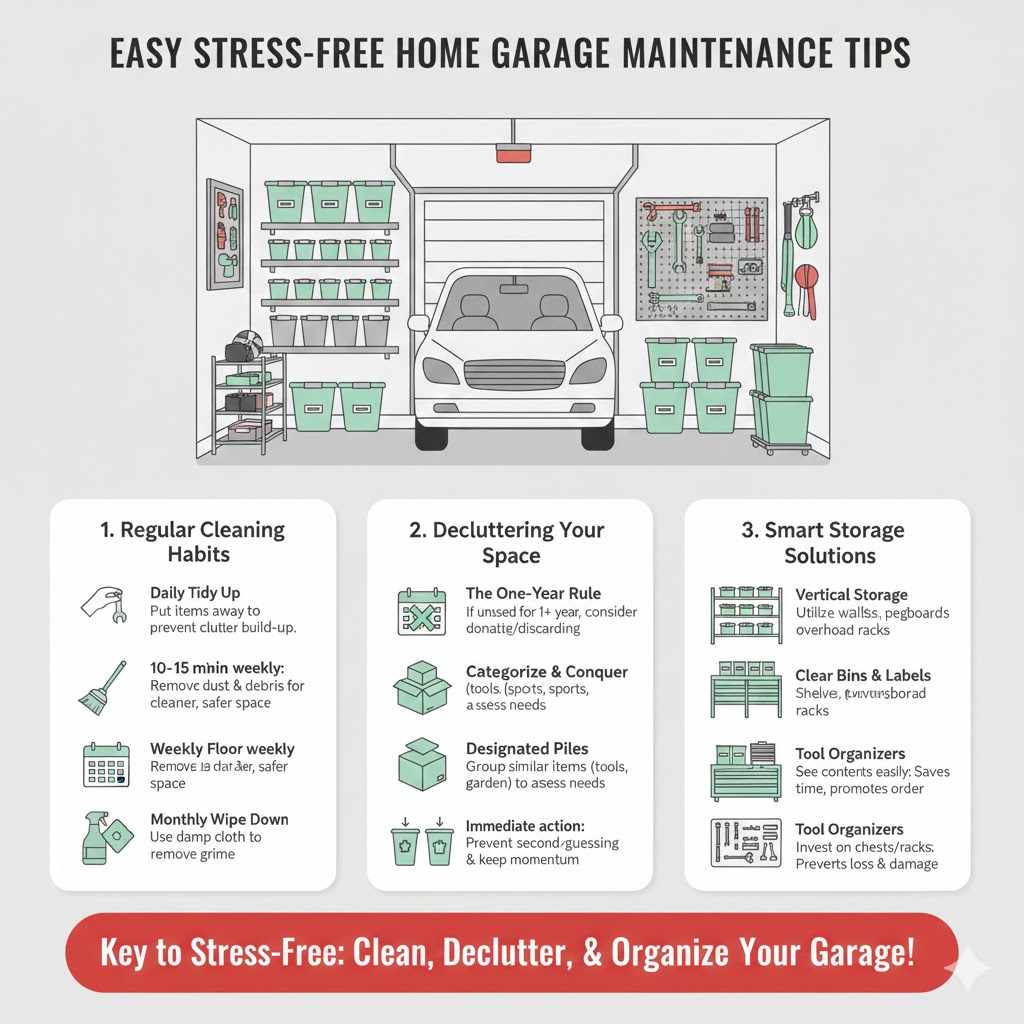
Regular Cleaning Habits
Setting up a routine for cleaning your garage is key to preventing it from becoming a chaotic space. Even a few minutes each week can make a huge difference. This involves simple tasks like sweeping the floor, putting things back where they belong, and wiping down surfaces.
These small actions stop clutter from building up and keep your garage looking neat.
- Daily Tidy Up
- Spend five minutes each day putting away items that are out of place. This might be tools, sports equipment, or gardening supplies. Putting things back immediately after use stops them from accumulating.
- It’s like a mini-clean that prevents a larger chore later. This habit helps maintain order and makes your garage instantly more usable.
- Weekly Floor Sweep
- Set aside 10-15 minutes once a week to sweep your garage floor. This removes dust, dirt, leaves, and any debris that has been tracked in. A clean floor makes the entire garage feel cleaner and safer.
- It also helps prevent dust from settling on your belongings. Choose a consistent day, like Saturday morning, to make it a habit.
- Monthly Wipe Down
- Once a month, take a bit more time to wipe down surfaces like shelves, workbenches, and the exterior of storage bins. This removes light dust and grime. Use a damp cloth with a mild cleaning solution.
This simple step keeps surfaces looking good and prevents sticky residues from building up, making cleaning easier in the long run.
Decluttering Your Space
Clutter is one of the biggest enemies of a functional garage. Regularly going through your items and deciding what to keep, donate, or discard is essential. This process might seem like a lot of work, but breaking it down into small steps makes it manageable.
The goal is to have only the items you truly need and use in your garage.
- The One-Year Rule
- If you haven’t used an item in your garage for over a year, seriously consider whether you still need it. Exceptions might be seasonal items or sentimental pieces. For most things, if they haven’t served a purpose in 12 months, they are likely taking up valuable space unnecessarily.
- This rule helps you make tough decisions about what to keep.
- Categorize and Conquer
- When decluttering, group similar items together. For example, all tools in one area, all gardening supplies in another, and sports equipment in a third. This not only helps you see how much you have of one thing but also makes it easier to decide what to keep or get rid of.
- You might realize you have three screwdrivers when you only need one.
- Designated Donation and Trash Piles
- As you declutter, immediately place items into either a donation box or a trash bag. Don’t let them sit around waiting to be sorted. Once a box is full, take it to a donation center or put the trash out.
This prevents you from second-guessing your decisions and keeps the decluttering momentum going. Speed is key to preventing remorse.
Smart Storage Solutions
Once you’ve decluttered, the next step is organizing what’s left. Smart storage solutions make your garage more functional and less stressful to use. Think about how you use your garage and what items you access most often.
Prioritizing these items with easy-to-reach storage makes a big difference.
- Vertical Storage
- Utilize wall space with shelves, pegboards, and overhead storage racks. This gets items off the floor and frees up valuable floor space. Pegboards are great for tools, while shelves can hold bins and boxes.
- Overhead racks are perfect for less frequently used items or seasonal decorations. Maximizing vertical space is a smart move.
- Clear Bins and Labels
- Use clear storage bins so you can easily see what’s inside. This saves you from having to open every bin to find something. Label each bin clearly with its contents.
- Use a permanent marker or a label maker. This makes it easy for everyone in the household to find what they need and put it back correctly. It adds another layer of organization.
- Tool Organizers
- Invest in specific tool organizers, like tool chests, wall-mounted racks, or drawer dividers. This keeps tools from getting lost or damaged. Having tools organized makes DIY projects much faster and less frustrating.
It also improves safety by keeping sharp objects stored properly.
Essential Garage Maintenance Tasks
Beyond tidiness, your garage structure and systems need attention. Regular checks and maintenance of key components ensure safety and prevent costly repairs down the line. This section focuses on the more technical aspects of garage care that are still easy to manage with a simple schedule.
Garage Door Health Check
Your garage door is a major part of your home, and its proper function is crucial for security and convenience. Simple checks can prevent major issues. You don’t need to be a mechanic to keep your garage door in good working order.
- Inspect for Damage
- Regularly look for any signs of wear and tear on the garage door panels, tracks, and rollers. Check for dents, cracks, or rust. Also, inspect the cables and springs for any fraying or looseness.
- If you see any significant damage, it’s best to call a professional for repairs to avoid accidents.
- Lubricate Moving Parts
- Once or twice a year, lubricate the rollers, hinges, and tracks with a silicone-based spray lubricant. This reduces friction, prevents rust, and ensures smooth operation. Don’t use oil-based lubricants as they can attract dust and dirt, making the problem worse.
- A quick spray keeps things running smoothly.
- Test Safety Features
- Most modern garage doors have a safety reversal system. Test this by placing a piece of wood or a brick on the floor in the door’s path. When the door hits it, it should automatically reverse.
If it doesn’t, the sensor might need adjustment or replacement. This is a vital safety check.
Flooring Care and Repair
Your garage floor takes a lot of abuse, from car tires to dropped tools. Keeping it clean and in good repair protects it and makes your garage look much better. Small issues, like minor cracks, are easy to fix if caught early.
- Regular Cleaning
- Sweep and wash your garage floor regularly to remove oil stains, dirt, and salt. Use a degreaser for stubborn oil spots. A clean floor not only looks better but also prevents stains from setting in permanently.
- It makes the garage a more pleasant place to be.
- Sealant Application
- Consider applying a concrete sealant to your garage floor. Sealants protect the concrete from stains, oil, and moisture. They also make the floor easier to clean.
- Choose a product that suits your needs, such as a water-based acrylic or a polyurethane sealant. This adds a protective layer against wear and tear.
- Minor Crack Repair
- Small cracks in concrete can be repaired using a concrete patch or caulk. Clean out the crack thoroughly before applying the repair material. Follow the product instructions carefully.
Promptly repairing small cracks prevents them from widening and becoming bigger problems. This is a simple DIY task.
Lighting and Electrical Checks
Good lighting is essential for safety and usability in your garage. Also, ensuring your electrical outlets are working correctly is important for power tools and storage.
- Update Lighting
- If your garage is dimly lit, consider upgrading to brighter LED lights. LEDs are energy-efficient and provide better illumination. Ensure your lighting covers all areas where you work or store items.
- Good lighting prevents accidents and makes tasks easier.
- Inspect Outlets and Cords
- Periodically check electrical outlets for any signs of damage or loose connections. Inspect extension cords and power tool cords for fraying or cuts. Replace any damaged cords immediately.
- Ensure GFCI outlets are installed near water sources for safety.
- Test Smoke Detectors
- If you have a smoke detector in or near your garage, test it monthly and replace batteries annually. Garages can store flammable materials, making a working smoke detector a critical safety feature. This small step can be life-saving.
Seasonal Garage Maintenance
The changing seasons bring different challenges and tasks for your garage. Preparing your garage for summer heat or winter cold helps protect your belongings and the structure itself. These seasonal checks are simple and prevent bigger issues later.
Preparing for Summer
As the weather warms up, you might start using your garage more for projects or hobbies. It’s also a time when pests can become more active. Ensuring good ventilation is key during hotter months.
- Pest Control Check
- In spring, inspect your garage for any signs of insect or rodent activity. Seal any small openings or cracks where pests could enter. Consider using natural deterrents or traps if necessary.
- Keeping your garage clean also helps deter pests.
- Ventilation Improvement
- Ensure your garage is well-ventilated during summer to prevent heat buildup. If you don’t have windows, consider installing a small fan or a ventilation grate. Good airflow helps keep the space cooler and reduces the risk of moisture damage.
- Clean Outdoor Gear
- Get out your summer outdoor equipment, like lawnmowers, bikes, and gardening tools. Clean them, check their condition, and store them neatly. This ensures they’re ready for use and not accumulating dirt or rust inside the garage.
Getting Ready for Winter
Winter weather can be harsh on your garage. Protecting it from the cold, moisture, and snow can save you from damage and make winter more bearable.
- Snow Removal Tools Check
- Ensure your snow shovels, snow blowers, and salt or ice melt are in good condition and easily accessible. Store them in a place where you can quickly grab them when needed. Having them ready saves you time and effort during snowstorms.
- Moisture Protection
- Winter often brings more moisture. Check for any leaks around the garage door and seal them. Consider using a dehumidifier if you live in a very damp climate.
- This helps prevent mold and mildew growth on stored items and the garage structure.
- Protect Your Vehicle
- If possible, keep your car in the garage to protect it from snow, ice, and salt. If your garage floor is prone to salt stains, consider using floor mats or applying a sealant. A clean car means less salt tracked into your home.
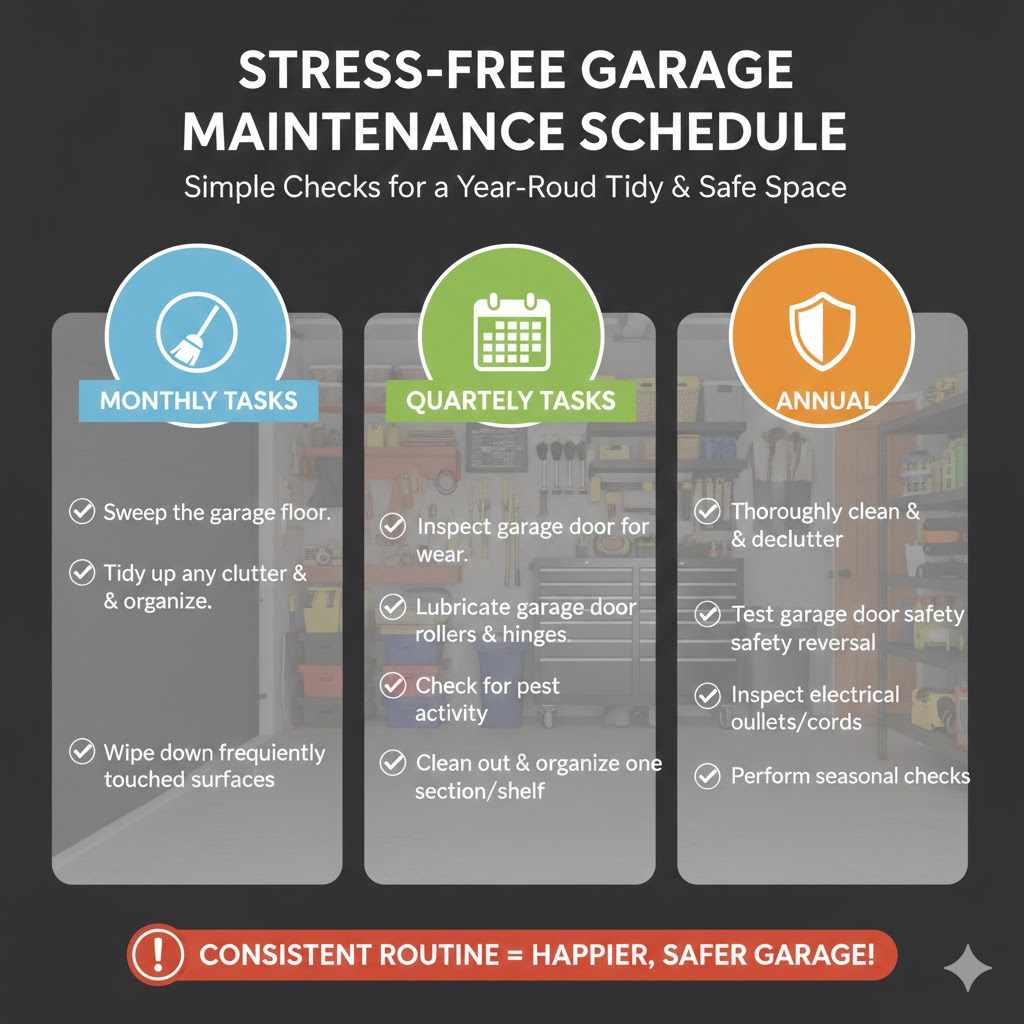
Stress-Free Garage Maintenance Schedule
Creating a simple schedule takes the guesswork out of garage maintenance. You don’t need a complicated system. A few checks throughout the year are enough to keep your garage in great shape.
Monthly Tasks
These are quick tasks that you can do regularly to keep your garage in good order. They help maintain cleanliness and order without taking up too much time.
- Sweep the garage floor.
- Tidy up any clutter and put items back in their designated spots.
- Wipe down frequently touched surfaces like doorknobs or light switches.
Quarterly Tasks
These tasks require a little more time but are important for the upkeep of your garage structure and its contents.
- Inspect the garage door for any obvious damage or wear.
- Lubricate garage door rollers and hinges.
- Check for any pest activity or entry points.
- Clean out and organize one section or shelf.
Annual Tasks
These are the more in-depth maintenance jobs that ensure your garage is safe and functional year-round.
- Thoroughly clean and declutter the entire garage.
- Inspect and test the garage door safety reversal system.
- Check the condition of the garage floor for cracks or damage.
- Inspect all electrical outlets and cords for wear.
- Perform seasonal checks (e.g., prepare for summer heat or winter cold).
- Deep clean outdoor equipment.
Frequently Asked Questions
Question: How often should I deep clean my garage?
Answer: A deep clean of your garage is recommended at least once a year, ideally in spring or fall. This allows you to declutter thoroughly and address any accumulated mess before or after the busy seasons.
Question: What is the best way to organize tools in a garage?
Answer: Pegboards are excellent for hanging frequently used tools, while tool chests or drawer organizers keep smaller items neatly sorted. Grouping similar tools together makes them easy to find and access.
Question: How can I prevent my garage door from rusting?
Answer: Regularly clean your garage door, especially if you live in a coastal area or where roads are salted in winter. Applying a protective coating or paint designed for metal can also prevent rust formation.
Question: My garage floor has oil stains. How do I get rid of them?
Answer: For fresh oil stains, cover them immediately with absorbent material like cat litter or sawdust. For older stains, use a concrete degreaser and a stiff brush. You may need to repeat the process a few times.
Question: Is it necessary to seal my garage floor?
Answer: Sealing your garage floor is highly recommended. It protects the concrete from stains, oil, and moisture, making it easier to clean and extending its lifespan. It also helps prevent dusting.
Conclusion
Maintaining your garage doesn’t have to be overwhelming. By following these simple, regular tasks, you can keep your garage organized, safe, and functional. Focus on small, consistent efforts.
This approach ensures your garage remains a useful and tidy space for years to come, making your home life easier.