LED Strip Lighting for Cars: Where to Use It and What to Buy
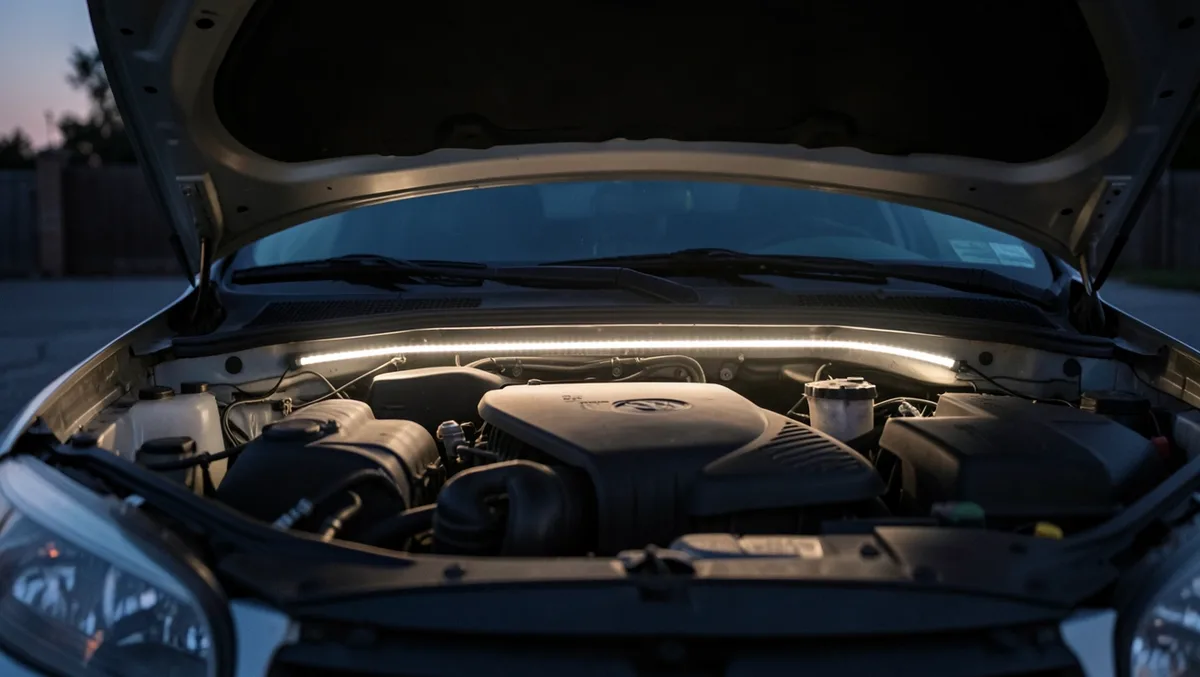
LED strip lighting for cars covers three different jobs: cabin ambient color, engine bay or trunk work light, and underglow beneath the body.
Each job needs a different waterproof rating and power hookup, and most of the confusion around this topic comes from treating all three like the same product. A cabin strip that looks great under a dashboard will corrode within weeks if it is run through the engine bay, and a strip built for underglow is overkill (and often illegal to leave on) if all you want is a soft glow in the footwells. This guide covers where strip lighting actually goes on a car, what to check before buying, and how the legal rules differ depending on where the light ends up.
Where Car Owners Use LED Strip Lighting
BEST FOR ENGINE BAY AND TRUNK LIGHTING
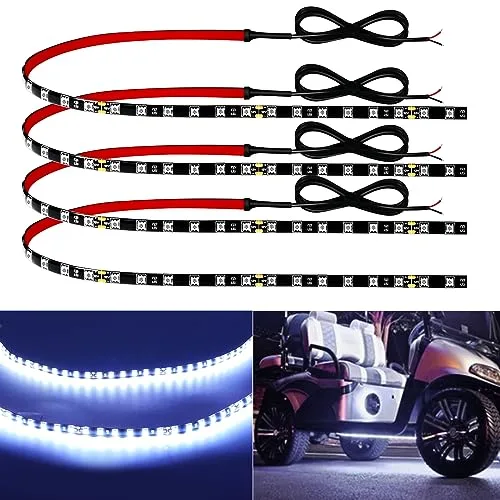 |
Keiurot 24-Inch Waterproof LED Light Strip – $18.59 A basic connectable strip like this is what most engine bay, trunk, and general accent installs actually use, not the RGB app kits built for cabin ambiance.
|
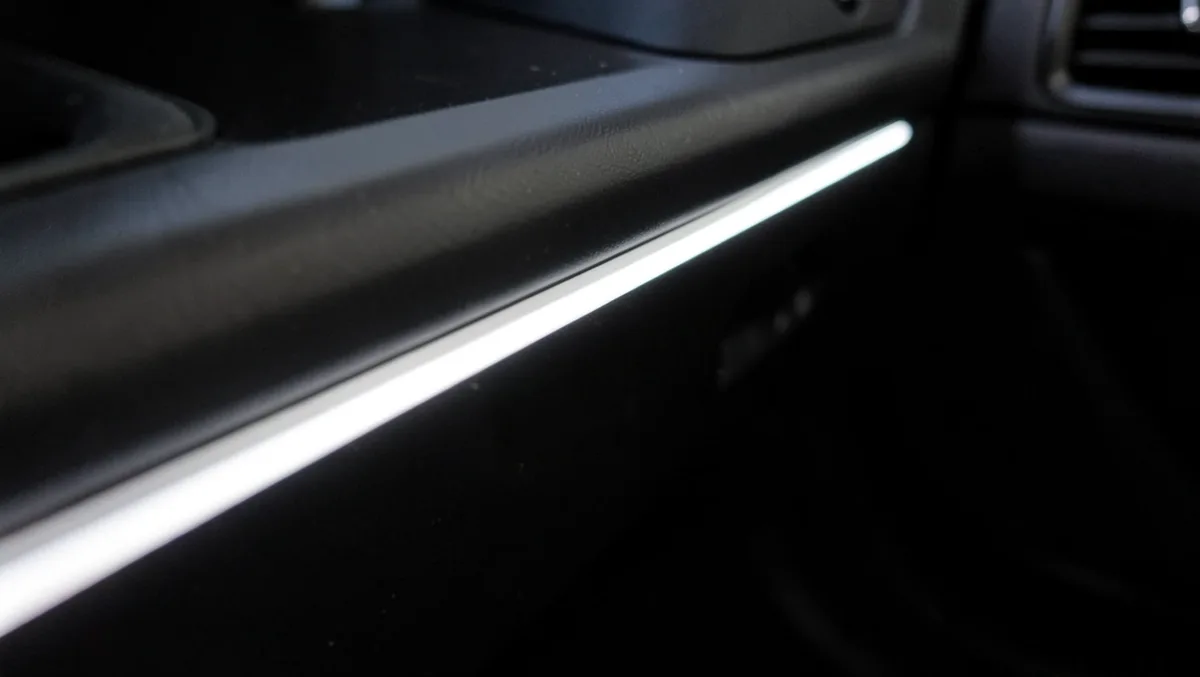
Inside the cabin, strips typically run along the dash edge, footwells, center console, or door sills for ambient accent color. For a full breakdown of adhesive strip kits versus fiber-optic ambient kits, along with specific product picks, see our guide to interior LED lights for cars.
Under the hood or in the trunk, a basic waterproof strip works as utility lighting for late-night checks or roadside repairs, which is the least-covered use case even though it is one of the simplest to set up. Along the underside of the body, strips become underglow, mounted low and aimed outward or down so the light is visible from outside the car; our undercarriage lighting guide covers mounting and the underglow-specific legal rules in detail. If you want a UV or black-light effect instead of standard RGB for the cabin, that is its own category with different bulbs and safety notes, covered in our black light interior lighting guide.
What to Check Before Buying LED Strip Lights for a Car
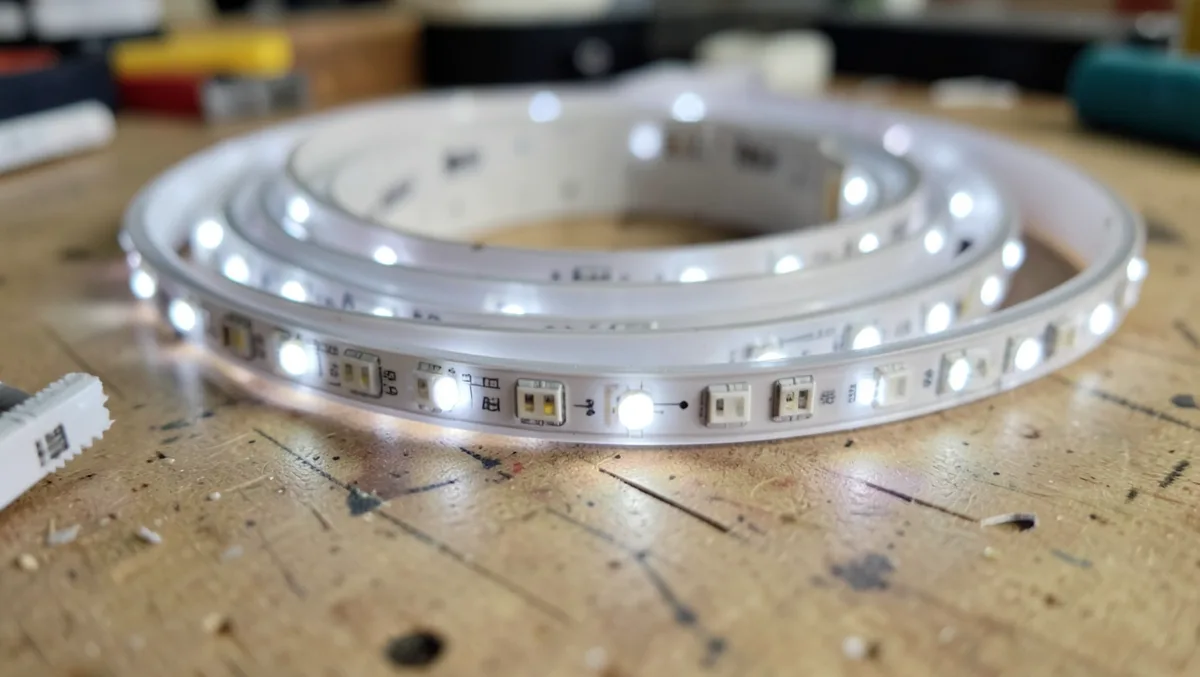
- Waterproof rating: IP44 or lower is fine for a dry interior spot like under the dash. Anything near the engine, wheel wells, or the underside of the car needs IP65 at minimum, with IP67 or IP68 holding up better long-term.
- Power source: a 12V accessory socket is the fastest install but stays live with the key out on many cars; a fuse-tap hardwire ties the strip to the ignition circuit so it switches off automatically; USB works for short cabin runs but limits total current.
- Cuttable and connectable: look for marked cut points, usually every 3 LEDs, and connectors that let two strips link together if one roll will not cover the run you need.
- LED density: strips are commonly sold as SMD5050 or SMD3528 chips per meter; a higher LED count per foot gives a smoother, less dotted line of light, which matters more for visible accent runs than hidden work lighting.
- Control method: a plain on/off or single-color strip is enough for utility lighting; app or remote-controlled RGB kits add color-changing and music sync but cost more and add another thing that can fail.
Are LED Strip Lights Legal on a Car?
Strips kept entirely inside the cabin are generally not regulated the same way as exterior lighting, though a handful of states restrict any light visible through the glass. Once a strip is mounted where it is visible from outside the car, whether that is underglow, a grille accent, or a strip run along the bottom of the doors, most states step in and restrict the colors: red and blue are off-limits nearly everywhere because they can be mistaken for emergency vehicles, and some states also restrict green. Our interior LED lighting guide covers the cabin-visible color rules, and our underglow legality guide has the state-by-state breakdown for anything mounted where it shows from outside.
Frequently Asked Questions
What Is LED Strip Lighting for a Car?
LED strip lighting for a car is a flexible circuit board covered in small LEDs, usually backed with adhesive, that runs off the car’s 12V system. It is used inside the cabin for ambient accent color, in the engine bay or trunk as basic work lighting, or underneath the body as underglow, depending on which strip and mounting spot you pick.
What Waterproof Rating Do I Need for an Engine Bay or Trunk Strip?
Look for at least IP65, and IP67 or IP68 is safer for anything near the engine bay, wheel wells, or exposed to road spray. A strip rated only IP44 or lower is meant for dry cabin use and will corrode or short out if it gets wet under the hood.
Can I Use the Same LED Strip Lights Inside and Outside My Car?
You can use a fully waterproof strip (IP65 or higher) in either location, but a cabin-only strip should stay inside. Exterior-visible strips also have color restrictions in most states, so check local rules before running anything red or blue where it can be seen through the glass or from outside the car.
Do LED Strip Lights Drain the Car Battery?
Not meaningfully if they are wired to a switched circuit. A short strip typically draws well under half an amp, but a strip left connected straight to the battery or a socket that stays live with the key out can slowly drain the battery over several days if forgotten.
Are LED Strip Lights the Same as Underglow Lights?
Underglow is one specific use of LED strip lighting: strips mounted low on the underside of the car so the light shines down and out from beneath the body. The strips themselves are often the same type used for interior or engine bay lighting, just mounted differently and, in most states, restricted to certain colors.
How Long Do LED Strips Last on a Car?
A quality 12V strip typically runs 30,000 to 50,000 hours before the LEDs dim noticeably, which is well beyond the life of most vehicles. Connection failures, not LED burnout, are the more common reason a strip stops working, usually from a corroded splice or a connector that was not fully waterproofed.
Conclusion
The right LED strip for a car depends entirely on where it is going. A cabin-only strip can skip the heavy waterproofing and focus on color and app control, while anything near the engine, in the trunk, or under the body needs at least an IP65 rating to survive moisture and road grime. Match the strip to the spot first, then decide whether you want a plain utility light or a full RGB kit with music sync, since getting the waterproofing right is what determines whether the install still works a year from now.
Products related to this article
Sponsored / affiliate links. As an Amazon Associate I earn from qualifying purchases. I may earn additional commission from eligible campaigns.