Tow Hitch for Car: How to Choose the Right Hitch Class
A tow hitch is the frame-mounted receiver that lets your car pull a trailer, boat, or camper — the right one depends on your specific vehicle and how much weight you plan to tow.
Before you buy, you need two numbers: your vehicle’s towing capacity (set by the manufacturer) and the hitch class that matches it. Get either one wrong and you risk sagging suspension, a blown transmission, or a hitch that simply won’t bolt to your frame.
What Is a Tow Hitch and How Does It Work?
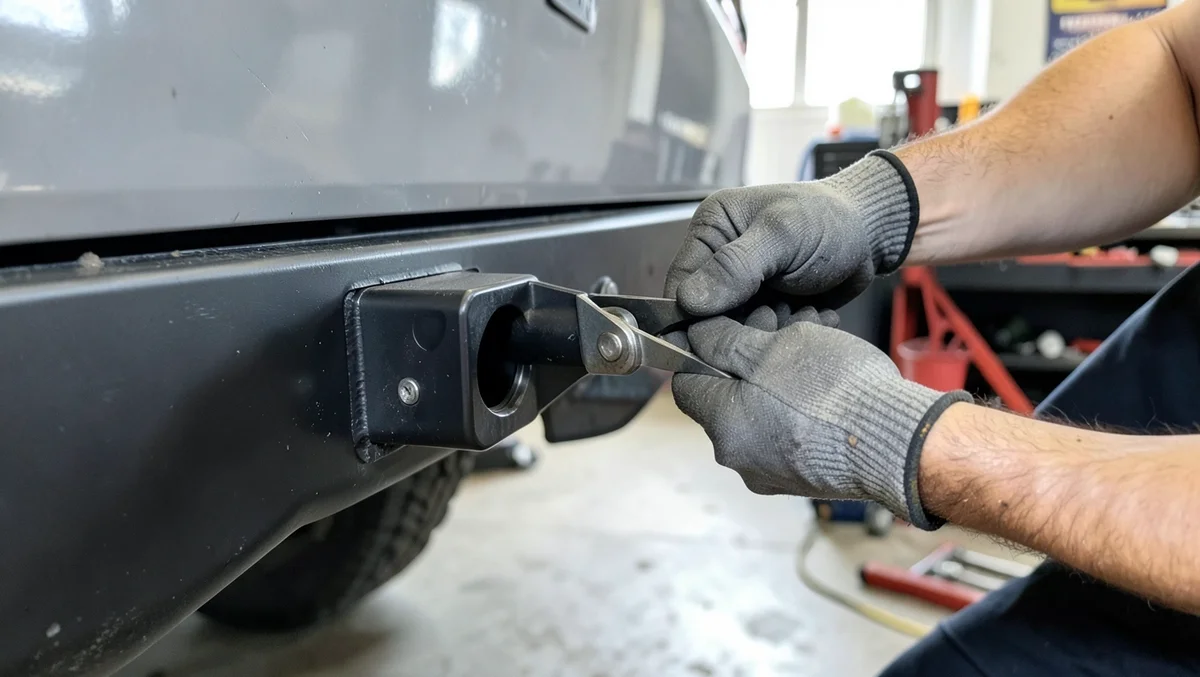
A tow hitch (technically a receiver hitch) is a steel or aluminum assembly that bolts to your car’s frame or unibody structure below the rear bumper. It ends in a square receiver tube — almost always 1.25″ or 2″ — that a ball mount or accessory slides into and locks with a hitch pin. The ball mount then holds the hitch ball that the trailer’s coupler latches onto, while safety chains provide a backup connection if the coupler ever fails.
FITS ANY STANDARD 2-INCH RECEIVER
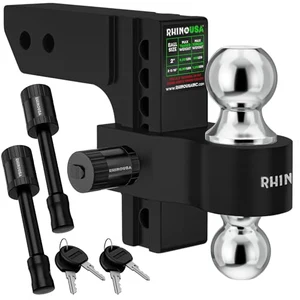 |
Rhino USA Adjustable Trailer Hitch Ball Mount – $199.90 Since the exact receiver hitch you need depends on your car’s make and model, this adjustable Rhino USA ball mount is the genuinely universal piece — it works with any Class III or IV 2-inch receiver once one is installed on your vehicle.
|
Tow Hitch Classes and Towing Capacity Explained
Hitches are rated in five standardized classes. Your vehicle’s owner’s manual or door-jamb sticker tells you its maximum towing capacity — buy a hitch class that matches or exceeds that number, never the other way around.
| Class | Gross Trailer Weight (GTW) | Receiver Size | Typical Vehicles |
|---|---|---|---|
| Class 1 | Up to 2,000 lbs | 1.25″ | Compact cars, small crossovers |
| Class 2 | Up to 3,500 lbs | 1.25″ | Mid-size cars, minivans, smaller SUVs |
| Class 3 | 3,500 – 5,000+ lbs | 2″ | Full-size SUVs, mid-size trucks |
| Class 4 | Up to 14,000 lbs | 2″ | Full-size trucks (weight-distributing) |
| Class 5 | Up to 17,000–20,000 lbs | 2″ or 2.5″ | Heavy-duty trucks, commercial use |
One detail most buyers miss: your real towing capacity is the lowest rated part in the chain, not the highest. A truck rated to tow 12,000 lbs is still limited to whatever its ball mount, hitch ball, and coupler are individually rated for — so every component needs to clear the weight you actually plan to haul.
How to Choose the Right Tow Hitch for Your Car
- Check vehicle-specific fitment first. Receiver hitches bolt to pre-existing mounting points on your frame, so a hitch made for a Honda CR-V will not fit a Toyota RAV4 even though both are compact SUVs. Shop by year, make, and model — not by generic description.
- Match the receiver size to your towing needs. A 1.25″ receiver is fine for a bike rack or a small utility trailer; anything heavier needs the added strength of a 2″ Class 3+ receiver.
- Choose steel or aluminum. Steel hitches are typically stronger for the same price but heavier and more prone to rust without a good powder coat. Aluminum weighs less and resists corrosion but usually costs more for the same weight rating.
- Budget for a wiring harness separately. The hitch itself doesn’t include trailer lights. Most vehicles need a 4-pin or 7-pin wiring harness (often a plug-and-play kit for popular models) to legally connect a trailer’s brake lights and turn signals.
Tow Hitch Installation: DIY or Professional?
Many Class 1 and Class 2 hitches bolt on in under an hour with basic hand tools, since they use the vehicle’s existing frame holes. Class 3 and above installs are more involved — some require drilling, and a few need the exhaust or spare tire temporarily dropped for clearance. If the kit’s instructions call for cutting, welding, or drilling into structural frame rails, or if you’re also adding a wiring harness that taps into the vehicle’s factory wiring, having a shop install it (typically $75–$250 in labor) is the safer call.
Whoever installs it, torque every bolt to the manufacturer’s spec and re-check them after the first 50 miles of towing — hardware can seat and loosen slightly under initial load.
Frequently Asked Questions
What Is a Tow Hitch for a Car?
A tow hitch is a receiver that bolts to your car’s frame, giving you a secure attachment point for a ball mount and trailer coupler so you can tow a trailer, boat, or camper.
How Do I Install a Tow Hitch?
Most kits bolt directly into pre-drilled holes in your vehicle’s frame using the included hardware and torque specs. Lighter Class 1–2 hitches are a common DIY job; heavier Class 3+ installs or ones needing a wiring harness are often worth paying a shop for.
Can Any Car Have a Tow Hitch?
Most cars can have a hitch installed, but the hitch itself must be made for your exact year, make, and model since it bolts to specific frame mounting points. Check your vehicle’s manual and a hitch fit-guide before buying.
How Much Weight Can a Tow Hitch Handle?
It depends entirely on the hitch class, ranging from 2,000 lbs for a Class 1 hitch up to 20,000 lbs for a heavy-duty Class 5. Your vehicle’s own towing capacity, listed in the owner’s manual, is the real limit — never exceed it even if the hitch itself is rated higher.
What Hitch Class Do I Need for My Car?
Match the hitch class to your vehicle’s maximum towing capacity, found in the owner’s manual or on the driver-door jamb sticker. Most sedans and compact SUVs use Class 1 or 2, while mid-size and full-size SUVs and trucks typically use Class 3 or higher.
Do I Need a Wiring Harness With My Tow Hitch?
Yes, if you plan to tow anything with its own lights. The hitch itself only provides a mechanical connection; a separate 4-pin or 7-pin wiring harness is what lets the trailer’s brake lights and turn signals run off your car’s electrical system, which is required by law in every state.
For a full side-by-side comparison of specific hitch models, see our tested tow hitch picks, and if you want the broader buying overview, check our complete hitches for cars guide. If you’re weighing whether the upgrade is worth it, our hitch installation cost breakdown covers real-world pricing by vehicle type.
Conclusion
A tow hitch turns your car into a vehicle that can genuinely pull a trailer, boat, or camper — but only if you buy the right class for your vehicle’s real towing capacity and the correct fitment for your exact model. Confirm those two numbers first, budget for a wiring harness if you don’t already have one, and decide upfront whether the install is a DIY job or one worth paying a shop for.
Products related to this article
Sponsored / affiliate links. As an Amazon Associate I earn from qualifying purchases. I may earn additional commission from eligible campaigns.