TPMS Sensor Reset Guide Chevy Trailblazer
Getting your TPMS light to turn off can seem tricky, especially if you’re new to car maintenance. You might search for a TPMS Sensor Reset Guide for Chevy Trailblazer and find confusing instructions. Don’t worry!
This guide makes it simple. We’ll walk you through each step clearly. After this, you’ll know exactly how to handle your tire pressure light.
Understanding Your Chevy Trailblazer TPMS Light
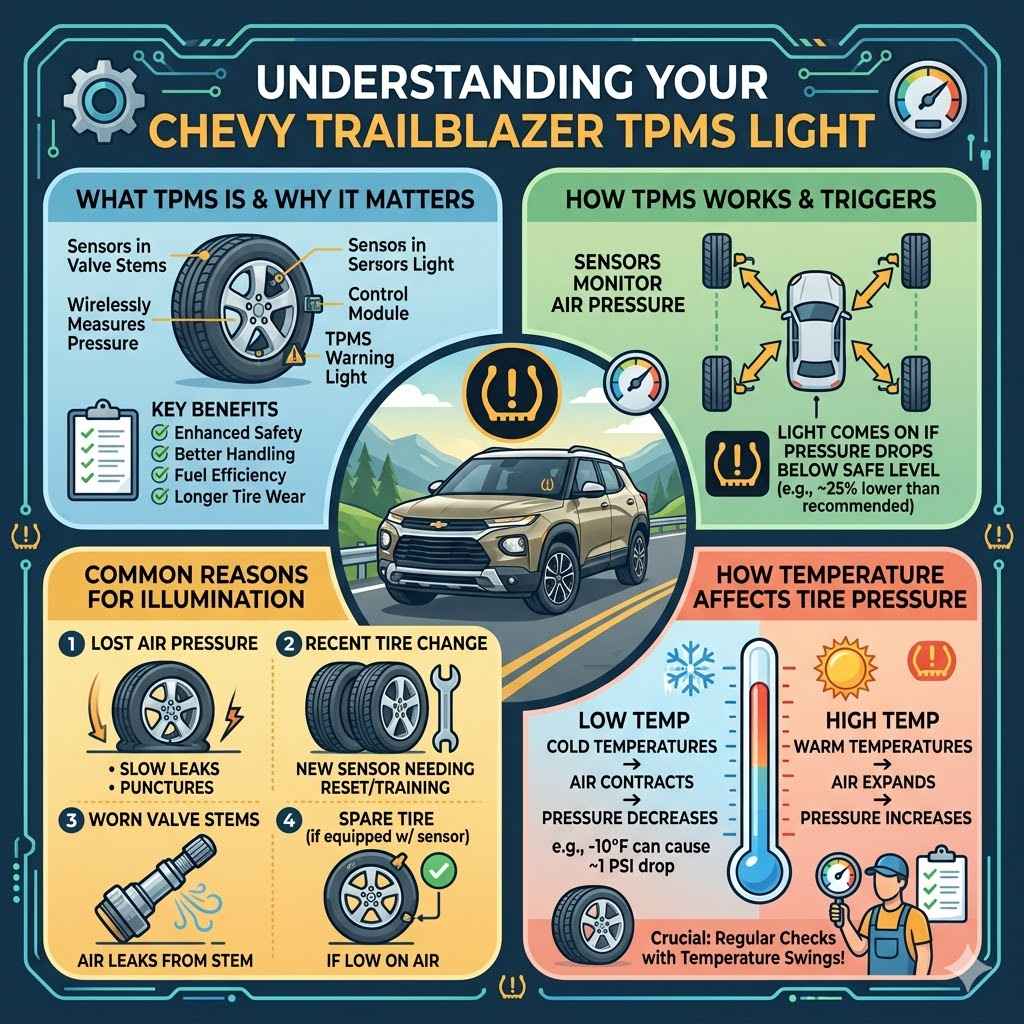
The TPMS, or Tire Pressure Monitoring System, light on your Chevy Trailblazer dashboard is an important safety feature. It alerts you when one or more tires are significantly under-inflated. Low tire pressure can affect your vehicle’s handling, fuel efficiency, and tire wear.
Ignoring this light can lead to dangerous driving conditions and costly tire damage. Understanding why the light comes on is the first step to fixing it. This section helps you grasp the basics of your vehicle’s TPMS.
What TPMS Is And Why It Matters
TPMS is a system built into your car that constantly checks the air pressure in your tires. Most modern vehicles, including your Chevy Trailblazer, come equipped with this technology. The system uses sensors located inside each tire’s valve stem.
These sensors measure the air pressure and send this data wirelessly to a control module in your car.
When the air pressure in a tire drops below a safe level, usually about 25% lower than the recommended pressure, the TPMS warning light illuminates on your dashboard. This light typically looks like a flat tire with an exclamation mark inside. It’s a direct signal that your tires need attention to ensure safe driving.
Common Reasons For The TPMS Light To Illuminate
Several things can cause your TPMS light to turn on. The most common reason is simply a tire that has lost air pressure. This can happen due to slow leaks, punctures, or even changes in outside temperature, as colder weather can cause tire pressure to drop.
Sometimes, the light might come on if you recently replaced a tire or had one repaired. In these cases, the new sensor might need to be trained or reset. Air leaks can also occur from worn-out valve stems.
Even a spare tire, if it has a sensor and is low on air, could trigger the warning.
It’s also possible for the TPMS system itself to have a fault. Sensor batteries can die, or there could be an issue with the car’s receiving unit. While less common, these are factors to consider if a simple tire inflation doesn’t resolve the issue.
How Temperature Affects Tire Pressure
Temperature plays a significant role in tire pressure. As the temperature outside drops, the air inside your tires contracts, causing the pressure to decrease. For every 10 degrees Fahrenheit decrease in ambient temperature, tire pressure can drop by about 1 PSI (pound per square inch).
This is why you might notice your TPMS light coming on during colder months. Conversely, when temperatures rise, the air expands, and tire pressure increases. It’s crucial to check your tire pressure regularly, especially when there are significant temperature swings.
Maintaining the correct tire pressure ensures your TPMS system is accurate and your tires are safe.
Resetting Your Chevy Trailblazer TPMS System
After addressing the cause of the TPMS light (like reinflating tires or fixing a leak), you often need to reset the system. This tells your car that the issue has been resolved. For many Chevy Trailblazer models, there are straightforward ways to do this.
We’ll cover the most common methods, making sure you can get that light off your dash.
Method One The Simple Drive Cycle
Sometimes, your Chevy Trailblazer’s TPMS system will reset itself after a short drive. This happens if the system detects that all tires are properly inflated. You don’t need to do anything special for this to occur.
Just ensure your tires are at the correct pressure first.
After adjusting tire pressure, drive your vehicle at a speed of 15-20 miles per hour for at least 10 minutes. During this drive, the TPMS control module should re-evaluate the tire pressures. If all sensors report optimal pressure, the light should automatically turn off.
This is the easiest and most common way the system corrects itself.
Method Two Using The DIC Controls
Many Chevy Trailblazer models allow you to manually reset the TPMS through the Driver Information Center (DIC). This is a common method that many owners find effective. You’ll use the buttons on your steering wheel to navigate through the DIC menus.
Here’s a general outline of how to use the DIC controls. First, ensure your ignition is turned ON, but the engine is OFF. Then, locate the DIC buttons, usually on the steering wheel or dashboard.
You will need to cycle through the menus until you find the “TPMS” or “Tire Pressure” option. Once there, you’ll likely see an option to “Reset” or “Relearn.” Press the appropriate button to initiate the reset process.
For specific instructions for your model year, it’s always best to consult your owner’s manual. However, this DIC method is widely used across various Chevy vehicles.
Method Three Tire Pressure Learning Mode
Some Chevy Trailblazer models require you to enter a “tire pressure learning mode” before resetting. This is especially true if you’ve recently rotated your tires or replaced a sensor. The vehicle needs to learn which sensor is on which wheel.
To enter learning mode, you’ll typically need to perform a specific sequence of actions. This might involve turning the ignition on and off a certain number of times or pressing and holding a button. Your owner’s manual is the best resource for the exact steps for your specific model.
Once in learning mode, you usually start by inflating or deflating the driver’s side front tire to a specific pressure. Then, you move to the passenger’s side front, then passenger’s side rear, and finally the driver’s side rear. The car will often signal that it has learned each sensor, often with a beep or by unlocking the doors.
After learning all four sensors, the TPMS light should turn off.
When To Consider A Professional TPMS Reset
While many TPMS resets can be done at home, sometimes professional help is needed. If you’ve tried all the common reset methods and the light remains on, there might be a deeper issue. This could be a faulty sensor, a problem with the TPMS control module, or a wiring issue.
Auto repair shops and tire service centers have specialized tools that can diagnose TPMS problems. They can identify which sensor is malfunctioning, check for communication errors, and perform advanced resets. If your TPMS light continues to be a problem, or if you suspect a sensor failure, it’s best to visit a qualified mechanic.
They can ensure your TPMS is functioning correctly for your safety.
Troubleshooting Common TPMS Issues
Sometimes, even after a reset, the TPMS light can be stubborn. This section helps you tackle those tricky situations. We’ll explore common problems and how to fix them.
This ensures your TPMS sensor reset guide for Chevy Trailblazer provides a complete solution.
Dealing With False Warnings
False TPMS warnings can be annoying. They happen when the light comes on even though your tire pressure is correct. One common cause is a rapid change in outside temperature.
As mentioned before, cold weather lowers tire pressure. If your tires were inflated on a warm day and the temperature drops significantly, the pressure can fall enough to trigger the light.
Another cause can be a slightly inaccurate sensor. Sensors are designed to be precise, but like any electronic component, they can sometimes give readings that are a bit off. If you check your tires with a reliable gauge and they are all at the correct PSI, but the light is still on, the sensor itself might be giving a faulty reading.
In such cases, a recalibration or replacement of the sensor might be necessary.
What To Do If A Sensor Is Bad
If you suspect a TPMS sensor is bad, it’s important to address it. A malfunctioning sensor means your TPMS system isn’t working correctly, and you won’t be alerted to dangerous low tire pressure. Signs of a bad sensor include the TPMS light staying on constantly, or the warning light flashing for a few seconds before staying on, indicating a system malfunction.
To confirm a bad sensor, a mechanic can use a diagnostic tool to read the signals from each sensor. If a particular sensor isn’t transmitting data or is sending incorrect data, it will be identified. Replacing a TPMS sensor involves deflating the tire, removing the old sensor, installing a new one, and then performing a relearn procedure.
Some sensors are integrated into the valve stem, while others are separate units.
It’s important to note that TPMS sensor batteries typically last about 5-7 years. When the battery dies, the sensor stops transmitting. Often, the entire sensor unit is replaced when the battery fails, as they are not usually designed to be serviceable.
The Role Of Tire Rotation And Balancing
When you rotate your tires, you move them from one position on the vehicle to another. This helps them wear more evenly. If your vehicle has different tire sizes or types on the front and rear axles, or if sensors are specific to wheel positions, the TPMS system may need to be reset or retrained after a rotation.
Tire balancing involves adding small weights to the tire and wheel assembly to ensure weight is distributed evenly. This prevents vibrations and uneven tire wear. While tire rotation and balancing don’t directly cause TPMS issues, they are often performed at the same time as tire services that might trigger the TPMS light.
Always inform your service provider if you have a TPMS system so they can properly handle the sensors during these procedures.
When To Seek Professional Help
There are times when DIY troubleshooting isn’t enough. If you’ve tried inflating your tires and performed a reset, but the TPMS light remains illuminated, it’s time to call a professional. This is especially true if the light flashes on startup, which usually indicates a system fault rather than just low pressure.
A certified mechanic has the specialized diagnostic equipment to communicate with your car’s TPMS control module. They can pinpoint issues that are beyond simple resets. This could include diagnosing faulty sensors, problems with the tire pressure receiver, or even wiring harness issues.
Trying to force a reset without addressing an underlying fault can be ineffective and frustrating.
Maintaining Your Chevy Trailblazer’s TPMS
Keeping your TPMS working well means regular checks and knowing when things need attention. This section provides practical tips to ensure your system is always ready to alert you. A well-maintained TPMS contributes to safer driving and better tire life.
Regularly Checking Tire Pressure
The most important part of TPMS maintenance is still manually checking your tire pressure. Don’t rely solely on the warning light. Use a good quality tire pressure gauge at least once a month and before long trips.
Find the recommended tire pressure on the sticker located on the driver’s side doorjamb or in your owner’s manual.
The pressure listed on the tire’s sidewall is the maximum pressure the tire can hold, not the recommended operating pressure for your vehicle. Always use the vehicle’s recommended pressure for optimal performance and safety. This simple habit can prevent the TPMS light from coming on unnecessarily and ensures your tires are always at their best.
Understanding TPMS Sensor Lifespan
TPMS sensors are designed to last for many years, but they are not permanent. The average lifespan for a TPMS sensor is typically between 5 to 7 years. This is largely due to the internal battery that powers the sensor.
Once this battery depletes, the sensor will no longer transmit data, and the TPMS light will likely illuminate.
If your vehicle is approaching this age range, and you notice TPMS issues, it’s a good time to have your sensors checked. Many tire shops can test the battery life of your TPMS sensors. If one or more sensors are nearing the end of their life, it’s often cost-effective to replace them all at once, rather than waiting for each one to fail individually.
When To Replace TPMS Sensors
Replacement of TPMS sensors is necessary when the internal battery dies or when a sensor is physically damaged. Physical damage can occur during tire changes if the sensor is not handled carefully, or from road debris. If a sensor fails, you will typically see a TPMS warning light on your dashboard.
When replacing sensors, it’s crucial to use compatible parts for your Chevy Trailblazer. After installing new sensors, a relearn procedure is always required to pair them with your vehicle’s computer. This ensures the system correctly reads the pressure from each wheel.
Some vehicles have programmable sensors that can be programmed to match your car’s specifications, offering flexibility.
The Importance Of The Owner’s Manual
Your vehicle’s owner’s manual is an invaluable resource for all aspects of your car’s maintenance, including the TPMS. It contains specific instructions for your exact model and year of Chevy Trailblazer. This includes the precise steps for entering learning mode, recommended tire pressures, and any model-specific reset procedures.
If you ever find yourself unsure about a TPMS reset or are experiencing a warning light, your owner’s manual should be your first point of reference. It’s a detailed guide provided by the manufacturer to help you understand and operate your vehicle safely and efficiently. Many manuals are now available online in PDF format if you have misplaced your physical copy.
TPMS Sensor Reset Guide for Chevy Trailblazer Specifics
This section gets into the finer details often missed in general guides. We’ll look at what makes the Chevy Trailblazer’s TPMS unique and provide actionable advice. This ensures you have a complete TPMS Sensor Reset Guide for Chevy Trailblazer that covers your needs.
Identifying Your Trailblazer’s TPMS Type
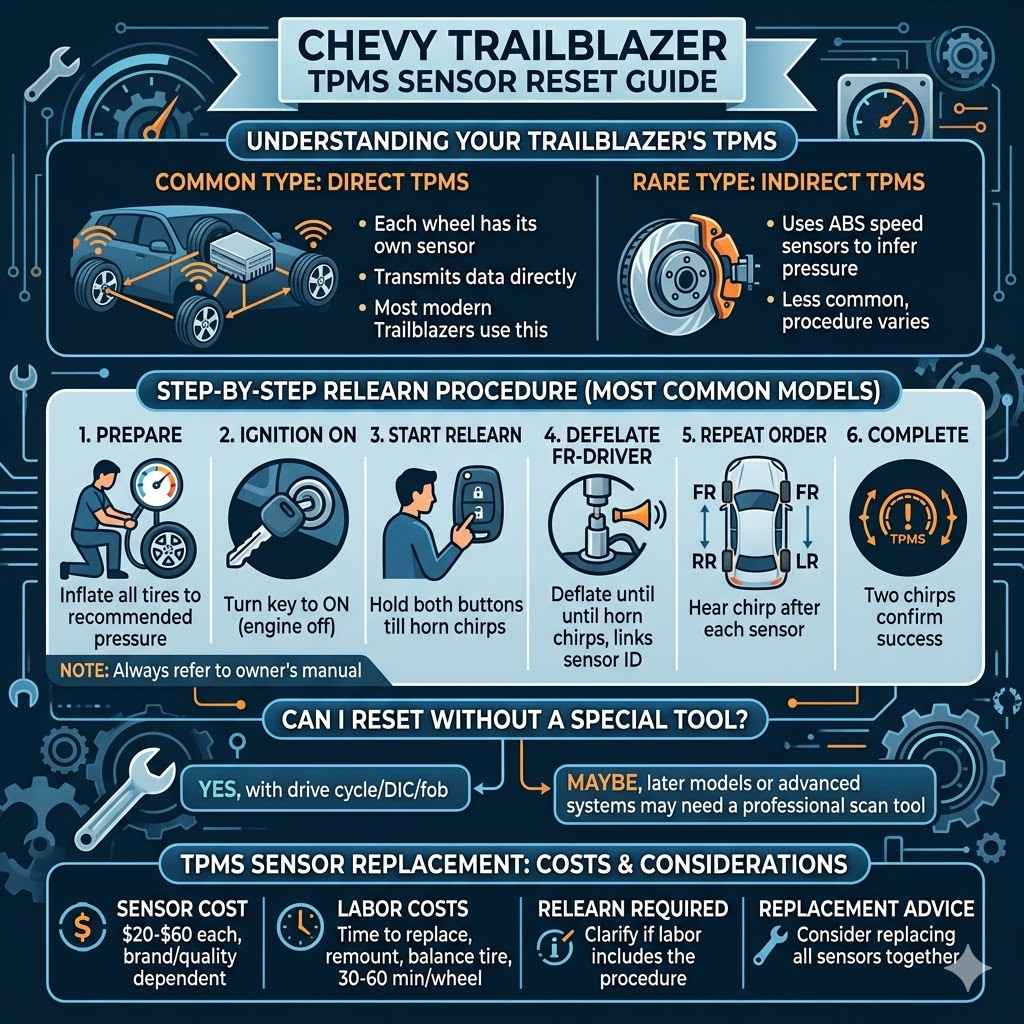
Chevy Trailblazers, like many vehicles, can come with different types of TPMS sensors. The most common type uses direct monitoring, where each wheel has its own sensor. These sensors transmit data directly to the car’s computer.
Some vehicles might also use indirect TPMS, which uses the anti-lock braking system (ABS) wheel speed sensors to infer tire pressure. However, most modern Trailblazers use direct TPMS. It’s important to know which type you have, as the reset procedure can vary.
Your owner’s manual will specify the type of TPMS your vehicle is equipped with. Knowing this helps in understanding why certain reset methods work or don’t work.
Step-by-Step Relearn Procedure For Common Models
For many Chevrolet Trailblazer models from the mid-2000s to the present, a common relearn procedure involves using the DIC controls and potentially a special tool.
Ensure all tires are inflated to the recommended pressure (found on the driver’s doorjamb sticker).
This is critical because the system needs accurate starting pressures.
Turn the ignition to the ON position (engine off).
This powers up the vehicle’s electronics, including the TPMS module.
Press and hold the lock and unlock buttons on your keyless remote simultaneously for several seconds until you hear a horn chirp. This often signals the start of the relearn mode.
This action puts the car’s computer into a state where it’s ready to learn new sensor IDs.
Starting with the driver’s side front tire, deflate it slightly until you hear a horn chirp. This indicates the car has recognized the front driver’s side sensor.
This step links the sensor’s unique ID to that specific wheel position.
Repeat this process for the passenger’s side front, passenger’s side rear, and driver’s side rear tires in that order. You will hear a horn chirp after each successful recognition.
This sequential learning ensures each sensor is correctly assigned.
Once all four tires have been recognized, you will typically hear two horn chirps, and the TPMS light will turn off.
This confirms the system has successfully relearned all sensor IDs.
Remember, this is a general guide. Always refer to your owner’s manual for the exact procedure for your specific year and trim. Some newer models might require a professional TPMS scan tool for the relearn process.
Can I Reset TPMS Without A Special Tool
Yes, for many Chevy Trailblazer models, you can reset the TPMS without a special tool. The methods described earlier, such as the drive cycle and using the DIC and key fob, are designed for owner use. These methods leverage the vehicle’s existing controls to initiate the learning or reset process.
However, if your Trailblazer is a later model or has a more advanced TPMS system, it might require a scan tool to activate the learning mode or to register new sensors. These tools communicate directly with the TPMS control module. If the manual methods don’t work, or if you’ve
TPMS Sensor Replacement Cost And Considerations
Replacing TPMS sensors involves a few cost factors. The sensors themselves can range from $20 to $60 each, depending on the brand and quality. Some are more universal, while others are specific to certain vehicle manufacturers.
You will also incur labor costs if you have a mechanic perform the replacement. This includes the time to remove the tire from the wheel, replace the sensor, and then remount and balance the tire. This process typically takes about 30-60 minutes per wheel.
Additionally, after replacement, a relearn procedure is necessary, which may or may not be included in the labor cost, so it’s good to clarify.
When replacing sensors, it’s often recommended to
Frequently Asked Questions
Question: How long does it take for the TPMS light to go off after inflating tires?
Answer: It can vary. For many Chevy Trailblazers, the light may turn off immediately after inflating. In other cases, you might need to drive the vehicle for 10-15 minutes at speeds above 15 mph for the system to recalibrate and turn the light off.
Question: Can I ignore the TPMS light if my tires look fine?
Answer: No, it is not recommended to ignore the TPMS light. Even if your tires appear properly inflated, the light indicates a specific issue with tire pressure that needs to be addressed for safety and optimal vehicle performance.
Question: How often should I check my tire pressure?
Answer: You should check your tire pressure at least once a month and before any long road trips. Temperature changes can significantly affect tire pressure, so regular checks are important, especially during seasonal transitions.
Question: What does a flashing TPMS light mean on my Chevy Trailblazer?
Answer: A flashing TPMS light typically indicates a system malfunction rather than just low tire pressure. This could mean a faulty sensor, a problem with the control module, or another issue within the TPMS system. It requires professional diagnosis.
Question: Where can I find the correct tire pressure for my Chevy Trailblazer?
Answer: The recommended tire pressure for your Chevy Trailblazer can be found on a sticker located on the driver’s side doorjamb. You can also find this information in your vehicle’s owner’s manual.
Wrap Up
This TPMS Sensor Reset Guide for Chevy Trailblazer provides clear steps for resetting your tire pressure light. You can likely handle simple inflation and reset procedures yourself. Always check your owner’s manual for specifics.
If the light persists, a professional diagnosis is your best option for a safe and functioning TPMS system.