Rear Cargo Liners for Trucks: Fit Them Right
For rear cargo liners for trucks, match the liner to your exact cab style, rear-seat layout, and wheel-well shape; universal mats usually miss the fit. A bad fit lets cargo slide into footwells, traps dirt under the edges, and blocks seat folds or child-seat access. This guide shows how to check cab fitment, wheel-well coverage, retention points, and cargo-use tradeoffs before you buy.
A rear cargo liner protects the truck’s back-seat or rear cargo area from grit, moisture, and abrasion. It is not the same as a truck bed liner, which covers the open bed, or a cargo mat that may cover only a flat floor with less sidewall and edge coverage. The difference matters when the floor is uneven, the seats fold, or the wheel wells steal usable space.
What a rear cargo liner does


Rear cargo liner vs. cargo mat
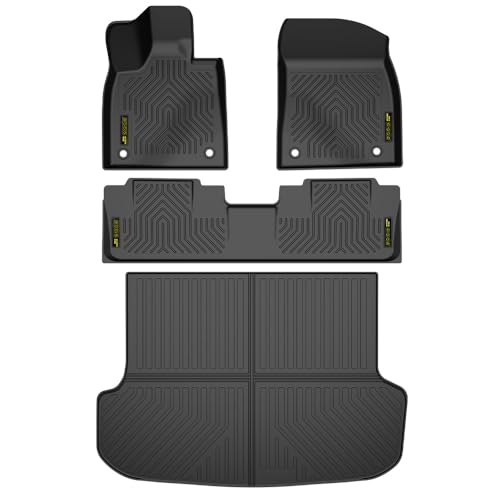
A cargo mat usually sits flat, with anti-slip backing and basic spill containment. A rear cargo liner often extends higher at the edges and may wrap around wheel well humps, with cutouts or molded contours to help it stay aligned with seat tracks, latch points, and tie-downs. That extra coverage matters when the cargo area is not a square floor.
Rear cargo liner vs. truck bed liner
A truck bed liner is built for open-bed abrasion, tailgate coverage, and weather exposure. It needs to handle tie-downs, sliding toolboxes, and repeated loading from the side or rear. A rear cargo liner lives in the cab or behind the rear seats, where seat hardware, carpet, and trim panels create different fit risks. Treat them as separate products.
Where coverage usually starts and ends
Good coverage starts at the highest wear point and stops before it blocks a latch, belt buckle, or seat hinge. In a cab, that may mean floor-to-seat-back protection, sidewall coverage around the wheel wells, and a lip that contains spills without interfering with folding seats. In a bed, coverage usually follows the floor, wheel wells, and tailgate zone.
Does it fit your truck cab?
Cab configuration decides whether a rear cargo liner works at all. Crew cab, extended cab, and regular cab trucks place the rear area in different positions, with different seat folds, legroom, and floor contours. The liner has to match those shapes, or it can buckle, slide, or block access to anchors and latches.
Crew cab fit points
Crew cab trucks usually have full rear seating and more floor area, which can help coverage but may also add more seat hardware to work around. Check whether the liner clears the rear-seat bases, child-seat anchors, and any center floor tunnel. If the rear seat folds, make sure the liner can move with the seat or lift out cleanly.
Extended cab fit points
Extended cab layouts are often tighter and more irregular. Rear access may depend on rear-hinged doors or a smaller rear seat area, so the liner needs precise edge shape and retention. A universal mat can leave gaps near the threshold or bunch near the wheel wells, especially where the rear seatback or access panel changes the floor profile.
Regular cab and fold-flat seat checks
Regular cab trucks may use the rear area more like a storage zone than a passenger space, but seat folding constraints still matter if the truck has jump seats or fold-flat cushions. Check latch travel, seatback clearance, and any stowed-seat lock points. A liner that blocks a latch is a bad fit even if the floor coverage looks right.
Say your crew cab has fold-flat rear seats and child-seat anchors in the same row. A liner that covers the floor but sits too high at the front edge can stop the seat from locking down fully, and the issue shows up only after you try to return the seat to passenger use.
Rear cargo liners checklist
Wheel well humps change the usable floor shape and are often a major cause of rear cargo liner failure. You need to check hump width, hump height, and the distance from the hump to the seat base or cab wall. You also need to confirm that the liner clears tie-downs, hooks, and any raised trim around the wells.
Measure hump width and height
Measure the widest point of each wheel well intrusion and the highest point it reaches into the cargo area. Then compare those numbers with the liner’s molded contour or cut-to-fit pattern. If the liner is too flat for the hump, the edges will bridge the gap and lift over time.
Check tie-down and anchor clearance
Tie-downs, seat anchors, and cargo hooks can break a good fit. A liner that covers them may need pre-cut openings, trim marks, or a molded recess. If the product has no anchor strategy, cargo can pull the liner out of position or leave the anchor inaccessible when you need it.
Watch for edge gaps and pinch points
Edges that end too early leave a dirt trap near the wheel well. Edges that extend too far can pinch under seat rails or door thresholds. Both problems invite curling, especially in heat or after repeated seat folding. A secure edge sits flat without blocking movement.
Cargo liner fitment checklist
This checklist helps you match the liner to the truck instead of guessing by brand photos. Use it before you buy, and again when you unpack the liner. A few minutes here can prevent the common failures: sliding cargo, seat interference, and gaps near the wheel wells.
| Truck cab type | Rear-seat configuration | Wheel well clearance | Cargo use case | Liner material recommendation | Install risk flags |
|---|---|---|---|---|---|
| Crew cab | Fold-flat rear seats | High hump, full side coverage needed | Wet gear, pets, mixed daily cargo | TPE or rubber | Seat latch interference, edge curl near hinges |
| Crew cab | Fixed rear seats | Medium hump, anchor cutouts required | Tools, groceries, school bags | TPE | Anchor blockage, trimming too close to seam |
| Extended cab | Small rear seat or access panel | Tight hump with narrow floor | Dry cargo, occasional tools | Carpet or TPE | Gaps at door sill, bunching at seat base |
| Regular cab | Jump seat or fold-down storage | Low clearance but more trim edges | Light cargo, mixed storage | TPE | Latch blockage, poor retention on small floor |
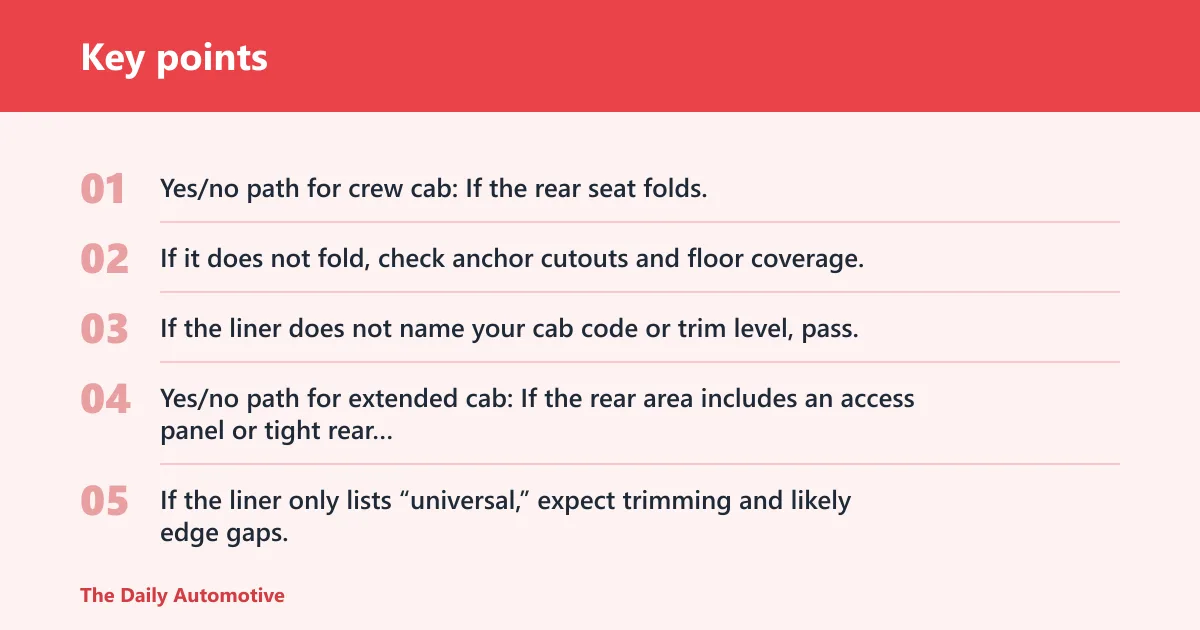
Yes/no path for crew cab: If the rear seat folds, choose a liner listed for that exact fold pattern. If it does not fold, check anchor cutouts and floor coverage. If the liner does not name your cab code or trim level, pass.
Yes/no path for extended cab: If the rear area includes an access panel or tight rear bench, choose a product with vehicle-specific templates. If the liner only lists “universal,” expect trimming and likely edge gaps. If you need frequent rear-seat access, pass on thick carpet styles.
Yes/no path for fold-flat rear seats: If the liner can stay flat when the seats are down, it may work. If it lifts, bunches, or blocks the release handle, it will become a trim job. If retention depends on loose tabs alone, look for a better match.
Which material should you choose?
Material choice should follow cargo use, not marketing language. Rubber, TPE, and carpet all have a place, but each behaves differently in cold weather, odor control, cleanup, and grip. The best option for wet boots may be the wrong one for a quiet daily driver.
Rubber for wet, heavy, or dirty cargo
Rubber works well when you want spill containment, abrasion resistance, and a high lip at the edges. It is a practical choice for muddy boots, wet tools, and pets after rain. The tradeoff is weight and odor sensitivity; some rubber products can carry a stronger smell out of the box and may stiffen in cold weather.
TPE for lighter weight and cold flexibility
TPE often has lower odor and better cold-weather flexibility than basic rubber, which helps in winter cab use. It is a strong middle-ground choice for mixed daily cargo, school bags, and occasional wet gear. Look for a molded surface texture and raised edges if you want spill control without a heavy mat.
Carpet for dry cargo and quieter load areas
Carpet cargo liners suit dry cargo, luggage, and office-type use where noise matters more than spill containment. They can feel more finished in a passenger cab, but they do not stop water as well as molded rubber or TPE. If you haul tools, paint cans, or damp gear, carpet is the weak option.
A common first-timer mistake is choosing carpet because it looks cleaner on day one, then using the truck for wet winter boots and a shovel. The result is soaked backing, trapped grit, and more cleaning work than a molded liner would have created.
How do you install one?
Installation is mostly about fit verification. Measure first, trim only when the product calls for it, and confirm that the liner sits flat before loading cargo. The right sequence reduces curling, missed anchors, and seat interference, especially in trucks with fold-flat rear seats or wheel well cutouts.
Gather tools and cleaning supplies
Have a measuring tape, utility knife, trim scissors, and cleaning supplies ready. The floor should be free of loose grit and moisture before the liner goes in, because trapped debris can keep the backing from sitting flat. If the liner is meant to grip carpet, a clean surface matters even more.
Trim for cut-to-fit models
Use the vehicle template, then trim in small steps. Remove less than you think you need, test fit, and repeat. Cutting too close to a wheel well or seat anchor creates permanent gaps. If the product has molded lines, stay on the marked side until the liner clears all hardware.
Place, press, and secure retention points
Set the liner in place, press the edges into the corners, and check every retention method the product uses. That may include tabs, hooks, hook-and-loop strips, or under-seat tucks. Before the first load, fold the seat, open the doors, and make sure nothing shifts or binds.
Common fit and use failures
Most failures come from fit, heat, or movement. A liner that looks fine in the garage can curl in summer heat, stiffen in winter, or slip when cargo shifts. The problem usually starts at the edges or around the wheel wells, then spreads to the center.
Curling edges after heat or cold
Edges curl when the liner is too thin, too stiff, or trimmed too close to a contour. Heat can lift corners after parking in the sun, while cold can make the liner resist the floor shape. A stronger retention method and a more precise pattern help, but only if the base fit is right.
Sliding cargo on low-grip surfaces
Low-grip surfaces can keep the liner in place but still let cargo move. That matters for toolboxes, pet crates, and grocery bags. A textured surface and raised edge help, but you also need the right material for the load. Carpet quiets cargo, while rubber and TPE better resist spill spread.
Seat or latch interference
Seat latches, belt buckles, and anchor points need free movement. If a liner crosses them, the truck becomes harder to use and less safe to configure for passengers. Interference often shows up only after folding the seat or trying to install a child seat, so test those actions before daily use.
Water pooling near seams
Water pools when seams or edges sit on a low spot instead of rising over it. That can happen near the wheel wells or at a floor transition. A liner with better edge height and a more accurate contour keeps liquid on top, where it can be wiped or removed.
Suppose a crew cab liner fits the flat center section but misses the hump by one inch on each side. That small gap can collect sand and melted snow, then grind against the carpet every time the rear seat folds.
What should you check before buying a rear cargo liner for your truck?
Check cab type, rear-seat layout, wheel well shape, and retention method before you buy. Then match the material to your cargo: wet gear favors rubber or TPE, dry cargo can use carpet, and mixed use usually points to TPE. If the listing does not name your trim or seat style, keep looking.
Frequently asked questions
What is a rear cargo liner for a truck?
A rear cargo liner is a protective floor-and-side coverage piece for the truck’s rear cab area or cargo zone. It helps contain dirt, water, and debris, but only if it matches the cab layout, seat movement, and wheel well shape. A loose universal mat often falls short.
Do rear cargo liners fit with wheel well humps and tie-downs?
They can, but only if the product is shaped for the truck’s hump height and anchor layout. Measure the wheel well intrusion, then check for molded recesses or cutouts around tie-downs and hooks. If the liner bridges over the hump, expect gaps and early edge lift.
How do you install a rear cargo liner in a truck bed or cab?
For a cab liner, clean the floor, measure the contours, trim only marked areas, then press the liner into place and test seat folds and latches. For a bed liner, align the floor, wheel wells, and tailgate coverage, then confirm tie-down access before loading cargo.
Which material is better: rubber, TPE, or carpet cargo liner?
Rubber suits wet, dirty, and heavy cargo. TPE is often the best all-around pick for mixed use because it is lighter and usually stays more flexible in cold weather. Carpet fits dry cargo and quieter cabins, but it gives up spill containment and easy cleanup.
Can a cargo liner be trimmed for a custom fit?
Yes, many cut-to-fit liners can be trimmed, but only after you compare the template with the truck’s seat rails, wheel wells, and anchor points. Trim in small steps and test after each cut. Over-trimming creates permanent gaps and can ruin retention at the edges.
How to install rear wheel well liners
Rear wheel well liners should match the hump shape before you fasten them. Clean the area, align the liner around the intrusion, verify clearance for cargo tie-downs and nearby trim, then secure according to the product’s method. If the liner blocks cargo access or seat movement, it is the wrong part.
Products related to this article
Sponsored / affiliate links. As an Amazon Associate I earn from qualifying purchases. I may earn additional commission from eligible campaigns.