Best Portable Car Ramps for Cars: 3 Picks by GVW Capacity
Portable car ramps lift one axle at a time for oil changes, brake jobs, and undercarriage inspections — a 12,000-lb GVW pair holds 6,000 lb per ramp, not 12,000 lb per side. Using an underrated ramp, or driving up crooked, is how ramps slip or crack. This guide compares three real GVW-rated ramps (Ironton, MaxxHaul, FloTool) by capacity, lift height, and price, and explains what that GVW number actually means before you buy.
Note: Insert your Affiliate Disclosure reusable block here.
Quick Answer
For most cars, the Ironton 12,000-Lb. GVW Poly Car Ramp Set is the best all-around portable ramp — 6,000 lb per ramp, a gradual approach angle, and a corrosion-proof poly build. Low-clearance cars should look at MaxxHaul’s shorter 6.25″ lift instead, and budget shoppers can go with FloTool’s RhinoRamp pair.
Quick comparison: 3 portable car ramps
|
Best Overall 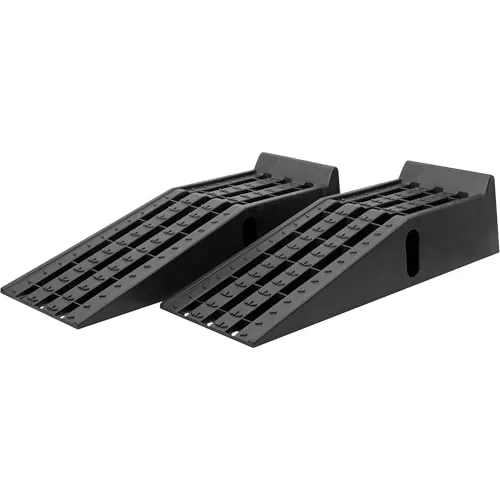 Ironton 12,000-Lb. GVW Poly Car Ramp Set 6,000 lb/ramp • 8.5″ lift • $68.79 Check on Amazon |
Best for Low Cars 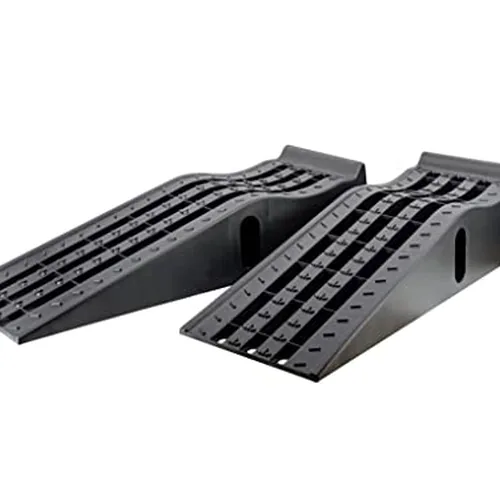 MaxxHaul 50515 6.25″ Lift Car Ramps 3,250 lb/ramp • 6.25″ lift • $69.99 Check on Amazon |
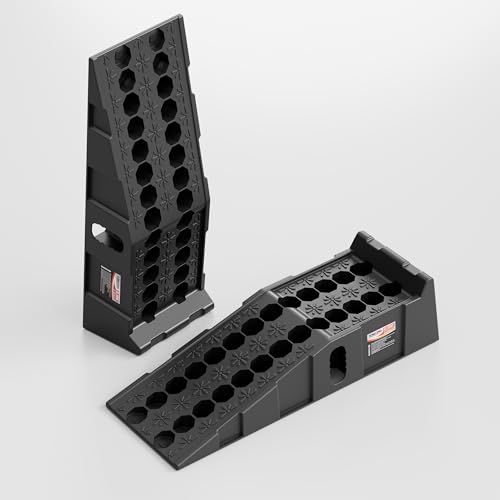
Budget Pick 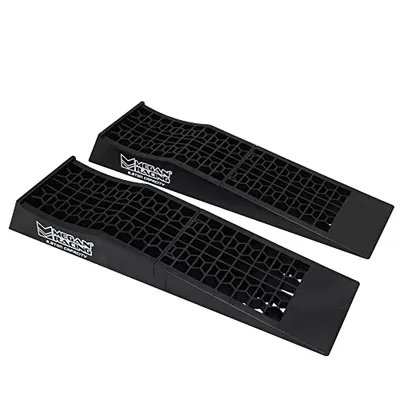 Megan Racing 2PCS Universal Low Profile Drive-On Detachable Auto Service Ramp 6,000 lb/ramp • 17° incline • Check price Check on Amazon |
As an Amazon Associate we earn from qualifying purchases. Prices fluctuate; FloTool price unavailable at time of writing — check the listing for current pricing.
What Does “GVW” Mean on a Car Ramp?
GVW (Gross Vehicle Weight) on a ramp listing is the combined rating for the pair, not one ramp. A “12,000-lb GVW” set holds 6,000 lb per ramp, because each ramp lifts one side of one axle at a time — not the whole car. Manufacturers such as Ironton, MaxxHaul, and heavy-duty industrial brands like Wilmar rate their ramps this way, and mixing up “per pair” with “per ramp” is the single most common car-ramp buying mistake.
To check whether a ramp fits your car, divide the GVW rating by 2, then compare that number to your vehicle’s front or rear axle weight (listed on the driver-door jamb sticker) — not the full curb weight. We cover the GVW math, the 5 most common ramp failures, and a full step-by-step safe-use walkthrough in our dedicated car ramp safety guide.

1. Ironton 12,000-Lb. GVW Poly Car Ramp Set – Pair
- Capacity: 6,000 lb per ramp / 12,000 lb per pair
- Dimensions: 35.5″ L × 12″ W × 8.5″ H
- Weight (pair): 20.6 lb
- Material: high-impact poly, honeycomb core
- Price: $68.79
The Ironton set is rated for cars, trucks, SUVs, and vans up to 6,000 lb per ramp, and the poly construction won’t rust the way steel ramps eventually do. The 8.5″ lift height and 35.5″ length give a gradual approach angle, and a non-skid tread pattern plus rubber feet keep the ramp from sliding forward as tires climb it.
Advantages
- Rated for a wide range of vehicles, from compact cars to 3/4-ton trucks
- Poly build resists the rust that eventually affects steel ramps
- Non-skid tread and rubber feet reduce slipping during loading
- At 20.6 lb for the pair, easy to carry in one trip
Best For
Best for: drivers who want one ramp set that covers most sedans, crossovers, and light trucks without buying a heavier commercial-grade set. Watch out for: the 8.5″ lift height is too steep for many sports cars and lowered vehicles — check your front clearance before buying, or see the MaxxHaul pick below.
2. MaxxHaul 50515 6.25″ Lift Car Ramps – 2-Pack
- Capacity: 3,250 lb per ramp / 6,500 lb per pair
- Dimensions: 35.5″ L × 12″ W × 8.25″ H
- Lift height: 6.25″
- Material: heavy-duty black plastic
- Price: $69.99
MaxxHaul’s 6.25″ lift height is noticeably shorter than the Ironton set’s 8.5″, which makes it a more forgiving choice for sedans and crossovers with lower front air dams or splash guards. The deep-grooved ramp surface is built for stable tire placement, and rubber stops on the base help keep the ramp from creeping as the vehicle drives up.
Advantages
- Lower 6.25″ lift suits cars with limited front-end clearance
- 3,250 lb per ramp is enough for most passenger cars and crossovers
- Ridged surface and rubber base stops add traction and grip
- Heavy-duty plastic construction, no assembly required
Best For
Best for: lower-clearance sedans, hatchbacks, and crossovers where the Ironton set’s steeper 8.5″ angle risks scraping the front bumper. Watch out for: the lower 6,500-lb pair rating means this isn’t the set to reach for on a full-size pickup or SUV — check your front-axle weight against the 3,250-lb per-ramp figure first.
3. FloTool 11909ABMI RhinoRamp Vehicle Ramp Pair
- Capacity: 6,000 lb per ramp / 12,000 lb GVW per pair
- Dimensions: 36″ L × 12″ W × 8.5″ H
- Incline: 17°
- Material: RhinoGear plastic, CoreTRAC non-skid base
- Manufacturer: RhinoGear (FloTool brand)
FloTool’s RhinoRamp pair matches the Ironton set’s 12,000-lb GVW rating and 8.5″ lift, with a wider extra-wide tread and a 17° incline built specifically for low-clearance cars. The CoreTRAC non-skid base is designed to reduce the same shifting-and-slipping risk that causes most ramp accidents when a ramp isn’t seated flat on the ground.
Advantages
- 12,000-lb GVW capacity matches the Ironton set at a typically lower price
- 17° incline and extra-wide design suit low-clearance vehicles
- CoreTRAC non-skid base reduces slippage during loading
- Works for routine maintenance: oil changes, brake jobs, tire rotations
Best For
Best for: buyers who want Ironton-level capacity and lift height at a more competitive price point. Watch out for: availability and pricing on this listing fluctuate more than the other two picks — confirm current stock and price before counting on it.
You’ll Also Want These: Safety Gear for Using Car Ramps
A ramp set alone isn’t a full setup. The wheel that stays on the ground can still roll if the transmission slips out of park, so wheel chocks behind the rear tires are the one accessory every ramp guide (including ours) treats as non-negotiable. Jack stands, a torque wrench, and a rolling creeper round out a basic home setup.
Best Wheel Chock Pick
MaxxHaul Solid Rubber Wheel Chock, 2-Pack
Blocks the rear wheels while the front sits on ramps, so a slipped parking brake or transmission can’t send the car rolling backward.
- Best for: the rear wheels on any ramp setup, front- or rear-wheel-drive
- Why we picked it: solid rubber (not hollow plastic), built-in handle, all-weather grip
- Main drawback: no strap or tether to the vehicle, so it must be placed correctly by hand each time
Round out the setup
 Option 1 Pro-Lift 6-Ton Jack Stands, Pair
|
 Option 2 CRAFTSMAN Torque Wrench, 3/8″ Drive
|
 Option 3 DNA Motoring 40″ Mechanic Creeper
|
As an Amazon Associate we earn from qualifying purchases.
📊 Consumer vehicle ramps span a wide GVW range — from around 6,000 lb per pair for light passenger cars up to 16,000+ lb for stackable commercial-grade sets. Source: Wilmar LLC, 13,000 & 16,000-lb GVW vehicle ramp specs.
“I chock the rear wheels every single time before I drive up a ramp — it’s the one step people skip, and it’s the one that actually stops a car from rolling back mid-oil-change.”
How to Use Portable Car Ramps Safely
- Park on flat, hard ground: concrete or asphalt only — never gravel or a sloped driveway.
- Line up straight: approach each ramp dead-center; a crooked approach is a common cause of a ramp sliding sideways.
- Drive up slowly, then stop: ease onto the ramp until the tire is fully seated against the top stop, then put the vehicle in park.
- Set the parking brake and chock the rear wheels: this is the step most guides call the single biggest safety gap.
- Inspect the ramps before every use: cracks, bent edges, or worn tread mean it’s time to replace them.
This covers the basics. For the full 10-step process, the 5 most common ramp failures, and the GVW math worked out in detail, see Are Car Ramps Safe? The Weight-Rating Rule Most Guides Skip.
Buying Guide: What to Look for in Portable Car Ramps
Finding the right portable ramp comes down to matching capacity and lift height to your specific car, then checking build quality. Here’s what actually matters, criterion by criterion.
Material
High-impact poly and heavy-duty plastic (used by all three ramps in this guide) resist rust and hold up to outdoor storage better than bare steel. Steel ramps can carry higher GVW ratings but need a rust-resistant coating to last outside a climate-controlled garage.
Weight Capacity
Check the GVW rating against your car’s actual front or rear axle weight, not its full curb weight — see the GVW section above for the math. When in doubt, size up: a ramp rated well above your axle weight has margin for a full tank of gas, cargo, or a slightly uneven surface.
Size and Length
Longer ramps create a gentler approach angle, which matters most for cars with low front bumpers or aftermarket splitters. All three ramps here run 35.5″–36″ long; if your car scrapes on driveway aprons, look for an even longer or lower-degree-incline model.
Portability
A pair under 25 lb (like the Ironton set at 20.6 lb) is easy to carry in one trip and stack in a corner of the garage. Built-in handles or hand cutouts make a real difference if you’re moving ramps in and out of a trunk regularly.
Surface Texture
A non-skid or ridged tread pattern keeps tires from spinning or slipping as the vehicle climbs the ramp, especially on a damp garage floor. This is a safety feature, not a nice-to-have — a smooth-surfaced ramp is far more likely to let a tire slide sideways.
Stability
A wide base and rubber feet (or an eyebolt for strapping down) keep the ramp from creeping forward under load. Wider ramps also give more margin for error if a tire isn’t perfectly centered as it drives up.
Ease of Use
Ramps that need zero assembly and can be set down and driven onto immediately are the standard for this category — all three picks here qualify. If a listing mentions bolting sections together, factor in extra setup time before the first use.
Price
Portable poly and plastic ramp pairs in the 12,000-lb GVW class typically run $60–$80. Paying more usually buys a higher GVW rating or a lower-profile design for sports cars, not necessarily better durability.
Customer Reviews
Look for reviews that mention the ramp’s actual GVW rating holding up under a specific vehicle (not just star ratings) — that tells you more than a generic 5-star average about whether the capacity claim is realistic.
Warranty
A manufacturer warranty (even a short one) signals the brand stands behind its stated GVW rating. Check the listing or manufacturer site directly, since warranty terms on ramps change more often than the product photos do.
Frequently Asked Questions
What are portable car ramps for?
Portable car ramps lift one axle of a vehicle so you can reach the underside for oil changes, brake inspections, and other routine maintenance. They’re lightweight, foldable or stackable, and store easily compared to a full lift or a floor jack and stands.
Does a 12,000-lb GVW rating mean each ramp holds 12,000 lbs?
No. GVW is the combined rating for the pair. A 12,000-lb GVW set holds 6,000 lb per ramp, since each ramp only supports one side of one axle at a time. Always divide the listed GVW by 2 before comparing it to your vehicle’s axle weight.
How do you use a portable car ramp safely?
Park on flat, hard ground, line up straight, drive up slowly until the tire seats against the top stop, then set the parking brake and chock the rear wheels. See our full car ramp safety guide for the complete step-by-step process.
Are portable ramps safe for cars?
Yes, when the GVW rating covers your vehicle’s axle weight, the ramps are used on flat ground, and the rear wheels are chocked. Most ramp accidents come from an underrated ramp, a crooked approach, or skipping the wheel chocks — not a manufacturing defect.
What’s the difference between poly ramps and low-profile aluminum ramps?
Poly and heavy-duty plastic ramps (like the three compared above) are rust-proof and typically cost less. Low-profile aluminum ramps, such as Race Ramps’ lightweight models, weigh less per pair and use a shallower incline built for sports cars and lowered vehicles, but usually cost more for the same GVW rating.
Where can I buy portable ramps for cars?
Auto parts stores, home improvement retailers, and online marketplaces like Amazon all carry portable car ramps, typically in the $60–$80 range for a 12,000-lb GVW poly pair. Compare the per-ramp GVW rating and lift height before buying — not just the price.
Conclusion
All three ramps in this guide are rated for real GVW capacity and standard home-garage maintenance. The Ironton set is the best all-around pick for most cars and trucks, MaxxHaul’s shorter lift suits low-clearance vehicles, and FloTool matches Ironton’s capacity at a typically lower price. Whichever you choose, pair it with wheel chocks and a flat, hard surface — that combination, not the ramp alone, is what keeps the lift safe.
Products related to this article
Sponsored / affiliate links. As an Amazon Associate I earn from qualifying purchases. I may earn additional commission from eligible campaigns.